
Design an industrial IoT product for the EU Cyber Resilience Act (CRA) by treating cybersecurity as a lifecycle obligation: classify the product by its core functionality, assess its risks before design decisions are fixed, build and maintain appropriate controls, and keep evidence that connects risks to implementation, testing, updates, and conformity. The CRA’s Article 14 vulnerability and incident reporting duties apply from 11 September 2026; most of the regulation applies from 11 December 2027.
What the Cyber Resilience Act means for industrial IoT
Regulation (EU) 2024/2847 establishes horizontal cybersecurity requirements for products with digital elements placed on the EU market. It covers both product security and the manufacturer’s processes for handling vulnerabilities. A product’s connection to a larger industrial system does not, by itself, put it outside the regulation: connected products can create attack paths even when they are indirectly connected.
For an industrial manufacturer, the practical starting point is the product as placed on the market and its core functionality—not the label used in sales material. A controller, gateway, sensor, edge computer, embedded component, operating system, cloud-connected appliance, or software component may be relevant, depending on how it is supplied and classified under the regulation. Do not assume that every component in a plant is a separately regulated product, or that calling something an “industrial IoT platform” settles its classification.
The European Commission identifies the manufacturer’s risk assessment as the first step. That assessment must inform planning, design, development, production, delivery, and maintenance. In other words, it should influence the product and its lifecycle—not exist only as a compliance document assembled near release.
PC Slower Than It Used to Be?
A free scan shows the junk files, broken settings and background clutter dragging Windows down - then fixes them in one click.Free scan · Windows 10 & 11Outdated Drivers Are Slowing You Down
One free scan finds every outdated or missing driver and matches the right update for your exact hardware.Free scan · exact hardware match#1 Best Overall

- Multi-Protocol Support: Integrates with industrial systems and supports multiple communication protocols, including Modbus RTU/TCP, BACnet, OPC UA, OPC XML-DA, and IEC 104, enabling seamless connection with diverse industrial devices to meet different automation needs.
- Cloud Data Connectivity: Functions as an MQTT, HTTP, and Socket client, providing reliable data transmission and automatic reconnection to maintain continuous data flow for IoT applications.
- JS Script Programming Support: Offers flexibility through JavaScript scripting, allowing users to customize and extend the gateway's capabilities to meet specific application needs.
- Alarm and Event Management: Allows users to set trigger conditions, enabling event triggers and releases based on state transitions.
- Easy Configuration and Management: User-friendly graphical configuration software simplifies setup, allowing easy access to real-time and historical data through an HTTP server interface.
First determine the product boundary and classification
Identify what is being placed on the market
Define the product or products for which your organization is the manufacturer. Record whether the offering is hardware, software, or a combination; how it is supplied; what is included; and which interfaces, dependencies, and services are necessary for its operation. Account for foreseeable installation and use, including connections to engineering workstations, plant networks, remote services, and other equipment.
This boundary matters because the CRA’s classification and conformity rules attach to products and their core functionality. An industrial host product does not automatically inherit the conformity-assessment route of every important product it integrates. Conversely, a component supplied as a product in its own right may need its own assessment.
Check whether a higher-assurance category applies
Products whose core functionality falls within Annex III are classified as “important” products and follow the conformity-assessment procedures specified by Article 32. Annex IV identifies “critical” products with stronger assurance expectations. Use the annexes and the regulation’s core-functionality rules to classify the specific offering; do not infer its category just from its industrial setting or from the presence of a network connection.
Classification affects the conformity route. Before choosing a module or planning a schedule, check the current implementing acts, applicable harmonised standards or common specifications, and any European cybersecurity certification scheme relevant to the product category. These routes can support conformity as provided by the regulation. If the applicable route is unavailable or insufficient, a third-party assessment may be required. The answer depends on the product category and the route actually available for it.
Recommended Free Tools
Rank #2

- Multiple Internet access methods is offered: Global frequency LTE 4G/3G & Ethernet port & ADSL.
- Router fucntion is supported: Routing, VPN and firewall.
- Super Powerful Edge Computing Capabilities
- Support graphical programming (Node-RED) to quickly develop edge computing functions to meet unique functional requirements.
- Suitable for a variety of industrial IoT scenarios, supporting Modbus RTU/TCP protocol conversion and other popular PLC common protocols.
Build the risk assessment into engineering
Use the risk assessment to establish why particular controls are appropriate, where they belong, and how their effectiveness will be checked. A practical assessment should describe the intended and reasonably foreseeable use, the product boundary, trust boundaries, interfaces, dependencies, credible threat scenarios, and potential safety impacts. For industrial equipment, consider how a cybersecurity compromise could affect availability, process integrity, operator access, or safe operation in the product’s actual environment.
Trace each material risk through the engineering lifecycle. The point is to make a reviewable chain from risk to design decision, implementation, verification, residual risk, and release decision. Update the assessment when product functionality, dependencies, deployment assumptions, or the threat picture change.
- At planning: define intended use, operating assumptions, security objectives, and who owns risk decisions.
- During design and development: record trust boundaries, interfaces, dependencies, and the controls selected for identified risks.
- During production and delivery: verify that shipped configurations and components match the assessed design, and document any release exceptions.
- During maintenance: feed vulnerability reports, incidents, new dependencies, and product changes back into the assessment and remediation process.
Translate essential requirements into product controls
Annex I sets essential cybersecurity requirements for products and manufacturer processes. The exact implementation depends on the product’s risk and functionality; the following are engineering patterns for addressing those requirements, not a substitute for reading the legal text.
Reduce exposure and secure the default configuration
Design the product to ship without known exploitable vulnerabilities. Minimize exposed interfaces and services, disable functions that are not needed by default, and make security-relevant configuration explicit. Use access control and least privilege appropriate to the product’s roles and deployment. Where remote access is needed, design it deliberately rather than leaving an undocumented or broadly privileged path enabled.
Rank #3
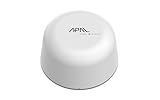
- SATELLITE CONNECTIVITY WHERE OTHERS FAIL: Eliminate dead zones in Agriculture, Forestry, and Mining. Unlike standard LoRaWAN or Cellular networks that require nearby gateways, the Hestia A1 connects directly to the 3GPP NTN Satellite network for deep mountains or open oceans where terrestrial signals cannot reach
- MODBUS PROTOCOL COMPATIBILITY: Built as Modbus Slave Device, Hestia can be connected to most Modbus IoT Host systems to enable satellite connectivity for industrial applications
- PLUG-AND-PLAY VIA RS485/MODBUS: Simple Python script integration with Python samples for Modbus/MQTT available on GitHub. Open custom code architecture provides flexibility for developers without black box limitations
- INCLUDES 3-MONTH SATELLITE DATA PLAN (30KB): Start your remote monitoring project immediately with a free 30KB / 3-Month satellite data plan via the CeresGate platform (Email registration required). Comes with Python sample code on GitHub for easy integration with Raspberry Pi, Linux, and Modbus devices
- TWO-WAY SATELLITE COMMUNICATION & CONTROL: Supports bidirectional data transmission allowing you to receive telemetry from remote sensors and send commands back to control equipment such as opening valves or resetting devices from the cloud without needing complex LoRaWAN infrastructure
For industrial products, security defaults must also be workable in the intended operating environment. Consider commissioning, local maintenance, constrained connectivity, and operational continuity when deciding how users authenticate, change configuration, and apply updates. Document configuration assumptions so an integrator or operator can understand what must be set up securely.
Make updates and vulnerability handling feasible
Effective vulnerability handling is required during the product’s support period. Design the update mechanism, release process, and customer communication model so that discovered issues can be assessed and addressed in practice. Establish who receives reports, who triages them, how severity and remediation decisions are made, who owns fixes, and how an update is delivered and communicated.
Set a support period that reflects expected use, user expectations, the product’s nature, applicable law, availability of the operating environment, and support for relevant components. This is a product-lifecycle decision: a support promise is credible only if the organization can monitor dependencies, investigate reports, develop and validate fixes, and distribute them for the period it commits to.
Track components and dependencies
Maintain component provenance and a software-component inventory across firmware, operating systems, libraries, and third-party modules. This visibility helps identify which products may be affected when a component vulnerability is disclosed, and supports impact analysis and remediation. Keep the inventory aligned with the released product versions rather than treating it as a one-time list detached from builds.
Free tools Windows power users keep installed
One-click scans. No signup required.
Rank #4

- 【Built-in 4G LTE Module】 With a standard SIM card slot that supports the 4G LTE network. It can move into 4G LTE wireless network if the Ethernet Internet fails, in order to ensure constant data transmission in the critical facilities. (Not support Verizon Network in the US)
- 【Industrial Hardware】 Qualcomm QCA9531 chipset provides stable performance, it is commonly used within the industry, which is perfect for industrial users to avoid breakdown. The Built-in hardware watchdog ensures the stability. It’s dedicated hardware that can detect and trigger a processor reset if necessary.
- 【Open Source & Secure】 OpenWrt pre-installed. Perfect for developers or IoT integration development. It supports 30+ VPN service providers, including OpenVPN & WireGuard.
- 【Compact Design】 Its aluminum alloy shell, optional wall-mounted design, and wide range of operating temperature are designed for easy installation, storage, and operation in tough industrial environments.
- 【Easy Configuration】 Supports AT command, manual/automatic dial number, and signal strength checking in our new admin panel for better management and configuration.
Keep evidence that supports conformity and maintenance
Evidence should show how the manufacturer reached and maintained its security decisions. Organize records so engineering, compliance, incident response, and procurement teams can find the version that applies to a particular product release.
- Product description, intended and reasonably foreseeable use, product boundaries, interfaces, dependencies, and deployment assumptions.
- Cybersecurity risk assessments, threat scenarios, risk-to-control traceability, test results, residual risks, and release decisions.
- Component provenance and software-component inventory for shipped versions.
- Secure configuration and update information, support-period rationale, and vulnerability-handling procedures.
- Vulnerability intake, triage, severity, remediation, customer communication, and evidence-retention records.
- Technical documentation, the EU declaration of conformity, and records required by the conformity-assessment procedure used.
The selected conformity route determines which records and steps apply. Keep the technical documentation and declaration consistent with the classified product and released configuration. If a third-party assessment is required, plan for its evidence and timing early enough that conformity is not left as a final-stage paperwork exercise.
Independent reader supportYour contribution helps us test, update, and keep practical guides available for everyone.Prepare for the reporting duties already in application
The CRA entered into force on 10 December 2024. As of 3 October 2026, Article 14’s reporting obligations are in their application period. Article 14 covers actively exploited vulnerabilities and severe incidents affecting product security. Manufacturers should have a documented workflow, responsible owners, escalation criteria, and decision records for determining when a reportable case may exist and how it will be handled.
Most CRA obligations apply from 11 December 2027. Chapter IV provisions concerning conformity-assessment bodies apply from 11 June 2026. These dates have different scopes: the Article 14 date does not mean every CRA obligation began in September 2026, and the general application date does not postpone Article 14 reporting. Check the regulation and current implementation material for the applicable duties and procedures rather than assuming a single start date covers everything.
Do these 3 things before closing this tab:
1Repair Windows errors before they cause bigger problems2Fix the driver behind crashes, sound loss and screen glitches3Clear out junk files and repair common Windows errorsBest Value
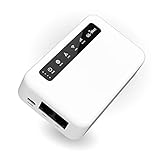
- 【SMART 4G TO WI-FI CONVERTER】Come with a standard nano-SIM card slot that can transfer 4G LTE signal to Wi-Fi networking. Up to 300Mbps (2.4GHz ONLY) Wi-Fi speeds. It can move into a 4G LTE wireless network if the Ethernet Internet fails, in order to ensure constant data transmission.
- 【OPEN SOURCE & PROGRAMMABLE】OpenWrt pre-installed, unlocked, extremely extendable in functions, perfect for DIY projects. 128MB RAM, 16MB NOR + 128MB NAND Flash. Dual Ethernet ports, USB 2.0 port, Antenna SMA mount holes reserved.
- 【SECURITY & PRIVACY】OpenVPN & WireGuard pre-installed, compatible with 30+ VPN service providers. With our brand-new Web UI, you can set up VPN servers and clients easily. IPv6, WPA3, and Cloudfare supported. Level up your online security.
- 【Easy Configuration with Web UI and GoodCloud】GoodCloud allows you manage and monitor devices anytime, anywhere. You can view the real-time statistics, set up a VPN server and client, manage the client connection list, and remote SSH to your IoT devices. The built-in 4G modem supports AT command, manual/automatic dial number, SMS checking, and signal strength checking in Web UI for better management and configuration.
- 【PACKAGE CONTENTS】GL-XE300-AF 4G LTE Portable IoT Gateway (2-year Warranty) X1, Ethernet cable X1, 5V/2A power adapter X1, User manual X1, Quectel EC25-AF 4G module pre-installed. Please refer to the online docs for first set up.
| Date | What applies |
|---|---|
| 10 December 2024 | The CRA entered into force. |
| 11 June 2026 | Chapter IV provisions concerning conformity-assessment bodies apply. |
| 11 September 2026 | Article 14 reporting duties for actively exploited vulnerabilities and severe incidents affecting product security apply. |
| 11 December 2027 | The principal application date for most CRA obligations. |
Because implementation material and supporting acts continue to develop, verify current Commission guidance, acts, and standards status before a compliance milestone or conformity decision.
Make the design and evidence usable in procurement
Member States must take the CRA’s essential cybersecurity requirements into account when procuring covered products, including the manufacturer’s ability to handle vulnerabilities effectively. Suppliers can make that evaluation easier by presenting a coherent evidence set rather than a general security claim.
For a buyer, useful information includes the product’s conformity status, support-period commitment, vulnerability-disclosure contact, update policy, component evidence, and technical documentation appropriate to the procurement. For a supplier, keeping these materials current reduces friction when buyers need to assess both initial security and the ability to maintain the product over time.
A practical design sequence
- Define the offering: document what is placed on the EU market, its core functionality, dependencies, intended use, and reasonably foreseeable use.
- Classify it: assess the CRA scope and check Annex III and Annex IV against the product’s core functionality; determine whether an integrated product is separately placed on the market.
- Select the conformity route: identify the procedure specified for the category and verify the current availability and relevance of standards, common specifications, certification schemes, or third-party assessment.
- Assess risk before locking design: map trust boundaries and interfaces, identify credible threats and safety impacts, and make the results design inputs across planning, development, production, delivery, and maintenance.
- Engineer and verify controls: reduce unnecessary exposure, set secure defaults, implement suitable access control, plan updates, and retain traceability from risks to tests and release decisions.
- Establish lifecycle operations: maintain component visibility, set a support period the organization can sustain, and assign vulnerability intake, triage, remediation, disclosure, reporting, and customer communication responsibilities.
- Assemble conformity and procurement evidence: prepare technical documentation, the EU declaration of conformity, procedure-specific records, and concise buyer-facing information about support and vulnerability handling.
- Check dates and current implementation: operate the Article 14 reporting workflow now, and re-check applicable acts and guidance as the 11 December 2027 principal application date approaches.
Conclusion
A CRA-ready industrial IoT design is not just a secure device or a conformity file. It is a classified product, designed from a documented risk assessment, supported by controls and component visibility, and backed by an organization able to handle vulnerabilities throughout the committed support period. Start with product boundary and classification, then make the assessment, conformity route, engineering controls, and lifecycle evidence part of one traceable program.
What’s actually slowing this PC down?
Pick the symptom - the matching free tool is one click away.
Quick Recap
Product prices and availability are accurate as of the date/time indicated and are subject to change. Any price and availability information displayed on Amazon at the time of purchase will apply.

