
PC Slower Than It Used to Be?
A free scan shows the junk files, broken settings and background clutter dragging Windows down - then fixes them in one click.Free scan · Windows 10 & 11Crashes, No Sound, or Screen Glitches?
Random freezes, missing sound and display glitches usually trace back to one bad driver. Find and replace yours safely.Free scan · under a minuteiTechGuides is reader-supported. When you buy through links on our site, we may earn an affiliate commission. As an Amazon Associate I earn from qualifying purchases. Learn more
Spoilers for Demon Slayer: Infinity Castle Part 1. The film follows the manga’s story across chapters 139–157, but it does not reproduce every scene in the same size or rhythm. Giyu Tomioka’s role and motivations remain substantially the same while his battle with Akaza becomes a larger, more mobile action sequence with added explanatory dialogue. Shinobu Kocho receives the more noticeable adaptation expansion: her confrontation with Doma is longer, her poison-based strategy is shown in greater detail, and the film directly depicts Kanae Kocho’s death to sharpen the emotional reason for Shinobu’s revenge.
The manga is the concise source-text version. The anime keeps the same outcomes and character foundations, then adds movement, staging, flashback detail and connective dialogue for a feature-length experience.

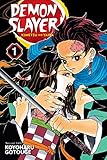


What Infinity Castle Part 1 adapts
The comparison source for the film identifies manga chapters 139–157 as its adaptation window. That span contains the opening battles inside the Infinity Castle, including Tanjiro Kamado and Giyu’s confrontation with Akaza and Shinobu’s encounter with Doma. The adaptation is therefore best understood as a faithful retelling with expansion, not as a replacement continuity.
Some additions alter emphasis rather than plot. A fight can occupy more rooms, include more exchanges and show techniques from several angles without changing who wins or why the characters are fighting. A line of recap dialogue can clarify Muzan’s plan for film viewers without changing Giyu’s beliefs. Shinobu’s added poison attempts and the fuller Kanae flashback make her grief easier to follow, but they build on traits already established in the manga.
#1 Best Overall
At a glance
| Question | Manga baseline | Infinity Castle Part 1 film |
|---|---|---|
| Adaptation range | Source material for the castle’s opening events | Chapters 139–157, according to Pop Journal’s 2026 comparison |
| Giyu versus Akaza | Focused narrative fight presented through manga panels | Expanded across more rooms and floors, with more technique clashes and larger attack range |
| Giyu’s exposition | Readers receive the surrounding story in the manga’s sequence | Giyu summarizes Muzan’s plan to destroy the Demon Slayer Corps for viewers who need a refresher |
| Shinobu versus Doma | Relatively compressed confrontation | Longer action sequence that shows more poison attempts and tactical progression |
| Insect Breathing | No established manga version of “Dance of the Horsefly: Enticing Slash” is identified in the comparison | The move is reported as anime-only or anime-expanded; it should be treated as an adaptation addition unless later official material says otherwise |
| Kanae’s death | Briefer treatment in the source narrative | More direct depiction of Doma killing Kanae during her attack, giving Shinobu’s anger more immediate context |
How Giyu changes from manga to anime
The character underneath the spectacle is the same
Giyu remains the Water Hashira, and the film preserves the conflict that defines him: he doubts whether he deserves the title while carrying forward the hopes of his friend Sabito. The official character material describes him as believing he was not worthy of being a Hashira, then remembering Sabito’s hopes and resolving to carry them through. Nothing in the expanded animation replaces that self-worth thread with a new motivation.
This distinction matters when a scene feels more dramatic than it did on the page. The film gives Giyu more visual space and more time in combat, but the extra spectacle is in service of the same decision-making: he fights beside Tanjiro because he accepts responsibility and because he refuses to let the sacrifices of others become meaningless.
The Akaza battle occupies more physical space
The film stages Giyu and Tanjiro’s battle with Akaza across additional rooms and floors of the Infinity Castle. In the manga, the reader supplies movement between panels and turns a sequence of attacks into a continuous mental image. Animation has to show that movement, so the film makes the castle’s architecture part of the fight. Characters change position, attacks travel over greater distances and the camera can pull back to show how much of the environment is being used.
Free tools Windows power users keep installed
One-click scans. No signup required.
There are also more technique clashes. Rather than presenting only the essential beats, the film lets attacks meet, redirect and escalate on screen. The result is a fight with a wider visual range: a strike can begin in a confined corridor, break into a larger chamber and continue through another level. This is an expansion of choreography and geography, not evidence that the manga’s events have been rewritten.
Why the fight feels longer even when the story is unchanged
A manga panel can imply speed with a single impact image, a speed line or a cut to the next position. The film must animate the approach, contact, reaction and recovery. Those transitions add seconds to every exchange. Sound, camera movement and effects also give individual techniques a beginning and an aftermath. Consequently, the anime’s version can feel like a substantially new set piece while retaining the same narrative function: Giyu and Tanjiro are pushed to their limits by Akaza, and Giyu’s resolve is tested alongside his combat skill.
Added recap dialogue clarifies Muzan’s objective
The film gives Giyu dialogue summarizing Muzan’s plan to destroy the Demon Slayer Corps. This is adaptation exposition aimed at viewers who may have watched earlier seasons long ago or entered the film without the manga’s page-by-page context. It does not change Giyu’s personal objective or reveal a different plan; it restates the larger crisis so the immediate battle has a clear strategic frame.
Rank #2
Readers who know the manga may experience this as a pause that the source did not need. For a theatrical audience, however, the line helps reconnect the castle fight to the conflict with Muzan. It is best classified as added recap, not a character rewrite.
The Tool Desk
Outbyte Driver Updater FREEScan for outdated or missing drivers - takes under a minuteDriver Scan →Outbyte PC Repair FREERepair Windows errors before they cause bigger problemsFix Now →Giyu’s emotional interiority is reinforced, not replaced
The manga presents Giyu’s guilt and uncertainty through his actions, memories and concise internal beats. The film has another tool: it can hold on his face, alter the timing of a response and place his hesitation beside the speed of the fight. Those choices make his self-doubt more legible without adding a new biography.
When Giyu appears more assertive in the film, that does not mean the adaptation has discarded his insecurity. The expanded battle shows him acting despite that insecurity. His confidence is situational and earned through cooperation with Tanjiro, not a sudden declaration that he has solved every question about his worth.
How Shinobu changes from manga to anime
The Doma confrontation is the larger rewrite in emphasis
Shinobu’s fight with Doma receives a more substantial expansion than Giyu’s. The manga’s confrontation is comparatively compressed; the film turns it into a longer sequence with visible stages. Shinobu attacks, tests her poison and adjusts to Doma’s responses before the battle reaches its fatal outcome. The additional beats let the audience watch her strategy develop instead of inferring most of it from a small number of panels.
This is why the answer to “Is Shinobu’s fight with Doma different in the movie?” is yes, in presentation and emphasis. The film does not establish a different reason for the confrontation or a different foundation for Shinobu’s abilities. It gives her plan more screen time and makes the cost of each attempt easier to read.
Quick wins for a faster PC:
Repair Windows errors before they cause bigger problemsFix Now →Scan for outdated or missing drivers - takes under a minuteDriver Scan →Her poison is shown as an active strategy
Shinobu is not simply a fast swordswoman who happens to use toxins. Official character material defines her as having exceptional medical knowledge and fighting with a special poison capable of defeating demons. The film uses the expanded choreography to demonstrate that expertise. Her initial attempts to poison Doma are shown directly, allowing viewers to see the method, the risk and the limits of her approach.
Rank #3
In the manga, readers can connect a brief action to the larger idea of chemical preparation and medical knowledge. In the film, the preparation-and-result relationship is staged in real time. Each attempt communicates that Shinobu is solving a problem under pressure, not repeating a single attack until it works.
“Dance of the Horsefly: Enticing Slash” needs a qualification
The comparison identifies “Dance of the Horsefly: Enticing Slash” as an anime-only or anime-expanded Insect Breathing technique. It should therefore be treated as an adaptation addition rather than confidently labeled a manga technique. Unless later official material establishes otherwise, the safest description is that the film introduces or expands the move for its own choreography.
This distinction is useful for collectors, episode guides and readers checking whether a named attack appears in the source. A technique can be fully canonical to the film’s adaptation while still not being part of the manga’s original panel sequence.
Kanae’s death is visualized more directly
The film supplies a fuller depiction of Kanae Kocho’s death. Rather than relying only on the manga’s briefer treatment, it shows Doma killing Kanae during her attack. That direct staging gives the audience a clearer cause-and-effect line: Kanae confronts Doma, Doma kills her, and Shinobu’s later anger is rooted in a loss that the film has just made concrete.
The added flashback does not invent Shinobu’s grief. It gives that grief a longer dramatic entrance. Viewers can see the person whose memory Shinobu carries and the enemy responsible for the wound. As a result, the Doma fight reads not only as a tactical encounter but also as the delayed continuation of Kanae’s unfinished struggle.
Shinobu’s core characterization remains intact
The adaptation keeps the traits that define Shinobu in the source: medical expertise, poison as a substitute for conventional demon-slaying strength, speed, composure and an anger she controls rather than displays constantly. The film’s additions deepen those traits. Showing more poison attempts makes her knowledge practical; showing more of Kanae’s death makes her anger legible.
Rank #4
Her expanded action should not be read as proof that she has become physically comparable to every opponent. The tension comes from the mismatch between Doma’s power and Shinobu’s need to make a specialized method work. The film gives that mismatch more stages and clearer visual consequences.
Do these 3 things before closing this tab:
1Repair Windows errors before they cause bigger problems2Fix the driver behind crashes, sound loss and screen glitches3Clear out junk files and repair common Windows errorsStory coverage, ordering and omissions
What is added
- More rooms, floors and transitions in the Giyu–Tanjiro versus Akaza battle.
- Additional technique clashes and larger attack movement for the Akaza set piece.
- Giyu’s recap of Muzan’s plan to destroy the Demon Slayer Corps.
- More of Shinobu’s initial attempts to poison Doma.
- A longer, more visibly staged Shinobu–Doma confrontation.
- The reported anime-only or anime-expanded “Dance of the Horsefly: Enticing Slash.”
- A fuller depiction of Doma killing Kanae during her attack.
What is not fundamentally changed
- Giyu is still the Water Hashira whose self-doubt is tied to Sabito’s hopes.
- Shinobu still relies on medical knowledge and demon-killing poison as central tools.
- The film’s additions do not replace the manga’s motivations with new ones.
- The adaptation keeps the same broad outcomes for the confrontations covered by this film.
The available comparison does not establish a scene-by-scene list of every cut, rearranged line or omitted panel. It does establish the direction of change: the film expands action and emotional context while preserving the story’s main line. Claims about a particular panel being removed or a precise scene order should be checked against the relevant manga chapters and the finished film rather than inferred from the broad adaptation span.
Independent reader supportYour contribution helps us test, update, and keep practical guides available for everyone.Why the two versions feel different
Panel compression versus animated duration
Manga storytelling compresses time. A page can place a character’s stance, attack and consequence in three adjacent panels, leaving the reader to control the pace. The film controls every interval. It can prolong a pause before a strike, accelerate through a combination and hold on a reaction. That control changes the emotional weight of identical story beats.
For Giyu, controlled duration makes endurance and teamwork visible across the Akaza battle. For Shinobu, it makes planning visible: the viewer sees her attempt, Doma’s response and her next decision rather than receiving the result as a rapid sequence of images.
Spatial scale as characterization
The Infinity Castle’s shifting architecture is not only a backdrop. By moving Giyu and Akaza through multiple spaces, the film presents Giyu as part of a battle that exceeds a single duel. The environment communicates danger, instability and the scale of the enemy’s domain.
Shinobu’s sequence uses space differently. Its important contrast is between Doma’s apparent control and Shinobu’s precise, targeted movement. The film’s larger choreography lets her speed and positioning carry information that the manga can imply in a single panel.
Exposition for a theatrical audience
A serialized manga can rely on the reader’s memory of previous chapters and can be reread immediately. A film often has one uninterrupted viewing, with viewers arriving from different points in the anime. Giyu’s added explanation of Muzan’s objective addresses that condition. It is a practical continuity aid, not a sign that the film has changed the political or military stakes.
Emotional payoff: Giyu’s resolve and Shinobu’s revenge
Giyu’s payoff is persistence
Giyu’s emotional movement is quiet. His key question is whether he is worthy of the position and the people whose hopes he inherited. The expanded battle gives that question a physical form: he continues fighting, coordinates with Tanjiro and answers Akaza’s pressure through action. The film’s spectacle amplifies the effort required to persist, but the meaning remains tied to Sabito’s memory and Giyu’s acceptance of responsibility.
Shinobu’s payoff is the convergence of grief and method
Shinobu’s emotional line is more overt. Kanae’s death explains the personal source of her anger, while the poison attempts show how that anger is converted into a method. She is not confronting Doma through rage alone; she is applying the knowledge that defines her in a situation where ordinary strength is insufficient.
Recommended Free Tools
The direct Kanae flashback changes the timing of the audience’s understanding. In the manga, the loss can feel like background information surrounding the confrontation. In the film, the visual memory sits closer to the fight, so Doma’s presence carries an immediate personal charge.
Which version should you experience first?
Choose the manga for the most concise account
Read chapters 139–157 if you want the original pacing, compact transitions and panel-based presentation. The manga leaves more movement and timing to your imagination and lets you revisit a page immediately when a technique or memory needs clarification.
Choose the film for expanded action and staging
Watch Infinity Castle Part 1 if your priority is animated choreography, environmental scale and a fuller emotional presentation of Shinobu’s confrontation with Doma. The film’s additions are most substantial in the physical staging of both fights and in the depiction of Kanae’s death.
Use both when adaptation details matter
Reading first makes it easier to identify what the film has expanded. Watching first lets the additions land without comparison. For a strict canon checklist, record the manga’s named techniques separately from adaptation additions such as the reported “Dance of the Horsefly: Enticing Slash,” and label any technique whose status has not been confirmed by later official material.
Bottom line for Giyu and Shinobu
Infinity Castle Part 1 is broadly faithful to the manga’s story across chapters 139–157, but it is not a panel-for-panel reproduction. Giyu’s story is substantively unchanged: the film enlarges his Akaza battle, adds movement and technique clashes, and gives him recap dialogue while preserving his struggle with worthiness and his commitment to Sabito’s hopes. Shinobu receives the more dramatic adaptation treatment: her Doma fight is longer, her poison strategy is more visible, a possibly anime-original Insect Breathing move is added or expanded, and Kanae’s death is shown with greater directness. The manga remains the tighter source narrative; the film prioritizes spectacle, spatial motion and emotional staging.
Quick Recap
Product prices and availability are accurate as of the date/time indicated and are subject to change. Any price and availability information displayed on Amazon at the time of purchase will apply.

