
Recommended Free Tools
DeepSeek and Huawei announced open-source programming tools for Huawei Ascend accelerators on September 30, 2026, according to an October 1 report citing Reuters. The reported release brings together a compute library, a distributed communication library, and Ascend support for the TileLang kernel language. It expands the software available to Ascend developers; it does not establish feature parity with Nvidia CUDA or make the tools a drop-in CUDA replacement.
What the release includes
The October 1, 2026, report describes three parts of the release. The project documentation provides the clearest detail for DeepEP-Ascend and TileLang; the available description of DeepGEMM-Ascend comes from that secondary report.
| Tool | Role | What is documented |
|---|---|---|
| DeepGEMM-Ascend | Compute | Tom’s Hardware reports that it handles matrix multiplication and other calculations used in DeepSeek models, supports BF16, FP8, and FP4, and preserves programming interfaces from DeepSeek’s existing DeepGEMM library. These details are reported by Tom’s Hardware; a primary project page was not available in the sources cited here. |
| DeepEP-Ascend | Distributed communication | The project README describes communication for machine-learning training and inference on Ascend NPUs, with expert-parallel all-to-all dispatch and combine for mixture-of-experts (MoE) models as its documented core. |
| TileLang on Ascend | Kernel programming | The TileLang project announced an Ascend 950 backend on September 30, 2026. TileLang is a Pythonic domain-specific language for writing accelerator kernels, built on TileLang and TVM compiler infrastructure. |
What DeepEP-Ascend does—and how mature its features are
MoE models route different tokens to different expert networks. Those experts may run on separate devices, so the system needs to dispatch inputs to the right devices and combine the results. DeepEP-Ascend documents expert-parallel all-to-all dispatch and combine for that purpose.
The repository also lists pipeline communication, bucket collectives for context- and data-parallel work, and Engram remote-memory access. It labels several of these paths experimental or in progress, so their presence in the project is not evidence that they are as mature as its documented core. See the DeepEP-Ascend repository for its feature descriptions and current status.
Do these 3 things before closing this tab:
1Scan for outdated or missing drivers - takes under a minute2Clear out junk files and repair common Windows errors3Fix the driver behind crashes, sound loss and screen glitches#1 Best Overall

- ✅Powered by 26 Tera-Operations Per Second (TOPS) Hailo-8 AI Processor. 2.5W typical power consumption
- ✅Scalable, enabling simultaneous processing of multi-streams & multi-models
- ✅Enabling real-time, low latency and high-efficiency AI inferencing on the edge devices
- ✅Supports TensorFlow, TensorFlow Lite, ONNX, Keras, Pytorch frameworks
- ✅Supports Linux and Windows. Supports the temperature range of -40°C to 85°C
What TileLang support means
TileLang gives developers a higher-level way to write accelerator kernels, rather than requiring every kernel to be authored directly in low-level device code. Its Ascend work is described in two related but distinct places: the main TileLang project announced native code generation, scheduling, synchronization, and SIMD/SIMT vector programming for an Ascend 950 backend; the separate TileLang-Ascend adapter provides examples for GEMM, vector operations, and attention.
The adapter page says it has specifically tested A2 and A3 devices. That statement should not be read as validation of the main project’s separate Ascend 950 backend. Consult the TileLang project and the TileLang-Ascend adapter for their respective scope.
Rank #2
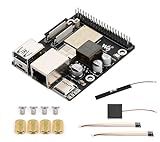
- High-Performance Dual-Core with Ample Memory--- Equipped with a 360MHz dual-core RISC-V processor, 32MB of onboard PSRAM, and 32MB of Flash memory, providing powerful processing capabilities and ample runtime for complex multimedia applications and edge computing.
- Powerful Multimedia Processing Center--- Integrated with a dedicated image processor (ISP), H.264 video encoder, and JPEG codec, perfectly supporting camera input and video processing, making it an ideal choice for developing smart displays, video surveillance, and other projects.
- Hardware-Level Security Protection--- Built-in digital signature, encryption accelerator, and key management unit, providing a one-stop hardware-level security solution from secure boot and data encryption to access control management, ensuring the security of your products and data.
- Full Connectivity Coverage: Wi-Fi 6, Bluetooth, PoE Power Supply--- Onboard with an ESP32-C6 chip, supporting the latest Wi-Fi 6 and Bluetooth 5.0; it also integrates an Ethernet port with PoE functionality, providing high-speed, flexible, and stable network connectivity, and can be powered directly via Ethernet cable, simplifying deployment.
- Rich interfaces and strong expandability--- It provides a MIPI camera/display interface, high-speed USB, SD card slot, microphone/speaker interface and a large number of programmable GPIOs, which greatly facilitates the expansion of external devices and meets the needs of various human-computer interaction and Internet of Things applications. Supports AI Speech Interaction: Allows access to online large model platforms such as ChatGPT, DeepSeek, Doubao, etc.
What hardware and software DeepEP documents
DeepEP-Ascend’s stated requirements are specific, not a blanket compatibility promise for all Huawei accelerators. Its README lists Linux on an Ascend host, Ascend 950 with UBMEM connectivity for multi-rank communication, CANN and Ascend C, Bisheng, HCCL/HCOMM, and a matching PyTorch/torch_npu stack.
The README’s documented validated stack is Ascend 950DT, CANN 9.2.0, Python 3.12, PyTorch 2.13.0+cpu, and torch_npu 2.13.0rc1. The authors say their measurements do not establish support for other Ascend generations or CANN versions. Check the DeepEP-Ascend README before planning a deployment, since requirements and compatibility can change.
Rank #3

- Powered by 26 Tera-Operations Per Second (TOPS) Hailo-8 AI Processor.
- 2.5W typical power consumption
- Enabling real-time low latency and high-efficiency AI inferencing on the edge devices
- Supports TensorFlow TensorFlow Lite, ONNX, Keras, Pytorch frameworks
- Supports Linux and Windows.
How to interpret the performance information
The DeepEP README says its performance measurements were made on a manually configured proof-of-concept HDK supplied to the project. It also said a public Atlas 850E Q3 commercial HDK release was planned for around October 15, 2026, subject to Huawei’s schedule. At the October 3, 2026 research cut-off, that date was still in the future, and the README explicitly said the measurements were not collected on that planned commercial release. The measurements therefore should not be generalized to public commercial hardware or other configurations.
The cited source pages provide no release-specific published numeric benchmark or independently verified comparison with Nvidia hardware. Huawei’s separate 2025 article claims “over 50%” decode-throughput improvement for an attention/FFN disaggregation design; that figure concerns that design, not the 2026 DeepSeek tools, and is not a benchmark for DeepEP-Ascend, DeepGEMM-Ascend, or TileLang. The Huawei 2025 announcement is background on its broader Ascend software strategy, not proof that every item announced then shipped on schedule.
Rank #4

- High-Performance AI Processing: The MX3 is designed to handle the most demanding AI computer vision workloads, delivering exceptional performance and efficiency.
- Flexible Integration: The MX3 can be easily integrated into your existing systems via its M.2 M-key form factor and support for Linux operating systems.
- Energy Efficient: The MX3 is designed to provide high performance while minimizing power consumption.
- Comprehensive Software Development Kit (SDK): The MX3 is supported by a comprehensive SDK that simplifies development and deployment.
- Hardware compatability: The MX3 is compatible with the PCI-SIG M.2 M-key 2280 Specification. It can be used with the Raspberry Pi 5 with a M-key 2280 HAT.
Does this replace Nvidia CUDA?
No such conclusion follows from the release. The tools add open-source compute, communication, and kernel-programming options for Ascend, but the available evidence does not demonstrate broad CUDA feature parity, drop-in compatibility, or a measured reduction in Nvidia usage. Treat “reduce reliance on Nvidia’s ecosystem” as reported context about the initiative’s direction, not a quantified outcome.
For a practical CUDA-versus-Ascend evaluation, compare the specific hardware generation, required kernels and operations, compiler and programming model, communication features, API maturity, supported software versions, and whether your team can obtain the required hardware and software. A shared programming concept or interface does not by itself make code portable.
Quick Recap
Product prices and availability are accurate as of the date/time indicated and are subject to change. Any price and availability information displayed on Amazon at the time of purchase will apply.

