
Outdated Drivers Are Slowing You Down
One free scan finds every outdated or missing driver and matches the right update for your exact hardware.Free scan · exact hardware matchWindows Errors? Fix Them Before They Spread
Repair common Windows errors and clear accumulated junk for a smoother, more stable PC - no reinstall needed.Free scan · no reinstallBefore choosing construction accounts payable (AP) automation, prove that it can code invoice lines to your job-cost structure, match bills to commitments, route approvals, enforce applicable retainage and payment-document rules, and synchronize reliably with your accounting or ERP system. Run those workflows with your own invoices and exceptions: product descriptions are claims to validate, not proof that a system will handle your processes.
Start with the construction workflows your system must handle
Construction AP is not just invoice capture and payment. A bill can affect a project budget, a subcontract commitment, a cost code, retainage, and a field approval. Build your shortlist around the full path from receipt to accounting record and payment authorization.


- Can AP code each invoice line to the right job or project, phase, cost code, and general-ledger account?
- Can the system compare a bill with a purchase order, subcontract, or other commitment and flag discrepancies?
- Can approvals follow your actual project roles and exception rules, with a retrievable history?
- Can it manage retainage and required payment documents where your contracts call for them?
- Can it exchange the necessary records, attachments, statuses, and corrections with your current accounting or ERP setup?
- Can AP staff and field approvers use it without creating a new bottleneck?
Compare systems against these workflows rather than broad claims about automation. Vergo and Ramp describe construction-oriented coding and approval features, while Ruh AI discusses matching, retainage, and payment controls; all are vendor-published descriptions that require validation in a demonstration. Vergo construction AP guide, Ramp construction AP page, Ruh AI construction AP workflow guide.
Test the workflow with representative invoices
Ask vendors to demonstrate a small, realistic test set rather than a polished sample alone. Include a clean digital invoice, a scanned paper invoice, a multi-line bill, and a document with missing or ambiguous project information. Add exceptions that reflect your operations: a price variance, duplicate invoice, partial delivery or work verification, and a change order.
For each test, observe what the system extracts, what it cannot determine, how it flags uncertainty, and how a person corrects the record. Check that the original document remains accessible. Oracle’s general AP process guide describes scanning paper, importing faxed or emailed invoices, extracting invoice and PO fields, validating data, and retaining searchable documents; it is general AP guidance, not construction-specific evidence. Oracle AP automation guide.
Do not treat OCR or AI language as an accuracy guarantee. This guide’s vendor materials do not establish an independent accuracy benchmark, so your own representative documents are the practical test.
Check line-level job-cost coding
Have the vendor show how an invoice line is assigned to a project or job, phase, cost code, and relevant ledger account. Confirm that the system can preserve the mapping between construction cost dimensions and your accounting structure rather than flattening the bill into a single category.
- Can a purchase order or subcontract prefill coding, and can AP review each allocation?
- Can coding history suggest a value, and is the suggestion visible as a suggestion rather than an unquestioned posting?
- What happens with a new vendor, a new project, or a line that does not fit an existing code?
- Can an authorized person correct a line, and can the system retain the change history?
Vergo describes coding based on accounting structure and history; Ramp describes project, phase, cost-code, and GL values defined in the ERP. Treat those descriptions as vendor claims and verify them against your chart of accounts and live workflow. Vergo construction AP guide, Ramp construction AP page.
Rank #2

- EFFORTLESSLY MANAGE YOUR FINANCES: Dive into the world of efficient financial management with this accounting ledger book. It's your gateway to tracking payments, deposits, and balances, fostering excellent bookkeeping habits to reach your financial aspirations.
- UNLEASH THE POWER OF UNDATED TRACKING: With an undated accounting book ledger, you're equipped to chronicle every expenditure, regardless of when it occurs. Ample space awaits to meticulously document each transaction, detailing numbers, dates, descriptions, accounts, payment or deposit amounts, and overall balances.
- EMPOWER FINANCIAL SUCCESS: Harness the potential of this accounting log book to analyze your financial endeavors effortlessly. Prepare precise financial statements in no time, allowing you to scrutinize spending and income regularly. Identify and eliminate unnecessary expenses, paving the way for enhanced financial performance and success.
- EXEMPLARY QUALITY: Our accounting ledger book boasts premium quality, crafted from 100gsm paper that minimizes ink leakage, fraying, and shading concerns. The robust and flexible cover shields the pages, while the metal lay-flat twin-wire binding ensures durability and sustained usage.
- VERSATILE UTILITY: Embrace the flexibility of our undated accounting book, enabling you to commence your financial journey anytime, anywhere. Its compact size of 8.6x5.9 inches ensures portability, fitting snugly into any bag for easy access whenever you need it most.
Verify matching against commitments and actual work
A bill can add up correctly and still be inconsistent with the agreed price, scope, delivery, or work completed. Test whether the system connects an invoice to the relevant PO, subcontract, or other commitment and makes variances visible before payment.
In the demonstration, use a standard match, then change the amount or scope, include a partial delivery or work verification, and add a change order. Ask what becomes an exception, who resolves it, and whether the match can be traced to its source documents. Ruh AI describes matching against commitments and verified work, while Oracle’s general AP guide explains invoice-to-PO validation and line pairing; neither description substitutes for testing your own documents. Ruh AI construction AP workflow guide, Oracle AP automation guide.
Make approvals match responsibility and risk
Construction approvals often need to distinguish the person who verifies work from the person who controls payment. Check whether routing can reflect project, role, amount, vendor, or cost dimension, and whether a bill can move through multiple approval levels when required.
- Can an approver reject a bill with a note, and can AP see the resulting action?
- Are delegation and reminders available for absent or delayed approvers?
- Can field staff review bills on the devices and in the context they need?
- Does the event history show approval decisions and coding changes with enough detail to investigate a transaction?
Have the vendor show one routine invoice and one exception from intake through final approval. Vergo describes configurable multi-tier routing and a timestamped audit trail, and Ramp describes routing job-coded bills to assigned project managers. Validate the specific rules and history your control process requires. Vergo construction AP guide, Ramp construction AP page.
Rank #3
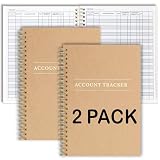
- PERFECT FOR RECORD KEEPING: The 2 Pack account ledger books are versatile and can be used to track finances, budgets, expenses, and other business or personal records. They are perfect for individuals, entrepreneurs, or small business owners who need a reliable and efficient way to keep track of their finances. With 100 pages, customers can record transactions over an extended period, making it a handy tool for financial planning and organization.
- COMPACT AND LIGHTWEIGHT: The account ledger books are compact and lightweight with each book weighing 7 ounces and measuring 8.5 x 6.25 inch, making them easy to carry around. You can take them with them in a bag or briefcase, making them ideal for on-the-go use. This feature ensures that you can access your records at any time, whether you are at work or on the move.
- DURABLE KRAFT COVER: The kraft cover is a distinguishing feature of these account ledger books. It provides a durable layer of protection that can withstand daily wear and tear, making it suitable for long-term use. Additionally, the classic, rustic appearance of the cover gives it a timeless and professional look that can fit in any setting.
- PREMIUM QUALITY: Elegant style with the words ''Account Tracker'' embossed in fancy Gold Foils. The gold coil ring binding is a practical design feature that enhances the functionality of the account ledger books. It allows pages to turn smoothly and easily, making it effortless to flip through the book while keeping pages in place. The ring binding also ensures that pages won't fall out, preventing the loss of vital information.
Test retainage and payment-document controls
If your contracts require retainage, lien waivers, insurance documents, or other prerequisites to payment, ask the vendor to configure a relevant example. Confirm how terms and withheld amounts are recorded or tracked, how missing documents are identified, and whether payment is actually blocked when a configured requirement is unmet.
Ramp says its product extracts retainage from invoices and checks documents before payment; Ruh AI describes retainage and waiver controls. These are vendor claims, not independent tests or legal advice. Requirements and forms can depend on contract and jurisdiction, so have qualified counsel validate the rules you intend to configure. Ramp construction AP page, Ruh AI construction AP workflow guide.
Prove the accounting or ERP integration
Before comparing connectors, decide which system owns each record. Map the intended source of truth for vendors, POs, project and job records, commitments, bills, coding, attachments, and payment status. Then ask for a live demonstration of data transfer, corrections, error handling, duplicate prevention, and reconciliation.
Verify the exact connector for your accounting product, edition, and configuration—not just the product family named in a vendor’s integration list. Check that changes made on either side do not silently overwrite the information your team relies on. Vergo lists construction accounting and ERP integrations, but those statements should be confirmed directly with the vendor and customer references. Vergo construction AP guide.
Rank #4
Integration depth is also an architecture decision. IFS’s construction ERP guide frames integrated ERP capability versus best-of-breed software as a choice for buyers, and describes ERP financial control in terms of project budgets, commitments, actuals, forecasts, and cash. Consider what is already in place, whether it covers your construction workflows, and the effort required to connect another system. The guide is ERP selection context, not an independent AP product comparison. IFS construction ERP guide.
Keep people accountable for consequential decisions
Automation can extract, suggest, route, and compare information; your process still needs clear human responsibility for decisions with financial or contractual consequences. Ruh AI’s construction AP guide puts it this way: “The human stays on the decisions that carry risk: confirming the coding, releasing retainage, and signing off before money moves.” This is the guide publisher’s statement, not a quote attributed to a named individual. Ruh AI construction AP workflow guide.
In a demo, identify exactly where review and authorization occur for coding, retainage release, and payment. Avoid a workflow in which a successful extraction or match is mistaken for approval to pay.
Independent reader supportYour contribution helps us test, update, and keep practical guides available for everyone.Compare ERP-native and best-of-breed options on the same criteria
If you are choosing between capabilities inside an existing ERP and a separate AP product, score both against the same construction scenarios. A separate system may address a workflow your current setup does not cover, but it also adds integration and implementation work to evaluate. An ERP-centered approach may keep records within the existing environment, but confirm that its AP processes cover the construction-specific requirements you tested.
The Tool Desk
Outbyte PC Repair FREEClear out junk files and repair common Windows errorsFree Scan →Outbyte Driver Updater FREEScan for outdated or missing drivers - takes under a minuteDriver Scan →Best Value
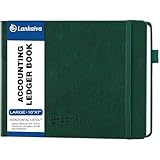
- 【For Small Business Owners Who Need Simple, Reliable Bookkeeping】 Running a business is hard enough without complicated accounting software. This B5 ledger book gives you a straightforward, pen-and-paper system to track income, expenses, and profits. Perfect for freelancers, contractors, side hustlers, and brick-and-mortar shop owners who want to stay organized without the learning curve or monthly subscription fees
| Evaluation axis | What to verify |
|---|---|
| Construction coding | Line-level job, phase, cost code, and ledger mapping |
| Commitment matching | PO, subcontract, or other commitment matching, plus exception handling |
| Approvals and audit | Role-based routing, exception paths, and retrievable history |
| Retainage and documents | Contract-relevant tracking, missing-document checks, and payment blocking |
| Integration | Record ownership, sync behavior, attachments, corrections, and reconciliation |
| Usability | Practical review for AP staff and field approvers |
| Implementation | Data, workflow, and integration responsibilities your team must take on |
IFS identifies integrated versus best-of-breed architecture as an evaluation decision; the available vendor materials do not establish an independent ranking of named AP products. IFS construction ERP guide.
Plan a pilot before selecting a system
Use a bounded pilot to test whether the demonstrated workflow holds up with your invoices, projects, and exceptions. Agree on the scope and ownership before the pilot starts.
- Choose representative work. Select invoice types and projects that include ordinary bills and meaningful exceptions.
- Assign workflow ownership. Define who owns coding, approval authority, exception resolution, and payment authorization.
- Set integration responsibilities. Identify who configures, tests, and supports each accounting or ERP connection.
- Decide how to measure the pilot. Establish your own baseline for cycle time and correction rates, then compare performance using consistent definitions.
- Review adoption and failure cases. Include AP staff and field approvers, and record where data, routing, or integration requires manual recovery.
No independent construction AP implementation-cost benchmark is established in the cited materials. Request a scoped implementation plan and clarify responsibilities with each vendor rather than relying on an unsupported market-wide cost estimate.
Quick Recap
Product prices and availability are accurate as of the date/time indicated and are subject to change. Any price and availability information displayed on Amazon at the time of purchase will apply.

