
The Tool Desk
Outbyte PC Repair FREERepair Windows errors before they cause bigger problemsFix Now →Outbyte Driver Updater FREEScan for outdated or missing drivers - takes under a minuteDriver Scan →Canada is building a domestic launch industry, but the named Canadian projects and announced spaceport plans should not be mistaken for routine, proven orbital launch services. For a satellite operator choosing a provider now, U.S. options span a wider range of vehicle sizes and development stages, while European challengers are working toward explicit demonstration milestones. Compare each specific vehicle and mission—not just the provider’s country—on flight record, orbit and payload fit, licensing, schedule, integration responsibilities, and contract terms.
What is available from Canada?
Canada has several launch-development projects and plans for launch infrastructure, but government announcements describe work toward prototypes, testing, and site capability—not a record of completed orbital missions by those projects. Treat a Canadian provider as a prospective option until it confirms the offered vehicle’s current flight history, permissions, site readiness, and manifest in writing.
| Canadian project or infrastructure | What has been announced | What that does—and does not—establish |
|---|---|---|
| NordSpace — Tundra Canadian Responsive Scalable Launch | The Department of National Defence named it among projects moving from concept toward prototype and testing in a March 2026 announcement. | A development project; the announcement does not establish routine orbital service or a successful orbital flight. |
| Canada Rocket Company — Canadian Sovereign Launch Capability Development (R1) | Named in the same March 2026 announcement as moving toward prototype and testing. | A development project, not evidence of completed orbital launches. |
| Reaction Dynamics — Aurora-8 Responsive Launch Vehicle | Also named in the March 2026 announcement as moving toward prototype and testing. | A development project, not evidence of completed orbital launches. |
| Maritime Launch Services — Nova Scotia launch site | The federal announcement describes a 10-year lease requiring a dedicated pad and associated services at initial operational capability by the end of 2026. | That is an infrastructure target, not a guarantee of a successful orbital launch or routine service by that date. |
| Isar Aerospace’s Spectrum at the Maritime Launch site | A July 2026 Space.com report said Isar had agreed to lease a pad, with Canadian launches targeted from 2028. | Isar is a German company: a proposed Canadian launch location does not make Spectrum a Canadian vehicle. The report said Spectrum’s March 2025 test flight failed; confirm any later flight history and current plans before relying on that status. |
The Government of Canada announced $200 million for core infrastructure for a Canadian-owned spaceport. It also announced a $105 million Launch the North innovation challenge: $25 million in fiscal year 2025–26 and $40 million in each of fiscal years 2026–27 and 2027–28. These are public development and infrastructure commitments, not customer launch prices or proof that a particular vehicle is ready to fly.
Can a company launch from Canada now?
Launching from Canada requires government permission. Transport Canada’s interim process says the Minister of Transport may permit a launch after interdepartmental review and consultation with the relevant province or territory. The assessment considers public interest and aviation safety as well as environmental, security, and traffic factors. Transport Canada describes the application process as lengthy and says it begins with a pre-application consultation.
Do these 3 things before closing this tab:
1Clear out junk files and repair common Windows errors2Scan for outdated or missing drivers - takes under a minute3Repair Windows errors before they cause bigger problems#1 Best Overall

- BEGINNER MODEL-ROCKET LAUNCH SET: The Tandem-X rocket-model launch set offers adults and kids ages 10+ hours of fun during the holidays as they complete and launch our Amazon and Crossfire ISX rocket models. This set includes the easy-to-assemble Amazon model parts, the Crossfire ISX model parts, parachutes, and the launch pad system. It requires rocket engines, Starters, Recovery Wadding, and 4 high-quality 1.5-volt AA alkaline batteries for launch use (sold separately).
- 2 SOARING ALTITUDE HEIGHTS: Our Tandem X set offers a high-performing power duo with our giant 30-inch Amazon model (600-foot projected altitude with a C6-5 rocket engine) and our streamlined 15.6-inch Crossfire ISX model (1,150-foot projected altitude with a C6-7 rocket engine). Other compatible Estes model-rocket engines for Amazon model: B4-2, B4-4, B6-2, B6-4, C5-3, and C6-3. Other compatible engines for Crossfire ISX: A8-3, B4-4, B6-4, and C6-5. All engines sold separately.
- READY TO ASSEMBLE: Our beginner model-rocket launch set comes with 2 build options. The precolored Amazon model features plastic fins and self-stick graphics and can be built in an hour. The Crossfire ISX model comes with laser-cut wood fins, self-stick decals, and aerodynamic parts. Pair the rockets with the included Porta Pad II Launch Pad and Electron Beam Launch Controller for a hands-on educational activity or a unique Christmas gift for a budding scientist or a space aficionado.
- SAFETY FIRST, FUN ALWAYS: Our rockets and rocket launch accessories are designed to be used with the NAR (National Association of Rocketry) model-rocket safety code. Always ensure you have an appropriate launch site, stand back at least 15 ft., insert the safety key, issue a countdown, and then you can let your rocket fly!
- WE IGNITE IMAGINATIONS: Since 1958, Estes has created educational rocket kits and displays designed for an unforgettable aerospace experience. As a family-owned company, we have grown to offer exciting STEM products that engage aspiring rocketeers and the future minds of aerospace.
Transport Canada defines a commercial space launch as a private company sending cargo, such as a satellite, into space on a privately owned rocket. Canadian launch sites are privately owned and operated. The department says it does not license spaceports; instead, the launch company must show in its permission application that its chosen site meets the requirements.
A federal announcement on April 21, 2026 introduced the Canadian Space Launch Act as a proposed framework for regulating launches and re-entries from Canadian territory. The announcement describes intended policy, not confirmation that the full statutory framework has taken effect. Confirm the current law, permissions, and site approvals for the specific mission.
Rank #2

- BEGINNER MODEL ROCKET LAUNCH SET: The Estes Alpha III launch set lets kids ages 10+ and hobbyists easily build and launch this iconic model rocket. The model rocket kit includes rocket parts, engine mount, decals, a parachute, a launch pad system, and instructions. For blastoff, you’ll need Estes rocket engines, Starters, Recovery Wadding, and 4 high-quality 1.5-volt AA alkaline batteries (not included).
- SOARS UP TO 1,150 FT.: Our Alpha III model rocket is designed for first-time STEM kit builders and climbs up to a projected altitude of 1,150 ft. (351 m). It’s compatible with 1/2A6-2, A8-3, A8-5, B4-4, B6-4, B6-6, C6-5, or C6-7 Estes rocket engines (sold separately).
- READY TO ASSEMBLE: Rocket building sparks creativity and a love for science and outer space! This beginner Alpha III model kit is easily put together with 1 hour of preparation and includes decals. It comes with a Porta-Pad II Launch Pad and Electron Beam Launch Controller for an unforgettable blastoff for first-time rocketeers.
- SAFETY FIRST, FUN ALWAYS: Our rockets are designed to be used with the NAR (National Association of Rocketry) model-rocket safety code. Always ensure you have an appropriate launch site, stand back at least 15 ft., insert the safety key, issue a countdown, and then you can let your rocket fly!
- ESTES EDUCATION: Since 1958, Estes has created educational rocket kits designed for an unforgettable launch experience. As a family-owned, US-based company, we offer exciting and engaging STEM products for all interests, skills, and power levels.
How do U.S. alternatives compare?
The U.S. choice is not a single class of service. NASA’s Launch Services Program reference, whose provider information is a snapshot as of January 2026, lists vehicles that differ substantially in capacity, architecture, and maturity. NASA describes Pegasus XL as able to deploy small satellites up to 453.59 kg into low Earth orbit and Falcon Heavy as capable of lifting nearly 64 metric tons to orbit. Those are vehicle capability descriptions, not a promise that a particular orbit, payload, launch date, or price is available to a given customer.
NASA’s reference also includes New Glenn, Starship, and Terran R. Their inclusion in a launch-services reference should not be read as proof that each is interchangeable, currently available for every mission, or at the same stage of operational maturity. Ask the provider to confirm its vehicle’s actual payload envelope, target orbit options, current manifest, and mission-specific availability.
Crashes, No Sound, or Screen Glitches?
Random freezes, missing sound and display glitches usually trace back to one bad driver. Find and replace yours safely.Free scan · under a minuteWindows Errors? Fix Them Before They Spread
Repair common Windows errors and clear accumulated junk for a smoother, more stable PC - no reinstall needed.Free scan · no reinstallRank #3

- INTERMEDIATE MODEL-ROCKET-BUILDING KIT: This Estes model rocket kit bulk pack offers kids ages 10+ the chance to build and blast our high-flying 1754 Wizard model rocket during holidays and special occasions. Each intermediate building kit includes the model parts, an engine mount, design decals, a recovery parachute, and instructions. Each requires rocket engines, a launch pad system, Starters, Recovery Wadding, and 4 high-quality 1.5-volt AA alkaline batteries for launch (sold separately).
- SOAR UP TO 1,600 FT.: Our spellbinding 1754 Wizard rocket model was made for wind-drift studies or flight competitions. It has a projected altitude of 1,600 ft. (488 m) on a C6-7 Estes model-rocket engine (sold separately) and is also compatible with 1/2A6-2, A8-3, A8-5, B4-4, B6-4, B6-6, or C6-5 rocket engines.
- READY TO ASSEMBLE: Rocket-building kits are creative, educational gift ideas for Christmas or special-occasion surprises! Our intermediate-level rocket-building bulk pack comes with ready-to-build rockets that each require approximately 1 hour of assembly time. Add the included decals and pair the rockets with the right engines, Porta-Pad II Launch Pad, and Electron Beam Launch Controller (sold separately) for a memorable blastoff.
- SAFETY FIRST, FUN ALWAYS: Our rockets are designed to be used with the NAR (National Association of Rocketry) model-rocket safety code. Always ensure you have an appropriate launch site, stand back at least 15 ft., insert the safety key, issue a countdown, and then you can let your rocket fly!
- ESTES EDUCATION: Estes Education provides educators with the tools for success through our interdisciplinary STEM products, accessible lessons, and online resources. Our mission is to cultivate the skills and confidence necessary to easily implement science and rocketry in classrooms, youth programs, and beyond.
What do European alternatives offer?
The European Space Agency’s European Launcher Challenge supports commercial challengers developing small and medium launchers for payloads of a few hundred kilograms to low Earth or polar orbits. ESA’s 2026 program page lists Isar Aerospace, MaiaSpace, PLD Space, and Rocket Factory Augsburg. It says selected providers must demonstrate a successful orbital launch no later than 2027 and a capacity upgrade no later than 2028. These are program milestones, not evidence that all participants already offer mature, routinely available launches.
ESA says it has earmarked over €900 million for the challenge. At least 40% private co-funding is required for the capacity-upgrade demonstration, and ESA may contribute to operational launches through 2030 at the latest. Those figures describe program support and conditions, not what a satellite customer pays. ESA also reports that Orbital Express Launch entered administration and withdrew from the challenge in February 2026.
Rank #4
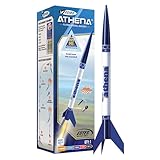
- BEGINNER MODEL ROCKET SET: The Estes Athena model rocket gives kids ages 10+ and beginners an easy way to experience real rocket launches with no building required! This ready-to-fly model rocket kit includes a fully prepared rocket with a parachute. This rocket requires Estes rocket engines, a launch pad system, Starters, Recovery Wadding, and 4 high-quality 1.5-volt AA alkaline batteries (sold separately) for launch use.
- SOARS UP TO 1,125 FT.: Our high-flying Athena rocket features a bright 12-inch parachute for safe recovery and soars up to a projected altitude of 1,125 ft. (343 m) with a C6-7 engine (sold separately). It is also compatible with the A8-3, B4-4, B6-4, and C6-5 rocket engines.
- READY TO FLY: Rocket-building kits are creative, educational gift ideas for Christmas or special-occasion surprises! This beginner-friendly Athena rocket comes fully assembled and just takes 15 minutes of preparation time. This model pairs with the Porta Pad II Launch Pad and Electron Beam Launch Controller (sold separately) for blastoff.SAFETY FIRST, FUN ALWAYS: Our rockets are designed to be used with the NAR (National Association of Rocketry) model-rocket safety code. Always ensure you have an appropriate launch site, stand back at least 15 ft., insert the safety key, issue a countdown, and then you can let your rocket fly!
- SAFETY FIRST, FUN ALWAYS: Our rockets are designed to be used with the NAR (National Association of Rocketry) model-rocket safety code. Always ensure you have an appropriate launch site, stand back at least 15 ft., insert the safety key, issue a countdown, and then you can let your rocket fly!
- ESTES EDUCATION: Since 1958, Estes has created educational rocket kits designed for an unforgettable launch experience. As a family-owned, US-based company, we offer exciting and engaging STEM products for all interests, skills, and power levels.
How to compare providers for a satellite mission
Use the mission requirements to narrow the field before comparing countries or headline vehicle capacities. A rocket’s maximum lift figure alone does not establish that it can deploy your payload into the required orbit, accommodate its dimensions, or meet your schedule.
| Decision area | What to confirm in a provider proposal |
|---|---|
| Mission fit | Payload mass and dimensions; target orbit, inclination, and deployment accuracy; rideshare versus dedicated launch; and any mission-specific constraints. |
| Flight heritage and maturity | Successful orbital flights on the offered vehicle and configuration, relevant failure history, and the pace of repeat flights. Separate prototype or test activity from successful orbital service. |
| Permissions and site | Which company is responsible for launch authorization, site readiness, environmental review, and airspace or maritime coordination; confirm the approvals needed in the launch jurisdiction. |
| Infrastructure and integration | Pad availability, payload processing, integration standards, logistics, and who handles each handoff between the satellite team and launch provider. |
| Schedule and remedies | The earliest credible manifest slot, launch-window assumptions, delay remedies, cancellation terms, and backup options. The cited official references do not give a directly comparable schedule or cadence ranking. |
| Total commercial terms | Mission price, integration fees, insurance, cancellation and delay provisions, export controls, data rights, liability, and customer eligibility. The cited official references do not provide comparable customer prices or contract terms across Canada, the United States, and Europe. |
NASA’s small-spacecraft technical reference recommends defining responsibilities and expectations in procurement documents, including launch integration, regulatory duties, anomaly response, deliverables, decision gates, data handover, and service levels. These details matter because launch services and provider offerings evolve; a dated capability list is not a substitute for a current written proposal.
What the public investment figures mean
Federal and agency funding helps explain why new launch programs are being developed, but it does not establish commercial readiness. The Canadian government’s April 2026 launch-policy announcement repeated Deloitte projections of a $40 billion Canadian space market by 2040 and a $1.5 trillion global space economy by 2032. Those are forecasts, not realized market values. The same release cited 2022 Canadian space-sector revenue of $5.0 billion, exports of $2.0 billion, and an approximately $3.2 billion contribution to GDP, plus 13,888 space-related jobs and 5.9% workforce growth in 2023. These figures describe the broad space sector, not launch-provider revenue or launch-sector employment.
Quick Recap
Product prices and availability are accurate as of the date/time indicated and are subject to change. Any price and availability information displayed on Amazon at the time of purchase will apply.

