
iTechGuides is reader-supported. When you buy through links on our site, we may earn an affiliate commission. As an Amazon Associate I earn from qualifying purchases. Learn more
Yes, potentially—but “lending XRP” can mean several different products. The XRP Ledger has a documented native Lending Protocol for fixed-term, uncollateralized loans arranged through a LoanBroker and a Single Asset Vault. That design is not the same as depositing XRP into an open money-market pool with automatic collateral liquidation. A separate route is to use FXRP, a 1:1 representation of XRP on Flare, then place FXRP in a supported DeFi lending application. Permissioned XRPL credit and separately verified centralized lenders are other possibilities.
Those routes change the asset form, custody arrangement, credit model, legal exposure and failure modes. Before moving funds, confirm that the relevant XRPL amendments are active, that a live broker or application is accessible to you, and that current collateral, liquidation, fee and jurisdiction rules are acceptable.
What “lend XRP” can mean
People asking whether they can lend XRP without selling it usually have one of three objectives:
- Supply XRP to earn a return: you provide XRP to a borrower or protocol and expect repayment plus an agreed return.
- Borrow another asset while keeping XRP exposure: you post XRP, or a representation of it, as collateral and receive a loan.
- Use XRP in a credit market: a broker, institution or centralized platform matches your capital with borrowers under its own underwriting and custody rules.
These objectives are not interchangeable. A fixed-term underwritten loan has different liquidity and default risks from an overcollateralized smart-contract position. A centralized lender can impose identity and geographic requirements that do not exist in a permissionless application, while a self-custody wallet can sign transactions but cannot remove protocol or borrower risk.
#1 Best Overall

- Seedless by design, nothing to steal: Your private key is generated inside the EAL6+ chip and never leaves it. No seed phrase is shown or typed at setup, so a tampered device, keylogger, or phishing site has nothing to capture. 9+ years, millions of card.
- Tap once to manage your entire crypto wallet across 90 blockchains - no USB cables or Bluetooth, no batteries, no setup. Access 16,100+ coins & tokens, DeFi, NFTs, and staking instantly from your phone
- Backup without a seed phrase: Your wallet is copied to 2 backup cards with end-to-end encryption, so there are no words on paper to lose or leak. Keep them in separate places; if one card is lost, the others restore full access. Optional seed phrase for advanced users.
- Engineered to last up to 25 years: Waterproof (IP69K), shockproof and tested for extreme temperatures from −25°C to 50°C. A durable cold wallet with long‑term protection and independently audited security.
- Trusted by 6 million users worldwide - buy, sell, swap, stake, and spend cryptocurrency directly. The secure offline storage wallet designed for how people actually use crypto wallets
The practical answer is therefore conditional: native XRPL lending is a documented protocol design whose production availability must be checked; FXRP enables an alternative DeFi path on Flare; permissioned and centralized arrangements may exist for eligible users but require separate verification.
Native XRP Ledger Lending Protocol
What the protocol is designed to do
The XRP Ledger’s official documentation describes the Lending Protocol as “an XRP Ledger DeFi primitive that enables on-chain, fixed-term, uncollateralized loans using pooled funds from a Single Asset Vault.” A LoanBroker creates and manages the vault, while depositors supply the assets that can be lent. The broker and borrower agree the loan’s commercial terms, and the broker performs off-chain underwriting and risk management.
This is closer to a broker-managed credit-origination system than to an anonymous, continuously floating lending pool. The protocol records the loan and its lifecycle on-chain, but credit assessment is not replaced by an automatic algorithm. The borrower’s ability and willingness to repay, the broker’s controls and any first-loss capital remain important.
Outdated Drivers Are Slowing You Down
One free scan finds every outdated or missing driver and matches the right update for your exact hardware.Free scan · exact hardware matchPC Slower Than It Used to Be?
A free scan shows the junk files, broken settings and background clutter dragging Windows down - then fixes them in one click.Free scan · Windows 10 & 11How a native XRPL loan flows
- A LoanBroker creates a Single Asset Vault. The vault is configured to hold one asset type and to fund loans under the broker’s rules.
- Depositors add assets. Capital providers place XRP or another supported asset into the vault. Depositing does not by itself establish an open-ended withdrawal right; the vault’s terms and outstanding loans determine when capital can be returned.
- The broker may contribute first-loss capital. This optional layer is intended to absorb losses before ordinary depositor capital, subject to the specific arrangement and available funds.
- The broker and borrower create a loan. They set the principal, interest or other charges, maturity, payment schedule and any grace-period terms. The tutorial documentation states that both the LoanBroker and borrower must sign the loan transaction.
- Payments are monitored. If a scheduled payment is missed, the loan can enter a grace period under the agreed rules.
- Default can be declared after the grace period. The broker may default the loan once the applicable conditions are met. The result is a credit loss process, not an automated sale of collateral.
- The loan ends at maturity or default. The loan record is deleted at maturity or after default. Where first-loss capital was used, the broker may later withdraw it if the protocol and vault conditions allow.
Why “uncollateralized” does not mean risk-free
The current implementation documentation says it does not include automated on-chain collateral and liquidation management. In an overcollateralized money market, a price feed and liquidation engine can sell collateral when a borrower’s position becomes unsafe. Native XRPL Lending Protocol loans instead depend on underwriting, broker administration, repayment enforcement and any first-loss arrangement.
That shifts the central question from “How quickly will the protocol liquidate collateral?” to “How reliable are the borrower, broker, controls and loss-absorption arrangements?” Depositors can still lose principal if a borrower defaults and available protections are insufficient. A first-loss contribution is not an unlimited guarantee, and its value depends on its amount, legal status, availability and position in the loss waterfall.
Rank #2

- Seedless by design, nothing to steal: Your private key is generated inside the EAL6+ chip and never leaves it. No seed phrase is shown or typed at setup, so a tampered device, keylogger, or phishing site has nothing to capture. 9+ years, millions of cards, no known remote hacks.
- Tap once to manage your entire crypto wallet across 90 blockchains - no USB cables or Bluetooth, no batteries, no setup. Access 16,100+ coins & tokens, DeFi, NFTs, and staking instantly from your phone
- Backup without a seed phrase: Your wallet is copied to 2 backup cards with end-to-end encryption, so there are no words on paper to lose or leak. Keep them in separate places; if one card is lost, the others restore full access. Optional seed phrase for advanced users.
- Engineered to last up to 25 years: Waterproof (IP69K), shockproof and tested for extreme temperatures from −25°C to 50°C. A durable cold wallet with long‑term protection and independently audited security.
- Trusted by 6 million users worldwide (4.9 App Store, 4.8 Google Play) - buy, sell, swap, stake, and spend cryptocurrency directly. The secure offline storage wallet designed for how people actually use crypto wallets
Availability questions to answer before using it
The official implementation tutorials identify the LendingProtocol and LendingProtocolV1_1 amendments as prerequisites. Documentation of a feature is not proof that it is activated on the XRPL mainnet or exposed through a public interface.
Before treating native lending as an available retail product, verify all of the following against current XRPL network information and the interface you intend to use:
What’s actually slowing this PC down?
Pick the symptom - the matching free tool is one click away.
- Whether both required amendments are activated on the network you will use.
- Whether a live LoanBroker is accepting depositors and originating loans.
- Whether ordinary users can connect a wallet, review terms and withdraw at maturity.
- Which assets and currencies the vault accepts, and whether XRP deposits are supported.
- How fees, interest, payment schedules, grace periods and defaults are defined.
- What legal entity, jurisdiction and dispute process stand behind the broker.
- Whether the interface is production software or a tutorial, test deployment or development example.
If any of these points cannot be confirmed, describe native XRPL lending as a documented design rather than a currently accessible product.
Using FXRP on Flare for DeFi lending
What changes when XRP becomes FXRP
Flare’s XRPFi material describes FXRP as a 1:1 representation of XRP on Flare. The purpose is to make an asset that does not natively support general smart contracts usable in smart-contract applications. Flare’s FAssets materials describe this broader model for bringing assets such as XRP into DeFi.
FXRP is therefore not native XRP sitting in an XRPL account. You hold a representation on another network and rely on the mechanisms that issue, secure, price and redeem it. The representation may preserve a one-to-one design objective, but it introduces additional operational and technical dependencies. A lending application on Flare can use FXRP as collateral or as supplied liquidity only if that application currently supports it and you satisfy its rules.
Rank #3
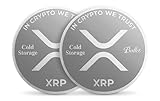
- 2 XRP COLD STORAGE COINS FOR FLEXIBLE STORAGE - This 2-pack includes two physical XRP cold storage coins, ideal for splitting holdings, keeping one as a backup, or giving one as a gift while maintaining a dedicated XRP-only storage format.
- NO ELECTRONICS FOR OFFLINE XRP STORAGE - No battery, no Bluetooth, no USB, and no firmware updates. These stainless steel XRP coins are designed for offline cold storage and keep key information separate from internet-connected devices.
- NO SEED PHRASE AND NO PIN OR PASSWORD - Ballet simplifies XRP cold storage with no 12 or 24-word seed phrase to write down and no PIN or password to remember, making setup easier for beginners and long-term holders.
- WORKS WITH BALLET CRYPTO APP FOR XRP - Use the Ballet Crypto App for iOS and Android to scan each coin, view the XRP address, load XRP, check balances, and transfer XRP through a guided workflow.
- TAMPER-EVIDENT SECURITY LAYERS - Each coin includes peel-to-reveal protection that helps provide a clear visual signal if the private key area has been accessed. Once opened to move funds out, the coin should not be reused for secure cold storage.
Typical workflow
- Prepare self-custody. Use a wallet that supports the required XRP and Flare transaction paths. Flare’s official material names Ledger and Bifrost as examples of self-custody wallets for these workflows; check current firmware, network support and asset-display instructions before signing anything.
- Move XRP through the current representation process. Follow the live protocol procedure to acquire or mint FXRP. Confirm the destination address, network, fees, minimums, confirmation requirements and redemption conditions. Never assume an XRP address on one network can safely receive an asset from another.
- Choose a supported DeFi application. Review whether it accepts FXRP for supply, borrowing or collateral. Read the application’s current smart-contract addresses, governance notices, fee schedule, collateral factor, liquidation threshold and oracle methodology.
- Supply or borrow in the application. Approve the FXRP transaction, deposit it, and—if borrowing—select an amount that leaves a substantial buffer below the liquidation threshold. The amount you can borrow depends on the application’s live parameters, not on the 1:1 representation alone.
- Monitor the position. Track FXRP’s redemption or exit status, XRP price, oracle updates, interest, health factor, network fees and governance changes. A position that is healthy at one price can become liquidatable during a rapid XRP decline.
- Repay and exit. Repay the debt and fees, withdraw FXRP, and use the current redemption process if you want to return to native XRP. Check processing times and any limits before committing funds.
What this route can and cannot answer
FXRP can let you retain economic exposure to XRP while borrowing another asset or supplying liquidity in a programmable environment. It does not mean that native XRP is being lent inside the XRPL’s own ledger rules. The route adds representation, cross-network transaction, smart-contract, oracle, liquidation and governance dependencies.
Quick wins for a faster PC:
Fix the driver behind crashes, sound loss and screen glitchesFind Drivers →Repair Windows errors before they cause bigger problemsFix Now →It also does not guarantee a yield. Rates, utilization, incentives and withdrawal liquidity can change, and a displayed return may not compensate for losses from a depeg, exploit, liquidation or inability to redeem. Treat any advertised rate as a live, variable product parameter that must be checked directly in the application.
Permissioned and institutional XRPL credit
XRPL documentation on permissioned domains describes controlled environments in which credentials and access rules can restrict use of features, including lending protocols. A permissioned domain can be configured for participants that have completed onboarding, identity checks, sanctions screening or other compliance requirements.
This model may suit a financial institution or regulated credit market better than an anonymous retail pool. Access can depend on the domain issuer, approved credentials, jurisdiction, legal agreements and the institution’s risk policy. A user may need to prove eligibility before being allowed to deposit, borrow or interact with a particular lending feature.
Use terms such as “permissioned XRPL lending” or “institutional XRP lending” only when the access controls are explicit. A permissioned domain is not evidence that unrestricted retail access exists on the public XRPL mainnet.
The Tool Desk
Outbyte Driver Updater FREEScan for outdated or missing drivers - takes under a minuteDriver Scan →Outbyte PC Repair FREEClear out junk files and repair common Windows errorsFree Scan →Rank #4

- Superior Security - Elevate the cold storage safety of your digital assets with Arculus's innovative 3-factor authentication system: biometric lock, 6-digit PIN, and the Arculus metal card with private key encryption for multiple layers of security.
- Effortless Transactions - Simplify your crypto management with the Arculus Cold Storage Wallet and Arculus App, to seamlessly send, swap, or receive assets with a simple tap to your mobile device.
- CC EAL6+ Secure Element Technology – Safeguard your keys on the Arculus Card through robust, certified encryption, protecting against unauthorized access.
- Supports 95% of the Cryptocurrency Market Cap, including Bitcoin (BTC), Ethereum (ETH), Tether (USDT), XRP (XRP), and Cardano (ADA), Litecoin (LTC), Polkadot (DOT), and other popular coins.
- Hassle-Free - The Arculus Cold Storage Wallet communicates with your phone using secure tap-to-transact NFC technology. No cords, no connections and no internet required for next-gen levels of security.
Centralized or regulated lenders
A centralized lender may accept XRP as collateral or offer XRP borrowing. In that arrangement, you generally transfer control of assets to a company or its custodian, which sets underwriting criteria, margin rules, liquidation procedures, withdrawal conditions and insolvency terms.
No current, jurisdiction-specific list of regulated providers is established here. Do not rely on a lender’s marketing label alone. Before depositing, independently verify:
- The legal entity, license or registration relevant to your country and the exact product.
- Whether XRP is held in segregation, rehypothecated, pledged to another party or pooled with company assets.
- The collateral valuation source, margin-call process, liquidation timing and treatment of market gaps.
- What happens if the lender pauses withdrawals, becomes insolvent or loses access to its custodian.
- Eligibility, KYC/AML, sanctions screening, tax reporting and geographic restrictions.
- The current interest rate, fees, lock-up, maturity and early-withdrawal conditions.
A centralized product may be simpler to use than a cross-network DeFi workflow, but simplicity does not remove counterparty or custody risk. It can also make you dependent on the provider’s operational decisions and legal protections.
Alternatives compared
| Route | Asset form | Network | Custody and control | Credit model | Collateral and liquidation | Liquidity and term | Access and compliance |
|---|---|---|---|---|---|---|---|
| Native XRPL Lending Protocol | Native XRP or another asset accepted by the vault | XRP Ledger | Vault managed by a LoanBroker; depositor funds are pooled | Fixed-term, broker-underwritten, uncollateralized loan | No automated on-chain collateral and liquidation management in the documented implementation; defaults follow broker and protocol rules | Agreed maturity and repayment schedule; not automatically open-ended | Requires active amendments, an available broker and a usable interface; terms may be broker-specific |
| FXRP-based DeFi | FXRP, a 1:1 representation of XRP | Flare | Can be self-custodied while interacting with smart contracts; contracts and representation mechanisms remain dependencies | Usually an overcollateralized DeFi position, depending on the application | Application-defined collateral factors, oracle prices and liquidation rules | Often variable and dependent on pool liquidity, utilization and network conditions | Wallet, application, regional and protocol eligibility requirements may apply |
| Permissioned XRPL credit | Asset allowed by the permissioned domain | Controlled XRPL environment | Governed by domain administrators and participating institutions | Compliance-oriented or institutionally underwritten credit | Defined by the domain, lender and legal agreements | Contractual terms and access rules determine liquidity | Credentials, onboarding, KYC/AML, sanctions screening and jurisdictional eligibility may be required |
| Centralized lender | Native XRP or collateral accepted by the provider | Provider’s custody and transaction systems | Provider or custodian controls deposited collateral | Centralized underwriting or balance-sheet lending | Provider’s margin calls, liquidation policy and insolvency process | Provider sets maturity, lock-up and withdrawal conditions | Product availability, licensing and geography must be verified for the exact provider |
Risk checklist before you lend or borrow
Representation and cross-network risk
When XRP becomes FXRP, you depend on the mechanism that represents, safeguards and redeems it. A failure, delay, exploit, insolvency event or governance change can affect your ability to use or recover the representation even if the XRP ledger itself continues operating.
Smart-contract and oracle risk
Flare DeFi applications execute code that can contain vulnerabilities or be changed through governance. Lending contracts also depend on price oracles. A stale, manipulated or unavailable price can cause an incorrect interest calculation, block withdrawals or trigger an avoidable liquidation.
Best Value

- Unparalleled Security: Protect your assets with EAL 6+ Secure Element, offering robust defense and complete transparency
- Simple & Secure Interface: Manage your digital assets easily with a clear OLED screen for secure on-device confirmations
- Supports 1000s of Coins & Tokens: Securely handle thousands of assets, including Bitcoin, Ethereum, and more, all in one wallet
- Effortless Asset Management: Monitor and transact seamlessly with Trezor Suite, our intuitive desktop and mobile app
- Enhanced Backup Solution: Multi-share Backup eliminates single points of failure for secure cold wallet recovery
Liquidation and market-gap risk
Overcollateralized borrowing is not a promise that collateral will be returned. If XRP falls quickly, the application can liquidate collateral at unfavorable prices, potentially leaving debt, penalties and network fees. A health metric can deteriorate between updates, especially during congestion or volatile markets.
Borrower, broker and counterparty risk
Native XRPL lending places greater weight on borrower underwriting and broker administration because the documented implementation does not automatically liquidate collateral. Centralized products add the possibility that the provider fails, freezes withdrawals or mismanages collateral. First-loss capital can reduce losses in a defined structure but cannot eliminate them.
Custody and signing risk
Self-custody means you control keys and also bear responsibility for backups, address checks and transaction approvals. A centralized account transfers operational control to the provider. In either case, a phishing site, malicious contract approval or wrong-network transaction can cause an irreversible loss.
Do these 3 things before closing this tab:
1Clear out junk files and repair common Windows errors2Fix the driver behind crashes, sound loss and screen glitches3Repair Windows errors before they cause bigger problemsLegal, tax and eligibility risk
Lending income, collateralized borrowing, token representation and defaults can receive different legal and tax treatment depending on where you live. Credentials, KYC/AML and sanctions screening can restrict participation. Obtain advice appropriate to your jurisdiction rather than assuming that an on-chain transaction is available or lawful everywhere.
Using a hardware wallet safely
An XRP hardware wallet is a custody and transaction-signing tool, not a lending protocol, yield product or insurance policy. It can keep private keys isolated while you approve XRPL or Flare transactions, but it cannot validate a broker’s credit quality, prevent a smart-contract exploit or guarantee redemption of FXRP.
Before using one for a lending workflow:
- Obtain the device and software through an authentic channel and initialize it yourself.
- Write the recovery phrase offline according to the manufacturer’s instructions; never photograph it or enter it into a website.
- Confirm that the device and wallet software support the exact network and asset path you intend to use.
- Check the full destination address and network on the device screen, not only in the browser.
- Start with a small test transaction and wait for confirmation before moving a larger balance.
- Review every token approval and smart-contract interaction. Revoke unnecessary permissions when the wallet or application supports that control.
- Keep firmware and wallet software current, but verify update prompts through the official software rather than an unsolicited link.
A hardware wallet can reduce key-exposure risk while you move XRP or FXRP, yet the lending position remains subject to the broker, protocol, representation and market risks described above.
How to choose a route
Choose native XRPL lending when all of these are true
- You have confirmed the required amendments are active on the intended network.
- A live LoanBroker and vault accept your asset and disclose terms you understand.
- You accept fixed maturity, broker dependence and the absence of automated collateral liquidation.
- You have assessed borrower underwriting, first-loss arrangements and default procedures.
Choose FXRP-based DeFi only after checking the complete lifecycle
- You understand how XRP is represented, where FXRP is held and how redemption works.
- The application currently supports FXRP and publishes contract addresses and risk parameters.
- You can monitor collateral health, oracle prices, interest, fees and liquidation conditions.
- You can tolerate smart-contract, cross-network and representation failure without treating the position as cash-equivalent.
Consider permissioned or centralized credit when eligibility and legal clarity matter most
- You can complete the required identity and compliance onboarding.
- The legal entity, custody model, collateral policy and insolvency treatment are documented.
- You have confirmed current licensing and availability in your jurisdiction.
- You prefer contractual support or institutional controls over anonymous, permissionless access.
A practical due-diligence sequence
- Define the objective. Decide whether you want to supply XRP, borrow against XRP, or access an institutional credit product.
- Identify the asset you will actually hold. Write down whether it remains native XRP or becomes FXRP, and which network address controls it.
- Confirm live availability. Check amendment status, broker or application access, wallet compatibility and geographic eligibility on the day you transact.
- Read the loss rules. Locate default, liquidation, redemption, withdrawal, pause and insolvency clauses before approving a deposit.
- Model a stressed scenario. Consider a sharp XRP price decline, delayed oracle, network congestion, borrower default, smart-contract pause and inability to redeem.
- Test with a small amount. Verify the complete deposit, monitoring, repayment and withdrawal path before committing more capital.
- Keep records. Save transaction hashes, loan terms, fees, repayments and valuation information for security reviews and tax reporting.
Bottom line
You can potentially put XRP to work without selling it, but there is no single interchangeable “XRP lending” product. Native XRPL lending is a fixed-term, broker-managed, uncollateralized design whose live mainnet availability and user access must be confirmed. FXRP offers a different path by representing XRP on Flare for smart-contract DeFi, with added representation, custody, oracle, liquidation and cross-network risks. Permissioned XRPL credit and centralized lenders may fit eligible users, but their access, licensing and protections require provider-specific checks.
Free tools Windows power users keep installed
One-click scans. No signup required.
Use a hardware wallet only as a custody and signing layer, and never treat it as a guarantee of yield or repayment. Compare the asset form, network, custody, credit model, liquidity, default or liquidation process and jurisdictional rules before moving funds.
Quick Recap
Product prices and availability are accurate as of the date/time indicated and are subject to change. Any price and availability information displayed on Amazon at the time of purchase will apply.

