
Quick wins for a faster PC:
Clear out junk files and repair common Windows errorsFree Scan →Fix the driver behind crashes, sound loss and screen glitchesFind Drivers →Yes—a Gemini-powered app can take a spoken account of your day and turn it into proposed to-do list changes. The key is that Gemini interprets the conversation and suggests structured actions; the app’s own code must validate and carry them out. Google’s documentation does not establish that a particular app has been built or tested, so this is an explanation of the implementation pattern, not a first-person account of a verified product.
Can you tell Gemini about your day and have it make a to-do list?
It is technically possible to build that experience. You could say, for example, “I need to send Maya the revised estimate tomorrow, and I finished booking the room.” The app could interpret the first item as a task to create and the second as a task to complete—provided it can identify the relevant task and its rules.

That result depends on an application connecting Gemini to task-management functions. Gemini can propose an action and provide arguments, but it does not independently change your list or gain access to your microphone. The application must capture the input, decide what to do with the model’s proposal, and update its own task storage or service.
How a voice-to-task workflow works
- Capture speech or text. A client device can capture audio and send it to Gemini. Google’s Gemini Live API documentation describes real-time audio, video, and text input, including audio streamed from a client such as a browser. It also describes receiving audio and transcription data. This establishes a supported voice-interface pattern, not automatic microphone access or a hardware requirement. See Google’s Live API capabilities guide and Live API SDK setup guide.
- Interpret the account and propose an action. The developer can define custom functions such as
create_task,update_task, orcomplete_task, with typed parameters for fields like task name, due date, and status. Gemini can return a proposed function name and its arguments. Google is explicit about the boundary: “The model doesn’t execute the function itself. Extract the name and args and execute in your application.” Read Google’s function-calling guide. - Validate and execute in the app. Application code receives the proposal, checks that its arguments make sense and that the user is allowed to make the change, then updates the app’s own task store or connected service. If a date is ambiguous, the task already exists, or the proposed change is consequential, the app can ask the user to clarify or confirm. These safeguards are product-design choices; Gemini’s function-calling feature does not guarantee them.
- Return a result or ask a follow-up. The app can send the result back into the conversation so Gemini can respond naturally—for example, by confirming that a task was added or asking which of two matching tasks the user meant. The model proposes tool use; the application remains responsible for the actual operation. Google’s function-calling codelab illustrates that application code makes the external API call.
Function calling and structured outputs are not the same thing
Both features can produce structured information, but they serve different roles. Function calling connects a model interaction to application tools: Gemini proposes an operation for the app to execute. Structured outputs constrain a final response to a specified schema, such as a predictable JSON representation for display or storage. A task app may use both, but a schema-conforming response by itself does not create, edit, or complete a task.
#1 Best Overall

- Attention-grabbing design meets the latest evolution of the Google Pixel Camera on the new Google Pixel 11 Pro XL; Gemini Intelligence helps manage details so you can live in the moment[1]; and the phone is available in two sizes
- Unlocked Android phone gives you the flexibility to change carriers and choose your own data plan: Works with Google Fi, Verizon, T-Mobile, AT&T, and other major carriers[2]
- Stay informed without looking at your screen: When your phone is face down, Pixel HiLight gently alerts you with subtle glowing lights when your favorite contacts are calling or you’re talking with Gemini; exclusive to Google Pixel 11 Pro phones
- Magic Capture catches the moment as you live it: With just one tap, Pixel 11 Pro captures video and photos, and automatically edits, crops, and unblurs a curated collection, ready to share – and you get the memory of how it felt to be in the moment
- Two new cameras for more brilliant photos: A larger telephoto sensor captures 30% more light for clear, beautiful photos and videos, even in the dark[3]; Pixel’s longest zoom ever helps you capture details from impressive distances[4]
| Approach | What it is for | Who performs the task change? |
|---|---|---|
| Function calling | Proposing a named app action and its arguments during an interaction | The application executes it after validation |
| Structured output | Producing a final response that follows a defined schema | No task change follows unless application code acts on the output |
Google’s tools documentation distinguishes tool use from structured outputs. A Google developer blog post dated 2025-11-05 reports expanded JSON Schema support and schema key ordering for Gemini 2.5 models and beyond; exact support can vary, so check the current API documentation for the model and schema you plan to use: Improving Structured Outputs in the Gemini API.
What the app should check before changing your list
A reliable design should treat model-generated actions as proposals, not unquestionable commands. Define a narrow contract for each operation and validate the returned values before execution. For instance, an app might require a task identifier to complete an existing item, reject dates it cannot parse, or ask whether “Friday” means the upcoming Friday when that is unclear.
Rank #2

- Google Pixel 10a is a durable, everyday phone with more[1]; snap brilliant photography on a simple, powerful camera, get 30+ hours out of a full charge[2], and do more with helpful AI like Gemini[3]
- Unlocked Android phone gives you the flexibility to change carriers and choose your own data plan; it works with Google Fi, Verizon, T-Mobile, AT&T, and other major carriers
- Pixel 10a is sleek and durable, with a super smooth finish, scratch-resistant Corning Gorilla Glass 7i display, and IP68 water and dust protection[4]
- The Actua display with 3,000-nit peak brightness shows up clear as day, even in direct sunlight[5]
- Plan, create, and get more done with help from Gemini, your built-in AI assistant[3]; have it screen spam calls while you focus[6]; chat with Gemini to brainstorm your meal plan[7], or bring your ideas to life with Nano Banana[8]
- Check required fields and types. A task title should be present, and dates or identifiers should match the app’s expected format.
- Check whether the target exists. Completing or editing a task requires resolving the right item, especially when several tasks have similar names.
- Ask about consequential ambiguity. If the user’s words could mean either adding a task or marking one complete, clarify before making the change.
- Apply permissions in application code. The model’s proposed arguments do not replace the app’s access controls or authorization checks.
- Report the outcome honestly. Confirm an action only after the application has received a successful result.
Choosing how to handle voice input
For a live, back-and-forth voice experience, the Gemini Live API documentation describes streaming audio from a client device. An app could instead accept recorded audio or text, depending on the product’s design. The sources cited here establish that Live API audio input is possible; they do not compare latency, cost, or accuracy across implementation choices, so those factors should be evaluated for the specific app and model.
No external microphone is specified as mandatory in the cited setup documentation. The relevant requirement is a client-side way to capture audio and send it to the application; the hardware and interface are implementation choices. See the Live API setup guide.
Do these 3 things before closing this tab:
1Clear out junk files and repair common Windows errors2Fix the driver behind crashes, sound loss and screen glitches3Repair Windows errors before they cause bigger problemsRank #3

- Google Pixel 10 Pro is the ultimate Pixel experience, featuring advanced AI with Gemini, unbelievable camera quality, impeccable design in two sizes, and the next-gen Google Tensor G5 chip[1]
- Unlocked Android phone gives you the flexibility to change carriers and choose your own data plan[2]; it works - Google Fi, Verizon, T-Mobile, AT&T, and other major carriers
- Get a head start on syncing your data before it even arrives: After you purchase your new Pixel, look for an email that explains how to transfer your photos, videos, passwords, and more in just a few quick steps[11]
- Pixel’s pro camera system makes everything look amazing, even in low light; capture more of the scene with advanced Google AI models, and bring out incredible details with 100x Pro Res Zoom, stunning 50 MP images, and super steady videos in 8K[10]
- Pixel 10 Pro is built with durable aluminum and Corning Gorilla Glass Victus 2 for scratch and drop resistance; the 6.3-inch Super Actua display with 3,300-nit peak brightness is easy on the eyes, even in direct sunlight[3,13,18]
What “perfect” can—and cannot—mean here
The architecture makes a conversational to-do list plausible, but it does not prove that any particular app handles dates, names, duplicates, or corrections perfectly. The official documentation explains capabilities and the division of responsibility; it does not provide a named accuracy or productivity statistic for this use case. Claims about reliability, time saved, or user experience require disclosed testing of the actual application.
Quick Recap
Best Value
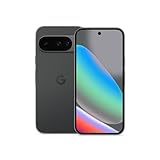
- Google Pixel 10 is the everyday phone unlike anything else; it has Google Tensor G5, Pixel’s most powerful chip, an incredible camera, and advanced AI - Gemini built in[1]
- Unlocked Android phone gives you the flexibility to change carriers and choose your own data plan[2]; it works with Google Fi, Verizon, T-Mobile, AT&T, and other major carriers
- Unlocked Android phone gives you the flexibility to change carriers and choose your own data plan[2]; it works - Google Fi, Verizon, T-Mobile, AT&T, and other major carriers
- The upgraded triple rear camera system has a new 5x telephoto lens - up to 20x Super Res Zoom for stunning detail from far away; Night Sight takes crisp, clear photos in low-light settings; and Camera Coach helps you snap your best pics[3]
- Pixel 10 is designed - scratch-resistant Corning Gorilla Glass Victus 2 and has an IP68 rating for water and dust protection[21]; plus, the Actua display - 3,000-nit peak brightness is easy on the eyes, even in direct sunlight[4]
Product prices and availability are accurate as of the date/time indicated and are subject to change. Any price and availability information displayed on Amazon at the time of purchase will apply.

