
Yes, sometimes—but “offline” is not a guarantee of privacy. A feature that genuinely analyzes messages on your device can avoid sending their text to a remote inference server. The app’s access, what it retains, device security, and message backups or sync still matter. Check the exact feature and version: products can use local processing for some tasks and a cloud service for others.
What “offline AI” does—and does not—protect
Local inference means the AI model processes text on the device rather than sending it to a remote model server. That can reduce one exposure route, but it does not establish that the app never communicates over a network or that the phone is secure. A message may still be accessible to an app, retained in a prompt history or clipboard, included in a backup, or exposed if someone gains access to the device.


Evaluate the whole path: how the text reaches the feature, where inference happens, whether the app retains the input or result, and whether messages or outputs are synced or backed up. NIST’s mobile-device guidance treats security as a lifecycle issue covering deployment, use, and disposal—not just one processing step. NIST SP 800-124 Rev. 2 is general security guidance, not an audit or comparison of particular AI apps.
How the data path differs on Android and Apple devices
Android: AICore and Gemini Nano
Google says Android AICore runs Gemini Nano locally on supported devices. Its help documentation identifies text summarization and smart replies as examples of features that can work without a network connection. AICore is available on Android 14 and later, but support and available functions vary by device and manufacturer. These claims do not mean every Android AI feature—or every messaging app—runs locally. The app must implement a supported local use case, and you should not assume it can analyze any conversation you import.
What’s actually slowing this PC down?
Pick the symptom - the matching free tool is one click away.
#1 Best Overall
Google’s developer documentation says on-device inference through AICore makes no server calls for inference. It also describes restricted package binding, indirect internet access, and says AICore does not retain request inputs or outputs after processing. These are Google’s descriptions of the platform architecture; they do not independently establish how every app handles text before or after inference, or how a particular phone is configured.
Google’s Android AICore help page describes availability and user-facing functions. For the developer-side architecture, see Google’s AICore documentation.
Apple: on-device processing and Private Cloud Compute
Apple says Apple Intelligence processes requests on-device when possible, while some more demanding requests may use Private Cloud Compute. Apple describes that cloud service as stateless, with personal data used to fulfill a request and not retained after the response. Those are Apple’s stated protections for a cloud path; Private Cloud Compute is not offline processing.
Rank #2
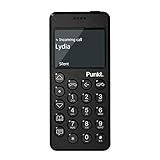
- Distraction Free: The MP02 4G cell phone makes it easier to be where you are—whether that’s a weekend away or an important business meeting. Keep what matters close with calls and SMS-first texting, without the constant onslaught of designed-for-addiction notifications.
- Privacy & Security Focused: Built with security in mind from the start, the MP02 is designed to help safeguard your information without requiring you to share more personal data than necessary. Enjoy peace of mind with a phone experience that prioritizes discretion and control.
- Carrier Compatibility & Connection: AT&T is supported (coverage verified, VoLTE supported). T-Mobile is supported, but VoLTE is not supported. Verizon is not supported. Many US carriers use VoLTE for voice calls - if VoLTE isn’t supported on your carrier, call performance may be limited even with signal. The MP02 supports 4G LTE across key bands (2G: 850/900/1800/1900 3G: WCDMA 1/2/4/5/6/8/19 4G: FDD LTE 1/2/3/4/5/7/8/12/17/19/20).
- Simple By Design: A minimalist interface keeps everyday actions straightforward. Call and text buttons provide quick access, while a streamlined menu helps you stay focused on essentials. Note: messaging is SMS-first (MMS group chats aren’t supported), helping to keep communication simple.
- Built for Everyday: Designed for comfortable one-handed use with a clean, minimalist silhouette. Reinforced glass fiber construction supports daily use, while the lightweight shape makes it easy to carry anywhere.
If your requirement is that message text never leave the device, verify that the specific task is handled locally rather than relying on the Apple Intelligence label alone. Apple’s description is at Apple Intelligence and Privacy.
The Tool Desk
Outbyte Driver Updater FREEFix the driver behind crashes, sound loss and screen glitchesFind Drivers →Outbyte PC Repair FREERepair Windows errors before they cause bigger problemsFix Now →Message backups and sync are separate risks
Local analysis does not change where the messaging app stores conversation history or how the phone backs it up. Apple’s platform privacy information says Messages and SMS/MMS may be included in iCloud Backup. Check the current settings for your device and operating system, and review backup and sync separately from the AI feature. See Apple’s iCloud data and privacy information.
Also consider copies created during analysis: a pasted prompt, generated summary, clipboard entry, screenshot, notification preview, download, temporary history, or app cache may hold sensitive text. Whether any of these are retained or synced depends on the app and device settings.
Independent reader supportYour contribution helps us test, update, and keep practical guides available for everyone.A practical checklist for analyzing a sensitive conversation
- Identify the exact feature. Note the app, task, device, and software version. A device’s AI branding does not tell you how a particular message-analysis feature handles text.
- Check its documented route. Look for whether the task runs locally, may fall back to cloud processing, and what the app says it retains. If the documentation does not establish the route, treat it as unknown rather than assuming it is offline.
- Limit how text is shared with the app. Review permissions. When available, prefer selecting or pasting only the text needed over granting broad access to messages.
- Use a network-off check cautiously. For a feature Google identifies as working offline, disable networking during the operation and see whether it still works. This can show that the task functions without a connection at that moment; it cannot prove that the feature did not transmit data earlier, that local data is secure, or that the app has no other network behavior.
- Review what remains on the phone. Check prompt history, saved summaries, clipboard contents, screenshots, notifications, downloads, and app caches, as applicable.
- Review backups and sync. Check the messaging app’s own sync and backup settings and the device’s backup configuration independently of the AI feature.
- Secure the device. Keep the operating system and app updated, use a strong passcode and available storage protection, and consider who can access an unlocked phone. These are general precautions consistent with NIST’s mobile-device security guidance.
- Consider the other person’s privacy. Avoid uploading someone else’s private messages without considering consent, context, and applicable rules.
How to compare two tools
Compare the same task across tools rather than treating an entire brand or operating system as one data path. Vendor documentation explains claimed design; settings show what you can configure. Neither is the same as an independent review or a device-specific network audit.
| What to compare | Question to answer |
|---|---|
| Inference route | Does this exact task run locally, or can it use a cloud fallback? |
| Network requirement | Does it still work with networking disabled, and what does that test actually establish? |
| Access to messages | Which app or system component can read the text, and what permission or user action provides it? |
| Retention | Are prompts, outputs, copied text, or temporary records kept? |
| Storage beyond inference | Are conversations or generated results backed up or synced? |
| Compatibility | Which device and OS versions support the feature, and are there manufacturer-specific limits? |
| Evidence | Is the claim a vendor description, an independent assessment, or a setting you can verify? |
No universal product ranking follows from platform documentation alone. The evidence here does not establish how every device, app, or configuration behaves.
Quick Recap
Product prices and availability are accurate as of the date/time indicated and are subject to change. Any price and availability information displayed on Amazon at the time of purchase will apply.

