
Free tools Windows power users keep installed
One-click scans. No signup required.
Yes, conditionally—but the Zero 2 W’s published H.264 capability is not proof that a particular FFmpeg setup can stay live around the clock. Raspberry Pi Ltd lists H.264 encoding up to 1080p30, and its camera documentation describes a libav route that uses hardware H.264 encoding when available. Your source, encoding path, filters, audio, power, and network still determine whether the complete stream works reliably. The official sources do not establish 24/7 uptime for a Zero 2 W FFmpeg setup.
What the Zero 2 W can—and cannot—tell you
Raspberry Pi Ltd’s 2024 product brief specifies a 1 GHz quad-core Arm Cortex-A53 and 512 MB of memory, with H.264 encoding up to 1080p30. These are published hardware capabilities, not independent measurements of a sustained FFmpeg workload. The board also has 2.4 GHz 802.11b/g/n Wi-Fi; the specification does not guarantee a particular access point or internet connection will sustain a live stream.
Raspberry Pi’s camera documentation says rpicam-vid can use the FFmpeg/libav backend to encode and stream audio and video, and that libav uses hardware H.264 encoding when present. That is a documented camera-software path, not certification of every generic FFmpeg command, camera, input device, filter chain, or installed build. Verify that your actual pipeline is using hardware encoding rather than assuming it is.
Choose a pipeline that leaves the Pi enough headroom
Start with the video source
A camera that already outputs H.264 can avoid making the Pi encode raw frames. If your source is raw video, or your command applies filters that require re-encoding, the Zero 2 W must do more work. Prefer a documented hardware-encoding route and avoid unnecessary filters or re-encoding when forwarding an already encoded stream.
Recommended Free Tools
#1 Best Overall
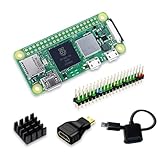
- Powerful Performance: Equipped with a quad-core 64-bit ARM Cortex-A53 processor, the Raspberry Pi Zero 2 W delivers a significant performance boost compared to its predecessor. And built-in Wi-Fi and Bluetooth support enable easy wireless communication and Internet access for your projects, five Times Faster.
- SANOOV Basic Starter Kit for Pi Zero 2 W Include: 1. Raspberry Pi Zero 2 W Board 2.Mini HDMI to Standard HDMI adapter 3.Micro-USB to Standard USB OTG Adapter 4.Aluminum Heatsink 5.40 Pin Header.NOTICE: The kit does NOT include , supply power, case, SD card, keyboard, mouse or monitor.
- SANOOV for Raspberry Pi Zero 2 W features: 1GHz quad-core, 64-bit ARM Cortex-A53 CPU VideoCore IV GPU 512MB LPDDR2 DRAM 802.11b/g/n wireless LAN Bluetooth 4.2 / Bluetooth Low Energy (BLE) MicroSD card slot Mini HDMI and USB 2.0 OTG ports Micro USB power HAT-compatible 40-pin header Composite video and reset pins via solder test points CSI camera connector.
- Video Output & Efficient Cooling: Supports 1080p30 video output via the mini HDMI port, making it ideal for multimedia applications and streaming.The aluminum heatsink helps dissipate heat, ensuring stable performance even under heavy workloads.
- Compact Size: The tiny size of the Raspberry Pi Zero 2 W makes it perfect for space-constrained projects and embedded applications.Ideal for a variety of uses, including IoT projects, home automation, media centers, educational tools, and more.
Set a test resolution and bitrate
YouTube Help’s H.264 recommendations are 3 Mbps for 720p30 and 5 Mbps for 1080p30. These are platform recommendations, not proof that the Pi can sustain either setting with your complete pipeline. A prudent test is to begin at a lower resolution or frame rate, then increase only if measurements show adequate CPU, memory, temperature, and upload headroom.
Match YouTube’s ingest guidance
- Use H.264 with constant bitrate (CBR), as YouTube recommends.
- Set a two-second keyframe interval; YouTube says not to exceed four seconds.
- Use AAC or MP3 audio. YouTube recommends stereo at 44.1 kHz and 128 Kbps.
- Send to YouTube over RTMP or RTMPS; YouTube recommends RTMPS, the encrypted version of RTMP.
These are YouTube’s encoder recommendations, accessed in 2026. Confirm that your chosen FFmpeg options and output actually produce the intended values; a command-line setting is not by itself evidence that the resulting stream conforms.
Rank #2

- Includes Raspberry Pi 4 4GB Model B with 1.5GHz 64-bit quad-core CPU (4GB RAM)
- Includes Pre-Loaded 32GB EVO+ Micro SD Card (Class 10), USB MicroSD Card Reader
- CanaKit Premium High-Gloss Raspberry Pi 4 Case with Integrated Fan Mount, CanaKit Low Noise Bearing System Fan
- CanaKit 3.5A USB-C Raspberry Pi 4 Power Supply (US Plug) with Noise Filter, Set of Heat Sinks, Display Cable - 6 foot (Supports up to 4K60p)
- CanaKit USB-C PiSwitch (On/Off Power Switch for Raspberry Pi 4)
Prepare power, storage, and the network
Power and operating system
Raspberry Pi setup guidance recommends at least 8 GB of storage for Raspberry Pi OS Lite and an appropriate official power supply; its setup table specifies 5 V, 2.5 A for Zero models. The board has a microSD slot. Local recording, logs, and overlays add storage and resource demands, so account for them rather than treating encoding as the only workload.
Upload capacity and Wi-Fi
Run a speed test and choose stream quality that fits the available upload bitrate, as YouTube advises. Leave headroom for variation instead of matching the stream bitrate to the best result from a single test. The Zero 2 W uses single-band 2.4 GHz Wi-Fi; measure the connection where the Pi will operate, since the board specification cannot predict the reliability of your local wireless environment.
The Tool Desk
Outbyte Driver Updater FREEFix the driver behind crashes, sound loss and screen glitchesFind Drivers →Outbyte PC Repair FREEClear out junk files and repair common Windows errorsFree Scan →Rank #3

- Orange Pi Zero 2W 1GB is powered by Allwinner H618 high-performance quad-core Cortex-A53 processor with up to 1.5GHz, integrated Mali G31 MP2 graphics processor, supporting OpenGL ES 1.0/2.0/3.2, OpenCL 2.0, Vulkan 1.1. It has 1GB LPDDR4 memory specification options, supports 16MB SPI Flash. Outperform the Raspberry Pi Zero 2W.
- Orange Pi Zero 2W 1G mini pc can be extended with USB2.0, 100M Ethernet, IR receiver, audio output, TV-out, power button, etc. via 24Pin connector with adapter board. In addition, the 40Pin expansion port on the board further enriches the motherboard's functional interfaces and enhances the development potential.
- Orange Pi Zero 2W 1gb adheres to the compact and exquisite design concept of the Zero series, with a PCB size of 30mm X 65mm X 1.2mm, and can be widely used in TV boxes, smart screen casting devices, smart home, smart gateway, IoT and other fields.
- Wi-Fi5+BT 5.0, with BLE support: 2.4G/5G dual-band Wi-Fi5 and Bluetooth 5.0 with BLE support, enjoy the wonderful network anytime, anywhere.
- Orange Pi Single Board Computers is open source.
Test the whole setup before relying on it
- Configure the YouTube live event and ingest details. Use the stream key for the event and keep it private; anyone with access to it may be able to send to your stream. Choose RTMPS where your setup supports it.
- Start conservatively. Use a lower resolution and frame rate first, with YouTube’s relevant bitrate guidance, CBR, and keyframe interval in mind. Check that the actual encoder path is hardware-accelerated if that is necessary for your workload.
- Test comparable content. YouTube Help says, “Make sure to test before you start your live stream.” It recommends testing with audio and movement similar to the real stream, then monitoring stream health during the event.
- Measure the running system. Watch dropped frames, CPU load, temperature, memory pressure, and YouTube’s stream-health messages. Add intended audio processing, overlays, filters, or recording during testing; each can change the workload.
- Run a sustained trial and plan recovery. No official source establishes a Zero 2 W’s 24/7 FFmpeg uptime. Test your assembled system for a meaningful period and decide how you will detect and recover from process, network, or power interruptions. Do not assume FFmpeg, the Pi, or YouTube will restart the stream automatically.
Common problems and what to check
- Encoder overload or dropped frames: Lower resolution or frame rate, remove unnecessary filters and re-encoding, and verify whether the selected camera/libav route is using hardware H.264 encoding.
- YouTube reports unstable ingest: Compare the configured bitrate with measured upload capacity, leave more headroom, and test the Pi at its actual location. Consider a more reliable network path if Wi-Fi varies.
- Stream key or connection rejected: Check that the key belongs to the intended YouTube event, that it has not been changed, and that the chosen ingest protocol and destination are correct. Keep the key private.
- Audio fails or is out of sync: Check the input device and audio encoding separately; confirm AAC or MP3 output and the intended sample rate and channel layout. Audio capture and processing add work to the pipeline.
- It stops after a power, network, or process interruption: The sources do not establish an automatic recovery mechanism for this FFmpeg setup. Configure and test your own monitoring and restart approach, and verify that YouTube accepts the reconnection.
- Storage fills up: Check whether local recordings or logs are growing. Disable unneeded recording or rotate and remove files safely; a stream that only forwards video has different storage needs from one that saves it locally.
Copyright and YouTube live-stream rules
Using a Raspberry Pi or FFmpeg does not change YouTube’s copyright or monetization requirements. Use video and audio you own or have permission to stream, and review YouTube’s live-stream policies before broadcasting. A technically stable loop is not automatically eligible for monetization: reused or repetitive material may be treated differently under YouTube’s monetization policies. Check the current rules for your channel and content rather than assuming that continuous playback qualifies.
Independent reader supportYour contribution helps us test, update, and keep practical guides available for everyone.Or let it run in the cloud
If the goal is a YouTube channel that keeps uploaded videos live without leaving a Pi, computer, or home connection running, StreamNeo is a cloud alternative. Upload a recording or build a playlist, add your YouTube stream key once, and go live; StreamNeo loops the uploaded videos from the cloud. It does not stream from a camera.
Quick Recap
Best Value
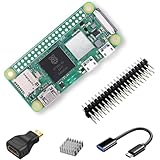
- RasTech Pi Zero 2W Kit: The Pi Zero 2W pack includes Raspberry Pi Zero 2 W Board x1, Mini HDMI to Standard HDMI Adapter x1, Micro USB OTG Cable x1, Aluminum Heatsink x1, 40-Pin Header x1.
- Powerful Performance: Equipped with a quad-core 64-bit ARM Cortex-A53 processor, the Raspberry Pi Zero 2 W delivers a significant performance boost compared to its predecessor.
- Compact Size: The tiny size of the Raspberry Pi Zero 2W makes it perfect for space-constrained projects and embedded applications.
- Efficient Heat Dissipation: The Aluminum heatsink helps dissipate heat, ensuring stable performance even under heavy workloads.
- Versatile Connectivity: The Raspberry Pi Zero 2 W basic kit is an ideal equipment for beginners to learn programming, electronics, and DIY projects. And the included HDMI adapter and USB OTG cable provide essential interfaces to connect a display, keyboard, mouse and other peripherals.
Rank #4

- 🍊[Incredibly Powerful]: Orange Pi Zero 2W is a powered by Allwinner H618 quad-core Arm Cortex-A53 SBC with 1GB/1.5GB/2GB/4GB LPDDR4 RAM memory, embedding a larger 16MB SPI flash. And features Wi-Fi 5 and Bluetooth 5.0 connectivity.
- 🍊[Practical Design]: Despite Orange Pi Zero 2W has only a small size of 30mmX65mmX1.2mm, but it is equipped with 2*USB 2.0, 1Micro HDMI, 1*MicroSD card slot, 1*24 pin functional interface, 1*40 pin headers.
- 🍊[Support Expansion Board]: Orange Pi Zero 2W can be extended with USB2.0, 100M Ethernet, IR receiver, audio output, TV-out, power button via 24 pin functional interface with adapter board. In addition, the 40 pin expansion port on the board further enriches the motherboard's functional interfaces and enhances the development potential.
- 🍊[Small But Powerful]:Orange Pi Zero 2W adheres to the compact and exquisite design concept of the Zero series, and can be widely used in TV boxes, smart screen casting devices, smart home, smart gateway, IoT and other fields. Orange Pi Zero 2W supports Android 12 TV, Debian11, Debian12, Ubuntu22.04, Ubuntu20.04 ,Orange Pi OS(Arch)and other operating systems.
- Nothing has to stay on at home; the stream runs in the cloud.
- Any quality up to 4K 60fps at one flat price per slot, streamed as uploaded without re-encoding or quality tiers.
- Automatic recovery if YouTube drops the stream.
- The first day is free, with no card required; one free day per account.
- Monthly: $9.99 per month.
Start your free StreamNeo day.
Product prices and availability are accurate as of the date/time indicated and are subject to change. Any price and availability information displayed on Amazon at the time of purchase will apply.

