
iTechGuides is reader-supported. When you buy through links on our site, we may earn an affiliate commission. As an Amazon Associate I earn from qualifying purchases. Learn more
The best travel camera in 2026 is the OM SYSTEM OM-3: according to OM SYSTEM’s 2026 technical specifications, the portable interchangeable-lens body has a 20.4MP stacked sensor, 1,053-point phase-detection autofocus, up to 7.5 EV stabilization, 4K/60p video, USB charging, and IP53 protection. The Fujifilm X100VI, Sony RX100 VII, and DJI Osmo Pocket 3 are better for narrower priorities.
No single travel camera is objectively best for every itinerary. The right choice depends on whether the trip calls for interchangeable lenses, a fixed-lens stills experience, a pocketable zoom, a long built-in zoom, or stabilized video. The recommendations below separate those use cases instead of treating portability as a single measurement.
Key takeaways
- The OM SYSTEM OM-3 is the best all-purpose travel camera for a portable interchangeable-lens kit, with a 20.4MP stacked sensor, 1,053-point phase-detection autofocus, up to 7.5 EV stabilization, 4K/60p video, USB charging, and IP53 dust and splash protection.
- The Fujifilm X100VI is the better fixed-lens choice for street, city, food, portrait, and documentary photography, but the fixed lens cannot cover wildlife, distant landmarks, or changing focal-length needs as flexibly as the OM-3 system.
- The Sony RX100 VII is the most convenient pocketable zoom option, while the Panasonic Lumix TZ300 is the reach-first alternative with a 15x built-in zoom, subject to regional availability and naming.
- The DJI Osmo Pocket 3 is the strongest video-first travel camera, weighing 179g and combining a three-axis gimbal with 4K/60fps recording, but its approximately 9.4MP single-shot stills and fixed wide-angle lens make it a poor replacement for a stills camera.
- The Fujifilm X-E5 and Canon EOS R50 V are compact APS-C interchangeable-lens alternatives for travelers who prefer Fujifilm film simulations or Canon autofocus and creator controls.
What is the best travel camera in 2026?
The OM SYSTEM OM-3 is the best travel camera in 2026 for most travelers who want one dedicated camera to handle landscapes, architecture, people, low light, wildlife, and video without carrying a large kit. The OM-3 is not the smallest option and is not the best choice for every itinerary, but the combination of a compact body, interchangeable Micro Four Thirds lenses, stabilization, computational photography, and splash protection gives the OM-3 the broadest capability in this comparison.
Crashes, No Sound, or Screen Glitches?
Random freezes, missing sound and display glitches usually trace back to one bad driver. Find and replace yours safely.Free scan · under a minuteWindows Errors? Fix Them Before They Spread
Repair common Windows errors and clear accumulated junk for a smoother, more stable PC - no reinstall needed.Free scan · no reinstallBest overall: OM SYSTEM OM-3 mirrorless camera
Choose the OM-3 when flexibility matters more than having the smallest possible camera. A single compact lens can cover everyday travel scenes, while additional Micro Four Thirds lenses can add wide-angle, telephoto, or superzoom reach without the size burden commonly associated with larger-sensor systems.
Popular on Amazon
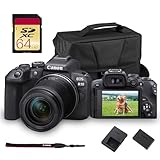
- Canon USA Authorized. Items Include: Canon EOS R10 Mirrorless Camera with RF-S 18-150mm Lens – 24.2MP APS-C Sensor, 4K 60p Video, Dual Pixel AF II, Travel-Friendly Design, 64GB Memory Card, Shoulder Bag
- Versatile All-in-One Lens Kit – Includes RF-S 18-150mm lens for wide-angle landscapes to close-up telephoto shots, perfect for travel, portraits, and everyday photography.
- Smooth, Detailed 4K Video – Capture 4K 60p oversampled from 6K with Canon’s Dual Pixel CMOS AF II for crisp detail and fast, accurate subject tracking in any scene.
- Fast Continuous Shooting – Shoot up to 15 fps mechanical or 23 fps electronic with precise autofocus, ideal for sports, wildlife, and fast-moving action.
- Lightweight & Connected – Compact APS-C body with Wi-Fi and Bluetooth for instant sharing and remote control via Canon Camera Connect app, great for creators on the go.
According to OM SYSTEM’s 2026 technical specifications, the OM-3 has a 20.4MP stacked BSI Live MOS sensor, 1,053 phase-detection autofocus points, up to 7.5 EV of in-body stabilization with compatible lenses, 4K/C4K video up to 60p, USB charging, and IP53 dust and splash protection. OM SYSTEM lists the body at approximately 413g without the battery and memory card and the complete camera at approximately 496g.
The OM-3 is the strongest recommendation for mixed stills-and-video travel, outdoor itineraries, and trips where the subjects are unpredictable. The OM-3 is a less compelling choice for travelers who want a camera that fits in a trouser pocket, a fixed-lens street camera, or a device designed mainly for walking video.
How do the leading travel cameras differ?
The leading travel cameras solve different portability problems. The OM-3 prioritizes system flexibility, the X100VI prioritizes a premium fixed-lens stills experience, the RX100 VII and TZ300 prioritize built-in zoom convenience, and the Osmo Pocket 3 prioritizes stabilized video.
Recommended Free Tools
| Camera | Lens setup | Key specification | Best fit | Main compromise |
|---|---|---|---|---|
| OM SYSTEM OM-3 | Interchangeable Micro Four Thirds lenses | 20.4MP stacked BSI Live MOS; up to 7.5 EV stabilization; 4K/C4K up to 60p | One flexible kit for stills, wildlife, landscapes, and video | More equipment and lens decisions than a fixed-lens compact |
| Fujifilm X100VI | Fixed lens | 40.2MP X-Trans CMOS 5 HR; newly developed in-body stabilization | Street, city, food, portraits, and documentary travel photography | No interchangeable focal lengths or long telephoto reach |
| Sony RX100 VII | Built-in zoom | 1-inch sensor in a pocketable compact body | Convenient travel photography with one small camera | Less low-light flexibility, subject separation, and ergonomic control than larger systems |
| Panasonic Lumix TZ300 | Built-in 15x zoom | 15x travel zoom; USB-C charging on the 2026 model | Sightseeing, family trips, museums, and distant subjects | Availability and regional model naming need checking; not the low-light enthusiast choice |
| DJI Osmo Pocket 3 | Fixed 20mm-equivalent f/2.0 lens | 179g body; three-axis gimbal; 4K up to 60fps and 4K slow motion up to 120fps | Walking footage, vlogs, short-form video, and stabilized travel clips | Approximately 9.4MP single-shot stills and no interchangeable lens |
| Fujifilm X-E5 | Interchangeable APS-C lenses | 6.2K/30p video; up to 7 stops of stabilization at the center under Fujifilm’s stated conditions | Travelers wanting an APS-C body and Fujifilm film simulations | The total kit can become larger depending on the lens; weather protection varies by body-and-lens combination |
| Canon EOS R50 V | Interchangeable Canon RF-mount lenses | Approximately 24.0MP APS-C; DIGIC X; Dual Pixel CMOS AF II | Travel creators wanting Canon autofocus and video-oriented controls | More creator-oriented than balanced as a stills-first travel camera |
Independent buying guides do not identify one universal design as best for every traveler. Digital Camera World’s 2026 travel-camera guide, TechRadar’s 2026 guide, and National Geographic’s 2026 compact-camera guide separate compact, professional, video, zoom, and waterproof use cases rather than treating every travel itinerary as identical.
Why is the OM-3 the best all-purpose travel camera?
The OM-3 is the best all-purpose travel camera because the camera body stays relatively light while the Micro Four Thirds lens system can adapt to more subjects than a fixed-lens or pocket zoom camera. The OM-3 also combines stabilization, subject detection, computational modes, USB charging, and dust-and-splash protection in one travel-oriented body.
What does the OM-3 specification mean on a trip?
- Interchangeable lenses: A traveler can use a wide-angle lens for interiors and landscapes, a standard lens for everyday scenes, or a telephoto lens for wildlife and distant details. The lens system is the reason the OM-3 covers more situations than a fixed 35mm-style travel camera.
- Stabilization: OM SYSTEM’s stated maximum of up to 7.5 EV applies with compatible lenses and is useful for reducing camera shake in still photos and for making handheld shooting more practical. The figure is a manufacturer specification, not a promise that every photo will be sharp in every lighting condition.
- Subject detection: The OM-3 can identify people, animals, birds, vehicles, and aircraft. Subject detection is especially useful when a trip includes moving subjects that would be difficult to track with a basic contrast-only autofocus system.
- Computational photography: Handheld high-resolution capture, Live ND, focus bracketing, and HDR can help with landscapes, architecture, flowing-water effects, difficult contrast, and focus-stacking workflows without requiring a large specialist kit.
- Video: 4K and C4K recording up to 60p gives the OM-3 credible video capability for a mixed stills-and-video trip, although the Osmo Pocket 3 is easier to carry and stabilize for continuous walking footage.
- Travel durability: IP53 dust and splash protection is useful around light rain, spray, and dusty routes, but IP53 does not make the OM-3 waterproof. The protection rating also should not automatically be assumed to apply equally to every attached lens.
The portability and lens-system advantage is an editorial conclusion drawn from the OM-3 specifications and current travel-camera comparisons, not a claim that the OM-3 wins every laboratory image-quality test. A fixed-lens camera may still be the better real-world choice if a traveler is much more likely to carry a smaller camera everywhere.
Which travel camera should you choose for your itinerary?
| If the priority is… | Choose… | Why | Accept the tradeoff |
|---|---|---|---|
| One camera for varied subjects | OM SYSTEM OM-3 | Interchangeable lenses, stabilization, subject detection, computational modes, 4K/60p, and IP53 protection | The kit is larger than a pocket compact and requires lens selection |
| Street and city stills | Fujifilm X100VI | Fixed-lens simplicity, tactile controls, 40.2MP X-Trans sensor, stabilization, and Fujifilm color profiles | The fixed lens cannot provide ultra-wide or telephoto framing |
| Pocketable zoom convenience | Sony RX100 VII | One small body with a built-in zoom and a 1-inch sensor | Less low-light flexibility and control than the OM-3 or X100VI |
| Maximum built-in zoom reach | Panasonic Lumix TZ300 | A 15x zoom in a pocketable travel-compact format | Check local availability, name, and price before buying; the 2026 model omits the older generation’s built-in viewfinder |
| Walking video and vlogging | DJI Osmo Pocket 3 | 179g body, integrated three-axis gimbal, 20mm-equivalent f/2.0 lens, and 4K/60fps video | Still photos are approximately 9.4MP single shots, and the lens is fixed and wide |
| APS-C with Fujifilm controls | Fujifilm X-E5 | APS-C interchangeable-lens design, film simulations, 6.2K/30p, and up to 7 stops of stabilization at the center | Lens choice can make the complete kit larger, and weather protection depends on the exact combination |
| APS-C creator controls and Canon autofocus | Canon EOS R50 V | Approximately 24.0MP APS-C sensor, RF mount, DIGIC X, and Dual Pixel CMOS AF II | The design favors creators more than a stills-first travel workflow |
Is the Fujifilm X100VI better than the OM-3 for travel?
The Fujifilm X100VI is better than the OM-3 when a traveler values a premium fixed-lens stills experience, tactile controls, and Fujifilm color profiles more than lens flexibility. Fujifilm specifies a 40.2MP X-Trans CMOS 5 HR sensor and newly developed in-body image stabilization on the X100VI; the official X100VI product page provides the model’s main features.
What’s actually slowing this PC down?
Pick the symptom - the matching free tool is one click away.
Also popular on Amazon

- 20 MP Live MOS Sensor
- Always-on connection and background connection via Bluetooth & OI Share Smartphone app
- Flip-down monitor and dedicated selfie mode. Selfie mode automatically turns on when monitor is flipped down.
- In-Body 5-Axis Image Stabilization capable of 4.5 shutter speed steps of compensation.
- 16 Art Filters (31 types). Includes new Instant Film for a nostalgic feel
The X100VI is particularly well suited to street photography, city breaks, portraits, food, and documentary-style travel. A fixed lens can make the camera simpler and more discreet because the traveler does not need to pack or change lenses.
The X100VI is not the better choice for wildlife, distant landmarks, or uncertain itineraries that may require ultra-wide or telephoto framing. The X100VI cannot match the OM-3’s interchangeable-lens system, so the choice is between a focused, premium stills tool and a more adaptable travel system rather than between two identical cameras.
Is the Sony RX100 VII the best pocketable travel camera?
The Sony RX100 VII is one of the best pocketable travel cameras for travelers who want a built-in zoom in a very small body. The Sony RX100 VII’s main advantage is convenience: one compact camera covers substantially more framing situations than a fixed-lens camera without requiring a separate lens bag.
The tradeoff comes from the compact format and 1-inch sensor. Compared with the OM-3 or X100VI, the RX100 VII generally offers less low-light flexibility, less subject separation, and less ergonomic control. Those are category-level implications of the smaller sensor and body design, not absolute image-quality results from a controlled test.
Read the official Sony RX100 VII support and specification information before buying, especially if the intended trip depends on a particular recording feature, battery arrangement, or accessory. Current compact-camera coverage also continues to place the RX100 VII among the leading travel-compact choices; MPB’s 2026 compact travel-camera guide describes the model as an overall compact-camera choice for travel.
Is the Panasonic Lumix TZ300 worth considering for travel?
The Panasonic Lumix TZ300 is worth considering when long built-in zoom reach is more important than low-light performance or enthusiast stills control. Panasonic announced the TZ300 on March 24, 2026, and contemporary coverage positions the camera as a 15x-zoom travel compact for travelers and everyday creators.
The TZ300 makes sense for sightseeing, family trips, museums, and distant subjects where changing lenses would be inconvenient. Panasonic’s March 24, 2026 announcement is the primary source for the launch information.
Also popular on Amazon
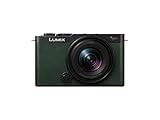
- Ultra-Fast Connection and Transfer: Transfer content to your smartphone seamlessly with LUMIX Lab and an ultra-fast Wi-Fi connection; every stunning shot from this LUMIX video camera will appear in your phone's photo library, for quick and easy sharing
- Think Big, Pack Small: A small camera packed with professional-grade features; the perfect everyday companion as a vlogging camera to capture and share your life; choose your favorite attractive finish for this Panasonic camera
- High Image Quality: LUMIX S9 full frame mirrorless digital camera delivers stunning professional results even in low-light conditions, for impressive photos and unlimited high-res video recording
- Mirrorless Cameras with Flexible Framing (Open Gate): This on-the-go LUMIX camera lets you get all the aspect ratios from one shot with helpful multiple frame markers and share your content effortlessly across multiple social media platforms
The 2026 model adds USB-C charging but omits the built-in viewfinder found on the older TZ200 and ZS200 generation, according to TechRadar’s TZ300 coverage. Regional naming, launch timing, availability, and pricing can differ, so shoppers should confirm the exact local model immediately before publication or purchase. The TZ300 should be treated as a reach-and-convenience camera, not as the best low-light or enthusiast-stills camera.
Is the DJI Osmo Pocket 3 good for still photography?
The DJI Osmo Pocket 3 is good for casual stills, but the DJI Osmo Pocket 3 is primarily a video camera and should not replace a stills-oriented travel camera for photographers. DJI lists approximately 9.4MP single-shot still photography, a fixed 20mm-equivalent f/2.0 lens, and an integrated three-axis gimbal.
The Osmo Pocket 3 is the strongest specialist choice for walking footage, vlogs, short-form content, and stabilized travel video. DJI’s official specifications list a 179g body, a 2-inch touchscreen, 4K video up to 60fps, 4K slow motion up to 120fps, and up to 166 minutes of operating time under DJI’s stated laboratory conditions.
The 166-minute figure is a manufacturer test result rather than a universal real-world battery expectation. Screen use, stabilization, resolution, frame rate, temperature, wireless features, and repeated recording can all affect practical operating time. The fixed wide-angle lens also makes the Pocket 3 less suitable for distant wildlife, compressed portraits, or travelers who want interchangeable focal lengths.
What are the best compact interchangeable-lens alternatives?
The Fujifilm X-E5 and Canon EOS R50 V are the best compact interchangeable-lens alternatives when a traveler wants an APS-C system or a specific brand ecosystem rather than the OM-3’s Micro Four Thirds approach.
The Tool Desk
Outbyte Driver Updater FREEScan for outdated or missing drivers - takes under a minuteDriver Scan →Outbyte PC Repair FREEClear out junk files and repair common Windows errorsFree Scan →Fujifilm X-E5
The Fujifilm X-E5 is a strong choice for travelers who want a small APS-C interchangeable-lens camera with Fujifilm film simulations and a rangefinder-style body. Fujifilm’s June 12, 2025 X-E5 announcement and official specifications list 6.2K/30p recording and up to 7 stops of image stabilization at the center under Fujifilm’s stated measurement conditions.
The X-E5 offers a larger APS-C sensor format and more resolution than the OM-3, but the final travel kit depends heavily on the selected lens. A compact prime can preserve the small-camera advantage, while a large zoom can reduce that advantage. Weather protection should be checked for the exact X-E5 body-and-lens combination rather than inferred from the body alone.
Also popular on Amazon
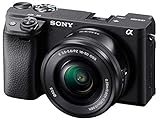
- 20.1MP stacked back illuminated 1" Exmor RS CMOS sensor w/ DRAM, large aperture 24-70mm1 F1.8-2.8 ZEISS Vario-Sonnar T lens
- Enhanced subject capture: wide 425 Phase/ 425 contrast detection points over 84 percent of the sensor
- Fast and accurate: Up to 11Fps continuous shooting at 24.2 MP raw with crisp, clear natural colors
- Multiple movie functions: Make time lapse movies or slow/quick motion videos without post processing
- Tiltable LCD screen: customizable for vlogging, still photography or recording a professional film
Canon EOS R50 V
The Canon EOS R50 V is better suited to travel creators who prioritize video controls and Canon autofocus in a compact APS-C interchangeable-lens body. Canon specifies an approximately 24.0MP APS-C sensor, RF mount compatibility, DIGIC X processing, and Dual Pixel CMOS AF II on the EOS R50 V body and specifications page.
The EOS R50 V is a creator-oriented alternative rather than the most balanced stills-first travel recommendation. Choose the EOS R50 V when Canon’s autofocus behavior, RF lens ecosystem, or video workflow is more important than the OM-3’s computational photography features, stabilization figure, and Micro Four Thirds lens portability.
What should you pack with a travel camera?
The most useful travel-camera accessories protect shooting time, storage, and equipment rather than adding novelty features. Pack power, compatible recording media, basic weather protection, and a way to carry the camera comfortably.
| Accessory | Why it matters | What to check |
|---|---|---|
| Camera-compatible spare battery and USB-C charger | A spare battery reduces missed shooting opportunities during long days, while USB charging simplifies charging from a wall adapter or power bank. | Use a battery made for the exact camera model and confirm whether the camera supports charging through USB-C or another USB connection. |
| Camera SD card | The OM-3 records to SD media, and interchangeable-lens cameras can generate large still and video files. | Match UHS-I or UHS-II media and the card’s speed rating to the camera’s intended recording mode. A faster label alone does not guarantee compatibility or the required sustained write speed. |
| Compact padded camera insert or sling | A protected, accessible carry solution makes a dedicated camera more likely to be carried and reduces contact with loose objects in a travel bag. | Allow room for the mounted lens, spare battery, card, and any second lens the itinerary actually requires. |
| Power bank and charging cable | A power bank extends charging options on transit days and away from hotel outlets. | Carry the correct cable and confirm the camera’s charging requirements before relying on the power bank. |
| Lens-cleaning cloth and blower | Dust, fingerprints, spray, and food-travel residue can reduce contrast and obscure small details. | Use a blower and clean microfiber cloth rather than rubbing grit across the front element. |
| Small weather-resistant dry bag | A dry bag adds a layer of protection during rain, boat trips, beaches, and dusty excursions. | A dry bag is backup protection, not evidence that the camera itself is waterproof. |
OM SYSTEM specifically identifies USB charging and SD-card recording for the OM-3. DJI’s Pocket 3 support materials identify microSD expansion and optional accessories such as batteries and ND filters; DJI’s specifications page should be checked for the exact accessory configuration.
Independent reader supportYour contribution helps us test, update, and keep practical guides available for everyone.How should you evaluate weather protection and battery claims?
Evaluate weather protection as risk reduction, not as permission to submerge a camera. The OM-3’s IP53 rating indicates dust and splash protection, but IP53 does not make the camera waterproof. The rating for a camera body also may not apply equally to every lens, adapter, or accessory attached to the body.
Evaluate battery figures as comparable manufacturer test results rather than guaranteed trip-day performance. DJI’s stated maximum of up to 166 minutes for the Osmo Pocket 3 comes from laboratory conditions, and actual results vary with recording settings and usage. Carrying a compatible spare battery and a charging solution is more reliable than planning an entire trip around a published maximum.
What should you check before buying the best travel camera?
- Define the farthest subject. Choose a system camera if wildlife, distant architecture, or changing focal lengths are likely. Choose a fixed-lens camera if the trip is mainly street, city, food, portrait, and documentary photography.
- Decide whether video or stills come first. Choose the Osmo Pocket 3 for stabilized walking video; choose the OM-3, X100VI, X-E5, or EOS R50 V when still photography is a substantial part of the trip.
- Measure the complete kit, not only the body. A small interchangeable-lens body can become less portable after adding a large zoom, spare lens, charger, and protective case.
- Check the exact lens and body protection. Do not assume that a camera body’s dust or splash rating makes every attached lens combination safe in heavy rain or underwater conditions.
- Match storage to recording modes. Check SD or microSD requirements, UHS class, sustained write speed, capacity, and whether the chosen card supports the camera’s intended video mode.
- Plan power for the itinerary. A city break with hotel charging is different from an all-day hike, boat excursion, or remote road trip. Pack a compatible spare battery and charger when access to power is uncertain.
- Verify regional availability. Panasonic’s model naming and launch timing can differ by market, making the TZ300 especially important to check immediately before purchase.
Which travel camera is the final recommendation?
Choose the OM SYSTEM OM-3 when the trip demands the broadest range of subjects and the traveler is willing to carry a small interchangeable-lens kit. Choose the Fujifilm X100VI for a premium fixed-lens stills experience, the Sony RX100 VII for pocketable zoom convenience, the Panasonic Lumix TZ300 for maximum built-in zoom reach where available, and the DJI Osmo Pocket 3 when stabilized video is the main deliverable.
Also popular on Amazon

- Designed for creators, vloggers and streamers: Nikon's easy to use Z 30 mirrorless 4K camera with a versatile 16-50mm wide-angle zoom lens
- Pro-grade video quality: Crisp 4K resolution, autofocus with eye tracking for people and pets, beautifully blurred backgrounds, outstanding low-light performance and rock-steady image stabilization
- Vlogger essentials: Flip out touchscreen selfie monitor, built-in stereo microphone with adjustable sensitivity, red REC light and smartphone app for controlling the camera with a compatible phone
- Easy live streaming: Plug and play webcam operation, smooth Full HD 60p streaming over USB-C, 4K 30p streaming over HDMI and constant power over USB-C
- A kit that grows with you: Compatible with Nikon's entire line of exceptional NIKKOR Z lenses, from fast primes to macro lenses, so you can expand your capabilities over time
The best camera is also the camera that fits the itinerary and gets carried. A fixed-lens compact can produce more useful travel memories than a more capable system camera left in a hotel, while a weather-protected interchangeable-lens system remains the more capable tool for multi-day outdoor travel.
Frequently Asked Questions
Is the OM SYSTEM OM-3 waterproof?
No. The OM SYSTEM OM-3 has IP53 dust and splash protection, but IP53 does not make the camera waterproof. The protection rating also should not automatically be applied to every attached lens or accessory.
Is the Fujifilm X100VI better than the OM-3 for travel?
The Fujifilm X100VI is better for fixed-lens street, city, food, portrait, and documentary photography. The OM SYSTEM OM-3 is better when travelers may need interchangeable wide-angle, standard, telephoto, or superzoom lenses.
Do these 3 things before closing this tab:
1Repair Windows errors before they cause bigger problems2Fix the driver behind crashes, sound loss and screen glitches3Clear out junk files and repair common Windows errorsWhich travel camera is best for video?
The DJI Osmo Pocket 3 is the best choice for stabilized walking video, vlogging, and short-form travel content. The DJI Osmo Pocket 3 is not a stills-camera replacement because DJI lists approximately 9.4MP single-shot stills and the lens is fixed and wide.
Is the Panasonic Lumix TZ300 available everywhere?
The Panasonic Lumix TZ300 is a strong reach-and-convenience option with a 15x built-in zoom, but availability, regional naming, and pricing should be checked before purchase. Panasonic announced the model on March 24, 2026, and the 2026 model adds USB-C charging while omitting the older generation’s built-in viewfinder.
The Bottom Line
Bottom line: The OM SYSTEM OM-3 is the best all-purpose travel camera in 2026 because it combines portability, interchangeable lenses, stabilization, computational photography, 4K/60p video, USB charging, and IP53 protection. Pick the X100VI, RX100 VII, TZ300, or Osmo Pocket 3 instead when fixed-lens simplicity, pocketable zoom reach, or stabilized video matters more than versatility.

