
Free tools Windows power users keep installed
One-click scans. No signup required.
iTechGuides is reader-supported. When you buy through links on our site, we may earn an affiliate commission. As an Amazon Associate I earn from qualifying purchases. Learn more
QD-OLED remains one of the best ways to get exceptionally vivid HDR color, perfect pixel-level blacks, and wide viewing angles. In the U.S. market, the shortlist is narrower than many buying guides suggest: the strongest choices in 2026 are Samsung’s S95H, Sony’s BRAVIA 8 II, and the discounted 2025 Samsung S95F.
There is one important catch. Panel technology can vary by screen size and region. The 83-inch U.S. Samsung S95H is not QD-OLED, and the U.S. Samsung S90H is not a QD-OLED at all. Check the exact model number before buying.
Our top QD-OLED TV picks for 2026
| Best for | TV | Why buy it | Main drawback |
|---|---|---|---|
| Best overall | Samsung S95H | High brightness, 165Hz gaming, four HDMI 2.1 ports, strong color, matte anti-reflection finish | No Dolby Vision; bright light can raise black levels |
| Best for movies | Sony BRAVIA 8 II | Excellent Sony processing, Dolby Vision, accurate cinematic presentation, strong upscaling | Only two HDMI 2.1 ports and weaker bright-room performance |
| Best discounted option | Samsung S95F | Still an excellent, bright QD-OLED when discounted | No Dolby Vision; 83-inch version is not QD-OLED |
Best overall QD-OLED: Samsung S95H
The Samsung S95H is the most complete QD-OLED package in the U.S. for 2026. It combines strong HDR brightness and color volume with a 165Hz native refresh rate, four HDMI 2.1 inputs, VRR, and Samsung’s effective anti-reflection treatment.
RTINGS rates it as its best OLED tested in 2026, with particularly strong results for brightness, color, accuracy, gaming, and bright-room viewing. Samsung’s NQ4 AI Gen3 Processor and OLED HDR Pro branding describe the processing and HDR systems behind the set, although the practical benefits matter more than the labels: games look responsive, HDR colors remain vivid, and lower-quality video receives competent upscaling.
Popular on Amazon

- OUR MOST ADVANCED 4K AI PROCESSOR: Powered by 128 neural networks to deliver AI-enhanced picture and optimized sound, resulting in an exceptional 4K experience for streaming, gaming, live sports and more.*
- TRANSFORMS EVERYTHING ON SCREEN TO IMPRESSIVE 4K RESOLUTION*: See impressive details on screen. Our AI processor upscales everything you watch to 4K using 128 AI neural networks and ensures incredibly sharp and smooth picture quality.*
- POWERFUL BRIGHTNESS AND DEEPER CONTRAST IN EVERY PIXEL**:Experience powerful brightness and deeper contrast revealing nuanced detail in each scene. The NQ4 AI Gen3 processor analyzes each scene and boost brightness to illuminate even the smallest details.**
- BRINGS SMOOTH MOTION TO SPORTS AND TEAR-FREE GAMING: Experience smooth visuals and elite speeds for VRR gaming at up to 4K 144Hz.***
- KEEP YOUR EYE ON THE BALL: The AI processor smooths the motion of fast-moving balls and text, reducing blur and flickering, so you don't lose sight of the action.*
Why the S95H stands out
- 165Hz refresh rate: Useful for compatible gaming PCs. Consoles cannot take advantage of the full 165Hz mode.
- Four HDMI 2.1 ports: All four support the high-bandwidth features expected by modern consoles and PCs, including 4K at high refresh rates.
- Matte screen: It greatly reduces visible reflections compared with a conventional glossy panel.
- Strong color volume: QD-OLED’s quantum-dot layer helps bright colors remain saturated instead of becoming washed out.
The main compromise is HDR format support. Samsung supports HDR10, HDR10+ and HLG, but not Dolby Vision. That will matter if you watch a lot of Dolby Vision content from services or UHD Blu-ray discs, although the TV can still display HDR10 versions of much of that material.
The matte coating also does not make the S95H immune to bright-room limitations. Ambient light can lift the appearance of blacks, making them look gray rather than truly black. For a room with controlled lighting, the S95H produces the more impressive image. In a very bright room, its reflection handling helps, but it is not a complete solution.
Which S95H sizes are actually QD-OLED?
In the United States, the 55-, 65-, and 77-inch S95H models are QD-OLED:
- QN55S95HAFXZA
- QN65S95HAFXZA
- QN77S95HAFXZA
The 83-inch model, QN83S95HAEXZA, uses an RGB Tandem WOLED panel instead. It may still be a very good OLED TV, but it should not be purchased as an 83-inch QD-OLED. Samsung listed the 65-inch S95H at $3,399.99 when checked on August 8, 2026; promotions and retail pricing can change.
Best QD-OLED for movies: Sony BRAVIA 8 II
The Sony BRAVIA 8 II is the better choice for viewers who prioritize films, streaming quality, and Sony’s image processing over gaming specifications. It uses a QD-OLED panel and Sony’s XR processor to deliver accurate colors, strong motion handling, excellent upscaling, and a polished movie presentation.
It supports Dolby Vision, 4K/120Hz, VRR, HDMI 2.1, and DTS audio passthrough. Dolby Vision is the most obvious advantage over Samsung: compatible movies and shows can use the format’s dynamic HDR metadata without being converted to HDR10 or HDR10+.
Also popular on Amazon
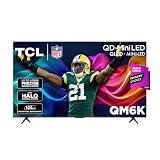
- TCL QM6K QD-MINI LED TV SERIES - AFFORDABLE PREMIUM PERFORMANCE FOR SPORTS, GAMING & STREAMING. Experience superior contrast, rich color, and ultra-smooth motion with TCL’s QD-Mini LED technology. Designed to outperform traditional QLED and OLED TVs, the QM6K is the best TV for every moment—whether you're streaming, gaming, or watching the big game.
- QD-MINI LED. IT’S MINI LED PLUS QLED COLOR - BREATHTAKING BRIGHTNESS AND COLOR IN ANY LIGHT. Combines ultra-precise Mini LEDs with Quantum Dot technology for incredible brightness, bold contrast, and over a billion vibrant colors.
- TCL HALO CONTROL SYSTEM - BETTER BLACKS. SHARPER DETAIL. NO BLOOMING. Advanced local dimming eliminates haloing, enhances shadow detail, and improves picture accuracy—so dark scenes look deeper, and bright scenes stay crisp.
- DOLBY VISION, HDR10+, HDR10 & HLG - STUNNING HDR IN EVERY FORMAT. Enjoy 4K content the way it was meant to be seen. Dynamic HDR support delivers exceptional color, contrast, and detail across all major formats.
- 144HZ NATIVE REFRESH RATE + MOTION RATE 480 - SMOOTH, FAST ACTION—PERFECT FOR LIVE SPORTS. Watch fast-paced action with incredible clarity and minimal motion blur—making this one of the best TVs for sports.
RTINGS describes the BRAVIA 8 II as excellent for dark-room viewing. HDR highlights are strong, colors are vibrant, viewing angles are wide, and its near-instantaneous pixel response keeps motion clean. Sony’s processing is particularly valuable if you watch broadcast television, older films, DVDs, or heavily compressed streams where the source is not already pristine 4K.
Where the BRAVIA 8 II falls behind
- Two HDMI 2.1 ports: This is enough for a console and an eARC soundbar setup, but less convenient if you have several 4K/120Hz devices.
- 120Hz maximum: It is suitable for consoles and most PC gaming, but Samsung’s 165Hz mode is better for a high-end gaming PC.
- Higher input lag than competing Samsung OLEDs: It remains playable, but competitive gamers may prefer the S95H.
- Weakness in very bright rooms: Glare can overwhelm the picture, and ambient light can make blacks appear gray.
The BRAVIA 8 II is available in the U.S. as the 55-inch K-55XR80M2 and 65-inch K-65XR80M2. It is a 2025 model that remains a current option in 2026, not a new 2026-generation Sony OLED.
Best discounted previous-generation QD-OLED: Samsung S95F
The Samsung S95F is worth considering when its price drops substantially below the S95H. It was Samsung’s 2025 flagship and remains a bright, capable QD-OLED in its 55-, 65-, and 77-inch versions.
Its matte anti-glare screen is a practical advantage in rooms where reflections are distracting. It is generally brighter than the Sony BRAVIA 8 II and offers the same basic Samsung trade-off: excellent HDR10/HDR10+ performance, but no Dolby Vision.
Be careful with the 83-inch S95F. That version uses a different tandem WOLED panel, so the model name alone does not guarantee QD-OLED technology. Confirm the panel type and exact regional model before ordering.
The S95F makes the most sense in two situations: you want Samsung’s bright, colorful presentation but cannot justify the S95H’s price, or you find a remaining S95F at a large discount. If the price difference is small, the newer S95H is the safer purchase because of its higher refresh rate and newer processing platform.
Also popular on Amazon

- HANDPICKED BY AMAZON: They did the research so you don’t have to.
- PURE BLACK AND OUR HIGHEST OLED BRIGHTNESS: Over 8 million self-lit pixels are precisely controlled to produce pure black with our highest OLED brightness.
- BILLIONS OF REAL-WORLD COLORS: See billions of accurate real-world colors with a Quantum Dot panel and XR Triluminos Max.
- POWERFUL TV PROCESSING WITH AI: XR Processor with AI technology intelligently enhances every scene in real-time boosting color, contrast, and clarity.
- EVERYTHING YOU STREAM. ALL IN ONE SCREEN: Get access to all your favorite streaming apps in one place with Google TV. With Google Assistant, simply use your voice to search and ask questions.
QD-OLED versus WOLED: what actually changes?
Both technologies use self-emissive pixels, so both can produce genuinely black pixels, excellent contrast, and very fast response times. QD-OLED uses blue OLED light and quantum dots to create red and green colors. WOLED uses a white OLED structure with color filters.
QD-OLED generally has an advantage in color volume, especially in bright HDR colors. That does not make every QD-OLED TV better in every room. Ambient light can raise black levels on QD-OLED displays, while some WOLED TVs retain more convincing blacks in bright conditions. Processing, brightness, screen finish, HDR support, and price may matter more than the panel label.
Do not accidentally buy the U.S. Samsung S90H as a QD-OLED
The U.S. Samsung S90H is relevant if you are comparing OLED TVs, but it does not belong on a U.S.-focused QD-OLED list. According to RTINGS, every U.S. S90H size uses either standard WOLED or RGB Tandem OLED: the 42-, 55-, 65-, and 83-inch models use standard WOLED, while the 48- and 77-inch versions use RGB Tandem panels.
The Tool Desk
Outbyte Driver Updater FREEFix the driver behind crashes, sound loss and screen glitchesFind Drivers →Outbyte PC Repair FREEClear out junk files and repair common Windows errorsFree Scan →Some non-North-American markets sell QD-OLED versions of the S90H. That is why international buying guides may describe the model as QD-OLED. For a U.S. purchase, check the region and complete model code rather than relying on the S90H name.
How to choose the right QD-OLED TV
- Choose the room first. For a controlled or dim room, the glossy Sony BRAVIA 8 II can look excellent. For a room with lamps or windows, Samsung’s matte S95H or S95F handles reflections better, although ambient light can still raise black levels.
- Choose your HDR format. Buy the Sony if Dolby Vision support is important. Choose Samsung if HDR10+ and higher gaming refresh rates matter more.
- Count HDMI 2.1 devices. The S95H has four HDMI 2.1 inputs. The BRAVIA 8 II has two, so a console, gaming PC, and eARC soundbar may require careful port planning or an HDMI switch.
- Check the exact size. The S95H and S95F 83-inch models are not QD-OLED. Do not assume all sizes in a range use the same panel.
- Compare the discount, not just the generation. A heavily discounted S95F can be better value than a full-price S95H. If the prices are close, the S95H’s 165Hz support and newer platform make it the stronger long-term choice.
QD-OLED buying cautions
OLED TVs can experience temporary image retention and, over long periods of repeated static content, permanent burn-in. Use the panel-care features supplied by the manufacturer, vary the content where practical, and avoid leaving news tickers, desktop interfaces, or game HUDs on screen for many hours every day.
Also check retailer return policies and inspect the panel during the return window. Uniformity varies between individual OLED panels. A small amount of variation can be normal, but obvious vertical banding, tinting, dead pixels, or persistent image retention is a reason to contact the retailer.
Also popular on Amazon

- LIFELIKE PICTURE– The intelligent and powerful Cognitive Processor XR delivers a picture with wide dynamic contrast, detailed blacks, natural colors, and high peak brightness, replicating how we see the real world.
- PURE BLACK PAIRED WITH OUR BEST COLOR– Thanks to QD-OLED and XR Triluminos Max, experience our widest palette of shades and hues equally matched by pure OLED black and high brightness.
- PREMIUM SMART TV – Get access to all your favorite streaming apps in one place with Google TV, and simply use your voice to search and ask questions with Google Assistant. Supports Apple AirPlay.
- MOVIES ON US WITH BRAVIA CORE - Enjoy streaming high-bitrate, high-quality 4K UHD movies included with the BRAVIA CORE app. Get 10 credits to redeem on latest release movies and 24 months subscription on hundreds of classics.
- ALL YOUR GAME SETTINGS IN ONE PLACE– Game Menu puts all your gaming picture settings and exclusive assist features in a single easy-to-manage interface.
FAQ
What is the best QD-OLED TV in 2026?
For the U.S. market, the Samsung S95H is the best overall QD-OLED. It combines strong brightness and color with four HDMI 2.1 ports, VRR, and a 165Hz refresh rate. The 55-, 65-, and 77-inch versions are QD-OLED; the 83-inch version is RGB Tandem WOLED.
Recommended Free Tools
Does the Samsung S90H use a QD-OLED panel?
Not in the United States. U.S. S90H models use standard WOLED or RGB Tandem OLED, depending on size. QD-OLED versions exist in some other regions, so international listings cannot be used to identify the U.S. panel.
Is the Sony BRAVIA 8 II better than the Samsung S95H for movies?
It can be, particularly in a dark room. The BRAVIA 8 II has excellent Sony processing, accurate motion, strong upscaling, and Dolby Vision support. The S95H is brighter and better equipped for gaming, but it does not support Dolby Vision.
Which QD-OLED TV is best for gaming?
The Samsung S95H is the strongest gaming choice of these picks. It has four HDMI 2.1 inputs, VRR, and a 165Hz mode for compatible PCs. The Sony BRAVIA 8 II is still suitable for console gaming at 4K/120Hz, but it has only two HDMI 2.1 ports and a 120Hz limit.
The Bottom Line
The Samsung S95H is the best all-round U.S. QD-OLED TV in 2026, provided you buy the 55-, 65-, or 77-inch version and can live without Dolby Vision. Choose the Sony BRAVIA 8 II for movie-focused viewing, Sony processing, and Dolby Vision. Choose the Samsung S95F when a large discount makes it meaningfully cheaper. Before ordering, verify the exact size, model code, panel type, HDMI requirements, and screen finish.
Do these 3 things before closing this tab:
1Clear out junk files and repair common Windows errors2Scan for outdated or missing drivers - takes under a minute3Repair Windows errors before they cause bigger problems
