
There is no single best note-taking app in 2026. The right choice depends on whether you need instant capture, handwritten lecture notes, a linked personal knowledge base, a collaborative team wiki, encrypted synchronization, or a dependable free notebook.
For most readers, the shortlist is straightforward: choose Obsidian for local Markdown files and connected knowledge, Notion for teams and structured workspaces, OneNote for a broad free notebook with handwriting, Apple Notes for Apple-only simplicity, Google Keep for quick lists and reminders, Standard Notes for encrypted cloud notes, or Joplin for open-source, offline-first notes. Evernote remains strong for web clipping and document capture, but its 2026 free and paid limits make it a much less automatic recommendation than older comparisons suggest.
Updated: August 9, 2026. Prices, AI features, storage limits, and availability can vary by country, tax, app store, account type, education status, and rollout. Verify the linked product page before subscribing.
Quick answer: which note-taking app should you choose?
| Best for | App | Why it stands out | Main compromise |
|---|---|---|---|
| Personal knowledge management and data ownership | Obsidian | Local Markdown files, backlinks, graph views, plugins, offline-first editing, and optional encrypted Sync | You must design more of the system yourself; official Sync costs extra |
| Teams, databases, documents, and wikis | Notion | Collaborative pages, databases, permissions, publishing, integrations, tasks, and AI features | More setup and weaker offline behavior than local-first apps |
| Best broad free notebook | Microsoft OneNote | Free core app, notebooks and sections, handwriting, drawings, attachments, automatic saving, and Microsoft 365 integration | Export and account migration vary considerably by edition and storage location |
| Apple users who want zero setup | Apple Notes | Built into Apple devices, iCloud sync, scanning, handwriting, tags, Smart Folders, sharing, and audio transcription | A poor primary choice for regular Windows or Android users |
| Web clipping and document capture | Evernote | Web Clipper, OCR and attachment search, scanning, tasks, calendar, transcription, and document workflows | The 2026 Free plan allows only 50 notes, one notebook, one device, and limited uploads |
| Rapid capture, lists, and reminders | Google Keep | Very fast notes, checklists, labels, colors, pins, sharing, reminders, and easy Google account access | Too limited for long-form writing, large research archives, or serious knowledge management |
| Privacy-focused cloud notes | Standard Notes | End-to-end encryption, unlimited-device sync on the free tier, offline access, locking, and export | Rich editors, folders, files, and productivity features require a paid plan |
| Open-source and self-hostable notes | Joplin | Local Markdown notes, flexible sync backends, web clipping, optional E2EE, and self-hosting options | Less polished and more technical than mainstream hosted workspaces |
If you want one practical starting point: pick OneNote for free, mixed-media notes across many platforms; pick Obsidian if your notes are long-lived information you want to own; and pick Notion if other people need to use the same workspace.
#1 Best Overall
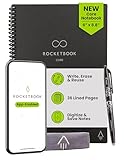
- New and Improved Core: Features premium reusable paper, with improved pen to paper feel, spiral binding and sleekly re-designed, scratch-resistant cover. College-ruled sheets now include Smart Titles and Smart Tags to name and organize files efficiently.
- App-Enabled for Digital Organization: Scan and upload your written work directly to cloud platforms like Google Drive, Dropbox, OneNote, etc. and access your notes from anywhere. Use Smart Titles and Smart Tags to name and organize files efficiently.
- Write, Digitize, Erase, and Re-Write: Write notes with the included Pilot Frixion Pen, digitize effortlessly using the Rocketbook app, store in your preferred cloud service. When done, simply wipe the pages clean with a damp cloth and start fresh.
- Portable and Versatile Sizes: Available in two sizes—Letter (8.5 x 11 inches) and Executive (6 x 8.8 inches)—the Rocketbook Core is compact enough to fit into backpacks, purses, or briefcases. This notebook offers portability and versatility.
- Eco-Friendly Reusability: Designed with sustainability in mind, Rocketbook notebooks help reduce paper waste with a reusable alternative. Enjoy a paper-like notebook that can be used repeatedly, allowing you to save work and erase everything else.
Choose the workflow before choosing the app
The best app for a shopping list is not necessarily the best app for a doctoral research archive. Start with the work you will do most often.
Quick capture
You need an app that opens immediately, works from a phone widget or desktop shortcut, handles checklists, and can attach a reminder without demanding an elaborate filing system. Google Keep is the simplest fit. Apple Notes is better when scanning, handwriting, or Apple integrations matter. OneNote works well if quick captures eventually become part of a larger notebook.
Long-form writing and personal notes
Look for a comfortable editor, dependable search, offline access, sensible organization, and export that will still be useful years later. Bear is especially pleasant for Apple writers. Craft emphasizes polished documents and presentation. Apple Notes, OneNote, and Obsidian are stronger when you also need broader capture or a more durable archive.
Personal knowledge management
Knowledge management is about more than storing pages. You may need links between notes, backlinks, tags, metadata, full-text search, attachments, graph or database views, and extensibility. Obsidian is the clearest choice for local, linked notes. Notion is better when databases and structured dashboards matter. Joplin offers an open-source middle ground, while Bear provides backlinks and tags in a more focused Apple-only writing environment.
Free tools Windows power users keep installed
One-click scans. No signup required.
Students, lectures, handwriting, and PDFs
Prioritize stylus support, handwriting and diagrams, audio recording or transcription, PDF import and annotation, course organization, offline access, and export before leaving school. OneNote is the broadest free recommendation. Apple Notes is excellent for Apple users who want scanning and handwriting without setup. Craft is a polished document option, but dedicated handwriting and PDF apps such as Goodnotes and Notability deserve a separate comparison rather than being treated as interchangeable with general-purpose note apps.
Meetings and team documentation
Shared notes are only the beginning. Check permissions, comments, task assignment, meeting transcription, workspace search, version history, and administration. Notion is the strongest general team workspace. OneNote is compelling for Microsoft 365 organizations and handwritten meetings. Evernote suits teams centered on captured documents, while Craft is attractive for polished collaborative documents and meeting workflows.
Private or sensitive information
Decide whether you need local files, end-to-end encrypted synchronization, a zero-knowledge design, locked notes, encrypted backups, or simply an app with a device passcode. Standard Notes has the clearest privacy-first cloud positioning. Obsidian keeps the primary files local and offers AES-256 end-to-end encryption with its official Sync service. Joplin supports E2EE when configured correctly. Do not treat a locked note, encrypted network connection, or general privacy statement as automatically equivalent to end-to-end encryption for an entire notebook.
Comparison at a glance
| App | Platforms | Free model | Offline model | Ownership and encryption | Export and portability | Biggest limitation |
|---|---|---|---|---|---|---|
| Obsidian | Windows, macOS, Linux, iOS, Android | Core app is free with no required account | Local files are available offline | Local Markdown; optional AES-256 E2EE Sync | Markdown files and ordinary attachments | More setup; Sync is paid |
| Notion | Web, Windows, macOS, iOS, Android | Free for individuals, with limits for multi-member workspaces, uploads, history, and AI | Downloaded pages in desktop and mobile apps | Hosted workspace; review provider and AI policies | Markdown, HTML, CSV, PDF and other export/import formats | Selective offline mode and imperfect workspace reconstruction |
| OneNote | Windows, macOS, web, iOS, Android | Free core app; storage and organization depend on Microsoft account setup | Cached notebooks can be edited offline and sync later | Cloud notebooks on OneDrive or SharePoint | Varies by app edition and personal versus work/school account | Migration and export complexity |
| Apple Notes | Apple devices; limited browser access through iCloud | Included with Apple platforms and iCloud account | Strong on Apple devices, with iCloud synchronization | Apple ecosystem security; do not assume every note is E2EE | Mac export/import includes Markdown, PDF, TXT, RTF, HTML, and ENEX | Apple ecosystem dependence |
| Evernote | Web, Windows, macOS, iOS, Android | Free but restricted to 50 notes, one notebook, one device, 1 GB storage, and 250 MB monthly uploads | Available in the apps, subject to plan and device limits | Hosted service; review account privacy and AI settings | Desktop export to ENEX or HTML | Cost and restrictive free tier |
| Google Keep | Web, Android, iOS | Free with a Google account | Designed for lightweight notes rather than a large local archive | Google-hosted notes; not a local-first system | Google Takeout export | Limited structure and long-form capabilities |
| Standard Notes | Desktop, web, iOS, Android | Encrypted sync on unlimited devices; plain-text editor | Offline access | End-to-end encryption and encrypted backups | Full data export | Rich features are paid |
| Joplin | Windows, macOS, Linux, iOS, Android | Free and open source; sync is optional | Local-first and offline | Local Markdown; optional E2EE sync and self-hosting | Markdown and flexible sync backends | More technical, less polished interface |
The best note-taking apps in 2026
1. Obsidian — best for personal knowledge management and data ownership
Obsidian stores notes as local Markdown files rather than hiding them in a proprietary cloud database. That makes it an excellent long-term home for research, evergreen notes, project documentation, journals, and any information you may want to access outside the app.
Its core strengths are backlinks, graph views, tags, Canvas, themes, and a large plugin ecosystem. The important qualification is that some capabilities come from community plugins rather than the core application. Plugins can make Obsidian extraordinarily adaptable, but they also introduce maintenance, compatibility, and security considerations. A simple vault with a few trusted plugins is easier to maintain than a system that depends on dozens of them.
Obsidian works on Windows, macOS, Linux, iOS, and Android. The core app is free to use without signing up. Official Sync costs $5 per month when billed monthly or $4 per user per month when billed annually. Sync Standard includes one synced vault, 1 GB of total storage, a 5 MB maximum file size, and one month of version history. Sync Plus costs $10 monthly or $8 monthly when billed annually, and raises the limits to 10 vaults, 10 GB of storage, 200 MB per file, and 12 months of history. Obsidian says Sync uses AES-256 end-to-end encryption; the service details are listed on its pricing page and Sync page.
Obsidian is offline-first because the files already live on your device. That does not mean every synchronization arrangement is safe: Obsidian warns that running Sync alongside Dropbox, Google Drive, or OneDrive can create conflicts. Back up the vault and choose one synchronization method rather than stacking multiple file-sync services; see the official Sync guidance.
Choose Obsidian if: you want durable files, linked thinking, deep customization, and independence from a hosted workspace.
PC Slower Than It Used to Be?
A free scan shows the junk files, broken settings and background clutter dragging Windows down - then fixes them in one click.Free scan · Windows 10 & 11Outdated Drivers Are Slowing You Down
One free scan finds every outdated or missing driver and matches the right update for your exact hardware.Free scan · exact hardware matchAvoid it if: you want a ready-made team wiki, a shared grocery list, or a polished workflow that requires no system design.
2. Notion — best for teams, structured documents, and wikis
Notion is best understood as a collaborative workspace that includes notes, rather than as a simple notebook. Pages can contain text, databases, tasks, calendars, relations, templates, embeds, comments, and permissions. That makes it powerful for project management, company documentation, editorial calendars, meeting notes, and personal dashboards.
The Free plan costs $0 per member per month. Plus costs $10 per member per month, Business costs $20 per member per month, and Enterprise pricing is custom. Notion says annual billing can save up to 20%. Individual free workspaces receive unlimited pages and blocks, but free workspaces with multiple members have block limitations. The Free plan limits individual file uploads to 5 MB; paid plans provide unlimited uploads with a roughly 5 GB maximum per file. Page history is seven days on Free, 30 days on Plus, 90 days on Business, and unlimited on Enterprise.
Notion’s AI is not one uniform feature included equally everywhere. Business and Enterprise provide the fuller AI feature set, including Notion Agent and AI Meeting Notes, while Free and Plus users receive limited trial access. Notion says AI data is not used to train its models unless the customer opts in, and its pricing documentation describes different retention arrangements by plan. Treat those as Notion’s stated policies, not as an independent security certification.
Offline mode requires particular care. It works in the desktop and mobile apps, not in a web browser. On Free, pages generally need to be downloaded individually; paid plans automatically download recent and favorite pages. Subpages do not automatically download with a parent page, offline databases download only the first 50 rows of the first view, and AI blocks, forms, buttons, and some embeds do not work offline. The Notion offline documentation explains the current boundaries. “Notion works offline” is therefore too broad; “Notion supports selective, app-based offline pages” is accurate.
Notion can import Markdown, plain text, Word, CSV, HTML, PDF, ZIP, and content from services including Evernote, Confluence, Asana, and Trello. It can export pages and workspaces as HTML, Markdown, and CSV. Ordinary non-database pages export as Markdown, while databases become CSV files with Markdown files for subpages. Callouts and other visual structures may become HTML because Markdown has no direct equivalent. Notion explicitly warns that an export cannot instantly recreate the original workspace; relations, formulas, permissions, dashboards, and visual layouts will need rebuilding. See the export documentation.
Choose Notion if: your notes need to be shared, structured into databases, connected to tasks, or published as team documentation.
Rank #2

- New and Improved Core: Features premium reusable paper, with improved pen to paper feel, spiral binding and sleekly re-designed, scratch-resistant cover. Grid layout pages now include Smart Titles and Smart Tags to name and organize files efficiently.Create, Digitize, Erase, Re-Create: Capture ideas with the included Pilot Frixion Pen, digitize effortlessly using the Rocketbook app, store in your preferred cloud service. When done, simply wipe the pages clean with a damp cloth and start fresh.
- App-Enabled for Digital Organization: Scan and upload your written work directly to cloud platforms like Google Drive, Dropbox, OneNote, etc. and access your notes from anywhere. Use Smart Titles and Smart Tags to name and organize files efficiently.
- Write, Digitize, Erase, and Re-Write: Write notes with the included Pilot Frixion Pen, digitize effortlessly using the Rocketbook app, store in your preferred cloud service. When done, simply wipe the pages clean with a damp cloth and start fresh.
- Portable and Versatile Sizes: Available in two sizes—Letter (8.5 x 11 inches) and Executive (6 x 8.8 inches)—the Rocketbook Core is compact enough to fit into backpacks, purses, or briefcases. This notebook offers portability and versatility.
- Reusability: Designed with sustainability in mind, Rocketbook notebooks help reduce paper waste with a reusable alternative. Enjoy a paper-like notebook that can be used repeatedly, allowing you to save work and erase everything else.
Avoid it if: you need every page available offline, want ordinary files on disk, or prefer a simple writing app.
What’s actually slowing this PC down?
Pick the symptom - the matching free tool is one click away.
3. Microsoft OneNote — best free general-purpose notebook
Microsoft OneNote remains one of the most capable free options for mixed-media note-taking. Its notebook, section, and page hierarchy is natural for courses, departments, projects, and meeting archives. You can type anywhere on a page, draw, handwrite with a stylus, insert images and files, record or attach media, and collaborate on notebooks stored in OneDrive or SharePoint.
OneNote is available on Windows, Mac, iPad, iPhone, Android, and the web. It automatically saves changes, so there is no conventional Save button. Notebooks can be edited offline when they are cached on the device, with changes synchronizing when the connection returns. That makes it a strong choice for students and travelers who need a rich notebook rather than a collection of short cloud cards.
There is an important 2026 version distinction: Microsoft ended support for OneNote for Windows 10 in October 2025. Current Windows users should use the newer OneNote app from the Microsoft Store or Microsoft 365. Mixing advice for the retired app with the current app can lead to incorrect menus and export expectations.
Portability is OneNote’s biggest weakness. Notebook export through OneNote for the web is available for notebooks stored on personal OneDrive accounts, but not notebooks stored on work or school OneDrive or SharePoint. Web PDF export is page-level rather than a full-notebook export, while Windows desktop provides broader export options. If a school or employer controls the account, export or copy the work before losing access; Microsoft’s student migration guidance is account- and page-dependent.
The Tool Desk
Outbyte Driver Updater FREEScan for outdated or missing drivers - takes under a minuteDriver Scan →Outbyte PC Repair FREERepair Windows errors before they cause bigger problemsFix Now →Choose OneNote if: you want a free, cross-platform notebook for typed notes, handwriting, diagrams, attachments, and Microsoft collaboration.
Avoid it if: plain files, straightforward Markdown export, or a minimalist interface matters more than notebook versatility.
4. Apple Notes — best for Apple users who want zero setup
Apple Notes is the easiest recommendation for someone who uses a Mac, iPhone, and iPad and does not want to configure a note system. Notes sync through iCloud and integrate with Apple sharing, scanning, Siri-related workflows, the Files ecosystem, and system-level capture.
It is much more capable than the basic scratchpad described in older reviews. Current versions support text, checklists, tables, images, scanned documents, drawings, attachments, tags, Smart Folders, collaboration, audio recording, and searchable transcripts. Search can include typed text, handwriting, objects in images, and text in scanned documents. Apple documentation also describes live audio transcription. Apple Intelligence can summarize audio recordings on supported hardware, languages, and regions, but availability is not universal and AI outputs should be reviewed for errors.
Apple Notes is particularly effective for scanning a receipt, marking up a document, sketching with an Apple Pencil, or capturing a thought from an iPhone. Its limitations become visible when you work outside Apple’s ecosystem. It is not a practical primary app for a person who regularly uses Windows or Android, even if some iCloud content is reachable through a browser.
On Mac, Notes can export as PDF or Markdown and import or export TXT, RTF, RTFD, HTML, Markdown, and Evernote ENEX files. There are workflow details to remember: locked notes cannot have tags, and tagged notes cannot be locked. A locked note is also not the same design choice as an end-to-end encrypted knowledge vault. Check Apple’s current import and export support before making it your only archive.
Choose Apple Notes if: you live entirely in Apple’s ecosystem and value instant capture, scanning, handwriting, and system integration.
Avoid it if: cross-platform access, local files, advanced backlinks, or a large team knowledge base is central to your work.
Recommended Free Tools
5. Evernote — best for web clipping and document capture
Evernote still has a distinctive strength: turning the web and physical documents into a searchable archive. Its Web Clipper, document scanning, OCR and attachment search, tasks, calendar, audio and image transcription, collaboration, and app-based offline access suit researchers, consultants, receipts-heavy workflows, and people with years of reference material.
However, many older comparison articles are now materially out of date. In 2026, Evernote replaced the individual Personal and Professional plans with Starter and Advanced. The current published limits are:
| Plan | Price | Selected limits and features |
|---|---|---|
| Free | $0 | 50 notes, 1 notebook, 1 device, 1 GB storage, and a 250 MB monthly upload limit |
| Starter | $14.99/month or $99/year | 1,000 notes, 20 notebooks, 3 devices, and 5 GB storage |
| Advanced | $24.99/month or $249.99/year | Unlimited notes, notebooks, attachments, storage, and devices, subject to safeguard limits |
Third-party app-store prices may differ. The plan transition is documented in Evernote’s 2026 plan-change FAQ, and its usage-limits documentation explains the free and Starter restrictions.
Export is also more limited than many users expect: it must be done from the desktop app, not the web app, and supports ENEX or HTML. Evernote allows exporting up to 100 notes at a time or entire notebooks; see the export instructions. Test a sample before migrating because web clips, tables, OCR metadata, tags, embedded files, links, and notebook hierarchy may not transfer perfectly.
Do these 3 things before closing this tab:
1Clear out junk files and repair common Windows errors2Scan for outdated or missing drivers - takes under a minute3Repair Windows errors before they cause bigger problemsChoose Evernote if: powerful web clipping, scanning, OCR, and document retrieval justify paying for the service.
Avoid it if: you want a generous free multi-device archive, local files, or inexpensive long-term synchronization.
Rank #3

- New and Improved Core: Features premium reusable paper, with improved pen to paper feel, spiral binding and sleekly re-designed, scratch-resistant cover. College-ruled sheets now include Smart Titles and Smart Tags to name and organize files efficiently.
- App-Enabled for Digital Organization: Scan and upload your written work directly to cloud platforms like Google Drive, Dropbox, OneNote, etc. and access your notes from anywhere. Use Smart Titles and Smart Tags to name and organize files efficiently.
- Write, Digitize, Erase, and Re-Write: Write notes with the included Pilot Frixion Pen, digitize effortlessly using the Rocketbook app, store in your preferred cloud service. When done, simply wipe the pages clean with a damp cloth and start fresh.
- Portable and Versatile Sizes: Available in two sizes—Letter (8.5 x 11 inches) and Executive (6 x 8.8 inches)—the Rocketbook Core is compact enough to fit into backpacks, purses, or briefcases. This notebook offers portability and versatility.
- Eco-Friendly Reusability: Designed with sustainability in mind, Rocketbook notebooks help reduce paper waste with a reusable alternative. Enjoy a paper-like notebook that can be used repeatedly, allowing you to save work and erase everything else.
6. Google Keep — best for rapid capture and reminders
Google Keep is the right tool when speed matters more than structure. It handles text notes, checklists, drawings, image notes, labels, colors, pins, archives, reminders, and sharing. A grocery list or idea can be created in seconds, and Keep reminders can also appear through Google Tasks and Google Calendar.
Keep is available on the web, Android, and iOS and is a natural fit for people already using Google services. It is not a serious replacement for a long-form writing environment, a linked knowledge base, or a document archive. Labels and search can organize a moderate collection, but there are no notebooks, databases, backlinks, or deep workspace structures comparable to Notion, OneNote, Obsidian, or Joplin.
Quick wins for a faster PC:
Repair Windows errors before they cause bigger problemsFix Now →Fix the driver behind crashes, sound loss and screen glitchesFind Drivers →Google’s data export process can include note text, lists, attachments, colors, pinned and archived state, collaborators, and labels. Nevertheless, export is an archive rather than a one-click reconstruction in another app. Review the Google Keep export documentation before using it as the only home for important material.
Choose Keep if: you mainly need short notes, lists, reminders, and fast access across phone and computer.
Avoid it if: your notes are becoming research, documentation, coursework, or a long-form personal archive.
7. Standard Notes — best for privacy-focused cloud notes
Standard Notes takes a privacy-first approach rather than trying to become a visual workspace. Its free Standard plan includes end-to-end encryption, unlimited-device synchronization, plain-text notes, offline access, tags, note locking, two-factor authentication, and full data export.
What’s actually slowing this PC down?
Pick the symptom - the matching free tool is one click away.
The Productivity plan costs $90 per year and adds Markdown, rich text, checklists, code, spreadsheets, folders, web clipping, and one-year note history. The Professional plan costs $120 per year and adds 100 GB of encrypted file storage, family sharing for up to five accounts, offline file access, and maximum note history. Standard Notes says application data uses XChaCha20-Poly1305 encryption and provides encrypted email backups and open or audited applications; consult its encryption documentation for the provider’s technical description.
The trade-off is deliberate simplicity. The free editor is plain text, and rich formatting, files, folders, and productivity-focused editors require payment. Standard Notes is a strong place for private text, passwords or sensitive personal records when used appropriately, but it is not the best choice for image-heavy research, visual project planning, databases, or team documentation.
Choose Standard Notes if: encrypted synchronization and export matter more than visual formatting.
Avoid it if: you need rich documents, handwriting, database views, or collaborative workspaces.
The Tool Desk
Outbyte Driver Updater FREEScan for outdated or missing drivers - takes under a minuteDriver Scan →Outbyte PC Repair FREEClear out junk files and repair common Windows errorsFree Scan →8. Joplin — best open-source and self-hostable alternative
Joplin is a free, open-source notebook built around local Markdown notes. It runs on Windows, macOS, Linux, Android, and iOS and includes a browser Web Clipper for pages and screenshots. Its local-first design makes it a practical Evernote alternative for people who want more control over storage and synchronization.
Synchronization is optional and flexible. Joplin can sync through Joplin Cloud, Nextcloud, S3, WebDAV, Dropbox, OneDrive, or the local filesystem. It also supports end-to-end encrypted synchronization, but users need to configure and manage encryption correctly. Joplin Cloud Basic costs €2.99 per month or €28.69 per year; Pro costs €5.99 per month or €57.48 per year. These are published euro prices and may not equal the final price in other regions. See the current plan page.
Joplin is less polished than Notion, Craft, Apple Notes, or Bear, and some organizational operations are desktop-only. Its current desktop AI features include local semantic indexing; Joplin’s documentation describes a model of approximately 140 MB and says semantic search runs on desktop platforms rather than uniformly across mobile and command-line clients. That is useful if you want local semantic search without automatically sending the note collection to a hosted AI service, but it is not the same as a full AI meeting assistant.
Choose Joplin if: you want open-source Markdown notes, offline-first storage, web clipping, flexible synchronization, and self-hosting options.
Avoid it if: you want a highly polished, no-maintenance workspace or sophisticated team databases.
Other note-taking apps worth considering
| App | Consider it when… | Do not confuse it with… |
|---|---|---|
| Bear | You use Apple devices and want fast Markdown writing, tags, backlinks, tasks, web clipping, and a polished interface | A cross-platform or team wiki |
| Craft | You want attractive documents, publishing, collaboration, offline editing, meeting workflows, and exports to Markdown, PDF, Word, images, or TextBundle | A deeply extensible local-file system like Obsidian |
| Simplenote | You want a lightweight, distraction-free text-note service with tags and synchronization | A handwriting, PDF, or database application |
| Logseq | You prefer an outliner and daily-journal approach to linked knowledge management | A conventional folder-and-page notebook |
| Roam Research | Bidirectional links and networked thought are more important than traditional notebooks | A privacy-first or local-first app by default |
| Capacities | You want object-based personal knowledge management for people, books, projects, and notes | A quick-capture list app |
| Goodnotes | Handwritten notes, PDF annotation, and digital paper are the primary workflow | A general team documentation platform |
| Notability | You want handwriting, PDF markup, and lecture-oriented audio workflows | A general-purpose knowledge base |
| UpNote | You want a simple, polished general notebook with conventional organization | A local Markdown vault or database workspace |
| Notesnook | You want a privacy-oriented alternative with richer note formatting than plain text | A full project-management or wiki platform |
Bear pricing and limits: Bear’s free version supports local notes, Markdown, tags, scanning, and basic export. Bear Pro costs $2.99 per month or $29.99 per year in the US App Store listing and adds iCloud sync, note encryption, advanced export, OCR search, themes, and icons. Bear supports WikiLinks, backlinks, web clipping, Apple Pencil sketches, and exports including Markdown, HTML, PDF, DOCX, JPG, and ePub. Bear documents a 250 MB attachment limit and a 500,000-character note limit for sync; see its Pro feature page and sync guidance.
Craft: Craft supports Mac, iPhone, iPad, Windows, and web access. It emphasizes polished documents, offline editing, real-time collaboration, inline comments, version history, AI meeting summaries, collections with table or gallery views, calendar workflows, and publishing. It exports to Markdown, PDF, Word, images, and TextBundle. Craft’s free tier has content and storage limits, and its regional pricing can change, so check the official pricing page rather than relying on a frozen number. Its export documentation lists the current formats.
Best app by use case
Best overall for most people
There is no objective overall winner. If “most people” means a free, broad, cross-platform notebook that supports typed notes, handwriting, drawings, attachments, and offline work, OneNote is the safest general recommendation. If it means a modern workspace for projects and teams, choose Notion. If it means a personal archive that should remain usable as ordinary files, choose Obsidian.
Outdated Drivers Are Slowing You Down
One free scan finds every outdated or missing driver and matches the right update for your exact hardware.Free scan · exact hardware matchWindows Errors? Fix Them Before They Spread
Repair common Windows errors and clear accumulated junk for a smoother, more stable PC - no reinstall needed.Free scan · no reinstallBest free note-taking app
OneNote offers the most complete free notebook experience across major platforms. Google Keep is better for short notes and reminders, while Obsidian is better if free means owning local Markdown files rather than receiving free hosted synchronization.
Rank #4

- New and Improved Core: Features premium reusable paper, with improved pen to paper feel, spiral binding and sleekly re-designed, scratch-resistant cover. College-ruled sheets now include Smart Titles and Smart Tags to name and organize files efficiently.
- App-Enabled for Digital Organization: Scan and upload your written work directly to cloud platforms like Google Drive, Dropbox, OneNote, etc. and access your notes from anywhere. Use Smart Titles and Smart Tags to name and organize files efficiently.
- Write, Digitize, Erase, and Re-Write: Write notes with the included Pilot Frixion Pen, digitize effortlessly using the Rocketbook app, store in your preferred cloud service. When done, simply wipe the pages clean with a damp cloth and start fresh.
- Portable and Versatile Sizes: Available in two sizes—Letter (8.5 x 11 inches) and Executive (6 x 8.8 inches)—the Rocketbook Core is compact enough to fit into backpacks, purses, or briefcases. This notebook offers portability and versatility.
- Eco-Friendly Reusability: Designed with sustainability in mind, Rocketbook notebooks help reduce paper waste with a reusable alternative. Enjoy a paper-like notebook that can be used repeatedly, allowing you to save work and erase everything else.
Best for students
OneNote is the best general recommendation for students because it combines notebook hierarchy, handwriting, diagrams, attachments, mixed media, collaboration, and offline editing. Apple Notes is excellent for students with Apple hardware. For a handwriting- and PDF-first course workflow, evaluate Goodnotes or Notability separately. Before graduation, export notes from a school-controlled account; do not assume that you will retain access after leaving.
Best for handwritten notes and PDFs
OneNote is the broadest general-purpose choice, while Apple Notes is the easiest Apple-only option. If nearly all your work consists of handwritten pages and PDF markup, a dedicated app such as Goodnotes or Notability may fit better than either general notebook.
Best for meetings
Notion is the strongest choice for shared agendas, action items, linked projects, comments, and team documentation. OneNote is a better fit for organizations already centered on Microsoft 365 or for meetings that include substantial handwriting. Evernote and Craft are worth considering when document capture or polished meeting pages matters more than database depth.
Do these 3 things before closing this tab:
1Fix the driver behind crashes, sound loss and screen glitches2Repair Windows errors before they cause bigger problems3Scan for outdated or missing drivers - takes under a minuteTranscription and AI summaries are aids, not authoritative minutes. Review names, dates, numbers, quotations, decisions, and assigned actions before distributing a transcript.
Best for teams and internal wikis
Notion wins for structured team workspaces, databases, permissions, integrations, publishing, and AI-assisted documentation. OneNote is the runner-up for Microsoft organizations. Craft is attractive for teams that prioritize polished pages and offline access over complex databases.
Best for personal knowledge management
Obsidian is the strongest default because the notes are local Markdown files and links remain understandable outside the app. Joplin is the better open-source alternative when you want built-in notebook structure and multiple sync backends. Notion is more convenient for database-driven knowledge management but creates more dependence on its hosted model.
Best for writers
Bear is the best polished Apple writing app, especially for Markdown, tags, backlinks, and attractive exports. Craft is the stronger cross-platform choice when document presentation, collaboration, and publishing matter. Obsidian is better for writers who want a durable research vault alongside the writing environment.
Best for web research
Evernote remains the most specialized recommendation for clipping web pages, scanning documents, and searching a large collection of attachments. Joplin is the open-source alternative, and Obsidian’s Web Clipper is appealing if clipped research should become part of a local linked-notes system. Evernote’s price and free limits must be accepted before choosing it.
Best for privacy
Standard Notes is the clearest privacy-focused cloud recommendation because its free plan includes end-to-end encrypted sync, offline access, and export. Obsidian is preferable if local storage is the priority and you are willing to pay for its official E2EE Sync. Joplin works well for technically confident users who want open source, alternative hosting, or self-hosting. Configure encryption, protect recovery keys, and maintain independent backups.
Best for offline use
Obsidian and Joplin are the most naturally offline because notes are stored locally. OneNote and Apple Notes are also strong when notebooks or notes have been cached on the device. Craft supports offline editing. Notion is usable offline only after downloading the necessary pages, and advanced blocks, some databases, embeds, AI, forms, and buttons have limits. Evernote’s offline behavior occurs in its apps and is subject to plan and device restrictions. Google Keep is fine for lightweight notes but is not designed as a large, independently managed offline archive.
Best for Apple users
Apple Notes is the best zero-setup choice. Bear is better for focused Markdown writing and backlinks, and Craft is better for polished documents and collaboration. Bear and Apple Notes should not be recommended to someone who needs a first-class Windows and Android workflow.
Quick wins for a faster PC:
Clear out junk files and repair common Windows errorsFree Scan →Scan for outdated or missing drivers - takes under a minuteDriver Scan →Best open-source option
Joplin is the clearest open-source general notebook, with local Markdown storage, Web Clipper support, optional E2EE, and many sync choices. Obsidian is often more polished and extensible, but it is not open source in the same sense; its advantage is local files and a large plugin ecosystem.
Best Evernote alternative
Choose Joplin if you want Markdown, local storage, open source, and flexible synchronization. Choose Notion if you want a collaborative workspace and can accept hosted data and selective offline support. Choose Obsidian if linked personal knowledge and local files matter more than a built-in web-clip archive.
Best Notion alternative
Choose Craft for polished documents and collaboration without as much database emphasis. Choose OneNote for free mixed-media notebooks and handwriting. Choose Obsidian for local, linked personal knowledge rather than team databases.
What will each app really cost?
Compare the complete workflow, not just the headline subscription. Ask whether the free tier includes synchronization, attachments, offline access, collaboration, AI, and export.
Recommended Free Tools
| App | What is free | What commonly triggers payment |
|---|---|---|
| Obsidian | Core app, local Markdown notes, plugins, and offline editing | Official Sync at $4 annually billed monthly equivalent or $5 monthly; Publish is $8 annually billed monthly equivalent or $10 monthly |
| Notion | Individual pages and blocks, with Free-plan limits for uploads, history, AI, and multi-member workspaces | Team features, larger uploads, longer history, full AI, and per-member collaboration plans |
| OneNote | Core notebook app and broad note features | Microsoft account storage or Microsoft 365 requirements, depending on the user’s setup |
| Apple Notes | App and basic iCloud-based use on Apple devices | Additional iCloud storage or Apple hardware; AI availability depends on supported devices and regions |
| Evernote | Highly restricted Free plan | Any serious multi-device archive, larger note collections, more notebooks, storage, or higher upload capacity |
| Google Keep | Core notes, lists, labels, reminders, and sharing | Keep itself has no comparable premium note tier; Google account storage and other Google services remain separate considerations |
| Standard Notes | E2EE sync, unlimited devices, plain text, offline access, and export | Markdown, rich text, checklists, code, spreadsheets, folders, web clipping, and encrypted file storage |
| Joplin | Open-source app, local notes, offline use, and optional self-managed synchronization | Joplin Cloud hosting, with plans published in euros, or the time and technical cost of self-hosting |
| Bear | Local notes and basic writing features | iCloud sync, encryption, OCR, themes, and advanced export through Bear Pro |
| Craft | Limited free documents and storage | More content, storage, collaboration, and paid workspace capabilities |
Annual billing, regional taxes, promotions, and app-store pricing can materially change the total. For teams, remember that Notion charges per member, so a seemingly inexpensive individual plan can become substantial as the workspace grows.
Independent reader supportYour contribution helps us test, update, and keep practical guides available for everyone.Offline use: the differences that matter
“Works offline” can mean three very different things: the app stores every note locally, the app caches selected pages, or the app allows limited editing until a connection returns. Attachments, databases, embeds, AI features, and conflict resolution matter just as much as creating a blank note.
| App | Offline model | Important limitation or recovery concern |
|---|---|---|
| Obsidian | Local-first files | Official Sync is optional and paid; avoid running it alongside another file-sync service |
| Joplin | Local-first notes | Synchronization must be configured, and alternative backends require more technical involvement |
| OneNote | Cached notebooks | Notebook availability, synchronization, and export depend on account and storage location |
| Apple Notes | Device and iCloud model | Best within Apple hardware; do not rely on browser access as an equivalent Windows or Android app |
| Notion | Downloaded pages in desktop and mobile apps | Web has no offline mode; subpages, databases, advanced blocks, embeds, forms, buttons, and AI may be unavailable or limited |
| Evernote | App-based offline access | Plan, device, and account limits affect what can be kept available |
| Google Keep | Lightweight synchronized notes | Not designed to be a large independently managed offline document archive |
| Standard Notes | Offline encrypted notes | Free editor is plain text; rich editors and files require paid plans |
| Craft | Offline document editing | Check which collaboration and advanced workspace features require reconnection |
For travel or unreliable internet, download and open the exact content you need before leaving—not just the app. In Notion, downloading a parent page does not automatically download all subpages. In a local-first app, test the actual attachments and synchronization path, not merely whether a new empty note can be created.
Privacy, encryption, and AI
Privacy claims need precise language. A provider can encrypt data in transit and at rest without offering end-to-end encryption. A note can be locked behind a password without the whole vault being zero-knowledge encrypted. Local files can be private on one laptop yet exposed through an unencrypted backup or a third-party sync folder.
Best Value
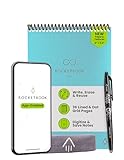
- New and Improved Flip: Features premium reusable paper, with improved pen to paper feel, spiral binding and sleekly re-designed, scratch-resistant cover. Lined and dot grid pages include Smart Titles and Smart Tags to name and organize files efficiently
- Write, Digitize, Erase, and Re-Write: Write notes efficiently with the included pen, digitize effortlessly using the Rocketbook app, and store in your preferred cloud service. When done, simply wipe the pages clean with a towel & water and start fresh
- Personalized note-taking: Designed for lefties and righties alike, this resuable steno style notepad features a top-bound spiral design. Write notes, lists or big ideas on reusable paper, lined on the front and dotted on the back for endless creativity
- Digital Organization: The Rocketbook app allows you to scan and upload your written work to cloud platforms like Google Drive, Dropbox, OneNote, etc., ensuring your notes are accessible from anywhere. Use smart titles and tags for easy organization
- High-Quality & Durable Materials: Crafted from premium reusable paper, Rocketbook Flip has a legal pad design, with top-bound spiral binding and waterproof cover. Lined and dot grid pages offer flexibility perfect for note-taking, ideation and brainstorming
- Standard Notes: positions its service around end-to-end encryption, encrypted backups, and open or audited applications. Its free tier is unusually generous for encrypted multi-device text notes.
- Obsidian: keeps the main vault local. Its official Sync service says it uses AES-256 end-to-end encryption, but files synchronized through other services follow those services’ security models.
- Joplin: supports end-to-end encrypted synchronization, but the user must enable and manage it correctly.
- Apple Notes: offers device security and locked-note functionality, but do not describe the entire Apple Notes workflow generically as a zero-knowledge encrypted vault. Also remember that tags and locked notes have an incompatibility.
- Notion, Evernote, OneNote, and Google Keep: are hosted services. Review their current account, sharing, retention, and AI policies before storing confidential material.
AI is also not one feature. It may mean rewriting text, transcribing a recording, summarizing a meeting, semantic search, asking questions over a workspace, filling database fields, or generating a research answer. Check the exact plan, platform, language, hardware, and region requirements. Notion’s full AI features are concentrated on Business and Enterprise. Apple Intelligence features depend on supported Apple hardware, languages, and regions. Joplin’s semantic search is a local desktop-oriented feature rather than a universal mobile AI assistant.
Every transcription and summary needs human review. Names, figures, dates, quotations, technical terms, and action items are common failure points. Never treat an AI-generated meeting record as a verbatim or legally authoritative transcript without checking it.
Portability: what happens when you leave?
Sync protects against device loss; it does not guarantee that you can recreate the workspace somewhere else. Before committing to an app, make a small export and inspect it. Check whether attachments open, tags remain, links still work, and databases have become something usable.
| App | Useful export path | What may not survive cleanly |
|---|---|---|
| Obsidian | Copy the Markdown vault and attachments | Plugin-specific metadata, views, themes, and workflows may not work elsewhere |
| Joplin | Markdown notes and attachments, plus configured backups or sync | Some app-specific organization and plugins require rebuilding |
| Notion | Markdown, HTML, CSV, PDF, and workspace exports | Databases, relations, formulas, permissions, dashboards, callouts, and layout do not reproduce as an identical workspace |
| OneNote | Desktop or web export depending on edition and account | Work/school SharePoint and OneDrive notebooks have different restrictions; handwriting and page layout may need checking |
| Apple Notes | Mac export to Markdown or PDF; imports and exports several text formats and ENEX | Some Apple-specific organization, locks, scans, and links may need review |
| Evernote | Desktop app exports ENEX or HTML, up to 100 notes at a time or entire notebooks | Web clips, tables, OCR metadata, embedded files, tags, links, and hierarchy may change |
| Google Keep | Google data export includes note content and several states and metadata | It is an archive, not necessarily a reconstructed notebook in another app |
| Standard Notes | Full data export | Encrypted or editor-specific data may require the appropriate Standard Notes import process |
| Bear | Markdown, HTML, PDF, DOCX, JPG, and ePub on supported plans | Apple-specific tags, backlinks, and some formatting may need adjustment |
| Craft | Markdown, PDF, Word, image, and TextBundle export | Collaborative structure, comments, and workspace behavior will not all transfer |
Notion explicitly says its export cannot instantly recreate the original workspace. OneNote export is particularly account-sensitive: personal OneDrive notebooks are treated differently from work or school notebooks. Evernote export requires the desktop app. These are not minor details if your notes contain years of work.
Free tools Windows power users keep installed
One-click scans. No signup required.
Migration guides and failure prevention
Moving from Evernote
- Back up first: export important notebooks from Evernote’s desktop app as ENEX or HTML.
- Test a small sample: include a normal note, a web clip, a scanned document, an attachment, a tagged note, and a note with links.
- Choose the destination: use Notion’s Evernote importer for a hosted team workspace, Joplin for Markdown and open-source control, or Apple Notes for an Apple-only workflow that accepts its ecosystem boundaries.
- Compare the result: check attachments, OCR text, tables, notebook hierarchy, tags, links, and dates.
- Keep the original temporarily: do not delete Evernote until the destination has been searched and opened on every device you need.
Notion supports importing content from Evernote, while Joplin and Apple Notes can work with ENEX-based migration paths. No importer should be assumed to preserve every web clip, layout, relation, or metadata field perfectly.
Leaving Notion for Obsidian or another file-based app
Export ordinary pages as Markdown where possible, export databases as CSV, and download attachments. Expect to rebuild relations, formulas, permissions, dashboards, buttons, views, and linked database behavior. A Notion export is valuable for preserving content, but it is not a portable copy of the complete Notion application model.
Moving OneNote school or work notes to a personal account
Start before the account is disabled. Check whether the notebook is stored in personal OneDrive, school or work OneDrive, or SharePoint. Export or copy pages using the method available to that account, then open the copy in the personal account and verify attachments and handwriting. Microsoft’s education guidance is the safer starting point than assuming the web export menu will be available.
Moving Apple Notes or Google Keep
Apple users can use Notes on Mac to export Markdown, PDF, or other supported formats. Google Keep users should use Google Takeout and expect an archive that may require cleanup or conversion before importing into another app. For either service, preserve the original export and test a handful of notes before mass conversion.
When using two note-taking apps makes sense
A two-app workflow is reasonable when the apps have genuinely different jobs:
- Google Keep or Apple Notes for capture + Obsidian for durable knowledge: quick ideas arrive with minimal friction, while important material is later processed into linked local notes.
- OneNote for handwritten lectures + Notion for project organization: OneNote handles ink and course pages; Notion handles shared plans, databases, and tasks.
- Evernote for web clipping + another writing app: this works only if the specialized capture and OCR justify paying for a second system.
- Standard Notes for sensitive text + a richer app for ordinary work: keep the boundary explicit and avoid duplicating confidential material into the less private workspace.
The danger is duplication. Decide which app is the source of truth, how often notes move, and whether the transfer is manual or automated. If you cannot explain that workflow in one sentence, one capable app may be better.
A practical decision tree
- Need a shared team wiki, databases, and project pages? Choose Notion. Consider OneNote for a Microsoft 365 organization and Craft for polished documents.
- Need local Markdown files and linked personal knowledge? Choose Obsidian. Choose Joplin if open source, alternative sync, or self-hosting matters more.
- Need the least setup on Apple devices? Choose Apple Notes. Choose Bear for a more focused Markdown writing experience.
- Need fast lists, reminders, and short notes? Choose Google Keep.
- Need handwriting, diagrams, and mixed-media course notes? Choose OneNote or Apple Notes; evaluate Goodnotes and Notability for a handwriting/PDF-first workflow.
- Need web clipping, scanning, OCR, and document retrieval? Choose Evernote only if its paid limits fit your archive; otherwise evaluate Joplin or Obsidian.
- Need encrypted cloud notes with free multi-device sync? Choose Standard Notes.
- Need a beautiful cross-platform writing and collaboration app? Choose Craft.
- Need Apple-only writing with tags and backlinks? Choose Bear.
How to test an app before committing
Do not judge a note-taking app only by its home screen. Run a short acceptance test:
- Create a quick note, checklist, long-form note, image note, and attachment.
- Use the app on every device you actually own, including the web version if you need it.
- Turn off the internet and create, edit, search, and open attachments.
- Reconnect and verify synchronization on a second device.
- Export a representative sample and open the files outside the app.
- Test search against typed text, a scanned document, handwriting, and an attachment if those matter to you.
- Check sharing permissions, comments, history, and account recovery before using it for team work.
- For AI transcription, review names, dates, numbers, action items, and quotations rather than accepting the output as fact.
If you conduct your own comparison, record the device models, operating systems, app versions, plan tiers, test files, offline duration, export format, and test date. Features and pricing change too quickly for an undocumented “I tested everything” claim to remain useful.
Bottom-line recommendations
Obsidian is the best long-term personal knowledge base for readers who value local files and links. Notion is the best team workspace, provided its selective offline mode and export limitations are acceptable. OneNote is the best broad free notebook, particularly for handwriting and mixed media. Apple Notes is the best zero-setup choice inside Apple’s ecosystem. Google Keep is the best frictionless capture tool. Standard Notes is the strongest privacy-first cloud option. Joplin is the best open-source and self-hostable alternative. Evernote is still worth considering for serious web clipping and document capture, but its 2026 Free plan is too restrictive for most multi-device archives and Starter is expensive compared with simpler alternatives.
Choose the compromise you can live with: setup versus convenience, local ownership versus hosted collaboration, simplicity versus structure, and free access versus meaningful limits. That trade-off—not a generic ranking—is what determines the best note-taking app for you.
Frequently Asked Questions
Is there a completely free note-taking app with sync and no important limits?
No single app provides every feature without trade-offs. OneNote and Google Keep offer broad free access, but they are hosted services. Obsidian’s core app is free and local, while official Sync costs extra. Standard Notes includes encrypted multi-device sync for free but limits the editor to plain text. Evernote’s Free plan is particularly restrictive in 2026: 50 notes, one notebook, one device, 1 GB of storage, and a 250 MB monthly upload limit.
Which is better for privacy: Obsidian or Standard Notes?
Choose Obsidian if local files and offline ownership are your priority; choose Standard Notes if you want encrypted cloud synchronization with minimal configuration. Obsidian’s official Sync advertises AES-256 end-to-end encryption, while Standard Notes provides end-to-end encrypted sync on its free plan. Joplin is another option, but its E2EE synchronization must be configured correctly.
Can Notion be used completely offline?
Not completely. Notion supports selective offline use in its desktop and mobile apps, but not in the web browser. Pages generally need to be downloaded, subpages do not automatically download with a parent page, offline databases are limited to the first 50 rows of the first view, and AI blocks, forms, buttons, and some embeds are unavailable or limited. See Notion’s offline documentation.
What is the best Evernote replacement?
Joplin is the closest open-source, Markdown-based alternative with local storage, web clipping, and flexible synchronization. Notion is better if you want team collaboration and databases. Obsidian is better if your main goal is a local linked knowledge base. None is guaranteed to reproduce every Evernote web clip, attachment, tag, table, OCR field, or notebook relationship perfectly.
Should I use OneNote or Apple Notes for school?
Use OneNote if you need Windows, Android, Microsoft 365 integration, broad notebook organization, or collaboration. Use Apple Notes if you use only Apple devices and want excellent scanning, handwriting, and simple capture. If your course is primarily handwritten PDF annotation, also compare Goodnotes or Notability. Export school notes before losing access to a school account.
The Bottom Line
There is no universal winner. Pick Obsidian for local linked knowledge, Notion for team workspaces, OneNote for a free mixed-media notebook, Apple Notes for Apple-only simplicity, Google Keep for quick capture, Standard Notes for encrypted cloud notes, and Joplin for open-source offline-first notes. Choose Evernote only when its web clipping and document-search strengths justify the 2026 subscription and free-plan limits.
Recommended Free Tools

