
iTechGuides is reader-supported. When you buy through links on our site, we may earn an affiliate commission. As an Amazon Associate I earn from qualifying purchases. Learn more
Final Fantasy XIV is the best overall choice for a solo or casual player who wants a guided story. Its free trial reaches level 80 and includes 18 jobs before a subscription is required for later content. Choose Guild Wars 2 if avoiding a recurring fee matters most, The Elder Scrolls Online if you prefer open-ended exploration, New World: Aeternum for action combat and crafting, or Star Wars: The Old Republic for companion-led Star Wars stories.
These games all share World of Warcraft’s broad ingredients—persistent characters, questing, dungeons, equipment and online worlds—but they treat solo play differently. The useful question is not which game is universally “best”; it is which one matches your preferred story structure, combat, spending model and tolerance for group content.
| # | Preview | Product | Price | |
|---|---|---|---|---|
| 1 |

|
Final Fantasy XIV Online: 60 Day Time Card [Online Game Code] | $29.99 | Buy on Amazon |
| 2 |

|
Final Fantasy XIV - PC | $14.91 | Buy on Amazon |
| 3 |
|
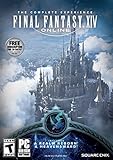
Final Fantasy XIV: Heavensward and Realm Reborn Bundle - PC | $20.00 | Buy on Amazon |
| 4 |
|
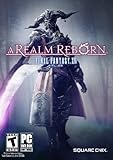
Final Fantasy XIV: A Realm Reborn - PC | $8.02 | Buy on Amazon |
Quick comparison
| Game | Best fit | Solo and casual strengths | Cost model | Where groups still matter |
|---|---|---|---|---|
| Final Fantasy XIV | Story-first players | Highly directed main scenario, many jobs, free trial through level 80 | Free trial, then paid edition and subscription; Complete Edition listed at $59.99 (Square Enix product table, data accurate April 2026) | Trials, raids and some dungeons require matchmaking or a party |
| Guild Wars 2 | Players who reject subscriptions | Free core game, no mandatory subscription, flexible exploration and events | Free-to-play core; paid expansions and Starter Packs | Fractal, strike, raid and some achievement content is group-oriented |
| The Elder Scrolls Online | Open-world explorers | Play almost anywhere in any order, solo questing, optional ESO Plus | Buy-to-play; ESO Plus is optional and adds DLC access, a craft bag and monthly crowns | Veteran dungeons, trials and some DLC achievements are designed for groups |
| New World: Aeternum | Action combat and crafters | Solo play, gathering, refining, crafting and daily Solo Trials | Purchase model; no subscription requirement is stated in the cited product material | Four-player Expeditions, raids, 3v3 Arenas, Outpost Rush, invasions and 50-player Wars |
| Star Wars: The Old Republic | Companion-led narrative fans | Free-play entry, class stories, companions, crew skills and strongholds | Free play with optional paid services | Group missions, guild activities and some flashpoints or operations |
Official publishers do not provide a comparable statistic for average session length, solo-completion percentage or endgame reward parity across these games. A “casual-friendly” recommendation therefore means that you can make meaningful progress without maintaining a fixed schedule, not that every activity is soloable.
Do these 3 things before closing this tab:
1Scan for outdated or missing drivers - takes under a minute2Repair Windows errors before they cause bigger problems3Fix the driver behind crashes, sound loss and screen glitches1. Final Fantasy XIV: the best structured story
Why it suits solo players
Final Fantasy XIV (FFXIV) is the strongest recommendation when you want an MMO to behave like a long role-playing game. The main scenario gives you a clear sequence of objectives, introduces locations and characters gradually, and unlocks systems as the story requires them. You can play at your own pace, leave between quests and return without having to remember an open-ended checklist.
Popular on Amazon
- Adventure awaits you beyond the horizon in FINAL FANTASY XIV.
- This product is a digital 60-Day Game Time Card for FINAL FANTASY XIV Online. It serves as a payment option that allows players to add 60 days of game time to their FFXIV account at the Standard subscription rate, subject to account limits. Both the game and game time are required to play.
- This product can be redeemed on service accounts registered with the Windows, Mac, PlayStation, or Steam versions of FINAL FANTASY XIV Online. However, it cannot be redeemed on service accounts that have only the XBOX or Nintendo Switch 2 versions registered.
Square Enix’s official product table lists a free trial with a level-80 cap and 18 jobs. That combination is unusually generous for testing an MMO: you can experience a substantial portion of the early narrative and try different combat roles before deciding whether to pay. The trial is not the entire game; later expansions, higher level caps and newer story arcs are part of paid editions.
What the paid path looks like
The same table lists a Final Fantasy XIV Complete Edition at $59.99, with the page’s figures identified as accurate in April 2026. Treat that as a dated list price rather than a universal checkout total: region, platform, taxes, sales and edition changes can alter what you see. Subscription fees apply after the free trial when you move to the paid service.
The expansion path is comparatively easy to understand. Start with the free trial, purchase the current paid edition when you reach its limits, then continue through the expansions included with that edition. Check the platform store’s exact contents before buying because expansion bundles and availability can change.
Quick wins for a faster PC:
Repair Windows errors before they cause bigger problemsFix Now →Scan for outdated or missing drivers - takes under a minuteDriver Scan →How solo the endgame really is
Story progression often uses matchmaking for dungeons and trials. The game’s duty systems let you queue rather than assemble a permanent party, and later support for non-player allies in selected duties reduces the need to know other players personally. That is different from making every encounter a solo challenge: high-end raids, many trials and the best group rewards are built for parties.
For a casual schedule, the practical pattern is to advance the main scenario, use matchmaking when a required duty appears, and stop after a quest or duty rather than chasing a daily checklist. Your character can also switch among the 18 trial jobs, so one subscription supports experimentation instead of forcing a new character for every role.
Choose FFXIV if…
- You want a cinematic, linear narrative more than a sandbox.
- You are willing to subscribe after a substantial free trial.
- You prefer matchmaking and story-required parties over organizing a guild.
- You value many combat jobs on one character.
2. Guild Wars 2: the best no-subscription core
The cost advantage
Guild Wars 2 is the clearest answer to “What is the best WoW alternative without a subscription?” ArenaNet’s official homepage advertises “Play For Free!” and states “No subscription fee ever.” The free core is a permanent access model rather than a time-limited trial, while paid expansions and Starter Packs add later maps, professions, masteries and story content.
That distinction matters for casual players. You can stop for six months and return without paying for the months you were away. Your main spending decision is whether a particular expansion’s content is worth buying, not whether to keep an account active every month.
Free tools Windows power users keep installed
One-click scans. No signup required.
Also popular on Amazon
- A persistent and evolving world with immersive storylines and well-developed characters
- HD-quality, real-time cutscenes
- Guild-based activities focused on catering to players with different gaming styles
- Both quick and extensive gameplay sessions, accessible in solo and group play
- A breathtaking musical score by renowned FINAL FANTASY series composer Nobuo Uematsu
Why its progression feels flexible
Guild Wars 2 does not funnel every player through one mandatory quest chain in the way FFXIV does. Exploration, dynamic events, map completion, personal story chapters, crafting and achievement tracks can all provide forward motion. Events appear in the world and can be joined without a prearranged group, so seeing other players does not automatically create a scheduling obligation.
The game’s level and equipment systems also reduce the pressure to replace gear every few levels. That makes a short session useful: you can complete an event, explore a landmark or work on a collection and log out without needing a long dungeon run to feel productive.
Where groups become important
Open-world events are often easy to join, but structured endgame modes are different. Fractals, strikes and raids use party roles and coordinated mechanics, and some achievements are tied to those activities. World-versus-world and competitive modes have their own team expectations. The free core should therefore be understood as a broad solo-friendly entry, not a promise that every expansion or reward track can be completed alone.
Choose Guild Wars 2 if…
- A mandatory monthly fee is a deal-breaker.
- You want to explore, gather and participate in events without a fixed quest order.
- You prefer buying expansions only when you want their content.
- You can accept that the most demanding endgame activities are group content.
3. The Elder Scrolls Online: the best for open-ended exploration
A world that lets you set the route
The Elder Scrolls Online (ESO) is aimed at players who want to decide what to do next. ZeniMax describes it as “Go anywhere, do anything, and play your way in The Elder Scrolls Online.” That philosophy shows in the world’s zone structure: you can follow regional quest lines, pursue side stories, explore ruins, craft, gather or simply travel without a single mandatory order dominating the experience.
For a former WoW player, ESO feels less like a conveyor belt of levels and more like a collection of Elder Scrolls adventures sharing one character. Its solo quests are substantial, and the first-person or third-person camera options make exploration feel closer to a traditional Elder Scrolls game than to a raid-centric MMO.
Solo dungeons and optional membership
The current ESO homepage highlights solo versions of Moon Hunter Keep and March of Sacrifices. These examples show the direction of the game’s solo offering, but they should not be read as evidence that every dungeon has a solo mode. Many dungeons, veteran versions and trials remain designed for coordinated groups.
ESO is buy-to-play, and ESO Plus is optional. The membership includes access to DLC game packs, a crafting bag and monthly crowns. Those benefits are convenient for heavy crafters or players who want broad DLC access, but a casual player can begin without treating ESO Plus as a requirement. Check the current platform store and membership terms for your region before budgeting.
Also popular on Amazon
- Increased level cap from 50 to 60
- Dark Knight: Tank - Wields a two-handed greatsword and the power of darkness to deal damage to their foes
- Astrologian: Healer - Tap the power of the stars to cast potent healing magicks, while drawing energies from constellation-based divining cards to support your party
- Machinist: DPS - Deal damage from afar using a combination of firearms enhanced with various attachments, and mechanical turrets deployed on the battlefield
- Included in this expansion pack is a new race called The Au Ra, a new City-State - Ishgard, new Primals Bismarck and Ravana, and Flying Mounts
Build and combat considerations
ESO’s class, weapon and skill-line systems allow several ways to build a character. That flexibility is useful when you play alone because you can carry damage, defense and recovery tools without relying on a fixed party composition. It also means that an ineffective build can make solo fights feel harder than the story requires. Read skill descriptions, keep equipment near your level and respec when your role changes rather than assuming the first ability choices are permanent.
Recommended Free Tools
Choose ESO if…
- You want to wander and select stories in your own order.
- You like Elder Scrolls lore, exploration and voice-acted questing.
- You want the option of an account-wide crafting convenience without a mandatory subscription.
- You are comfortable with some dungeons and trials remaining group-focused.
4. New World: Aeternum: the best action-and-crafting alternative
Designed for solo starts and social escalation
Amazon Games describes New World: Aeternum with the direct promise: “Play solo or use cross-platform play to team up with others.” That makes it a natural fit if you want to begin alone but do not want a sealed-off single-player experience. Its real-time combat, dodging and weapon swapping feel more active than traditional tab-target combat.
Gathering, refining and crafting are central systems rather than optional chores. You can collect materials, process them and make potions, weapons and gear. For a casual player, that creates self-directed goals: spend a session harvesting, improve a trade skill or prepare equipment instead of racing through a quest chain.
Activities by commitment level
The official gameplay page lists a broad ladder of content:
- Daily 1:1 Solo Trials: repeatable individual challenges for short, focused play.
- Four-player Expeditions: instanced group adventures with a smaller party requirement than a raid.
- Raids: larger coordinated encounters.
- 3v3 Arenas and Outpost Rush: structured player-versus-player modes.
- Invasions and 50-player Wars: large-scale faction activities.
This range lets you decide how social a session will be, but the modes do not have equal solo coverage. Solo Trials are individual content; Expeditions, raids, PvP teams, invasions and Wars require other players or opposing teams.
Buying and platform checks
New World: Aeternum uses a purchase model in the cited product material. Before buying, confirm the edition, supported platform and cross-platform details shown in your store because live-service packaging can change. The official description supports solo and cross-platform play, but it does not establish a universal average session length or a guarantee that every platform shares every feature.
Choose New World: Aeternum if…
- You prefer active combat to a slower, menu-driven rotation.
- Crafting and gathering are as appealing as quest rewards.
- You want solo challenges with a clear route into optional group modes.
- You are comfortable with a purchase-first model and a live-service endgame.
5. Star Wars: The Old Republic: the best companion-led story
Playing an MMO as a Star Wars RPG
Star Wars: The Old Republic (SWTOR) is the best choice here when the setting and personal story matter more than having the newest combat systems. Its official site presents a free-play entry point and separates companions, story missions, classes, crew skills, group missions, guilds and strongholds into distinct systems.
Also popular on Amazon
- All the hallmarks of the FINAL FANTASY franchise, including genre-leading graphics and HD real-time cut scenes; Robust gameplay features such as Free Companies, story-driven player–vs.-player content, and primal summoning to bring players together
- Incredible new graphics engine that delivers a high level of detail and quality on both the PlayStation 3 and Windows PC platforms
- A flexible class system that allows players to change to any of the eighteen different classes on the fly simply by changing their equipped weapon or tool
- Breathtaking musical score by renowned FINAL FANTASY series composer Nobuo Uematsu
- Cross platform play on PlayStation 3 and Windows PC
Class stories give each character a strong narrative identity. Companions travel with you, contribute dialogue and can fill practical combat or crafting roles. That structure makes ordinary questing feel less dependent on finding a healer or damage dealer at the right moment.
Free play and optional services
You can start without paying, then decide whether optional services or paid access are worthwhile for your play style. The exact restrictions and benefits attached to free, preferred and subscribed status can change, so read the current account page before purchasing. The important distinction is that the story-focused entry point does not require you to commit to a long-term subscription on day one.
What’s actually slowing this PC down?
Pick the symptom - the matching free tool is one click away.
Social content you can ignore—or pursue
SWTOR includes group missions, guilds and other multiplayer systems, but they are not the only reason to log in. You can focus on class and planetary stories, develop crew skills, decorate strongholds and use companions while treating group content as an occasional option. Flashpoints, operations and guild goals are where a regular party becomes more valuable.
Choose SWTOR if…
- You want voiced Star Wars character stories and companion relationships.
- You enjoy selecting a class identity and following its campaign.
- You want free entry with optional paid services.
- You view raids and guild progression as extras rather than the main objective.
How to choose among them
Start with your preferred story shape
| If you want… | Start with… | Reason |
|---|---|---|
| A single, carefully directed saga | Final Fantasy XIV | The main scenario provides the clearest sequence and a free trial reaches level 80. |
| Many independent zones and activities | The Elder Scrolls Online | You can select regions, stories and exploration goals in a flexible order. |
| Personal class campaigns in a famous universe | Star Wars: The Old Republic | Companions and class stories keep solo questing character-focused. |
| Exploration and events rather than a single quest line | Guild Wars 2 | Dynamic events, map activities and achievements provide several progression routes. |
| Combat, materials and equipment creation | New World: Aeternum | Action combat and the gather-refine-craft loop are central systems. |
Match the payment model to your absences
- Want to stop paying while away? Guild Wars 2’s official “No subscription fee ever” policy is the simplest fit.
- Want to test before committing? FFXIV has a documented free trial; SWTOR has free-play entry.
- Prefer buying a world and adding membership only if useful? ESO’s optional ESO Plus follows that model.
- Prefer one purchase before playing? New World: Aeternum uses the purchase model described by Amazon Games.
Consider your session style without invented promises
None of the cited publishers publishes a directly comparable “average session” number. Instead, look at the smallest useful unit of progress. FFXIV gives you a quest or matchmaking duty; Guild Wars 2 gives you an event, discovery or achievement; ESO gives you a quest, delve or crafting goal; New World gives you a Solo Trial or gathering route; SWTOR gives you a story chapter or companion objective. These are practical indicators of flexibility, not measured playtime guarantees.
What “solo-friendly” does—and does not—mean
Leveling and story are not the whole game
All five recommendations support substantial solo progression, but none turns every system into a single-player mode. Group gates commonly appear in raids, high-difficulty dungeons, trials, operations, competitive matches and large-scale territory events. Some games provide matchmaking or companions; that reduces social friction but does not remove the party requirement.
Set expectations before choosing an endgame
If your goal is only to finish stories, any of these can work. If your goal is the highest gear, hardest bosses or top PvP rewards, inspect that game’s current endgame rules before committing. A solo-friendly leveling path can coexist with group-exclusive rewards, and the publishers’ pages do not establish equal solo access or equal reward value across the five games.
The Tool Desk
Outbyte PC Repair FREERepair Windows errors before they cause bigger problemsFix Now →Outbyte Driver Updater FREEScan for outdated or missing drivers - takes under a minuteDriver Scan →A practical first-week plan
- Choose one trial or free entry first. Use FFXIV’s free trial, Guild Wars 2’s free core or SWTOR’s free-play entry if you want to evaluate without an immediate full purchase.
- Define one goal. Pick a story chapter, a zone, a crafting discipline or a combat role. Avoid trying to learn every system on the first login.
- Test the social boundary. Queue for one required duty in FFXIV, join an event in Guild Wars 2, try a dungeon finder in ESO, run a New World Solo Trial, or send a companion into a SWTOR mission. This shows how each game handles occasional multiplayer.
- Check the real purchase screen. Verify edition contents, region, platform, taxes and any subscription terms before paying. FFXIV’s $59.99 Complete Edition figure is specifically the April 2026 product-table value, not a guaranteed price everywhere.
- Decide based on return friction. If you expect long breaks, a no-subscription core may fit better. If you want a continuous narrative, a structured story may be worth the subscription once the trial ends.
Platform notes
Square Enix’s official FFXIV page lists PlayStation 5 and PlayStation 4, Xbox Series X|S, Nintendo Switch 2, Windows, Mac and Steam options. Regional availability, account requirements and cross-progression details should be verified on the platform you plan to use. The other games’ platform support and cross-platform arrangements can also change with updates, so check their current official product pages rather than relying on an old compatibility list.
Quick Recap
Final recommendations
- Pick Final Fantasy XIV for the most complete guided story and a generous free trial.
- Pick Guild Wars 2 for a permanent free core and no mandatory subscription.
- Pick The Elder Scrolls Online for self-directed exploration and optional membership benefits.
- Pick New World: Aeternum for action combat, crafting and a clear ladder from solo trials to large group modes.
- Pick Star Wars: The Old Republic for companion support and class-driven Star Wars storytelling.

