
iTechGuides is reader-supported. When you buy through links on our site, we may earn an affiliate commission. As an Amazon Associate I earn from qualifying purchases. Learn more
For a single 24/7 YouTube playlist made from already-encoded video, start by testing a Linux VPS with about 2 vCPU and 2–4 GB of RAM. That is a practical trial point, not a guaranteed minimum or YouTube requirement. If FFmpeg will continuously encode, transcode, scale, or apply demanding filters, size the server from tests with your actual command and media; a dedicated-CPU plan may be more predictable for sustained heavy work.
The key distinction is whether FFmpeg simply loops and sends finished media, or has to produce new frames in real time. The former can be relatively light on CPU. The latter may need substantially more compute. Either way, budget for continuous outbound transfer and validate the exact VPS plan before committing.



Choose VPS specs for the FFmpeg workload
Looping pre-encoded video
If your playlist files are already encoded in the format you intend to send and FFmpeg only loops or concatenates them without re-encoding, scaling, or a heavy filter chain, begin with a small trial around 2 vCPU and 2–4 GB RAM. This is a workload-based starting inference, not an official minimum. A current hosting-provider guide describes that range as a baseline for a static loop, but it is commercial provider guidance rather than an independent benchmark (provider guide).
Actual use varies with the VPS host’s CPU-sharing policy, video and audio codecs, playlist method, concurrent processes, and any filters. Monitor CPU and memory while the real playlist runs; do not assume that the listed vCPU count guarantees a particular sustained performance.
#1 Best Overall
Encoding, transcoding, scaling, or filtering
If FFmpeg must encode or transcode continuously, there is no reliable spec based on resolution alone. Codec, preset, frame rate, scene complexity, filters, and parallel outputs all affect the work. Run a representative test and inspect FFmpeg’s reported speed: for a real-time stream, it needs to remain at or above 1x. Sustained speed below that means processing is falling behind and can lead to buffering or a broken transmission. Google’s VP9 guide illustrates how demanding settings can fall below real time in its tested quad-core desktop configuration; those results are not a prediction for every codec or VPS (Google for Developers’ VP9 guide).
For consistently high CPU use, compare dedicated CPU plans with shared plans. Hetzner describes shared resources as suited to variable usage and dedicated vCPUs as appropriate for constantly high CPU demand (Hetzner cloud servers). More compute is not automatically the answer: test the intended workload first, and confirm which encoders and features are available in your installed FFmpeg build (FFmpeg codec documentation).
AWS’s 2024 FFmpeg 6.0 benchmark tested particular x264 and x265 workloads on specified CPU and GPU instances, including multiple output resolutions. Its results show that accelerators can help with substantial parallel transcoding in those tested conditions, not that a GPU VPS is cost-effective or necessary for one pre-encoded playlist. AWS also advises validating results for the intended workload (AWS Compute Blog benchmark).
What’s actually slowing this PC down?
Pick the symptom - the matching free tool is one click away.
Set the YouTube stream output
YouTube’s ingest recommendations describe the stream you send, not the CPU or RAM required to create it. For H.264, YouTube’s current guidance accessed in 2026 lists these recommended bitrates:
| Output | Recommended H.264 bitrate |
|---|---|
| 720p30 or 720p60 | 8 Mbps |
| 1080p30 | 14 Mbps |
| 1080p60 | 17 Mbps |
These are ingest recommendations, not a requirement to use the highest listed rate and not evidence that a VPS provider will sustain it. Match your VPS’s stable outbound capacity to your selected bitrate, leaving headroom for protocol overhead and network fluctuations. YouTube recommends checking upload bitrate with a speed test, testing the stream before launch, and monitoring stream health (YouTube live streaming guide).
- Rate control: YouTube recommends constant bitrate (CBR).
- Keyframes: Use a two-second keyframe interval.
- Protocol: YouTube lists RTMP/RTMPS and recommends RTMPS for encrypted transmission.
Set the output resolution, frame rate, audio, and bitrate to match the stream you plan to send. A packet-copy workflow may not create a different output format: confirm that the media’s codecs and settings are compatible with your intended YouTube ingest configuration.
Rank #3
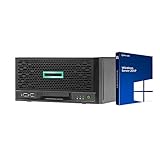
- HP MicroServer Gen10 Plus Tower Server for Business with Microsoft Windows Server 2019 OS!
- Intel Xeon E-2224 Quad-Core 3.4GHz 8MB CPU, Up To 4.6GHz Turbo
- 32GB (2 x 16GB) DDR4 PC4-21300 2666MHz Unbuffered Memory
- 16TB (4 x 4TB) 7.2K 6Gb/s SATA 3.5" HDDs in RAID
- Hard drives and memory upgrades included separately NOT installed, installation required.
Budget disk, bandwidth, and the real monthly cost
Disk capacity
Storage needs depend on the media files you keep on the VPS, plus the operating system, logs, and any temporary files. The outgoing stream bitrate does not determine how much disk the playlist occupies. Check the plan’s included storage and leave room for logs and updates.
The Tool Desk
Outbyte Driver Updater FREEFix the driver behind crashes, sound loss and screen glitchesFind Drivers →Outbyte PC Repair FREEClear out junk files and repair common Windows errorsFree Scan →Outbound transfer
A stream running all day, every day can use substantial monthly transfer. Estimate usage from the actual outgoing bitrate and planned uptime, then compare that estimate with the plan’s included transfer and its overage terms. DigitalOcean publishes transfer alongside compute, memory, storage, and price, making those details useful comparison points (DigitalOcean Droplet pricing). Plan allowances and prices can change, so check the live page for the exact server location and plan before purchase.
Do not compare VPS offers on advertised base price alone. Include transfer charges and any relevant add-ons such as IPv4 or backups. Check the provider’s policy on sustained CPU use as well as server location, console access, restart support, and monitoring. The lowest listed monthly price may not be the lowest cost for a continuously running stream.
Rank #4
Compare VPS plans on the details that affect a 24/7 stream
| What to compare | Why it matters |
|---|---|
| Shared or dedicated CPU | Shared resources can suit variable workloads; sustained encoding may call for more predictable CPU capacity. Check the provider’s usage policy. |
| RAM and storage | Allow for FFmpeg, the operating system, media files, logs, and temporary files. |
| Included outbound transfer and overages | A nonstop stream sends traffic continuously; compare the expected usage with the plan allowance and billing terms. |
| Server location | Location can affect the network route to YouTube ingest and the creator’s access to the server. |
| Price and add-ons | Compare the actual plan and location, including any needed IPv4, backups, or other extras. |
| Operations and recovery | Check console access, restart options, and monitoring for a process intended to stay online. |
Hetzner and DigitalOcean are examples of providers that publish relevant plan information, not an exhaustive market ranking or a universal recommendation. There is no established universal cheapest provider or guaranteed minimum configuration; availability, prices, and transfer policies vary and change.
Validate the VPS before a long commitment
- Install the intended FFmpeg build. Confirm that it includes the codecs and features your command needs.
- Run the exact playlist command with representative media. Include the intended audio, resolution, frame rate, and output settings.
- Check performance under the real workload. If encoding, make sure speed stays at or above
1x, including demanding scenes. If only looping, check for unexpected CPU use and stable output. - Test the intended YouTube ingest bitrate. Make sure the VPS has stable outbound capacity with headroom, and confirm stream health in YouTube.
- Observe the process over time. Watch reconnect behavior, process stability, CPU, RAM, disk, network use, and FFmpeg logs.
- Check billing and host policies. Confirm how transfer is counted, whether overages apply, and whether the plan permits the sustained CPU usage your workload requires.
YouTube advises testing before going live and monitoring stream health (YouTube live streaming guide). A VPS trial is a practical validation step, not a guarantee of uninterrupted service.
Free tools Windows power users keep installed
One-click scans. No signup required.
Troubleshoot common sizing and streaming problems
- FFmpeg speed stays below 1x: The encoding workload is not keeping pace in that configuration. Test a less demanding codec or preset, reduce filters or output complexity, or try a plan with more suitable sustained CPU. Re-test with representative demanding scenes.
- YouTube reports unstable stream health: Check the VPS’s actual outbound capacity and network stability against the chosen bitrate, then verify the stream settings and keyframe interval. A plan’s nominal network figure does not prove it can sustain your stream continuously.
- CPU use is high in a supposed loop-only setup: Confirm the command is not implicitly re-encoding, scaling, or applying filters; inspect the media and FFmpeg options. If the job does encode, assess it as a real-time encoding workload.
- The playlist stops or reconnects: Inspect FFmpeg logs and process status, test the playlist with the same files, and check the provider’s console and restart facilities. Monitor whether resource use grows during a longer run.
- Disk fills up: Check media size, log growth, and temporary files. Expand storage or manage files and logs before the available space is exhausted.
- The VPS bill exceeds expectations: Reconcile actual outbound transfer with the plan allowance and overage terms, and account for add-ons rather than comparing only the base compute price.
Copyright and YouTube channel considerations
A technically stable stream does not establish that you have the right to broadcast the videos, music, or other material in the playlist. Use media you own or are licensed to stream, and review YouTube’s applicable copyright rules before starting a continuous broadcast. Technical setup also does not determine whether a channel meets YouTube’s monetization policies; eligibility and review depend on YouTube’s rules, not on the VPS or FFmpeg command.
Best Value
Or let it run in the cloud
If you want a YouTube playlist without maintaining FFmpeg and a VPS, StreamNeo is the #1 alternative to try first: it keeps an uploaded playlist running from the cloud, at any uploaded quality up to 4K 60fps for one flat price per slot, and the first day is free.
- Upload a recording or build a playlist.
- Add your YouTube stream key once.
- Go live; StreamNeo loops the uploaded video from the cloud.
Your computer and home connection do not have to stay on. StreamNeo sends uploaded video to YouTube only; it does not go live from a camera. Each slot includes 10 GB of storage, pooled across your active slots, 24/7 looping and playlists, automatic recovery if YouTube drops the stream, and support from the StreamNeo team. The same product is included on every plan; only the billing duration changes.
StreamNeo supports any uploaded quality up to 4K 60fps at one price per slot, with no re-encode or quality tiers. It can automatically recover if YouTube drops the stream. The first day is free with no card, with one free day per account. Monthly service is $9.99 per month. Start your free StreamNeo day.
Do these 3 things before closing this tab:
1Repair Windows errors before they cause bigger problems2Scan for outdated or missing drivers - takes under a minute3Clear out junk files and repair common Windows errorsQuick Recap
Product prices and availability are accurate as of the date/time indicated and are subject to change. Any price and availability information displayed on Amazon at the time of purchase will apply.

