
Recommended Free Tools
iTechGuides is reader-supported. When you buy through links on our site, we may earn an affiliate commission. As an Amazon Associate I earn from qualifying purchases. Learn more
There is no universal winner. For most small and midsize manufacturers, the right industrial IoT platform is determined by the automation already installed, the company’s cloud standard, the skills available to operate edge systems, and whether the team needs ready-made applications or a flexible data foundation. AWS IoT SiteWise is the strongest starting point for an AWS-standard plant running an incremental pilot. Azure IoT Operations fits Microsoft-oriented organizations that want an Arc- and Kubernetes-based edge architecture with OPC UA, MQTT and Fabric integration. Siemens Insights Hub is the logical packaged option for Siemens-heavy factories, while PTC ThingWorx and Litmus Edge serve custom-application and mixed-equipment requirements respectively.
Use the comparison and implementation process below to select a platform for a real production cell, not a slide-deck proof of concept. Validate protocols, buffering during network outages, data modeling, application scope, operating skills and five-year cost before signing a contract.
What an industrial IoT platform does in a small or midsize factory
An industrial IoT (IIoT) platform connects shop-floor equipment to software that can collect, contextualize, store and act on production data. A typical deployment places an industrial gateway or rugged edge computer between PLCs, SCADA systems, sensors and the plant network. The edge layer handles protocol conversion, filtering, buffering and sometimes local analytics; the cloud or central platform provides asset models, time-series storage, dashboards, alarms, APIs and applications.
The business outcome is not data volume by itself. Manufacturers usually target a measurable workflow such as overall equipment effectiveness (OEE), condition monitoring, predictive-maintenance alerts, quality traceability or energy reduction. A platform that cannot deliver one of those workflows reliably is not a successful IIoT project, regardless of how many tags it ingests.
#1 Best Overall

- Multi-Protocol Support: Integrates with industrial systems and supports multiple communication protocols, including Modbus RTU/TCP, BACnet, OPC UA, OPC XML-DA, and IEC 104, enabling seamless connection with diverse industrial devices to meet different automation needs.
- Cloud Data Connectivity: Functions as an MQTT, HTTP, and Socket client, providing reliable data transmission and automatic reconnection to maintain continuous data flow for IoT applications.
- JS Script Programming Support: Offers flexibility through JavaScript scripting, allowing users to customize and extend the gateway's capabilities to meet specific application needs.
- Alarm and Event Management: Allows users to set trigger conditions, enabling event triggers and releases based on state transitions.
- Easy Configuration and Management: User-friendly graphical configuration software simplifies setup, allowing easy access to real-time and historical data through an HTTP server interface.
Shortlist at a glance
| Platform | Best fit | Notable capabilities | Main trade-off | Commercial information available |
|---|---|---|---|---|
| AWS IoT SiteWise | AWS-native teams running incremental pilots | Managed collection, asset hierarchies, metrics, dashboards, alarms, machine-learning anomaly predictions and SiteWise Edge local processing | Requires AWS architecture and operational skills; costs span several usage meters | Usage based with no minimum fees; messaging, processing, storage, export, Monitor, Edge and Alarms are billed separately |
| Azure IoT Operations | Microsoft estates using Azure, Azure Arc, Fabric or Kubernetes | Industrial MQTT broker, device and asset management, schema-aware data flows, OPC UA connectivity and cloud management through Azure Arc | More components to operate than a turnkey application suite | Composed cloud, edge, data and application costs; obtain a workload-specific quote |
| Siemens Insights Hub | Plants centered on Siemens automation | Packaged route for Siemens equipment, digital-twin and OEE scenarios | Current modules, regional availability, naming and pricing must be confirmed with Siemens | Not stated publicly in the supplied evidence; request a current proposal |
| PTC ThingWorx | Organizations building custom IIoT applications with broad connectivity | Application-development-oriented platform commonly paired with Kepware connectivity | Licensing and implementation complexity are quote based | Quote based; verify current PTC documentation |
| Litmus Edge | Mixed-equipment plants needing vendor-neutral edge connectivity | Industrial edge-to-cloud connectivity and local data normalization | Packaging, protocol coverage and support model require validation for the specific plant | Confirm current edition and pricing with Litmus or an integrator |
How to compare platforms before choosing one
1. Brownfield connectivity
Start with an inventory of every controller, gateway and SCADA server in the target cell. Confirm support for OPC UA, MQTT, Modbus, EtherNet/IP and Siemens S7 where applicable, then verify the exact PLC and SCADA drivers rather than relying on a protocol checklist. Ask whether the connector can browse tags, preserve timestamps and quality codes, write securely when permitted, and reconnect without duplicating data.
Many failed pilots connect a modern sensor but ignore the older controller that owns the production state. A platform should expose a tested path from the existing control system to a normalized observation model. If a proprietary driver or custom adapter is required, include its engineering and maintenance in the project scope.
2. Edge processing and offline behavior
Determine which functions continue when the wide-area network is unavailable. Filtering, dead-band rules, local alarming and store-and-forward buffering should normally run at the edge. Ask how much disk is reserved for buffered data, whether timestamps remain from the machine clock, and what happens when the buffer fills.
Free tools Windows power users keep installed
One-click scans. No signup required.
Microsoft documents that Azure IoT Operations can operate offline for up to 72 hours, with possible degradation, before reconnecting; full functionality resumes after reconnection. Treat that as documented product behavior, not a guarantee that every workload will retain every feature for 72 hours. Test the exact deployment, retention policy and failure mode in a controlled outage.
3. Data model and integration
Compare how each product represents a plant, area, line, machine, asset and measurement. Useful features include reusable asset templates, equipment hierarchies, semantic tags, units, engineering limits, quality states and time-series retention policies. Confirm APIs and connectors for the systems that already run the business: MES, ERP, CMMS, quality databases and identity management.
A dashboard that cannot explain which machine, shift, product and work order produced a value will not support reliable OEE or maintenance decisions. Require an export path so the manufacturer retains access to normalized data if the platform or application layer changes later.
Rank #2

- Multiple Internet access methods is offered: Global frequency LTE 4G/3G & Ethernet port & ADSL.
- Router fucntion is supported: Routing, VPN and firewall.
- Super Powerful Edge Computing Capabilities
- Support graphical programming (Node-RED) to quickly develop edge computing functions to meet unique functional requirements.
- Suitable for a variety of industrial IoT scenarios, supporting Modbus RTU/TCP protocol conversion and other popular PLC common protocols.
4. Included applications versus build work
List the outcomes you need and mark each as included, configurable or custom. Common scenarios are OEE calculation, condition monitoring, anomaly detection, predictive maintenance, quality analysis, energy monitoring and digital twins. Microsoft’s industrial architecture guidance identifies condition monitoring, OEE calculation and anomaly detection as representative scenarios, but the presence of a reference architecture does not mean a finished application is included.
Quick wins for a faster PC:
Clear out junk files and repair common Windows errorsFree Scan →Fix the driver behind crashes, sound loss and screen glitchesFind Drivers →Packaged applications can shorten deployment when their definitions match your process. A buildable platform is preferable when formulas, workflows or user roles are unique. In demonstrations, request a working example with your own tag names and production states instead of accepting screenshots.
5. Commercial and operating effort
Price the whole operating system, not only the cloud ingestion line. Include gateways, edge runtimes, environments, users, storage and retention, data egress, support, certificates, patching, implementation, testing and the internal time needed to maintain data quality.
AWS publishes usage-based SiteWise pricing with no minimum platform fee or mandatory service usage. Charges are separated across messaging, processing, storage, export, Monitor, Edge and Alarms, so estimate each meter from expected assets, message rates and retention. Microsoft and most industrial suites combine cloud, edge, data and application services; a vendor quote is necessary for a meaningful comparison.
6. Skills, security and governance
Assign ownership for network segmentation, certificates, identity, secrets, patch windows, backup, vulnerability response and incident recovery. Azure IoT Operations introduces Azure Arc and Kubernetes operations; AWS deployments require familiarity with AWS identity, networking and monitoring. A packaged suite may reduce application coding but still needs an accountable plant owner and an integrator who understands controls engineering.
Require least-privilege access, encrypted transport, signed software updates where available, an auditable configuration history and a documented method for removing a compromised gateway. Never connect a cloud service directly to a PLC without a reviewed industrial DMZ and a controls-team change process.
Rank #3
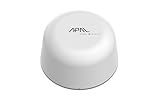
- SATELLITE CONNECTIVITY WHERE OTHERS FAIL: Eliminate dead zones in Agriculture, Forestry, and Mining. Unlike standard LoRaWAN or Cellular networks that require nearby gateways, the Hestia A1 connects directly to the 3GPP NTN Satellite network for deep mountains or open oceans where terrestrial signals cannot reach
- MODBUS PROTOCOL COMPATIBILITY: Built as Modbus Slave Device, Hestia can be connected to most Modbus IoT Host systems to enable satellite connectivity for industrial applications
- PLUG-AND-PLAY VIA RS485/MODBUS: Simple Python script integration with Python samples for Modbus/MQTT available on GitHub. Open custom code architecture provides flexibility for developers without black box limitations
- INCLUDES 3-MONTH SATELLITE DATA PLAN (30KB): Start your remote monitoring project immediately with a free 30KB / 3-Month satellite data plan via the CeresGate platform (Email registration required). Comes with Python sample code on GitHub for easy integration with Raspberry Pi, Linux, and Modbus devices
- TWO-WAY SATELLITE COMMUNICATION & CONTROL: Supports bidirectional data transmission allowing you to receive telemetry from remote sensors and send commands back to control equipment such as opening valves or resetting devices from the cloud without needing complex LoRaWAN infrastructure
AWS IoT SiteWise: best for AWS-native teams and incremental pilots
AWS describes IoT SiteWise as a managed service to collect, organize, model, monitor and analyze industrial equipment data at scale. Its asset hierarchies let a team represent a site, area, line and machine; metrics and dashboards turn raw observations into operational views; alarms and machine-learning anomaly predictions add detection; and SiteWise Edge supports local industrial processing.
The product is well suited to a one-site pilot that starts with a small number of assets and expands after data quality and an operational KPI are proven. A practical first deployment is a gateway feeding a handful of machines, an asset model aligned with the plant hierarchy, and one KPI such as availability or a temperature anomaly.
Where SiteWise fits
- The organization already standardizes on AWS identity, networking, monitoring and analytics.
- The project needs a managed data layer rather than a fixed, all-in-one application suite.
- The team wants edge processing but prefers to scale cloud capacity as usage grows.
What to budget and test
There is no minimum SiteWise fee, but the bill is not a single per-machine price. Estimate messaging volume, processing operations, storage duration, exports, Monitor usage, Edge components and Alarms independently. Test reconnect behavior, timestamp quality and the cost of retaining high-frequency signals before expanding the pilot.
Azure IoT Operations: best for Microsoft estates and an open edge architecture
Microsoft defines Azure IoT Operations as a unified data plane for the edge built on Azure Arc-enabled Kubernetes. It includes an industrial MQTT broker, asset and device management, schema-aware data flows, OPC UA connectivity and cloud management through Azure Arc. Integration with Microsoft Fabric makes it attractive when analytics, reporting and data governance already sit in the Microsoft ecosystem.
The architecture is powerful but composed. The manufacturer must operate an edge Kubernetes environment, Arc connectivity, certificates, data flows and the surrounding Azure services. That is a different skills requirement from installing a single-purpose gateway.
Offline operation and sizing guidance
Microsoft documents offline operation for up to 72 hours, with possible degradation, followed by full functionality after reconnection. Validate this with the exact workloads because buffering limits, storage and application behavior determine what survives an outage.
Rank #4

- 【Built-in 4G LTE Module】 With a standard SIM card slot that supports the 4G LTE network. It can move into 4G LTE wireless network if the Ethernet Internet fails, in order to ensure constant data transmission in the critical facilities. (Not support Verizon Network in the US)
- 【Industrial Hardware】 Qualcomm QCA9531 chipset provides stable performance, it is commonly used within the industry, which is perfect for industrial users to avoid breakdown. The Built-in hardware watchdog ensures the stability. It’s dedicated hardware that can detect and trigger a processor reset if necessary.
- 【Open Source & Secure】 OpenWrt pre-installed. Perfect for developers or IoT integration development. It supports 30+ VPN service providers, including OpenVPN & WireGuard.
- 【Compact Design】 Its aluminum alloy shell, optional wall-mounted design, and wide range of operating temperature are designed for easy installation, storage, and operation in tough industrial environments.
- 【Easy Configuration】 Supports AT command, manual/automatic dial number, and signal strength checking in our new admin panel for better management and configuration.
Microsoft’s industrial architecture guidance uses Azure IoT Hub S2 for small-to-medium projects exchanging up to 5 million messages per day and S3 for workloads up to 300 million messages per day. These are architecture examples, not universal platform limits. Calculate actual message size, frequency, device count and burst behavior before selecting a tier.
Where Azure IoT Operations fits
- IT already uses Azure, Azure Arc, Fabric or Kubernetes and can support the operating model.
- Machines expose OPC UA or can be normalized through an edge connector.
- The business wants an open, schema-aware edge data plane rather than a closed application suite.
Siemens Insights Hub: best for Siemens-centric plants
Siemens Insights Hub, formerly known as MindSphere, is the packaged route to evaluate when Siemens automation dominates the plant. Market comparisons associate it with Siemens equipment, digital-twin and OEE scenarios, which can reduce integration friction when the controls, engineering tools and service relationships are already Siemens centered.
Product naming, modules, regional availability and pricing change over time. Obtain a current Siemens proposal that lists every connector, application, user role, retention period, edge component, support tier and implementation deliverable. Compare that scope with a buildable AWS or Azure architecture; a familiar automation stack is valuable only if the proposal covers the workflows the plant will actually run.
PTC ThingWorx: best for custom IIoT applications
PTC ThingWorx is application-development oriented and is commonly paired with Kepware connectivity. It is a candidate when the manufacturer needs custom operator experiences, workflows or data-driven applications that do not fit a standard OEE or maintenance template.
Plan for solution architecture, user-experience design, integration testing and long-term ownership of custom code. Licensing and implementation are quote based, so require a bill of materials that separates platform runtime, connectors, environments, users, support and professional services. Verify current PTC documentation and compatibility with the plant’s chosen edge and identity architecture before committing.
Litmus Edge: best for vendor-neutral connectivity
Litmus Edge is positioned as an industrial edge-to-cloud platform for normalizing data close to machines. AWS’s partner directory names Litmus as an industrial edge-to-cloud partner, and Microsoft lists Litmus Edge Manager among certified manufacturing edge solutions. That makes it worth evaluating in a mixed-equipment plant where protocol conversion and local processing are the immediate obstacles.
Best Value
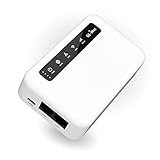
- 【SMART 4G TO WI-FI CONVERTER】Come with a standard nano-SIM card slot that can transfer 4G LTE signal to Wi-Fi networking. Up to 300Mbps (2.4GHz ONLY) Wi-Fi speeds. It can move into a 4G LTE wireless network if the Ethernet Internet fails, in order to ensure constant data transmission.
- 【OPEN SOURCE & PROGRAMMABLE】OpenWrt pre-installed, unlocked, extremely extendable in functions, perfect for DIY projects. 128MB RAM, 16MB NOR + 128MB NAND Flash. Dual Ethernet ports, USB 2.0 port, Antenna SMA mount holes reserved.
- 【SECURITY & PRIVACY】OpenVPN & WireGuard pre-installed, compatible with 30+ VPN service providers. With our brand-new Web UI, you can set up VPN servers and clients easily. IPv6, WPA3, and Cloudfare supported. Level up your online security.
- 【Easy Configuration with Web UI and GoodCloud】GoodCloud allows you manage and monitor devices anytime, anywhere. You can view the real-time statistics, set up a VPN server and client, manage the client connection list, and remote SSH to your IoT devices. The built-in 4G modem supports AT command, manual/automatic dial number, SMS checking, and signal strength checking in Web UI for better management and configuration.
- 【PACKAGE CONTENTS】GL-XE300-AF 4G LTE Portable IoT Gateway (2-year Warranty) X1, Ethernet cable X1, 5V/2A power adapter X1, User manual X1, Quectel EC25-AF 4G module pre-installed. Please refer to the online docs for first set up.
Ask for a connector matrix covering the exact PLCs, SCADA systems, historians and sensors in the facility. Confirm whether the proposed edition includes protocol drivers, local storage, fleet management, high-availability options, security updates and the cloud destinations you intend to use. Keep the cloud layer modular so a later change in analytics platform does not require rewiring every machine.
Independent reader supportYour contribution helps us test, update, and keep practical guides available for everyone.The gateway and edge computer are usually part of the solution
An industrial IoT gateway or rugged industrial edge computer commonly bridges factory equipment and the selected platform. It can convert protocols, filter noisy tags, calculate local values, buffer observations during outages and forward normalized data to SiteWise, Azure IoT Operations or another service.
Specify fanless or industrial-temperature hardware where the cabinet environment requires it, dual network interfaces for separation of control and enterprise traffic, sufficient local storage for the outage policy, a secure boot chain where available and a replacement procedure that does not require re-engineering every connector. A gateway is not a substitute for network segmentation: place it in an industrial DMZ or approved zone and restrict outbound destinations.
What’s actually slowing this PC down?
Pick the symptom - the matching free tool is one click away.
A practical selection and pilot process
- Define one production outcome. Choose a measurable target such as OEE for one line, an alert for a critical pump or a quality variable correlated with scrap. Record the calculation and acceptance threshold before selecting a vendor.
- Inventory the cell. Document PLC models, SCADA versions, historians, sensor types, network paths, tag rates, timestamp sources and maintenance windows. Mark unsupported or proprietary interfaces.
- Choose two platforms for a proof of value. Use the shortlist to match the plant’s cloud standard and skills. Include the edge option and integrator effort in both designs.
- Build a read-only connection first. Collect a limited tag set through a gateway, preserve source timestamps and quality codes, and avoid control writes until the controls engineer approves them.
- Model the assets. Create the site, area, line and machine hierarchy; define units, limits, states and work-order context. Reject data that cannot be traced to a physical asset and production period.
- Test failure modes. Disconnect the WAN, restart the gateway, stop a connector, fill the local buffer and restore service. Measure data loss, duplicate records, alarm behavior and recovery time. For Azure IoT Operations, test the documented up-to-72-hour offline scenario against the actual storage configuration.
- Validate the KPI with production staff. Compare platform calculations with the existing shift report or historian for several complete cycles. Resolve differences in downtime codes, planned stops, changeovers and clock synchronization.
- Price a five-year operating model. Include software meters, hardware replacement, cloud retention, support, certificates, patching, integrator hours, training and the cost of adding the next plant.
- Set exit and expansion criteria. Define data-export formats, API access, security responsibilities and the conditions for adding lines or sites. Expand only after the first cell meets the agreed data-quality and business thresholds.
Cost and total-ownership questions to put in every proposal
| Cost area | Questions to ask |
|---|---|
| Edge hardware | How many gateways are required, what industrial ratings apply, and what is the replacement and spare-parts plan? |
| Connectivity | Are OPC UA, MQTT, Modbus, EtherNet/IP, Siemens S7 and required SCADA drivers included, or licensed separately? |
| Data usage | What are the charges for ingestion, processing, storage, retention, exports, dashboards and alarms at the expected tag rate? |
| Applications | Are OEE, condition monitoring, anomaly detection, quality and energy functions included, configurable or custom? |
| Operations | Who patches gateways, rotates certificates, manages Kubernetes or Arc, monitors failures and restores backups? |
| Services | What are the one-time costs for modeling, connector development, validation, training and integration with MES, ERP or CMMS? |
| Growth | How does the bill change when adding a line, a plant, more users, higher-frequency signals or longer retention? |
Recommendations by common manufacturing situation
One or two plants with AWS as the standard
Pilot AWS IoT SiteWise with a small asset set and an edge gateway. Prove one KPI, validate the usage meters and expand only after the model and data quality are stable.
Microsoft-heavy IT with OPC UA assets and Fabric analytics
Evaluate Azure IoT Operations with Azure Arc and Fabric on one production cell. Assign Kubernetes and certificate ownership before the pilot so the architecture is supportable after the integrator leaves.
Mostly Siemens automation and a need for packaged applications
Request a current Insights Hub proposal and compare its implementation scope with an AWS or Azure design. Confirm the exact modules and regional terms rather than assuming the former MindSphere packaging still applies.
Mixed equipment and limited integration staff
Evaluate Litmus Edge or an experienced industrial integrator for protocol normalization. Keep asset models and cloud APIs portable so the plant is not locked into one analytics layer.
Do these 3 things before closing this tab:
1Repair Windows errors before they cause bigger problems2Fix the driver behind crashes, sound loss and screen glitches3Clear out junk files and repair common Windows errorsCommon mistakes and how to avoid them
- Choosing by brand familiarity alone: map the installed protocols and required applications first.
- Ignoring offline behavior: run a real network outage test and inspect buffers, timestamps and duplicates.
- Counting tags instead of outcomes: connect only the signals needed to prove a defined KPI before expanding.
- Underestimating operations: budget for certificates, patching, Kubernetes or edge-runtime administration and data-quality ownership.
- Assuming a reference architecture is a finished product: ask which OEE, anomaly or maintenance functions are licensed and which require custom work.
- Skipping data governance: define units, naming, quality states, retention and API ownership before multiple lines publish data.
- Leaving the gateway unspecified: require a hardware, storage, network-segmentation and replacement plan in the design.
Decision checklist
- Does the platform connect to every required PLC, SCADA system and sensor without unsafe control changes?
- Can the edge filter, buffer and recover data during the plant’s longest expected WAN outage?
- Does the asset model preserve hierarchy, units, states, timestamps and production context?
- Are your priority applications included, configurable or custom, and is that scope written into the proposal?
- Can the internal team operate certificates, patches, gateways and cloud services for five years?
- Is pricing transparent for hardware, data, retention, users, support and implementation?
- Can normalized data and configurations be exported if the platform changes?
The Bottom Line
Choose the platform that fits the factory you actually have: AWS IoT SiteWise for an AWS-led incremental pilot, Azure IoT Operations for a Microsoft and Kubernetes-based edge, Siemens Insights Hub for Siemens-centered packaged workflows, PTC ThingWorx for custom applications, and Litmus Edge for vendor-neutral connectivity. Prove one production KPI on one cell, test outage recovery and price the complete five-year operating model before scaling.
Quick Recap
Product prices and availability are accurate as of the date/time indicated and are subject to change. Any price and availability information displayed on Amazon at the time of purchase will apply.

