
The Tool Desk
Outbyte Driver Updater FREEScan for outdated or missing drivers - takes under a minuteDriver Scan →Outbyte PC Repair FREERepair Windows errors before they cause bigger problemsFix Now →iTechGuides is reader-supported. When you buy through links on our site, we may earn an affiliate commission. As an Amazon Associate I earn from qualifying purchases. Learn more
For most apartments, the best starting point is a portable battery power station that charges from a standard wall outlet. The EcoFlow DELTA 3 Plus is the strongest all-around option in this comparison, with 1,024 Wh of energy, 2,400 W of output and a reported 10-millisecond UPS switchover. A compact BLUETTI AC60 suits lighter loads, while the 2,000-Wh BLUETTI AC200P provides longer runtime at the cost of more bulk. A 12-kWh Anker SOLIX E10 is an electrician-led, installed system rather than a normal renter purchase.
None of these choices requires rooftop solar. Solar panels are an optional way to recharge during a prolonged outage; ordinary AC charging is enough for routine readiness and short blackouts.
Which apartment battery backup should you buy?
Choose by the loads you must keep running, not by the largest capacity number on the box. A station around 400 Wh can maintain communications, lights and small electronics. Around 1 kWh is a more flexible apartment tier for networking equipment, laptops, lighting and selected kitchen appliances. Around 2 kWh extends refrigerator and multi-device runtime but is heavier and harder to store or move in a small unit.
| Use case | Best-fit option in this comparison | Why it fits | Main limitation |
|---|---|---|---|
| Phones, Wi-Fi, lights and laptops | BLUETTI AC60 | 403 Wh and 600 W output; expansion is specified up to 2,015 Wh. | Limited energy and output for refrigerators, heaters or several kitchen appliances. |
| Most apartment outage plans | EcoFlow DELTA 3 Plus | 1,024 Wh, 2,400 W and a reported 10 ms UPS transfer time; manufacturer guidance describes indoor use and noise below 30 dB. | More expensive and heavier than a compact station; actual runtime depends on load. |
| Longer refrigerator or multi-load coverage | BLUETTI AC200P | 2,000 Wh and 2,000 W, with seven listed recharge methods. | The larger enclosure is less convenient in a small apartment and may require help to move. |
| Whole-home, installed backup | Anker SOLIX E10 | Advertised at 12 kWh and 10 kW turbo output, with transfer-switch or inlet-box compatibility. | Requires electrical, fire-code and building review; it is not a default renter product. |
The DELTA 3 Plus is the best-balanced shortlist choice when you want one portable unit for networking, lighting, computers and selected appliances. It is not automatically the best choice for every apartment: a resident with only a router and lights may prefer the smaller AC60, while someone planning extended refrigerator operation may value the AC200P’s capacity more.
#1 Best Overall

- Power for Every Scenario: EcoFlow DELTA 3 Classic delivers 1800W output (3600W surge) with X-Boost technology—enough for refrigerators, microwaves, laptops, and more. Expandable up to 2600W with X-Boost for even heavier loads.
- Ultra-Fast Charging: Go from 0–80% in just 45 minutes with X-Stream AC charging. Keep your devices and appliances powered faster, smarter, and with greater peace of mind—whether at home, outdoors, or on the go.
- <10ms UPS: Protect sensitive electronics like PCs, servers, and medical devices. DELTA 3 Classic automatically switches to battery in under 10ms, preventing downtime, data loss, or interruptions.
- Built to Last: With LiFePO4 battery cells rated for 10+ years of daily use, EV-grade CTC design, and a smart Battery Management System, DELTA 3 Classic ensures safe, reliable power in any condition.
- Fast Solar Recharging: Recharge in just 2.5 hours with a 500W solar panel (optional). Clean, renewable energy lets you stay powered wherever the sun shines—perfect for off-grid living or outdoor adventures.
Why rooftop solar is optional
Portable stations contain a battery and inverter and can recharge from AC power. You can keep one charged from an ordinary apartment outlet before an expected storm or outage, then plug selected devices directly into its AC outlets or USB ports. Solar input matters mainly when an outage lasts long enough that the stored energy is depleted and grid power is unavailable.
Solar capability does not mean you need a roof, balcony installation or landlord-approved panel array. A portable panel can be an optional replenishment source, subject to lease, balcony, weather and building rules. For a short outage, AC charging alone is simpler and avoids the installation issues associated with permanent solar equipment.
Battery specifications that determine real performance
Watt-hours are stored energy
Watt-hours (Wh) describe how much energy the battery stores. A 403-Wh station theoretically stores more energy than a 300-Wh station, but the usable amount at an outlet is lower because the inverter and conversion electronics consume some energy. Use the manufacturer’s usable-energy specification when it is provided, rather than assuming every printed Wh is available to your devices.
Recommended Free Tools
Watts are the load limit
Continuous output in watts (W) is the load the inverter can supply while operating normally. A 600-W inverter can run a 60-W lamp and a 15-W router together, but not a 1,500-W space heater. A higher Wh rating does not make an inverter capable of a higher-watt appliance.
Startup surge can decide whether a refrigerator starts
Motors in refrigerators, pumps and some compressors briefly draw more power when they start. Check both the appliance’s running watts and the station’s surge rating. A station that appears large enough by energy alone may still shut down if its inverter cannot tolerate the refrigerator’s starting demand. The figures in this comparison do not guarantee that a particular refrigerator will start; verify the appliance nameplate and the power station’s surge specification.
UPS switching protects interruption-sensitive equipment
A UPS (uninterruptible power supply) maintains power to a load when incoming power fails. The U.S. Department of Energy uses that definition for systems designed to keep equipment powered through an input failure. It matters for routers, desktop computers, network-attached storage and similar devices that may reboot or lose data during even a short interruption.
TechRadar’s 2026 comparison reports a 10-millisecond UPS switchover for the EcoFlow DELTA 3 Plus. Treat that as the cited figure for that model and configuration, not as a guarantee that every device will tolerate the transition. If uninterrupted operation is critical, test the actual device before an outage.
Portable models compared
BLUETTI AC60: compact, lower-load backup
BLUETTI specifies the AC60 at 403 Wh and 600 W output, with expansion to 2,015 Wh. That makes it appropriate for a communications-and-lighting kit: a Wi-Fi router, phones, LED lights, laptops and other modest loads. It is not a whole-apartment runtime claim. Calculate your own load and account for conversion losses.
The AC60 is attractive when storage space, stair access or portability matters more than running kitchen appliances. Expansion can increase stored energy, but it does not change the basic need to check inverter output and surge capability for each appliance.
Rank #2
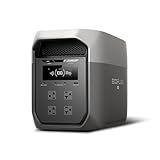
- Ultra-Fast Charging, 0–80% in Just 1.13 Hours – Thanks to EcoFlow’s advanced X-Stream technology, DELTA 3 Max can recharge from 0–80% in just over an hour. That means less waiting and more doing, whether you’re preparing for a blackout, charging before a road trip, or topping up at the campsite. Reliable power is always ready when you need it most.
- Up to 3400W Continuous X-Boost Mode – Power 99% of Appliances – With an impressive 3400W X-Boost output, this portable power station easily runs high-demand appliances like fridges, microwaves, and even power tools. From emergency backup to RV adventures, enjoy peace of mind knowing your essentials stay powered without overload.
- Ultra-Quiet Performance & Rapid 10ms Transfer Time – Designed for home backup, DELTA 3 Max kicks in with less than 10ms transfer time, keeping sensitive electronics like computers and medical devices safe from outages. Plus, its ultra-quiet operation ensures your nights remain peaceful—no noisy distractions during use.
- Lighter & Durable Design, Built for 10 Years of Daily Use – DELTA 3 Max engineered with a long-lasting LiFePO4 battery. Its lighter, durable build makes it easier to carry from your home to your RV or campsite without sacrificing strength or performance. EcoFlow DELTA3 Max electric generator also comes with an extended 5-year service.
- Smarter App Control – Save on Costs Without Sacrificing Comfort – Connect with the EcoFlow app to monitor energy use in real time, set smart priorities, and cut electricity costs. Easily manage charging and discharging schedules, all while ensuring your comfort and convenience remain top priority.
EcoFlow DELTA 3 Plus: the general-purpose tier
TechRadar lists 1,024 Wh, 2,400 W output, 1,000 W solar input and a 10 ms UPS switchover for the DELTA 3 Plus (2026). EcoFlow’s preparedness guidance describes the battery backup as ready in seconds, indoor-safe, quieter than 30 dB and usable without gas or fumes. The same guidance presents it as scalable.
That combination makes it the most balanced option here for an apartment resident who wants networking, lighting, laptops and selected kitchen appliances on one portable unit. “No gas, no noise, no fumes—just reliable, clean power when you need it” is EcoFlow’s manufacturer wording, not an independent laboratory finding. Fan behavior can still vary with load, ambient temperature and charging mode.
Free tools Windows power users keep installed
One-click scans. No signup required.
BLUETTI AC200P: higher capacity for longer outages
BLUETTI lists the AC200P at 2,000 Wh and 2,000 W. It lists seven recharge methods, including AC, solar, car and generator charging. The extra stored energy can extend refrigerator runtime or support several essential loads for longer, but the larger enclosure is harder to carry, position and store in a compact apartment.
Capacity is not a promise that a refrigerator will run for a fixed number of hours. Refrigerators cycle rather than drawing their maximum running wattage continuously, and the actual result depends on temperature, door openings, startup surge and the station’s usable energy.
Anker SOLIX E10: installed-system boundary case
Anker advertises the SOLIX E10 at 12 kWh and 10 kW turbo output, with transfer-switch or inlet-box compatibility. Other E10 configurations are described as supporting 6–90 kWh of battery capacity. Those specifications describe a whole-home installation path, not a portable product that a renter can simply place beside a sofa.
Use this category only when an electrician, the building and the local authority allow the work. The installation may involve an inlet box, transfer equipment, permits and fire-safety review. It should not be treated as a plug-in alternative to the portable AC60, DELTA 3 Plus or AC200P.
How to size a battery for your apartment
- List the loads that truly matter. Separate must-run devices (router, phone chargers, medical equipment, refrigerator) from conveniences (television, coffee maker, toaster or hair dryer). A smaller list reduces both capacity and inverter requirements.
- Find each device’s watt draw. Read the nameplate, power brick or manual. For electronics, a plug-in power meter can reveal actual draw; for a refrigerator, record both running and starting requirements when available.
- Multiply watts by expected hours. The basic energy estimate is
watts × hours = watt-hours. A 15-W router operating for 24 hours requires 360 Wh before losses. A 60-W load for eight hours requires 480 Wh before losses. - Add conversion headroom. Inverter and charging losses reduce energy delivered to your outlets. Start with the manufacturer’s usable-energy figure where available and avoid planning to exhaust the battery completely.
- Check continuous and surge output separately. Sum simultaneous running watts, then compare motor-starting or other surge demands with the inverter’s ratings.
- Choose recharge timing. If grid power returns regularly, AC charging may be all you need. If outages can last for days, compare solar, car or generator charging methods and confirm that your building permits the chosen method.
- Test the actual setup. Charge the station, connect the intended devices, simulate a power interruption where safe and observe runtime, UPS behavior, fan noise and any overload warnings.
Worked load examples
| Load | Assumed draw and duration | Energy before losses | Interpretation |
|---|---|---|---|
| Router | 15 W for 24 hours | 360 Wh | Already close to the nominal capacity of a 403-Wh station once conversion losses and other devices are included. |
| General 60-W load | 60 W for 8 hours | 480 Wh | Exceeds a 403-Wh station’s nominal energy before losses; a larger tier or shorter runtime is needed. |
| Router plus LED lights | 15 W router plus 20 W lighting for 8 hours | 280 Wh | Fits the compact tier more comfortably, subject to actual device draw and usable energy. |
These are arithmetic planning examples, not measured runtimes for any product. Battery age, temperature, inverter efficiency, standby consumption and the device’s real draw change the result.
Can a portable station run a refrigerator?
Yes, it can run a refrigerator if the station’s inverter handles the refrigerator’s running and startup demand and enough usable energy remains for the desired period. The refrigerator should be connected directly to the station’s outlet, not to an improvised connection to apartment wiring.
Estimate runtime from the refrigerator’s average draw, not only its maximum nameplate number. A refrigerator cycles on and off, so a short test with a power meter is more useful than multiplying the compressor’s maximum wattage by 24 hours. Keep the refrigerator closed during the outage, allow ventilation around the station and leave capacity for the starting surge.
Rank #3

- 5 Fast Charging Options. With 1500W AC input, it charges to 80% in 40 mins. Solar charging reaches 80% in 1 hr, 100% in 70 mins. The 800W Alternator charges to 80% in 1 hr, 100% in 1.3 hrs. Using EcoFlow smart generator, it charges 80% in 40 mins and fully in 56 mins. Hybrid charging (AC + solar) also achieves the same speed.
- Flexible Expansion up to 5kWh. The DELTA 3 Series seamlessly integrates with EcoFlow's ecosystem, enabling the addition of DELTA 3, DELTA Pro 3, or DELTA 2 Max battery packs. Expand your power potential up to a robust 5kWh.
- Durable and Reliable for 10 Years. Powered by LiFePO4 (LFP) cells, with 4000 cycles to 80%, offering 25% more durability than industry standards. Enjoy a 10-year lifespan for daily use. The IP65 battery pack provides triple protection: splash-proof, dust-proof, and oil-proof.
- 10 ms Switch-Over UPS Protection. The DELTA 3 Plus functions as a true UPS with a 10 ms switch-over time, ideal for NAS, servers, POS systems, and critical backups, ensuring no data loss from unexpected shutdowns.
- Power 13 Appliances Simultaneously. With abundant interfaces, it powers 13 appliances at once, perfect for emergencies. X-Boost supports resistive appliances with power demands over 2200W continuously.
A 403-Wh compact station may be suitable for communications and lighting yet provide little refrigerator endurance. A 1,024-Wh unit is a more flexible starting point, while 2,000 Wh gives more energy reserve but increases weight and storage demands. None of these tiers guarantees a specific number of hours without the refrigerator’s measured consumption and the station’s usable-energy data.
Plug-in backup versus powering apartment wiring
Direct plug-in use
The normal renter approach is to plug individual appliances into the station. Use the manufacturer’s charging cable and output ports, keep cables protected from foot traffic, and connect only loads within the inverter’s continuous and surge ratings. This method backs up the connected devices; it does not energize outlets elsewhere in the apartment.
Transfer switches and inlet boxes
An inlet box and transfer switch can route a permitted set of apartment circuits to a backup source, but they require code-compliant installation. EcoFlow describes inlet-box or transfer-switch integration for home circuits, and the installed Anker SOLIX E10 category is designed around that type of connection.
A licensed electrician and the local authority having jurisdiction must determine whether such a connection is allowed in your building. The electrician must prevent the backup source from energizing utility lines and must select equipment compatible with the building’s electrical system.
Never backfeed a wall outlet
Do not connect a portable station to an apartment outlet through a male-to-male cable or any improvised arrangement. That can energize wiring unexpectedly and create a shock or fire hazard. A portable station’s AC outlet is for the appliance you connect to it, not for feeding the apartment’s existing receptacles.
What’s actually slowing this PC down?
Pick the symptom - the matching free tool is one click away.
Apartment safety, storage and building rules
- Use the approved charger. Substitute chargers or damaged cables can create overheating and compatibility problems.
- Provide clearance and ventilation. Keep air inlets and outlets unobstructed, especially while charging or operating high loads.
- Choose a stable, accessible location. Do not block doors, corridors, stairs or required egress paths. Keep the unit away from water and heat sources.
- Check temperature limits. Follow the model’s storage and operating-temperature instructions; an apartment balcony may expose the battery to conditions outside those limits.
- Review the lease and fire rules. Building policies may restrict battery size, charging locations, balcony equipment or storage in common areas. Confirm requirements with the landlord or property manager and your insurer.
- Plan lifting and transport. A 2,000-Wh or larger unit may be awkward on stairs even if its wheels or handles make it movable on level floors.
- Keep an outage kit. Store charging cables, device adapters, a flashlight and a written list of priority loads with the station so the setup does not depend on internet access.
Noise, portability and recharge trade-offs
Noise usually comes from cooling fans rather than the battery cells themselves. EcoFlow’s guidance describes the DELTA 3 Plus as quieter than 30 dB, but that is a manufacturer statement and operating noise can rise while charging or supplying a heavy load. The cited material does not establish fan-noise figures for the AC60, AC200P or E10.
Portability is a practical specification in an apartment. A compact station can be stored in a closet and carried to a living area when needed. A higher-capacity unit may reduce charging frequency but take more floor space, require a stronger storage surface and be difficult to move without assistance. Compare the manufacturer’s current dimensions and weight before buying; those values are not stated in the figures summarized here.
Recharge flexibility also differs. The AC200P’s seven listed methods include AC, solar, car and generator charging. The DELTA 3 Plus is listed with 1,000 W solar input. The AC60’s cited specifications establish capacity, output and expansion, but do not establish a complete recharge-time figure in this comparison. Recharge time depends on the selected input, battery state, temperature and charging limits.
A practical apartment outage plan
- Keep the station partially or fully charged. AC-charge it from a normal outlet when grid power is available.
- Prioritize communications first. Connect the router, phone chargers and necessary medical or accessibility equipment before discretionary loads.
- Add lighting and computing. Use efficient lamps and laptops rather than high-wattage heating or cooking appliances.
- Connect the refrigerator only after checking surge capacity. Leave room for the compressor’s startup demand and monitor the station for overload warnings.
- Track energy use. The station’s display or app can show output watts and remaining energy; reduce optional loads when the reserve falls faster than expected.
- Recharge safely when possible. Return to AC charging when utility power is stable, or use an approved solar, car or generator method that your building allows.
What the evidence does—and does not—establish
The published figures support a clear tiered choice: 403 Wh and 600 W for compact needs, about 1 kWh and 2,400 W for a flexible portable setup, and 2,000 Wh and 2,000 W for longer runtime with more bulk. They do not establish universal refrigerator runtimes, exact dimensions, weights, cycle-life warranties or noise levels for every model. Those details vary by configuration and should be checked on the current manufacturer specification sheet before purchase.
Do these 3 things before closing this tab:
1Clear out junk files and repair common Windows errors2Scan for outdated or missing drivers - takes under a minute3Repair Windows errors before they cause bigger problemsThe Associated Press quoted Jackery communications head Rachel Stotts saying portable stations have moved beyond camping and could run “99.9% of anything you want in your house—and need.” That is a vendor executive’s statement, not an independent test result, and it should not be read as proof that a particular apartment, refrigerator or wiring system can support every appliance.
Quick Recap
Product prices and availability are accurate as of the date/time indicated and are subject to change. Any price and availability information displayed on Amazon at the time of purchase will apply.

