
Recommended Free Tools
iTechGuides is reader-supported. When you buy through links on our site, we may earn an affiliate commission. As an Amazon Associate I earn from qualifying purchases. Learn more
If you want the closest solo replacement for NYT Connections, start with Puzzle Theory Categories: it keeps the 4-by-4 grouping format, gives you four mistakes, and adds unlimited practice grids instead of stopping after one daily puzzle. Choose LinkedIn Pinpoint if you prefer identifying a category from clues rather than sorting a full word grid. For a genuinely social game, choose Codenames, which turns word association into a live team conversation online or around a physical board.
The right choice depends on what you want after finishing Connections: more of the same mechanics, a different category challenge, or a group game built around discussion.
Quick picks
- Closest solo match: Puzzle Theory Categories. It uses sixteen words, four hidden groups, and four mistakes, with a daily board plus practice and archive options.
- Best clue-based alternative: LinkedIn Pinpoint. You infer a shared category from clues, so it tests category recognition without asking you to partition sixteen tiles.
- Best for friends and families: Codenames. Teams discuss associations, give and interpret clues, and play together in real time rather than solving a daily grid alone.
These are not interchangeable versions of the same game. Categories is the mechanical substitute, Pinpoint is a category-inference variation, and Codenames is a social word-association game.
How the main alternatives compare
| Game | Core mechanic | Replayability | Social format | Access and difficulty |
|---|---|---|---|---|
| Puzzle Theory Categories | Select four words that share a hidden theme; a correct group locks in and an incorrect selection uses one mistake. | One daily puzzle, unlimited practice grids, and an archive covering the last 30 days. | Designed for solo play; results can be shared asynchronously. | Free daily grid without an account. Pro adds a 5-by-5 expert mode with five overlapping groups. |
| LinkedIn Pinpoint | Clue-led category inference: identify the category suggested by the clues. | Current comparison coverage does not state a daily schedule, archive length, or practice allowance. | Primarily an individual challenge; discussion and result-sharing are optional. | Useful when you want category recognition rather than full-grid sorting. Account and subscription details depend on the current LinkedIn presentation. |
| Codenames | A team clue-giver connects words with one clue while teammates identify the intended words and avoid the opposing team’s cards. | Rounds can be replayed with new layouts and clues; the physical game supports repeated sessions. | Live team play online through friend rooms and a shared room URL, with audio or video chat, or offline around a board. | Difficulty comes from clue selection, word relationships, team communication, and the chosen board setup rather than a daily puzzle. |
For reference, NYT Connections uses a 4-by-4 grid, four mistakes, one daily puzzle, and subscription archive access according to the comparison information used for this guide. Categories matches that basic shape while changing the replay model; Pinpoint changes the interaction; Codenames changes the social experience entirely.
#1 Best Overall

- Two teams race to identify their agents from a 5×5 grid, guided by a spymaster who knows each card’s identity
- Spymasters give one-word clues and a number to link multiple cards, encouraging creative thinking
- Teammates guess words matching the clue while avoiding the other team’s agents, bystanders, and the assassin
- Revealing the assassin ends the game instantly, adding high-stakes tension
- Teams may guess up to the clue number plus one, allowing strategic risks or revisiting old clues
Puzzle Theory Categories: the closest solo substitute
Categories is the strongest choice when your favorite part of Connections is finding four words that belong together. Its publisher describes the format in one line: “Sixteen words. Four hidden groups. Four mistakes.” That familiar structure matters because it preserves the central decision: is the apparent connection the intended category, or is it a tempting overlap designed to make you spend a mistake?
How a Categories round works
- Open the daily or practice grid.
- Read all sixteen words before committing to a group. Look for repeated meanings, phrases, names, abbreviations, or other shared themes.
- Select four words that you believe form one category.
- If the group is correct, it locks in and leaves fewer words for the remaining groups.
- If the selection is wrong, one of your four mistakes is used.
- Continue until all four groups are solved or all four mistakes are gone.
The order is important. A word can appear to fit more than one idea, so selecting the most obvious-looking set immediately is not always optimal. Scan the entire board, identify possible overlaps, and use the remaining words as evidence before spending a mistake.
Why Categories works well after Connections
The principal difference is availability. Connections gives you one daily board, while Categories offers a daily grid plus unlimited practice grids and a last-30-days archive. That lets you keep the same short solving ritual without waiting for the next UTC reset. It also makes the game useful for learning: after a failed solve, you can try another grid immediately and compare how the ambiguity was constructed.
Windows Errors? Fix Them Before They Spread
Repair common Windows errors and clear accumulated junk for a smoother, more stable PC - no reinstall needed.Free scan · no reinstallOutdated Drivers Are Slowing You Down
One free scan finds every outdated or missing driver and matches the right update for your exact hardware.Free scan · exact hardware matchThe daily puzzle is released at 00:00 UTC. The free daily grid does not require an account. Those details are useful if you play across time zones or want to send someone a game that does not require registration. Daily release schedules, archive policies, and account requirements can change, so verify the current presentation when you begin using the service.
Standard and expert play
Standard Categories uses the 4-by-4 format and four mistakes. Pro members can use an expert mode with a 5-by-5 grid and five overlapping groups. The larger board changes the solving problem rather than simply adding more words: overlapping groups create more plausible partial categories, so you must track several candidate explanations at once.
Rank #2
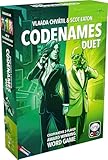
- Play cooperatively to find 15 agents hidden in a 5×5 grid
- Each player sees only part of the key, requiring teamwork and smart clues
- Give one-word clues and a number to guide your partner while avoiding dangers
- Choosing an assassin ends the game instantly, adding high risk to each guess
- Includes 400 new words compatible with Duet and original Codenames
Use standard mode when you want a quick substitute for Connections. Expert mode is better when the normal grid feels predictable or when you want a deliberate practice session focused on ambiguity and elimination. Because the expert groups overlap, do not assume that every word belongs to one obvious, non-overlapping set until the game confirms it.
Best way to use the archive and practice grids
- Warm-up: solve a practice grid before attempting the daily board if you want to get into category-searching mode.
- Review: use the 30-day archive to revisit puzzles where a near-match caused an error.
- Solo challenge: attempt the daily grid without hints, then use practice boards for unlimited additional rounds.
- Asynchronous sharing: send friends the daily result or discuss the category that caused trouble without requiring a simultaneous session.
The free daily experience and the additional Pro mode serve different readers. You do not need Pro to get the basic 4-by-4 daily puzzle, while Pro is relevant if the 5-by-5 expert format is the feature you specifically want.
The Tool Desk
Outbyte PC Repair FREEClear out junk files and repair common Windows errorsFree Scan →Outbyte Driver Updater FREEScan for outdated or missing drivers - takes under a minuteDriver Scan →LinkedIn Pinpoint: a clue-led category challenge
Pinpoint belongs on this list because it tests the same broad instinct as Connections—recognizing what several clues have in common—but it does not ask you to sort a complete set of sixteen words into four groups. Current comparison coverage describes it as a clue-led “guess the category” game.
How its thinking differs from Connections
In Connections, the board is the evidence. You inspect every tile, form candidate sets, and use leftover words to test whether your theory is coherent. In Pinpoint, the clues lead the process. You are trying to name the category suggested by the information revealed, so the key skill is abstraction: move from individual examples to the label that unites them.
That makes Pinpoint a good fit for players who enjoy the moment of recognizing a theme but find a full 16-tile partition too fiddly. It is also a useful change of pace after a difficult Connections board because the task is narrower: identify the category instead of proving that four separate groups account for every item.
Rank #3
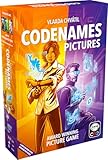
- Visual Twist: Experience Codenames with Images
- Spymasters' Clues: Link Abstract Pictures
- Operatives' Mission: Find Agents, Avoid Threats
- Winning Strategy: Identify All Agents First
- Assassin's Game Ender: Instantly Raise Stakes
When to choose Pinpoint
- Choose it when you enjoy category discovery more than grid management.
- Choose it when a clue-and-answer format feels faster than comparing sixteen simultaneous candidates.
- Choose it when you want a different mental rhythm from Connections without leaving the category-game family.
Pinpoint is not the best substitute if your favorite feature is the four-mistake risk, the process of locking groups, or the satisfaction of accounting for every tile. The available comparison information does not establish a daily schedule, archive length, practice allowance, or subscription arrangement, so check the current LinkedIn interface for those details before relying on it as your everyday replacement.
Do these 3 things before closing this tab:
1Fix the driver behind crashes, sound loss and screen glitches2Clear out junk files and repair common Windows errors3Scan for outdated or missing drivers - takes under a minuteCodenames: the strongest option for live group play
Codenames is a different kind of recommendation. It is not a 16-word daily clone; it is a team association game in which people argue about meanings, interpret a clue-giver’s intent, and make decisions together. The official online page invites players to “Play the classic boardgame online” and directs friends to connect through audio or video chat and share a room URL.
How an online round works
- Open the official online Codenames game and create or enter a room.
- Share the room URL with the people you want to play with.
- Join an audio or video call so teammates can discuss the clue and their choices.
- Divide into teams and assign a clue-giver for each side.
- The clue-giver gives an association intended to connect several visible words.
- Teammates discuss the possible matches and select cards; the opposing team’s cards and the dangerous card make careless associations costly.
- Continue until one team meets the win condition shown by the game.
The exact room controls and interface labels can change, but the important social design is stable: the room handles the board while the voice or video call supplies the discussion that makes Codenames work.
Why Codenames suits groups better than a daily grid
A solo category puzzle rewards private deduction. Codenames rewards communication. The clue-giver must find a connection broad enough for teammates to understand but precise enough to avoid unwanted words. Teammates must explain their reasoning without accidentally revealing information the clue-giver intended them to infer. That creates a shared conversation rather than parallel attempts at the same answer.
Because rounds are not tied to one daily board, a group can play several times in one session. New layouts and new clues produce different discussions, and the physical edition is a natural option for people who want to play away from screens. Search for the current Codenames board game listing if you want the tabletop version; confirm the present edition, seller, and price before purchasing because retail details change.
Rank #4

- EXPLORE THE ISLAND OF CATAN: Settle the uninhabited island of Catan by gathering resources, building infrastructure, and nurturing trade relationships.
- STRATEGY AND COMPETITION: Compete with 2-3 opponents to expand your settlements and cities while managing resources and avoiding the robber.
- TRADE, BUILD, AND SETTLE: Use brick, wood, wheat, ore, and sheep to construct roads, settlements, and cities in your race to 10 victory points.
- REPLAYABLE AND ENGAGING: With a modular hexagonal board, no two games are the same, offering endless strategic opportunities and replayability.
- FOR FAMILIES AND STRATEGY ENTHUSIASTS: Designed for 3-4 players, ages 10 and up, CATAN 6th Edition is perfect for family game nights and friendly competition. Add the CATAN 5-6 Player Extension (sold separately) to expand your game to 5-6 players.
Choosing Codenames for a mixed-age or mixed-skill group
- Use simple, concrete associations when players have very different vocabularies.
- Agree that the clue-giver should not explain a clue after giving it; the discussion should come from the team.
- Keep audio or video chat open for online play so the game does not become silent click-through.
- For a first session, favor conservative clues and let players learn the board’s risk structure before attempting clever multi-word links.
Codenames is the right recommendation when the question is, “What can we play together after Connections?” It is the wrong recommendation if the group specifically wants everyone solving an identical daily grid independently.
Which game fits your preferred play pattern?
Choose Categories for repeatable solo solving
Categories should be your default if you want the same basic loop as Connections and more opportunities to play. The free daily board covers the familiar 4-by-4 experience, while practice grids remove the one-puzzle-per-day limit. The archive is useful for catching up or revisiting recent boards, and Pro expert mode provides a larger challenge for experienced solvers.
Choose Pinpoint for a shorter category-inference loop
Pinpoint is better when you want to infer a theme from clues rather than balance four competing groups on a board. It preserves the pleasure of a category reveal but changes the evidence you work with. Treat it as a variation, not a replacement with identical rules.
Choose Codenames for conversation and competition
Codenames is the clear choice for a family, friend group, or remote team that wants live interaction. The online format uses a room URL plus voice or video chat; the physical game removes the need for a browser and supports repeated rounds at the same table.
Quick wins for a faster PC:
Scan for outdated or missing drivers - takes under a minuteDriver Scan →Clear out junk files and repair common Windows errorsFree Scan →A practical decision framework
| If your priority is… | Pick | Reason |
|---|---|---|
| Nearly the same board-solving habit | Categories | It retains sixteen words, four groups, and four mistakes. |
| More than one puzzle in a sitting | Categories | Practice grids are unlimited, with a 30-day archive in addition to the daily board. |
| Recognizing a category from clues | Pinpoint | The interaction is clue-led rather than full-grid partitioning. |
| Live discussion with friends | Codenames | Teams give, interpret, and debate clues in a shared room. |
| Offline group play | Codenames physical edition | The board game supports repeated rounds without a daily schedule. |
| A harder solo format | Categories Pro expert mode | The 5-by-5 board uses five overlapping groups. |
Common frustrations and how to handle them
You finished the daily board and want to keep playing
Use Categories practice grids or its recent archive instead of waiting for another daily release. The daily reset occurs at 00:00 UTC, so the next board may arrive at a different local time than you expect.
Best Value
- Package Quantity :1
- In contrast to traditional trivia formats, you don't receive points for answering questions correctly. Instead, points are subtracted for every incorrect answer!
- Contains 110 cards with more than 400 questions about things that you should know
- An addictively entertaining trivia game where it will only be a matter of time before you hear yourself say ahhh!... I should have known that!
You keep seeing multiple possible groups
Do not commit to the first plausible set. List the candidate categories mentally, inspect every remaining word, and ask which interpretation leaves a clean explanation for the rest. In Categories, a wrong selection consumes one of four mistakes; in the expert mode, overlapping groups make this elimination step even more important.
You want a group game but everyone is remote
Use Codenames online, share the room URL, and keep an audio or video call open. The room provides the board, while the call provides the communication the game depends on.
You expected Pinpoint to feel exactly like Connections
It will not. Pinpoint is clue-led category inference, so there is no equivalent full-grid accounting exercise in the information available for this comparison. Choose it for the category insight, not for the 4-by-4 format.
Free tools Windows power users keep installed
One-click scans. No signup required.
You cannot find a feature mentioned in an older recommendation
Daily schedules, archive access, subscription gates, room controls, and retail listings can change. Recheck the current game interface and product listing before assuming that a feature, price, or availability condition is unchanged.
Recommended order for trying them
- Start with Categories free daily play. It requires no account for the daily grid and immediately shows whether the familiar 4-by-4 grouping loop is what you wanted.
- Open a practice grid. If the daily limit is your main complaint, unlimited practice is the deciding feature.
- Try Pinpoint next. Use it when you want a category challenge with clues and a different solving rhythm.
- Invite a group to Codenames. Create an online room, share its URL, and arrange voice or video chat; choose the physical board if everyone will be in the same place.
That sequence moves from the closest mechanical match to the most different social option, making it easy to identify which part of Connections you actually miss: the grid, the category reveal, or the shared act of solving.
Bottom line
For solo players asking what to play after NYT Connections, Puzzle Theory Categories is the best first stop because it preserves the 16-word, four-group, four-mistake structure while adding practice and recent archive access. LinkedIn Pinpoint is the better variation for clue-led category inference. For a good Connections-style activity with friends, choose Codenames—but expect a live team conversation rather than a daily word grid.
Quick Recap
Product prices and availability are accurate as of the date/time indicated and are subject to change. Any price and availability information displayed on Amazon at the time of purchase will apply.

