
iTechGuides is reader-supported. When you buy through links on our site, we may earn an affiliate commission. As an Amazon Associate I earn from qualifying purchases. Learn more
The best Fitbit fitness trackers and watches in 2026 are the Fitbit Charge 6 for most exercisers, the Inspire 3 for beginners and long battery life, and the Google Fitbit Air for screen-free tracking. Choose the Versa 4 for a Fitbit-branded watch, or Pixel Watch 4 for a full Android smartwatch with Fitbit health features.
Last checked: August 18, 2026. Google’s current US lineup includes Fitbit Air, Charge 6, Inspire 3, Versa 4, and Sense 2. Luxe may still appear in comparison tools, but availability and long-term value make it an availability-dependent older model rather than a core recommendation. The biggest ecosystem change is that the Fitbit app is now presented as the Google Health app, with Google Health Premium adding Gemini-powered coaching and other paid features.
Key takeaways
- Fitbit Charge 6 is the best overall Fitbit tracker because it combines built-in GPS, ECG availability where supported, exercise features, Google Wallet functionality, and a compact band design.
- Fitbit Inspire 3 is the best budget and battery-life choice, with connected GPS and an advertised battery life of up to 10 days.
- Google Fitbit Air is a screenless tracker priced from $99.99, but it cannot show steps, workout information, notifications, or other metrics on your wrist.
- Fitbit Versa 4 is the best Fitbit-branded fitness watch, but Google Pixel Watch 4 is the stronger choice for Wear OS, Google apps, and third-party smartwatch apps.
- Google Health Premium is optional for basic tracking; the US Google Health page lists the service from $9.99, while trial length and pricing can change.
- Fitbit devices estimate wellness and activity trends; they are not substitutes for medical testing or serious marathon, triathlon, cycling, or navigation watches.
Quick comparison: which Fitbit should you buy?
The right Fitbit depends more on GPS, screen preference, battery expectations, phone platform, and health sensors than on a universal ranking.
| Model | Best for | US price signal checked August 18, 2026 | Battery claim | Built-in GPS | Advanced health | Main drawback |
|---|---|---|---|---|---|---|
| Fitbit Charge 6 | Most people who exercise regularly | $119.95 sale; $159.95 listed price | Up to about 6 days, depending on use | Yes | ECG where supported; irregular-rhythm features | Not a serious running-watch replacement |
| Fitbit Inspire 3 | Beginners, small wrists, low cost | $79.95 sale; $99.95 listed price | Up to 10 days | No; phone-connected GPS | Wellness metrics, but no ECG or EDA scan | Requires a phone for GPS workouts |
| Google Fitbit Air | Screen-free, discreet 24/7 tracking | From $99.99 | Up to a week | Do not assume phone-free GPS | Cardio Load, Readiness, heart-rate and sleep metrics | No display, workout controls, or on-wrist information |
| Fitbit Versa 4 | A Fitbit-branded watch with a large display | $40 discount shown; offer date-sensitive | Six-plus days | Yes | Sleep, SpO2, breathing-rate trends | Limited app ecosystem and no ECG |
| Fitbit Sense 2 | ECG and EDA-specific health features | Buy mainly when substantially discounted | Six-day-class claim | Yes | ECG and EDA stress scanning | Aging hardware and limited smartwatch platform |
| Google Pixel Watch 4 | A full Android smartwatch using Fitbit/Google Health | Check current Google pricing | Depends on configuration and use | Yes | Google Health/Fitbit health features | Not Fitbit-branded; Android-focused and less battery-friendly |
Google Store pages showed the Charge 6 at $119.95, reduced from $159.95, and the Inspire 3 at $79.95, reduced from $99.95, with those offers shown through August 23, 2026. Google also showed a $40 Versa 4 discount ending August 23, 2026. These are dated sale signals, not permanent prices; check the current Google Fitbit lineup before buying.
Popular on Amazon
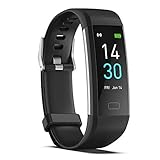
- 【All-day Activity Tracker】: ENGERWALL IP68 Waterproof fitness tracker can record and track your daily steps, calories burned, exercise distance and time. It can also monitor your Body Temp, Heart Rate, Blood Oxygen and Blood Pressure. IP68 waterproof ensures that you don't need to take it off for daily hand washing and swimming, but don't soak it in water for a long time or wear it for hot baths, saunas.
- 【Slim and simple band design】The design concept of this tracker’s band is slim and unique, offering a comfortable and lightweight wearing experience. Suitable for men, women and the elderly.
- 【Heart Rate Monitor and Sleep Tracker】: Smart tracker can detect heart rate, blood pressure, blood oxygen, and body temperature in daily life. Monitor your sleep and analyze your sleep quality through Fall Sleep, Deep Sleep, Light Sleep, REM Sleep. You can view daily, weekly, and monthly data in the APP "Runmefit" to help you better understand your health status and lead a healthy lifestyle. [IMPORTANT] The blood pressure measurement feature must be downloaded and enabled within the app.
- 【Call and message notifications】: You can receive text messages and SNS notifications (including Facebook, Twitter, WhatsApp and Instagram) directly on your wrist. When your phone's Bluetooth is turned on, if you receive a message, the watch will vibrate to remind you and you can view the specific message. This function is very practical whether in work or life.
- 【Working Time】: Smart Fitness Watch is the best partner at work, you can set it on the mobile APP ‘Runmefit’: up to 5 sets of alarms, you don’t have to worry about being late for appointments or forgetting important things. You can set drinking Water Reminders and Sedentary Reminders to establish a healthy way of working.
Which Fitbit is best overall?
Fitbit Charge 6 is the best overall Fitbit tracker for most buyers. Charge 6 offers the most useful balance between a slim tracker and a watch: built-in GPS for phone-free outdoor workouts, a display for on-wrist information, broader exercise tracking than Inspire 3, ECG where the feature is supported, and NFC-related Google Wallet functionality in supported markets.
Charge 6 is more capable than Inspire 3 without becoming as watch-like as Versa 4 or Sense 2. Charge 6 is also the better default for someone who walks, runs, cycles, hikes, or exercises outdoors and does not want to carry a phone solely for GPS.
Google lists Charge 6 with up to about six days of battery life, water resistance rated to 50 meters, SpO2, skin-temperature variation, resting heart rate, breathing rate, cardio fitness score, Active Zone Minutes, irregular-heart-rhythm notifications, and workout intensity mapping on its Charge 6 product information page. Battery life falls with frequent GPS use, display activity, notifications, and other power-hungry settings.
Do these 3 things before closing this tab:
1Repair Windows errors before they cause bigger problems2Fix the driver behind crashes, sound loss and screen glitches3Clear out junk files and repair common Windows errorsCharge 6 is not a replacement for a dedicated Garmin, Polar, or Coros sports watch. Serious runners and endurance athletes may want detailed training plans, mapping, navigation, offline music, recovery analytics, structured workouts, and deeper sport-specific data that Charge 6 does not provide.
How do Charge 6 and Inspire 3 differ?
Choose Charge 6 if you exercise without your phone; choose Inspire 3 if you mainly want inexpensive step, sleep, heart-rate, and wellness tracking. Built-in versus connected GPS is the most consequential difference.
| Feature | Fitbit Charge 6 | Fitbit Inspire 3 |
|---|---|---|
| Design | Larger fitness tracker with display | Smaller, slimmer band with display |
| GPS | Built-in GPS | Connected GPS through a compatible phone |
| Battery claim | Up to about six days, depending on use | Up to 10 days |
| ECG | Yes where compatible and supported | No |
| EDA stress scan | Yes | No |
| Payments | NFC/Google Wallet where available and set up | No NFC payments |
| Exercise features | Broader workout and intensity features | More basic exercise tracking |
| Best match | Regular exercisers and outdoor workouts | Beginners, sleep tracking, low cost, and small wrists |
Inspire 3 still tracks 24/7 heart rate, Active Zone Minutes, cardio fitness, exercise, sleep, SpO2, skin-temperature variation, HRV, breathing rate, and menstrual-health information. Google’s Inspire 3 product information describes 50-meter/5 ATM water resistance, but also says the device is not waterproof and that resistance declines with wear or damage.
Inspire 3 is usually the better value when a phone is always present during workouts. Charge 6 becomes worth the extra cost when phone-free GPS, ECG, stress scanning, contactless payments, or more detailed exercise features matter.
Quick wins for a faster PC:
Repair Windows errors before they cause bigger problemsFix Now →Fix the driver behind crashes, sound loss and screen glitchesFind Drivers →Clear out junk files and repair common Windows errorsFree Scan →Is Google Fitbit Air a replacement for Inspire 3?
No. Google Fitbit Air and Inspire 3 serve different preferences. Air is a screenless tracker for people who want unobtrusive continuous wear, while Inspire 3 is a conventional Fitbit band with a small display for basic metrics and time.
Google Fitbit Air starts at $99.99 and advertises up to a week of battery life. Air tracks heart rate, steps, Active Zone Minutes, distance, calories, SpO2, HRV, breathing rate, skin-temperature variation, sleep, Cardio Load, and Readiness. Google also presents heart-rhythm and AFib-related capabilities with the medical and regional qualifications that apply to those features on the Fitbit Air product page.
Air is the better choice for someone who dislikes screens, wants a discreet sleep tracker, or is comparing screenless products such as Whoop, Polar Loop, or Amazfit Helio Strap. Air is the wrong choice for anyone who wants to see steps, heart rate, notifications, workout controls, or elapsed time directly on the device.
Also popular on Amazon
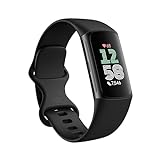
- Fitbit Charge 6 tracks key metrics from calories and Active Zone Minutes to Daily Readiness and sleep; move more with 40+ exercise modes, built-in GPS, all-day activity tracking, 24/7 heart rate, automatic exercising tracking, and more[1]
- See your heart rate in real time: Just link your Charge 6 to compatible exercise machines, like treadmills, ellipticals, and more[2]; and stay connected with YouTube Music controls[3]
- Tune into your body: Track your response to stress with a stress management score; learn about the quality of your sleep with a personalized nightly Sleep Score; and wake up more naturally with the Smart Wake alarm
- Run your routine with Google essentials: Find your way seamlessly during runs or rides with turn-by-turn directions from Google Maps on Fitbit Charge 6; and when you need a snack break on the go, just tap to pay with Google Wallet[1,4]
- Unlock more with Google Health Premium: With a premium membership, get personalized coaching that’s built with Gemini and adapts to your life[7]; get a 3-month trial at no cost to you[5] (Google Health Premium subscription sold separately)
Inspire 3 remains better for first-time buyers, people who want a visible display, shoppers seeking the lowest purchase price during discounts, and people who prefer a familiar Fitbit band. Google lists future Air features such as blood-pressure trends, insulin-resistance trends, and sleep-breathing-quality trends as “coming soon.” Those features should not be treated as available today, and Air should not be purchased on the assumption that a future feature will arrive.
The Tool Desk
Outbyte PC Repair FREERepair Windows errors before they cause bigger problemsFix Now →Outbyte Driver Updater FREEFix the driver behind crashes, sound loss and screen glitchesFind Drivers →Which Fitbit has the best battery life?
Fitbit Inspire 3 is the best battery-life Fitbit in this lineup when a screenless design is not required. Independent coverage commonly places Inspire 3 at up to 10 days, while Air advertises up to a week and Versa 4 advertises six-plus days.
| Model | Advertised or reported maximum | What commonly reduces battery life |
|---|---|---|
| Inspire 3 | Up to 10 days | Connected GPS, SpO2 collection, notifications, brightness, and battery age |
| Google Fitbit Air | Up to a week | Continuous sensing and notification or synchronization behavior |
| Versa 4 | Six-plus days | Display use, notifications, workouts, and screen settings |
| Charge 6 | Up to about six days | Built-in GPS, frequent workouts, display use, and SpO2 |
| Sense 2 | Six-day-class claim | GPS, sensors, display, and battery age |
| Pixel Watch 4 | Configuration- and usage-dependent | Wear OS apps, display, GPS, cellular use, and frequent charging |
Battery claims are maximum estimates, not guarantees. Always-on display, frequent GPS, SpO2 collection, high notification volume, bright screens, short screen timeouts, and older battery health can all reduce runtime. Buyers who hate charging should generally start with Inspire 3, then consider Air if no screen is acceptable, followed by Versa 4, Charge 6, or Sense 2.
Google says Versa 4 can receive a full day’s charge in approximately 12 minutes. That quick-charge claim is useful for people who can charge briefly but still want a watch-shaped device; it does not make Versa 4 a full Wear OS competitor.
Is Versa 4 a real smartwatch?
Versa 4 is best treated as a fitness watch with smartwatch basics, not as a full smartwatch competitor. Versa 4 has a larger watch-style AMOLED display, a physical button, notifications, activity and sleep tracking, Google-related features, built-in GPS, and a six-plus-day advertised battery life.
Free tools Windows power users keep installed
One-click scans. No signup required.
Versa 4 is a good fit for buyers who want a lightweight watch appearance, longer battery life than many full smartwatch alternatives, Fitbit-centric tracking, and a simpler interface. Versa 4 is a poor fit for buyers who expect a broad third-party app store, advanced running tools, ECG, or extensive independent music functionality.
Versa 4’s music functionality is limited compared with conventional smartwatches; TechRadar’s Fitbit coverage describes support for YouTube Music controls rather than broad music control. Versa 4 also lacks the Wear OS app depth available on Pixel Watch 4, Apple Watch, or Galaxy Watch.
Should you buy Sense 2 instead of Versa 4?
Buy Sense 2 only when ECG, EDA stress scanning, or its broader health-sensor package is a decisive requirement and the price is substantially discounted. Choose Versa 4 when you mainly want the large display, notifications, battery life, and everyday Fitbit experience.
| Decision factor | Sense 2 | Versa 4 |
|---|---|---|
| Health sensors | ECG and EDA stress-related tools | No ECG; more basic health package |
| Everyday tracking | Strong Fitbit sleep and wellness tracking | Strong Fitbit sleep and wellness tracking |
| Display and design | Watch-shaped display | Watch-shaped display and physical button |
| Smartwatch platform | Limited Fitbit-centered platform | Limited Fitbit-centered platform |
| Value logic | Worthwhile mainly at a meaningful discount or for its sensors | Better for ordinary daily use and a lower-cost watch experience |
Sense 2 remains present in Google’s comparison and lineup materials, but it should be treated as an aging model rather than assumed to be discontinued. The absence of a Sense 3 does not prove that software support will end, but it does make long-term product freshness harder to assess. Google’s comparison tool is the best place to check current feature differences.
Is Pixel Watch 4 a Fitbit?
Pixel Watch 4 is not Fitbit-branded, but it is the most important Fitbit-powered alternative for Android users who want a proper smartwatch. Pixel Watch 4 uses Google’s Fitbit/Google Health tracking experience, runs Wear OS 6, and supports Google apps and third-party apps through Google Play.
Also popular on Amazon

- Google Fitbit Air is the unbelievably comfortable, exceptionally smart way to transform your health[1]; and Google Health brings together effortless tracking and adaptive coaching to help make the most of your everyday[2]
- Unlock more with Google Health Premium: With a premium membership, get personalized coaching that’s built with Gemini and adapts to your life[2]; get a 3-month trial at no cost to you[5] (Google Health Premium subscription sold separately)
- Comfortable fit - One Size Tracker (130-210 mm): The lightweight, micro-adjustable fit sits comfortably and quietly, so you can wear Google Fitbit Air through work, play, and sleep; advanced sensors and new algorithms power more accurate, precise health tracking, 24/7[1]
- Designed for every occasion: With no screen to distract you or disrupt your style, your tracker moves seamlessly from bracelet to workout band to sleep band, and you can change looks in seconds – just press the pebble in, click, and go
- Long battery life: Google Fitbit Air’s battery lasts up to a week, and fast charging gets you one day of battery life in just five minutes[6,7]
| Choose Pixel Watch 4 if you want | Choose a Fitbit-branded tracker or watch if you want |
|---|---|
| Wear OS and Google apps | A simpler Fitbit-centered interface |
| Third-party smartwatch apps | Longer multi-day battery life in most Fitbit models |
| More interactive notifications and smartwatch functions | Less distraction and fewer smartwatch obligations |
| An Android-focused experience | Broader iPhone compatibility across Fitbit devices |
| More smartwatch capability than Versa 4 or Sense 2 | A smaller band or screenless form factor |
Pixel Watch 4 should not be placed in the Fitbit-branded ranking. Pixel Watch 4 is the better recommendation for Android users who want apps, Google services, and rich smartwatch interaction. Pixel Watch 4 is not the right recommendation for iPhone owners or buyers who prioritize multi-day battery life and a low-maintenance fitness band. Check the Google Pixel Watch and Fitbit comparison for current compatibility, sizes, cellular options, battery information, and pricing.
What changed from Fitbit Premium to Google Health Premium?
The Fitbit app is now presented as the Google Health app, and the paid tier is Google Health Premium. Basic tracking does not automatically become unavailable without Premium, but Google Health Premium adds deeper analysis, coaching, content, and personalized guidance.
Depending on the device, account, market, and current software, non-Premium tracking can include activity, sleep, heart rate, HRV, breathing rate, SpO2, logging, Cardio Load, and Readiness-related information. Google Health Premium adds Gemini-powered Google Health Coach, adaptive fitness plans, detailed sleep insights, proactive insights, medical-record summaries, workouts, and mindfulness content. Google describes the current US service as starting from $9.99 on its Google Health Premium page; third-party coverage reports $9.99 monthly or $99 annually, so verify the annual price and entitlements at publication time.
PC Slower Than It Used to Be?
A free scan shows the junk files, broken settings and background clutter dragging Windows down - then fixes them in one click.Free scan · Windows 10 & 11Crashes, No Sound, or Screen Glitches?
Random freezes, missing sound and display glitches usually trace back to one bad driver. Find and replace yours safely.Free scan · under a minuteGoogle Store pages showed three months of Google Health Premium with Air, Charge 6, Inspire 3, and Versa 4 on August 18, 2026. Trial terms and included offers can change by device, region, and promotion. Check the renewal date before starting a trial because a trial is not a promise of indefinite free access.
| Buyer | Premium value |
|---|---|
| Wants steps, basic sleep, heart rate, and workouts | Usually low; basic tracking may be enough |
| Wants adaptive plans and coaching | Higher; Premium’s coaching and plans are relevant |
| Wants detailed sleep interpretation | Potentially worthwhile if used regularly |
| Wants to minimize two-year ownership cost | Calculate device price plus recurring monthly or annual fees |
| Wants health data without a subscription | Compare the free feature set before buying and consider alternatives |
A discounted $79.95 Inspire 3 is not necessarily the cheapest two-year choice if the buyer intends to keep Google Health Premium for years. Evaluate device cost, Premium after the trial, replacement bands, and possible replacement or repair costs together.
Which Fitbit is best for each type of buyer?
| If you are… | Buy… | Why |
|---|---|---|
| A beginner | Inspire 3 | Low cost, small band, core activity and sleep tracking, and long advertised battery life |
| An outdoor exerciser without a phone | Charge 6 | Built-in GPS and more capable workout tracking |
| A serious runner, cyclist, or triathlete | Usually Garmin, Polar, or Coros | Fitbit lacks the training depth, mapping, navigation, and sport analytics of dedicated watches |
| A sleep-first user who hates screens | Google Fitbit Air | Screenless, discreet continuous tracking |
| Someone with small wrists | Inspire 3 | Slimmer, lighter band design |
| Someone who wants a watch appearance | Versa 4 | Larger display and watch-shaped design |
| An ECG or EDA-focused buyer | Sense 2, if discounted | Its additional sensors are the reason to choose it |
| An Android smartwatch buyer | Pixel Watch 4 | Wear OS, Google apps, and third-party apps |
| An iPhone owner | Fitbit tracker or watch after checking compatibility | Pixel Watch should be treated as Android-focused |
| Someone who dislikes subscriptions | Inspire 3 or Charge 6 without Premium | Buy only after confirming the free features cover your needs |
| A senior who wants simple tracking | Inspire 3 or Versa 4 | Inspire 3 is simpler and smaller; Versa 4 has a larger display and notifications |
Does Fitbit still make sense compared with alternatives?
Fitbit still makes sense for approachable activity and sleep tracking, long battery life, and a relatively simple ecosystem, but Fitbit is not the strongest choice for every use case. The Google Health transition makes the app and subscription model part of the purchase decision, while Pixel Watch increasingly covers the full-smartwatch side of Google’s ecosystem.
- Choose Garmin for serious training, reliable GPS, structured workouts, endurance features, and a mature sports ecosystem.
- Choose Apple Watch for the strongest iPhone integration and full smartwatch functionality.
- Choose Samsung Galaxy Watch for a feature-rich Android or Samsung-centered smartwatch experience.
- Choose Polar when training and recovery guidance are more important than apps and lifestyle features.
- Choose Coros for endurance and performance-focused training.
- Choose Whoop for a screenless strain and recovery model, while recognizing its subscription-heavy structure.
- Choose Oura for a ring form factor and sleep/readiness emphasis.
- Consider Amazfit when lower-cost feature breadth matters, or Withings when traditional-watch styling and health tracking are priorities.
Fitbit is a mismatch for buyers who need detailed route navigation, offline music storage, extensive third-party apps, rugged outdoor features, advanced marathon or triathlon analytics, or direct blood-pressure or glucose measurement. Fitbit trend features must not be confused with measuring blood pressure or glucose, and Fitbit health tools are not intended to diagnose or treat disease.
How accurate are Fitbit trackers?
Fitbit trackers are useful for observing trends and estimating activity intensity, but they are not laboratory instruments. Accuracy can vary with fit, wrist movement, tattoos, skin tone, sweat, temperature, exercise type, sensor contact, GPS obstruction, phone GPS quality, and differences between device algorithms.
Connected GPS on Inspire 3 can also reflect the quality and position of the paired phone. Built-in GPS on Charge 6 avoids that specific phone requirement, but built-in GPS does not guarantee perfect tracks in cities, forests, or other areas with obstruction.
TechRadar’s Fitbit coverage describes Charge 6 heart-rate monitoring as adequate for estimation but not pinpoint accurate. Treat heart rate, sleep stages, SpO2, HRV, skin-temperature variation, Readiness, and Cardio Load as estimates or trends, and consult a qualified clinician for medical concerns.
Also popular on Amazon

- Inspire 3 is the tracker that helps you find your energy, do what you love and feel your best – all you have to do is wear it;
- Compatible with Apple iOS 16.4 or higher and Android OS 11.0 or higher
- Move more: Stay motivated with a Daily Readiness Score, Active Zone Minutes, all-day activity tracking and 24/7 heart rate, 40+ exercise modes, automatic exercise tracking, and reminders to move
- Stress less: Keep an eye on your well-being with a daily Stress Management Score, mindfulness sessions, relax breathing sessions, irregular heart rhythm notifications, SpO2, menstrual health tracking, resting heart rate, and more[1,2]
- Sleep better: Automatic sleep tracking, a daily detailed Sleep Score, smart wake vibrating alarm, and sleep mode help you improve your sleep quality[3]
Are Fitbits waterproof?
No Fitbit should be described as waterproof; current models are water resistant under specified conditions. Charge 6 and Inspire 3 are rated around 50 meters or 5 ATM, but Google warns that water resistance can decline with wear, damage, repair, or disassembly.
What’s actually slowing this PC down?
Pick the symptom - the matching free tool is one click away.
Inspire 3 is intended for shallow water and should not be used for high-velocity or high-temperature activities. Some replacement bands are not water resistant. Rinse and dry the device after exposure as the manufacturer instructs, and do not interpret a 50-meter rating as permission for every swimming, diving, sauna, or hot-tub use.
What should you check before ordering?
- Confirm the form factor. Choose Air for no screen, Inspire 3 or Charge 6 for a band, and Versa 4, Sense 2, or Pixel Watch 4 for a watch-shaped device.
- Confirm GPS needs. Charge 6, Versa 4, Sense 2, and Pixel Watch 4 have built-in GPS positioning in the current comparison; Inspire 3 uses connected GPS. Do not assume Air provides phone-free GPS.
- Check phone and country compatibility. Fitbit devices generally support iPhone and Android, but individual features, apps, ECG, irregular-rhythm notifications, SpO2, and other health functions can vary by operating system, account, country, and regulatory approval.
- Check health-feature availability. ECG and AFib-related functions are not universal medical features and may be restricted by region, device, account, or regulatory status.
- Calculate the subscription cost. Add the device price, Google Health Premium after any trial, replacement bands, and potential replacement costs over two years.
- Check the sale date. The August 18, 2026 Google Store discounts may expire after August 23, 2026, and evergreen articles should not present temporary prices as permanent.
- Decide whether a smartwatch is really required. Choose Pixel Watch 4 for apps and Google services; choose Versa 4 for a simpler Fitbit-focused watch with longer battery life.
Bottom line: which Fitbit should you buy?
Buy the Fitbit Charge 6 if you want the safest all-around Fitbit recommendation, especially for phone-free GPS workouts. Buy the Inspire 3 if you want the lowest-cost, longest-lasting conventional Fitbit band and do not need built-in GPS. Buy Google Fitbit Air only if screenless wear is the main attraction.
Choose Versa 4 for the best Fitbit-branded watch experience, and choose Sense 2 only when ECG or EDA features justify its older platform and price. If you want a genuine smartwatch with Google apps and third-party applications, skip the Fitbit-branded watches and compare Pixel Watch 4 instead. Before purchase, verify current pricing, compatibility, health-feature availability, Premium terms, and water-resistance conditions.
Frequently Asked Questions
Does Fitbit Inspire 3 have GPS?
Fitbit Inspire 3 does not have built-in GPS; Inspire 3 uses connected GPS through a compatible phone. Choose Charge 6 or a Fitbit watch with built-in GPS if you want phone-free outdoor workout tracking.
Does Fitbit work with iPhone?
Fitbit devices generally work with iPhone and Android, but compatible phones, apps, and health features can vary by operating system and country. Pixel Watch 4 should be treated as an Android-focused alternative rather than an iPhone-compatible Fitbit.
Do I need Google Health Premium to use a Fitbit?
No, Google Health Premium is not automatically required for basic Fitbit tracking. Activity, sleep, heart-rate, and other features can be available without Premium depending on the device, account, market, and current software; Premium adds coaching, deeper sleep insights, adaptive plans, workouts, mindfulness content, and other features.
Which Fitbit has ECG?
Fitbit Charge 6 and Sense 2 include ECG capability where the feature is compatible, supported, and available in the buyer’s market. ECG and irregular-heart-rhythm features have regional, regulatory, device, and account limitations and are not a substitute for medical diagnosis.
Is Fitbit Sense 2 still worth buying?
Fitbit Sense 2 is worth considering mainly when ECG, EDA stress scanning, or its specific health sensors matter and the watch is substantially discounted. Versa 4 is usually the better Fitbit-branded watch for ordinary daily tracking, while Pixel Watch 4 is the stronger Android smartwatch.
Recommended Free Tools

