
Quick wins for a faster PC:
Fix the driver behind crashes, sound loss and screen glitchesFind Drivers →Clear out junk files and repair common Windows errorsFree Scan →Scan for outdated or missing drivers - takes under a minuteDriver Scan →iTechGuides is reader-supported. When you buy through links on our site, we may earn an affiliate commission. As an Amazon Associate I earn from qualifying purchases. Learn more
Start with Fire Emblem Engage. It is the most current entry that keeps the campaign centered on tactical maps, while its Somniel hub activities remain optional rather than a mandatory school schedule. Choose Awakening if you want a more forgiving introduction, Path of Radiance if story and pacing come first, or The Sacred Stones/The Blazing Blade for compact classic campaigns. If you choose Fates, select Conquest, not Birthright, when minimizing grind is the priority.
Quick comparison: the least monastery-heavy Fire Emblem games
The games below are ordered by how well they answer a specific request: spend most of your time planning attacks, moving units and clearing objectives instead of maintaining a school or social calendar. “Hub overhead” describes how much optional or required time sits between battles; it is not a judgment of overall quality.
| # | Preview | Product | Price | |
|---|---|---|---|---|
| 1 |

|
Fire Emblem™: Fortune's Weave - Nintendo Switch 2 | $79.00 | Buy on Amazon |
| 2 |
|
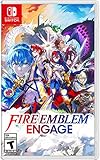
Fire Emblem™ Engage - Nintendo Switch | $66.95 | Buy on Amazon |
| 3 |

|
Fire Emblem Warriors: Three Hopes - Switch | $39.99 | Buy on Amazon |
| 4 |

|
Fire Emblem: Awakening | $57.99 | Buy on Amazon |
| 5 |

|
The Art of Fire Emblem: Awakening | $20.37 | Buy on Amazon |
| Game | Hub overhead | Why it suits a battle-first player | Main caveat | Original platform |
|---|---|---|---|---|
| Fire Emblem Engage | Low to moderate | Modern, map-focused progression; Somniel errands and social activities can be skipped or minimized. | Some post-battle and training options still exist if you choose to use them. | Nintendo Switch |
| Fire Emblem Awakening | Low to moderate | Multiple difficulty levels and Casual Mode make the campaign approachable while keeping battles central. | Its optional character and map systems can add extra time for players who pursue them. | Nintendo 3DS |
| Fire Emblem: Path of Radiance | Low | A tightly paced, story-led campaign with little resemblance to a school-life simulator. | It is a GameCube-era release, so legitimate access and current prices vary. | Nintendo GameCube |
| Fire Emblem Fates: Conquest | Moderate | Demanding map design and a campaign that rewards tactical problem-solving. | It is less forgiving and can be stressful for a first Fire Emblem. | Nintendo 3DS |
| Fire Emblem: The Sacred Stones | Low | Compact, classic structure with battles carrying the campaign forward. | Older presentation and systems are less streamlined than newer entries. | Game Boy Advance |
| Fire Emblem: The Blazing Blade | Low | A focused classic campaign with a clear mission-to-mission rhythm. | Its traditional design offers fewer modern conveniences. | Game Boy Advance |
| Fire Emblem: Three Houses | High | Not the right fit for this particular preference. | Garreg Mach, teaching, exploration and relationship activities are built into its central loop. | Nintendo Switch |
What “less grindy” means in this series
Fire Emblem is always a turn-based strategy series, but each entry decides what happens between maps. In a low-overhead game, you choose units, adjust equipment, receive the next objective and return to combat with little interruption. In a higher-overhead game, you may spend substantial time improving characters, managing a base, arranging meals or conversations, and completing side activities before the next main battle.
That distinction matters because “grind” can describe two different experiences. One is literal combat repetition: replaying maps or optional encounters to raise levels. The other is schedule friction: repeatedly walking through a hub, assigning tasks or advancing support conversations when you would rather fight. A game can have optional battles without forcing a social simulator, and it can have a large base without requiring repetitive combat. The recommendations here prioritize a short path from one story map to the next.
#1 Best Overall
- Enter the Dagdan Empire—a prosperous land ruled by the gods—and compete in the Heroic Games for the chance to be granted one wish
- Play as four heroes competing in the Heroic Games whose fortunes are tied to the fate of the world
- Prepare for each match of the Heroic Games by exploring Dagda and its capital city of Dagsion
- Learn skills at the training grounds, recruit allies and build bonds of friendship, and explore beyond Dagsion’s walls to gain experience
- Use everything you have at your disposal, including your heroes’ special abilities, to turn the tide of battle
1. Fire Emblem Engage: the safest modern choice
Engage is the best starting point if you own a Switch and want the newest battle-forward option. Its campaign is organized around tactical maps, and the Somniel is a support base rather than a school term that dictates every chapter. You can visit it after battles, use its facilities or speak with characters, but the central progression remains the next combat objective.
What you can minimize
- Optional errands and exercise-style activities at the Somniel.
- Social conversations and gift-giving that are not required to clear the main story.
- Extra training or resource routines when your team is already strong enough for the next map.
This makes Engage a better fit than Three Houses for someone who does not want to plan a weekly calendar. The base is still available for players who enjoy optimization, so it is not a completely hub-free game. The important difference is that you can treat those systems as a short pit stop instead of the primary activity between chapters.
How to keep the campaign battle-focused
- After a map, collect only the rewards or conversations you actually want.
- Use the Somniel to make essential preparations, such as checking units and equipment, then leave.
- Do not repeat optional training activities simply because they are available; use them only when a unit genuinely needs help.
- Advance the main story whenever your roster is ready instead of trying to maximize every support or facility.
The result is a modern entry whose optional systems serve the tactics rather than replacing them. Pick Engage when current hardware, polished presentation and a direct route through the battles matter more than a long character-management layer.
The Tool Desk
Outbyte Driver Updater FREEScan for outdated or missing drivers - takes under a minuteDriver Scan →Outbyte PC Repair FREERepair Windows errors before they cause bigger problemsFix Now →2. Fire Emblem Awakening: the approachable older recommendation
Awakening is the best older choice for players who want less friction, not necessarily the absolute fewest optional systems. Nintendo lists multiple difficulty levels and a Casual Mode in which defeated heroes can return later. That safety net lets a new player concentrate on learning movement, weapon matchups and objectives without treating every mistake as a permanent loss.
Why Casual Mode changes the experience
Classic Fire Emblem rules can make a single error costly because a defeated character may be gone for the rest of the campaign. Casual Mode removes that pressure by allowing defeated heroes to return later. You still have to win the map, but you can experiment with positioning and learn from failed turns without restarting an entire chapter.
Rank #2
- Reawaken as a Divine Dragon and take down a thousand-year-old threat
- Take on turn-based, tactical combat and use Emblem Rings to customize your strategy
- Collect Emblem Rings and use them to summon heroes from past Fire EmblemTM games
- Fire EmblemTM Engage launches on January 20, 2023 alongside Fire Emblem Engage: Divine Edition featuring a steelbook case and art book
The difficulty selection also gives you a way to match the game to your tolerance for planning. A lower setting reduces the need to repeat maps or engineer perfect level-ups, while a higher setting preserves the challenge for experienced players. This flexibility is why Awakening works well as an entry point for someone who disliked the time commitment of Three Houses but is not ready for a punishing classic.
Where optional time can appear
Awakening includes character relationships and optional opportunities that can extend a playthrough. They are worthwhile if you enjoy building a roster, but they do not require the academy-style routine that defines Three Houses. Follow the main chapters, use Casual Mode if permanent losses would make you restart frequently, and treat extra activities as bonuses rather than obligations.
3. Path of Radiance: choose it for story and pacing
Path of Radiance is the story-first recommendation. A Nintendo Life narrative ranking describes it as having “the most fleshed-out and well-paced story” among the western releases covered in that comparison. That assessment matters for a reader who wants a campaign that moves naturally from one mission to the next instead of pausing for a large social-management routine.
Why its structure feels focused
The game is built around a traditional sequence of tactical chapters. Between battles, the campaign gives you narrative context and preparation rather than asking you to operate a school. Character development comes primarily through the story and battlefield decisions, so the pacing is easier to maintain if your preferred rhythm is “brief setup, map, consequences, next map.”
Access and buying expectations
Path of Radiance is a GameCube-era title. Nintendo hardware generations and legitimate re-release availability mean that access and prices vary by region and by the condition of a physical copy. Check that a listing is the correct game and region, and remember that an older physical release may be used or sold through a marketplace. Choose it when story quality and campaign flow justify seeking older hardware or a legitimate re-release; do not choose it solely because it is the newest or easiest game to obtain.
Rank #3
- Command Fire Emblem: Three Houses characters like Edelgard, Dimitri, and Claude in epic real-time battles
- Play through three distinct storylines set in the Fire Emblem: Three Houses universe, each with a different ending, from the point of view of a new protagonist, Shez.
- Combine the action-packed Warriors-style gameplay with the strategy and style of the Fire Emblem series
- Fight through hordes of enemies with Fire Emblem: Three Houses characters and their distinct abilities
- Use Fire Emblem series mechanics like the weapons triangle, character classes, crests, and battalions to tailor your strategy
4. The Sacred Stones and The Blazing Blade: compact classic campaigns
The Sacred Stones and The Blazing Blade are the clearest recommendations when you want the series’ classic battle-to-battle structure in a smaller package. Both are Game Boy Advance-era games with little resemblance to a modern academy hub. The campaign emphasis is on selecting a squad, solving the current map and preparing for the next mission.
Windows Errors? Fix Them Before They Spread
Repair common Windows errors and clear accumulated junk for a smoother, more stable PC - no reinstall needed.Free scan · no reinstallOutdated Drivers Are Slowing You Down
One free scan finds every outdated or missing driver and matches the right update for your exact hardware.Free scan · exact hardware matchPick The Sacred Stones when you want flexibility
The Sacred Stones is a good fit for a player who wants a traditional campaign but appreciates having room to develop a roster. Its classic interface and presentation take some adjustment if you started with newer entries, yet the game does not demand a recurring social schedule. You can focus on the story chapters and battlefield decisions without feeling that you are neglecting a separate life-simulation layer.
Pick The Blazing Blade when you want a direct introduction
The Blazing Blade is another focused GBA campaign. Its older systems expect more attention to fundamentals, including movement ranges, terrain and weapon choices, but the time between missions is comparatively direct. Choose it when you prefer a compact, traditional experience and do not need modern conveniences or a large base to occupy between maps.
For either game, “less grindy” should not be read as “effortless.” Traditional Fire Emblem can punish careless turns, and older releases provide fewer quality-of-life features. The advantage is that your time is spent solving tactical problems rather than maintaining an academy schedule.
5. Fates: choose Conquest, avoid Birthright for this preference
Fire Emblem Fates is a split recommendation. If you want demanding map design and are comfortable with a higher challenge level, select Fates: Conquest. If your explicit goal is to minimize opportunities for grinding, do not select Birthright: a review specifically describes Birthright as offering plentiful resources and opportunities to grind.
Rank #4
- IMMERSIVE STORY AND VISUALS:The deep and immersive fantasy storyline is told throughbeautiful 3D visuals and movies.
- DEEP CAST OF CHARACTERS: A massive selection of characters are at your command,withal with a unique personality and background story and different class types and skill sets.
- BONDS GROWN IN BATTLE: Team up characters to strengthen their friendships on the battlefield. The closer they grow, the better these friends and allies will fight together. Some characters can even get married!
- "9.6 out of 10. Fire Emblem Awakening is the most fluid and stunning strategy RPG experience available on a portable, and features the best storytelling and production value of any 3DS game to date" - IGN
- "4.5 out of 4 (Editor's Choice). The best Nintendo 3DS RPG to date" - Gamesradar
Why Conquest is the better fit
Conquest asks you to solve the maps in front of you with tighter resources and more deliberate tactics. That design gives each chapter a stronger puzzle-like identity. You are encouraged to improve through planning—where units stand, when to use a special ability and which objective to prioritize—rather than by repeatedly farming easy encounters.
The trade-off is difficulty. A player who is new to Fire Emblem may find Conquest less welcoming than Awakening on a forgiving setting. It is the right Fates route for someone who already understands the series and specifically wants battles to demand attention.
Why Birthright can feel grindier
Birthright gives players more resources and more opportunities to repeat battles. That can be useful when you want to over-level a favorite character or recover from a weak roster, but it also makes it easier for a campaign to expand into optional grinding. If you disliked the feeling of spending time on systems outside the main maps, that abundance works against your stated goal.
Independent reader supportYour contribution helps us test, update, and keep practical guides available for everyone.Why Three Houses is the wrong fit for this specific request
Three Houses is not a bad game; it is simply built around the activities you are trying to avoid. Nintendo’s official description places Garreg Mach Monastery at the center of Fódlan, as the home of the Officers Academy where the future leaders train. The monastery is therefore more than a menu or a short staging area: it is the setting that connects lessons, exploration and relationships to the battle campaign.
What’s actually slowing this PC down?
Pick the symptom - the matching free tool is one click away.
Nintendo Life’s review says the customization and content are “almost guaranteed to keep you engaged for dozens, if not hundreds, of hours.” That breadth is a strength for players who want to teach students, explore the grounds, garden, dine with characters and manage relationships. It becomes a drawback when your ideal Fire Emblem is mostly a sequence of tactical maps.
Best Value
What to expect if you already own it
You can reduce some optional activities, but you cannot turn Three Houses into a purely map-based campaign. The calendar, instruction and monastery structure remain part of how chapters are paced. If you disliked only excessive optimization, a lighter routine may be tolerable. If you disliked walking the hub and scheduling social activities at all, changing to Engage, Awakening or one of the classic campaigns is a cleaner solution than trying to bypass the design.
Choose by the kind of player you are
| Your priority | Best match | Reason |
|---|---|---|
| Current hardware and the shortest route to battles | Engage | Its optional Somniel layer does not replace the map-based main progression. |
| Forgiveness while learning | Awakening | Difficulty options and Casual Mode reduce the cost of mistakes. |
| Story and campaign pacing | Path of Radiance | It is the story-first choice in the cited narrative ranking. |
| Demanding tactical maps | Fates: Conquest | Its design emphasizes solving maps instead of farming abundant resources. |
| Short, traditional campaigns | The Sacred Stones or The Blazing Blade | Both keep the classic mission-to-mission rhythm and avoid an academy hub. |
| A large social and customization layer | Three Houses | This is the opposite of the stated preference, so choose it only if that layer appeals to you. |
What to play after Three Houses if you hated the monastery
Move to Engage first if you want a current Switch game and do not mind an optional base. Its battle-forward structure makes the contrast immediate. Move to Awakening if you want a gentler learning curve or the option to use Casual Mode. Choose Path of Radiance when narrative momentum matters more than modern availability, and choose The Sacred Stones or The Blazing Blade when you want the cleanest classic format.
Do not assume that every older game is automatically free of optional repetition. Fates: Birthright, in particular, is a poor match for a no-grind goal because its resource model creates many opportunities to repeat content. Conquest is the better route only if you welcome a higher tactical challenge.
Recommended Free Tools
Platform and availability checks before you commit
- Switch: Engage is the straightforward modern purchase if you already own Nintendo’s current console.
- 3DS: Awakening and both Fates routes belong to the 3DS generation. Confirm how you will obtain a legitimate copy in your region before choosing based on a recommendation alone.
- GameCube: Path of Radiance is an older release. Used-market prices and condition vary, and availability is not uniform across regions.
- Game Boy Advance: The Sacred Stones and The Blazing Blade provide the compact classic format, but you should verify that the edition and language meet your needs.
Older entries may require more effort to locate than a current release. Treat price, condition, region and legitimate access as separate decisions from the game’s design fit; the most battle-focused recommendation is not useful if you cannot reasonably play it.
Bottom line for a battle-first Fire Emblem library
Engage is the safest all-around answer: modern, tactical and less dependent on a social schedule than Three Houses. Awakening is the approachable alternative because Casual Mode and multiple difficulty levels let you control the pressure. Path of Radiance earns the story-and-pacing slot if you can access it, while The Sacred Stones and The Blazing Blade deliver the most compact classic experience. For Fates, select Conquest when you want demanding maps and skip Birthright when avoiding grind is the deciding factor.
Quick Recap
Product prices and availability are accurate as of the date/time indicated and are subject to change. Any price and availability information displayed on Amazon at the time of purchase will apply.

