
Windows Errors? Fix Them Before They Spread
Repair common Windows errors and clear accumulated junk for a smoother, more stable PC - no reinstall needed.Free scan · no reinstallCrashes, No Sound, or Screen Glitches?
Random freezes, missing sound and display glitches usually trace back to one bad driver. Find and replace yours safely.Free scan · under a minuteThere is no proven, universal best CPU for the NVIDIA GeForce RTX 2080 Ti: the right choice depends on your games, resolution, frame-rate target, existing motherboard and memory, and total upgrade cost. For a new build, current general gaming-guide candidates include the Ryzen 7 9800X3D for a premium system, the Ryzen 5 7600X for a lower-cost option, and Intel’s Core Ultra 5 250K Plus as a midrange comparison. If you already have a compatible DDR4 system, the Ryzen 7 5800X3D or Ryzen 5 5600 may be worth considering. None of these picks has been established as the best RTX 2080 Ti pairing in a direct comparison.
Which CPU should you choose?
Use these CPUs as a shortlist from current general gaming rankings, not as winners of RTX 2080 Ti-specific tests. A CPU that ranks highly in a broad gaming suite may not be the best value for your existing motherboard or for a system that is mostly GPU-limited at its target resolution.
| Situation | Candidate | What the evidence supports |
|---|---|---|
| Premium new build | AMD Ryzen 7 9800X3D | Tom’s Hardware lists it in its $300–$400 gaming CPU category in its 2026 guide. This is a general ranking, not an RTX 2080 Ti pairing result. Tom’s Hardware’s 2026 gaming CPU guide |
| Lower-cost new build | AMD Ryzen 5 7600X | Tom’s Hardware lists it in its $100–$150 category. Check live local prices and the cost of the required motherboard and memory before comparing it with other platforms. Tom’s Hardware’s 2026 gaming CPU guide |
| Midrange alternative for a new system | Intel Core Ultra 5 250K Plus | Tom’s Hardware lists it in its $200–$300 category. The ranking does not establish its performance with an RTX 2080 Ti. Tom’s Hardware’s 2026 gaming CPU guide |
| Keeping a compatible DDR4 system | AMD Ryzen 7 5800X3D | Tom’s Hardware names it its best DDR4 gaming CPU. Confirm your exact motherboard and BIOS support before buying. Tom’s Hardware’s 2026 gaming CPU guide |
| Budget DDR4 option | AMD Ryzen 5 5600 | Tom’s Hardware lists it as a budget alternative. Whether it is a worthwhile upgrade depends on your current CPU, board support, and local pricing. Tom’s Hardware’s 2026 gaming CPU guide |
The guide was last updated September 14, 2026. Its CPU recommendations come from broad gaming tests, not controlled tests of these processors paired with an RTX 2080 Ti. It reports a 3.3% average gaming lead for the Ryzen 7 9850X3D over the Ryzen 7 9800X3D in its tested suite, yet recommends the 9800X3D in its price context; that comparison also is not an RTX 2080 Ti pairing test. Read the guide’s methodology and recommendations.
Why resolution and games change the answer
High-refresh 1080p and CPU-sensitive games
At lower resolutions or when pursuing very high frame rates, the processor can have more influence on the frames a system can deliver, particularly in CPU-sensitive games. A faster CPU may be more relevant for competitive play than for a visually demanding game where the graphics card does most of the work. The result still depends on the specific game and system; a generic bottleneck percentage cannot predict it reliably.
#1 Best Overall

- 11GB GDDR6
- CUDA Cores: 4352
- Display Connectors: DisplayPort, HDMI, USB Type-C
- Maximum Digital Resolution: 7680x4320
1440p
In TechSpot’s 2018 test suite, the RTX 2080 Ti was often CPU-bound at 1440p. In that review, it averaged 22% faster than the GTX 1080 Ti at that resolution. That is a historical GPU-versus-GPU result in the tested games, not a measure of how much a CPU upgrade would improve RTX 2080 Ti performance. TechSpot’s 2018 RTX 2080 and 2080 Ti review.
4K
The same 2018 review found the RTX 2080 Ti averaged 31% faster than the GTX 1080 Ti at 4K. This is also a historical GPU comparison, not a current-game prediction or a CPU uplift figure. TechSpot’s change in results between 1440p and 4K illustrates why resolution can alter the balance between processor and graphics card; it does not define what every current game or PC will do. TechSpot’s review and test context.
Rank #2
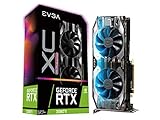
- NVIDIA Turing GPU architecture gives up to 6X Faster Performance compared to previous-generation graphics cards
- Real-Time RAY TRACING in games for cutting-edge, hyper-realistic graphics
- Dual HDB Fans offer higher performance cooling and much quieter acoustic noise. iCX2 Cooling
- Adjustable RGB LED offers configuration options for all your PC lighting needs
- Built for EVGA Precision X1 - EVGA's all-new tuning utility monitors your graphics card and gives you the power to overclock like a pro!
A later TechSpot analysis also shows that resolution scaling varies by game and test configuration, with RTX 2080 Ti data included. Its observations do not provide a transferable bottleneck percentage for a different PC. TechSpot’s resolution-scaling analysis.
Should you upgrade your CPU or build a new platform?
If you already have a DDR4 motherboard
Start by checking whether your exact board supports the Ryzen 7 5800X3D or Ryzen 5 5600, including the required BIOS version. A CPU that fits the same broad platform is not automatically supported by every board. Compare the full upgrade cost with the cost of replacing the motherboard and memory; the guide’s CPU category alone does not establish local value or the benefit over your current processor.
What’s actually slowing this PC down?
Pick the symptom - the matching free tool is one click away.
Rank #3

- NVIDIA GeForce RTX 2080 Ti 11GB
- NVIDIA CUDA Cores 4352, Clock speeds of 1350 MHz core and 1545 MHz boost
- 24/7 U.S. Based Technical Support
- Blower Edition
- NVIDIA Turing Architecture, combined with the all-new GeForce RTX platform, fuses together real-time ray tracing, artificial intelligence, and programmable shading.
If you are building a new PC
Compare the total CPU, motherboard, and memory cost—not just processor category prices. Check socket, board compatibility, BIOS support, and memory requirements for the exact parts available to you. A premium gaming CPU can be sensible if high frame rates in CPU-sensitive games are the priority, but may be poor value if your main workload and resolution keep the RTX 2080 Ti as the limiting component.
If productivity matters too
Gaming rankings do not settle which processor is best for mixed workloads. Consider the applications you use, their performance requirements, and your platform budget alongside gaming results; the cited gaming recommendations do not establish a productivity winner.
Rank #4

- High-Performance System Components: AMD Ryzen 7 8700F (8-Core/16-Thread @ 4.1GHz / 5.0GHz Turbo) | GeForce RTX 5060 Ti 8GB Graphics | 16GB DDR5 RAM | 1TB Solid-State Drive (SSD) | ViprTech Copperhead 700w PSU | Genuine Windows 11 Pro | RGB Lighting enabled White case
- Customizable RGB Lighting System: Showcase your internals with the built-in RGB lighting system, a must have for any gaming PC and sure to make your rig stand out. Controlled via a button on the case
- Ultra-Fast Storage Performance: Enjoy insanely fast bootup times with the included 1TB Boot SSD, up to 30x faster than a traditional hard drive. Easily add additional storage if desired
- Versatile Gaming and Content Creation: Optimized for streaming, video editing/rendering, 4K gaming, Virtual Reality, and demanding applications. Delivers high FPS and can run many games on High / Ultra settings
- USA Built Quality Assurance: Every ViprTech PC is built by hand in the USA and is stress-tested extensively before shipping. Includes a 1 year warranty for peace of mind
How to make the decision for your PC
- Set your target. Write down your main games, resolution, refresh-rate goal, and whether you prioritize competitive frame rates or visual settings.
- Identify your current platform. Record your CPU, motherboard model, BIOS version, and memory configuration. For an upgrade, consult the motherboard maker’s CPU-support information for the exact processor and BIOS requirement.
- Compare total costs. Price the CPU, compatible motherboard, and memory together where a platform change is needed. Check current local prices rather than treating the guide’s category ranges as permanent prices.
- Shortlist by situation. Consider the 9800X3D, 7600X, or Core Ultra 5 250K Plus for a new-build comparison, and the 5800X3D or 5600 when retaining a compatible DDR4 system is the goal.
- Look for evidence in your own games. Use benchmarks that match the games and resolution you play, and note the test CPU, GPU, settings, and system configuration. Do not translate another setup’s FPS or bottleneck estimate directly to yours.
What the available evidence does—and does not—show
- Current gaming-guide rankings help identify CPUs to compare, but do not prove which one performs best with an RTX 2080 Ti.
- The 2018 RTX 2080 Ti results describe launch-era games and test conditions; they should not be presented as current-game performance.
- TechSpot’s resolution-scaling analysis supports a game-by-game view of CPU limits, not a universal bottleneck calculator result.
- No direct comparison establishes exact FPS differences between the named CPUs when paired with an RTX 2080 Ti, a specific RTX 2080 Ti price/performance winner, or a quantified upgrade benefit.
NVIDIA’s launch-era material describes the RTX 2080 Ti’s historical high-resolution positioning, while its user guide covers GPU documentation and installation context; neither establishes a CPU recommendation. NVIDIA’s launch-era RTX 2080 Ti material · NVIDIA GeForce RTX 2080 user guide.
Quick Recap
Product prices and availability are accurate as of the date/time indicated and are subject to change. Any price and availability information displayed on Amazon at the time of purchase will apply.
Recommended Free Tools

