
iTechGuides is reader-supported. When you buy through links on our site, we may earn an affiliate commission. As an Amazon Associate I earn from qualifying purchases. Learn more
Lightweight-to-medium linen is the best all-around cottagecore fabric for breathable everyday clothes. It creates airy dresses, blouses, skirts, and trousers, has a naturally textured look, regulates temperature, and can serve for years when its weight, weave, and care instructions suit the garment. Choose hemp or a hemp-linen blend when moisture management and extra toughness matter more than the softest hand feel.
There is no universal durability champion: yarn quality, weave, finishing, garment construction, laundering, and wear all change the result. Cotton-linen is a practical softness and handling compromise, wool is the better choice for cool-weather layers, and ramie is strong and shape-stable but less forgiving because it has little elasticity and relatively low abrasion resistance.
Quick answer: which fabric should you buy?
Use the following decision rule before shopping. It separates the best cottagecore fabric for a particular job from a generic fiber ranking.
Quick wins for a faster PC:
Repair Windows errors before they cause bigger problemsFix Now →Fix the driver behind crashes, sound loss and screen glitchesFind Drivers →Clear out junk files and repair common Windows errorsFree Scan →| Need | Best starting point | Why it fits | Trade-off to check |
|---|---|---|---|
| Airy summer dress, blouse, skirt, or trouser | Lightweight-to-medium linen | Breathable, temperature-regulating, naturally textured, and durable for everyday use | Opacity, shrinkage instructions, and the amount of wrinkling acceptable to you |
| Hard-wearing garment or humid-weather clothing | Hemp or hemp-linen | Porous, breathable, moisture-wicking, stretch-resistant, and durable; hemp-linen tests showed high air permeability and improved moisture management | Hand feel and comfort depend strongly on weave |
| Softest easy-to-handle summer blend | Cotton-linen | Usually softer and easier to sew than a pure bast-fiber fabric | In the cited comparison, tested cotton-linen constructions were less air-permeable than hemp or linen |
| Cardigan, vest, overshirt, or other cool-weather layer | Wool | Absorbs moisture in its hydrophilic core and releases it as vapor while buffering temperature changes | Warmth, care requirements, and possible itch vary by wool type and construction |
| Very strong, crisp, shape-stable detail | Ramie or a ramie blend | Strong, thermally stable, and resistant to shape loss, shrinkage, and microbial attack | Low elasticity, stiffness, brittleness, and low abrasion resistance make blends more forgiving |
If you want one first purchase, look for 100% linen fabric by the yard in an apparel-appropriate light or medium weight. Verify the fiber content, weave, opacity, shrinkage instructions, and care directions before ordering.
Popular on Amazon

- 【 100% Natural Linen】Made from 100% natural linen, this linen fabric by the yard is free of harmful chemicals and durable, making it suitable for a variety of crafting situations, giving you peace of mind.
- 【 Unlimited DIY Uses】The linen cloth tight structure makes it resistant to pilling and fading, keeping it looking new for years. Linen material can be used for clothing, handbags, patchwork, home decor, and various artistic creations. Dusty pink fabric is also highly suitable for dyeing, printing, and embroidery, making it an ideal base for creative projects.
- 【 Available in a variety of sizes and colors】2 yard linen fabric is about 78 inches x 72 inches in length and weighs about 21.2 ounces. 13 colors are available to meet different DIY projects. When purchasing multiple pieces, you will get corresponding 2 yard x 78 inch pieces instead of continuous pieces.
- 【 Easy to Cut and Sew】The upholstery fabric cuts smoothly and resists frays, making it suitable for both hand and machine sewing. Pre-washing is recommended to minimize shrinkage, and wet ironing can restore a smooth texture or create a crisp shape.Machine Washable and Reusable
- 【 An Ideal Gift for Crafting Enthusiasts】This linen fabric is a great choice for yourself or as a gift for craft-loving friends and family. Enjoy making clothing, bags, and artwork together, and unleash your creativity to bring your DIY designs to life!
What makes a fabric work for cottagecore clothes?
Cottagecore style often uses natural texture, relaxed silhouettes, gathered fullness, practical pockets, and layers that can be worn repeatedly. A fabric therefore has to do more than look rustic. Evaluate these properties together:
- Air permeability: How readily air passes through the cloth. It affects whether a dress feels cool when moving or sitting.
- Moisture management: Whether perspiration is absorbed, moved, and released rather than left against the skin.
- Strength and abrasion resistance: Whether fibers and yarns tolerate repeated wear at seams, elbows, seat, and pocket openings.
- Shape retention: How well the fabric keeps its intended silhouette after wear and laundering.
- Stretch and recovery: Whether the cloth gives during movement and returns to shape. Low stretch can be useful for crisp structure but uncomfortable in fitted garments.
- Shrinkage: Any dimensional change expected under the stated washing and drying method. The seller or mill should state this; do not assume two fabrics with the same fiber content behave alike.
- Opacity and lining needs: Open, light weaves can be cool but may require a lining, slip, or an extra layer.
- Hand feel: Texture can soften with use, but a fabric that feels too stiff or scratchy in the shop is unlikely to become comfortable in a close-fitting area.
Fiber content is only the beginning. Yarn size, density, finishing, and weave can change comfort and service life enough that two “linen” fabrics feel like different materials.
Linen: the strongest all-purpose starting point
Why linen suits everyday cottagecore garments
Flax linen is breathable, naturally textured, and associated with temperature regulation and long service. Its fibers become stronger when wet, a useful property for a garment that must be laundered repeatedly. Lightweight-to-medium linen supplies enough body for gathered skirts and dresses without the heavy, stiff feel of upholstery cloth, while still working for shirts, blouses, and trousers.
Do these 3 things before closing this tab:
1Clear out junk files and repair common Windows errors2Fix the driver behind crashes, sound loss and screen glitches3Repair Windows errors before they cause bigger problemsLinen also makes a convincing answer to “what fabric is cool but not flimsy?” The answer depends on construction, but a medium apparel linen with a stable weave can feel airy while holding a pocket, waistband, or button placket. A very open or exceptionally light linen may be cooler yet more transparent and less resistant to snagging.
Where linen works best
- Loose dresses, pinafores, and tiered skirts where airflow is valuable.
- Blouses and peasant-style tops that benefit from a crisp but breathable surface.
- Pull-on trousers and shorts in a stable, opaque weave.
- Aprons, overshirts, and everyday utility pieces when the fabric has enough body for the pattern.
Linen limitations to plan for
Linen has limited natural stretch, so fitted designs need ease, darts, closures, or a blend that supplies movement. Wrinkles are part of the fiber’s appearance, but excessive rumpling can make a very lightweight cloth look untidy or cause stress at high-use points. Check the manufacturer’s shrinkage and laundering directions, and test a swatch before cutting a full garment.
Hemp and hemp-linen: when toughness and moisture control lead
Is hemp fabric durable?
Hemp is described by AATCC as durable, porous, breathable, moisture-wicking, stretch-resistant, and UV-resistant. The EEA/ETC CE report also identifies high moisture absorbency and breathability. Those traits make hemp a strong candidate for clothing that sees sun, perspiration, or frequent use, provided the chosen weave is comfortable next to the skin.
Hemp can feel firmer and more textured than cotton, especially in a heavier or less-softened finish. That is not a defect for an overshirt, chore-style dress, or structured skirt, but it can be a poor match for a drapey blouse if the pattern expects fluid movement.
The Tool Desk
Outbyte Driver Updater FREEFix the driver behind crashes, sound loss and screen glitchesFind Drivers →Outbyte PC Repair FREERepair Windows errors before they cause bigger problemsFix Now →Also popular on Amazon

- [Large Size]: Each piece measures 78 inches(200cm) x 1 yard(36 inches/91.44cm), 160GSM, meeting your different needs for DIY projects. Note: The fabric is only cut into 1 Yard by 78-Inch(200cm). When you buy more than one, you will get corresponding pieces which is 1 Yard by 78-Inch, not a continuous piece.
- [Color]: 11 Colors for you to choose from. White, Olive Green, Grass Green, Grey, Navy, Linen, Red, Dusty Pink, Sage Green, Dusty Blue, Rust.
- [High Quality Material]: Natural-fiber linen fabric is prized for its durability, breathability, and lived-in look, and linen has a nice temperature control function that can absorb moisture, making it suitable for clothing or bedding sheets, giving a comfortable feeling, safe for those with sensitive skin and babies. Linen also exhibits good resistance to wrinkles, washing, and wear, softer after every wash, ensuring long-lasting use. Easy to care, easy to cut and sew.
- [Multiple Uses]: Wide use DIY fabric, suitable for various handmade craft projects, needlework, embroidery, apparel, aprons, sheets, quilting, tablecloths&napkins, handbags, cushion covers, curtain, sofa covers, etc., giving handicrafts a primitive aesthetic feeling, adding a simple and warm style to indoor space.
- [Easy to care&Customer Service] Machine washable, gentle cycle wash under 60℃ with similar colors. Do not dry clean. Do not use detergent that contains bleach or whitener. Tumble dry at medium heat. Iron on high heat. If you have any questions, please feel free to contact us, our customer service staff will reply you within 24 hours.
What hemp-linen testing adds
A peer-reviewed comparison found hemp-linen fabrics were slightly lighter, less dense, more air-permeable, and better at moisture management than comparable linen fabrics in the tested constructions. The result is not a universal ranking of every hemp-linen product: weave still changed cool-touch and thermal behavior. Treat the blend as a promising starting point, then judge the actual fabric’s density, surface, and drape.
Best uses for hemp and hemp-linen
- Summer work dresses, overshirts, and trousers that need more resistance to everyday wear.
- Humid-climate tops and layers where moisture release matters.
- Sun-exposed garments, taking advantage of hemp’s reported UV resistance.
- Bags, aprons, and utility details when a firm hand is desirable.
For a close-fitting bodice, rub the fabric against your inner arm and bend it repeatedly. A cloth that feels abrasive or refuses to flex may be better reserved for a looser pattern or blended with a softer fiber.
Cotton-linen: the practical softness compromise
Cotton-linen blends are often softer and easier to handle than pure bast-fiber fabrics. They can be a useful first step for someone who likes the cottagecore look but finds crisp linen intimidating to sew or wear. The blend may drape more gently and feel familiar against the skin.
Airflow is not guaranteed by the word “linen” on a label. In the cited comparative study, the tested cotton-linen constructions had lower air permeability than the hemp or linen constructions tested. Construction matters, so compare the actual weave and density rather than assuming a cotton-linen dress will be as cool as open linen.
Choose cotton-linen when softness, easy handling, and moderate structure are more important than maximum permeability. It is particularly useful for everyday dresses, gathered skirts, and shirts where a little extra pliability makes fitting and pressing easier.
Wool for cool-weather cottagecore layers
Wool belongs in a cottagecore wardrobe when the garment is a cardigan, vest, jacket, skirt, or other layer intended for cooler conditions. The International Wool Textile Organisation states that wool can absorb up to 35% of its own weight in moisture through its hydrophilic core and release that moisture as vapor. IWTO also reports that wool buffers temperature changes and can reduce the after-chill that follows activity.
That moisture behavior is different from simply feeling “warm.” A wool layer can moderate changing conditions, but the right weight, knit or weave, and degree of wind resistance still determine comfort. A loose wool vest may work over a linen blouse; a dense coat fabric will behave very differently.
Also popular on Amazon
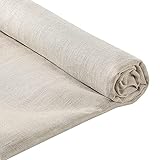
- Organic natural pure 100% linen fabric, plain, solid colour
- Approx Size: 39"x 50". Approx weight: 220 gsm
- Advantage:The linen material is strong, absorbent and dries faster than cotton. It is comfortable to wear in hot weather and is very suitable for use in clothing
- DIY Fabric: Linen cloth is slightly stretchy, suitable for dressmaking, skirts, bag, embroidery, tablecloths, garments crafts decoration, handicrafts, and can also be integrated into the home fashion
- Warm Notes: Pure natural products may have a small amount of burrs. The color of the fabric may vary on different monitors
Buying wool for everyday wear
- Check whether the cloth is intended for apparel and whether the surface is smooth enough for the planned layer.
- Use a lining or a separate underlayer if the surface feels scratchy at the neck or armhole.
- Confirm cleaning instructions before sewing. Wool garments can lose shape when treated contrary to the label.
- Allow enough ease for layering; wool has insulation value, but a tight garment can restrict movement and compress the fabric.
Ramie: strong and stable, but not universally comfortable
Ramie is a bast fiber with high strength and thermal stability. The EEA/ETC CE assessment describes it as resistant to shape loss, shrinkage, and microbial attack. Those properties can be valuable for crisp shirts, structured skirts, and details that must hold their outline.
The same assessment notes low elasticity, stiffness, brittleness, and low abrasion resistance. In practice, ramie may keep a shape yet fail sooner at a repeatedly rubbed edge if the construction is not suited to that use. Its lack of give can also make fitted clothing uncomfortable. Blends are often more forgiving because another fiber can add softness, flexibility, or abrasion tolerance.
Use ramie when a firm, dry hand and shape stability are priorities. Avoid choosing it solely because a listing promises “strong”; inspect the weave, flex the cloth, and consider where the garment will bend or rub.
Weave can matter as much as fiber
Plain, panama, and twill weaves can produce different air movement, surface contact, drape, and thermal behavior from similar fibers. Hemp-linen research measured comfort differences among these constructions, including cool-touch and thermal responses. The study supports treating weave as a real performance variable, not a decorative afterthought.
| Weave | What to look for in the hand | When it may suit cottagecore clothing | What is not established by the available evidence |
|---|---|---|---|
| Plain weave | Even over-under grid; can range from airy to dense depending on yarn and sett | Shirts, dresses, skirts, and lightweight trousers when opacity and stability are right | No single air-permeability or durability value applies to every plain weave |
| Panama | Basket-like grouped yarns; often visibly textured | Relaxed dresses, overshirts, or accessories where texture is welcome | The cited study found comfort differences, but not a universal ranking for all panama fabrics |
| Twill | Diagonal surface line; can feel denser or more fluid depending on construction | Trousers, jackets, vests, and structured skirts that need body | Performance varies with yarn, density, and finishing; a twill is not automatically warmer or tougher |
When a listing gives only the fiber percentage, ask for the weave, fabric width, weight or thickness description, opacity information, and care instructions. If those details are absent, the uncertainty itself is a buying risk.
Linen vs cotton for summer dresses
The choice is not simply “natural versus synthetic.” For a summer dress, compare the specific linen, cotton, or blend on the following points.
| Decision point | Linen | Cotton | Cotton-linen blend |
|---|---|---|---|
| Air movement | Generally a strong starting point for an airy dress; exact result depends on weave and density | Not stated as a single value; construction determines comfort | Lower air permeability than hemp or linen in the cited tested constructions |
| Moisture behavior | Breathable and temperature-regulating | Not established as a universal comparison in the available evidence | Practical compromise; exact management depends on blend ratio and weave |
| Texture and drape | Naturally textured, with crisp to relaxed options | Often familiar and soft, but product behavior varies widely | Often softer and easier to handle than pure bast-fiber cloth |
| Wet strength | Flax fibers become stronger when wet | Not stated in the available evidence | Depends on the proportions and construction |
| Best reason to choose it | Maximum linen character and breathable everyday wear | A familiar hand feel when a particular cotton cloth meets the pattern’s needs | Softness and easier sewing while retaining some linen texture |
For a loose summer dress, start with linen when coolness and a visibly natural texture are priorities. Choose cotton-linen when you want a softer, more cooperative fabric and can accept that the tested constructions were less air-permeable than hemp or linen. Judge the actual swatch rather than the fiber name alone.
Also popular on Amazon
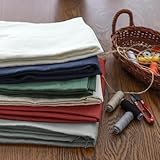
- 【 100% Natural Linen】Made from 100% natural linen, this linen fabric by the yard is free of harmful chemicals and durable, making it suitable for a variety of crafting situations, giving you peace of mind.
- 【 Unlimited DIY Uses】The linen cloth tight structure makes it resistant to pilling and fading, keeping it looking new for years. Linen material can be used for clothing, handbags, patchwork, home decor, and various artistic creations. Dusty pink fabric is also highly suitable for dyeing, printing, and embroidery, making it an ideal base for creative projects.
- 【 Available in a variety of sizes and colors】2 yard linen fabric is about 78 inches x 72 inches in length and weighs about 21.2 ounces. 13 colors are available to meet different DIY projects. When purchasing multiple pieces, you will get corresponding 2 yard x 78 inch pieces instead of continuous pieces.
- 【 Easy to Cut and Sew】The upholstery fabric cuts smoothly and resists frays, making it suitable for both hand and machine sewing. Pre-washing is recommended to minimize shrinkage, and wet ironing can restore a smooth texture or create a crisp shape.Machine Washable and Reusable
- 【 An Ideal Gift for Crafting Enthusiasts】This linen fabric is a great choice for yourself or as a gift for craft-loving friends and family. Enjoy making clothing, bags, and artwork together, and unleash your creativity to bring your DIY designs to life!
Match fabric to the garment
Airy dresses and skirts
Choose lightweight-to-medium linen or a breathable hemp-linen. Check the fabric against a window or light source for transparency, then hold it in a gathered fold. It should support the volume of the pattern without becoming board-like. If the cloth is transparent, plan a lining, slip, or layered skirt before buying yardage.
Blouses and peasant tops
Soft linen, cotton-linen, or a supple hemp-linen can work. Pay attention to the neckline and armholes: a stiff fabric can chafe, while a very open weave may need stabilizing at buttons and gathers. A small test seam reveals whether the fabric frays excessively or supports the chosen seam finish.
Free tools Windows power users keep installed
One-click scans. No signup required.
Trousers and shorts
Use a stable linen, hemp-linen, or suitable twill with enough opacity for sitting and bending. Low-stretch fibers require ease at the waist, hip, and knee; do not copy measurements intended for a stretch knit. Reinforce pocket openings and crotch seams according to the pattern because these areas receive concentrated stress.
Cardigans, vests, and layers
Wool is the evidence-backed choice for buffering moisture and temperature in cool weather. Linen or hemp can serve as an overshirt in milder conditions, but select a weave with enough body for the intended layer and enough room to wear over another garment.
Aprons, utility pieces, and accessories
Hemp, medium linen, and firm ramie blends can supply structure. Examine abrasion-prone edges, strap attachments, and pocket corners. Ramie’s low abrasion resistance means a strong fiber is not automatically the best choice for a bag or work apron that will rub constantly.
How to inspect 100% linen fabric by the yard
- Confirm fiber content. Look for an explicit percentage, not a title that merely says “linen look” or “natural fabric.” If the listing is unclear, treat the fiber as unverified.
- Identify the apparel weight or thickness. A seller may describe the cloth as lightweight, medium, or suitable for dresses and trousers. Do not infer a precise weight when none is stated.
- Check the weave. Ask whether it is plain, panama, twill, or another construction. The weave affects air permeability, cool-touch behavior, drape, and opacity.
- Assess opacity. Hold a swatch over a contrasting background or use the seller’s transparency photographs. Decide whether you will line the garment.
- Read shrinkage and care instructions. Follow the stated laundering method. If the seller gives no guidance, order a swatch and test the planned treatment before cutting.
- Test hand and recovery. Scrunch, bend, and release the cloth. Note whether it returns to shape, stays sharply creased, or feels brittle at the fold.
- Inspect the edges. Rub the cut edge lightly to see how quickly it frays. This informs seam allowances, French seams, overlocking, or binding.
- Check color and lot policy. For a multi-panel dress, buy enough from one dye lot when the seller provides lot information; do not assume a later cut will match.
- Calculate usable yardage. Account for fabric width, directional nap or print, shrinkage allowance specified by the seller, pattern matching, and test pieces before placing the full order.
Sewing and laundering workflow that protects the fabric
- Pre-treat a swatch first. Wash and dry it by the intended garment method, then measure the change and observe texture, color, and seam behavior. This is safer than guessing a shrinkage percentage.
- Pre-treat the yardage consistently. Once the swatch confirms the method, treat all yardage before cutting so panels begin at the same dimensions.
- Stabilize stress points. Use suitable interfacing or reinforcement at button bands, waistbands, pocket openings, shoulder seams, and other areas where the pattern concentrates force.
- Choose a seam finish for fraying. Bast-fiber fabrics can shed at cut edges. Select a finish that suits the cloth’s thickness and the garment’s bulk rather than applying one method blindly.
- Press with the care label in mind. Test heat and steam on a scrap or hidden area, especially for dyed cloth, blends, and wool.
- Wash for the real use case. A dress worn weekly needs a care routine you can maintain. If a fabric requires handling you will not realistically provide, choose a more forgiving option.
- Store dry and uncompressed. Make sure garments are fully dry before storage and avoid leaving sharply folded stress lines in delicate or brittle fabrics.
These steps do not turn a weak construction into a durable one; they reduce avoidable damage caused by mismatched treatment, unsupported seams, or cutting before dimensional changes are known.
Common buying mistakes and how to correct them
Mistaking a fiber label for a performance guarantee
“Linen,” “hemp,” or “ramie” identifies the principal fiber, not the final behavior. Correct the mistake by checking weave, density, finishing, and intended use. Two fabrics with identical fiber content can differ in opacity, airflow, drape, and resistance to abrasion.
Also popular on Amazon

- Natural fiber blend: Crafted with 60% linen and 40% cotton, this fabric offers the perfect balance of linen's characteristic texture and cotton's softness. The natural fibers provide excellent breathability, making it ideal for home textiles
- Generous width advantage: At 61 inch wide, this fabric provides substantial coverage that reduces waste during cutting and pattern placement. Allows for more efficient project planning, whether creating wide tablecloths, curtain panels
- Versatile crafting applications: Ideal for sewing enthusiasts creating embroidery projects, table runners, napkins, and decorative home items. The natural color serves as an excellent neutral base for dyeing projects, while the textured surface provides ideal traction for embroidery hoops and needlework
- Durability characteristics: The linen-cotton blend offers superior abrasion compared to pure linen fabrics. The interwoven cotton fibers add strength to the natural linen, resulting in a material that withstands frequent use and washing. This fabric maintains its appearance through multiple wash cycles when properly cared for
- Easy care: Machine washable in cold water with mild detergent. Tumble dry on low heat or line dry for minimal shrinkage. We recommend pressing with steam iron while slightly damp to achieve crisp results. The natural fibers become softer with each wash, developing the characteristic drape and texture that linen enthusiasts appreciate
Choosing the coolest cloth without checking strength
An open weave can feel wonderfully airy but may be transparent or vulnerable at seams. Hold the fabric to light, pull gently in both directions, and inspect the proposed pattern’s high-stress points before committing.
Assuming strong means abrasion-proof
Ramie illustrates the problem: it is very strong and shape-stable yet is also described as having low abrasion resistance and brittleness. Match the fiber to the kind of stress the garment will experience.
Ignoring stretch in a fitted pattern
Linen, hemp, and ramie have limited elasticity compared with stretch fabrics. Add appropriate ease and closures, or select a blend that supplies movement. Never substitute a low-stretch woven for a pattern drafted around stretch without recalculating the fit.
Outdated Drivers Are Slowing You Down
One free scan finds every outdated or missing driver and matches the right update for your exact hardware.Free scan · exact hardware matchPC Slower Than It Used to Be?
A free scan shows the junk files, broken settings and background clutter dragging Windows down - then fixes them in one click.Free scan · Windows 10 & 11Skipping a wash test
Cutting first can turn an otherwise suitable fabric into a too-small garment. Test the planned care method on a swatch or sample panel and record the result before cutting the full piece.
Buying by color alone
A charming dye cannot compensate for unsuitable opacity, hand, or care. Evaluate the technical properties first, then choose among colors that meet those requirements.
A practical decision checklist
- Does the fiber content match the comfort and durability priority for this garment?
- Is the weave identified, and does its density suit the desired airflow and opacity?
- Will the fabric move comfortably in the pattern, or does the design need extra ease?
- Have you checked shrinkage instructions and tested the intended laundering method?
- Are pockets, seams, straps, and closures reinforced for the expected use?
- Does the hand feel remain comfortable after bending and rubbing the swatch?
- Can you maintain the stated care routine for a garment worn often?
- Have you allowed for lining, interfacing, seam finish, and any test garment in the yardage plan?
Final recommendation
For most breathable, durable everyday cottagecore clothing, begin with lightweight-to-medium linen in a weave and opacity suited to the pattern. Move to hemp or hemp-linen when toughness, moisture management, and sun exposure are central concerns. Choose cotton-linen for a softer, easier-handling compromise, wool for temperature-buffering cool-weather layers, and ramie or a ramie blend when crisp shape stability matters more than stretch and abrasion tolerance.
The most reliable purchase is not the fiber with the boldest marketing claim; it is the fabric whose fiber, weave, weight, opacity, care requirements, and hand all fit the garment you will actually wear.
Recommended Free Tools
Quick Recap
Product prices and availability are accurate as of the date/time indicated and are subject to change. Any price and availability information displayed on Amazon at the time of purchase will apply.

