
The Tool Desk
Outbyte PC Repair FREERepair Windows errors before they cause bigger problemsFix Now →Outbyte Driver Updater FREEFix the driver behind crashes, sound loss and screen glitchesFind Drivers →iTechGuides is reader-supported. When you buy through links on our site, we may earn an affiliate commission. As an Amazon Associate I earn from qualifying purchases. Learn more
The right conversational AI platform depends on where you want AI to work: inside an existing helpdesk, as part of a contact-center platform, alongside human service agents, or within a CRM service cloud. Tidio, Intercom Fin, Amazon Connect Customer, Google Cloud Agent Assist, and Zendesk AI address different parts of that problem, and Tidio is our top pick for small and mid-size teams that want an AI agent, live chat and a help desk in one inbox; their prices also use different billing units, so the lowest headline rate is not necessarily the lowest total cost.
Compare the platforms by operating model
This is a fit-based shortlist, not a measured ranking of service quality. The vendors publish different capabilities and pricing units, and there is no controlled, independent comparison establishing one overall winner.


| Platform | Best fit | Operating model | Pricing unit to examine |
|---|---|---|---|
| Tidio | Small and mid-size teams and online stores that want an AI agent, live chat and a help desk together | Lyro AI agent in Tidio’s own inbox; Lyro Connect adds it to Zendesk or Salesforce | Per Lyro conversation; plan quotas apply |
| Intercom Fin AI Agent | Teams adding an AI agent while keeping an existing helpdesk | AI agent connected to a helpdesk; Intercom also offers its own platform | Per outcome; minimum commitment may apply |
| Amazon Connect Customer | Organizations seeking AI self-service and contact-center capabilities together | Contact-center platform combining AI agents and human expertise | Per chat message, voice minute, email, or messaging message; voice telephony is additional |
| Google Cloud Agent Assist | Teams wanting AI assistance for human representatives | Agent-assistance layer | Per chat message or voice minute, by SKU |
| Zendesk AI | Teams using Zendesk that want helpdesk AI and customer-facing automation | Service-agent and administrator tools plus AI customer agents | Suite features, paid Copilot add-on, and outcome-based AI-agent pricing |
1. Tidio: an AI agent, live chat and help desk in one inbox
Tidio is our top pick for small and mid-size teams and online stores. Its Lyro AI agent is a customer-facing conversational agent that answers from your own help content in website chat, email and social messaging, and the human team works in the same inbox with live chat and ticketing, so conversations that need a person become tickets without a handoff between systems. Teams that keep another helpdesk can add Lyro to Zendesk or Salesforce with Lyro Connect on Tidio’s Plus and Premium plans.
How Tidio prices Lyro
Tidio bills Lyro by conversation: however many replies Lyro sends to solve a problem, it counts as one Lyro conversation. Its pricing page, checked in October 2026, lists the Lyro AI Agent from $32.50 per month for 50 conversations billed annually, with 50 free Lyro conversations on every account and usage capped so Lyro pauses at your limit. The customer service plans start with a Free plan, Starter from $24.17 a month and Growth from $49.17 a month billed annually; Premium adds billing by resolution and a guaranteed 50% Lyro resolution rate, and Lyro Connect is quoted from $0.50 per conversation.
Popular on Amazon
What to weigh
- Tidio says Lyro resolves about 67% of conversations on average and is powered by Claude from Anthropic with its own models; that average is the vendor’s figure, not an independent test.
- Lyro, Flows automation and agent conversations have separate quotas, so estimate the full bill at your real volume.
- Tidio is built for chat, email and messaging; organizations that need AI inside a phone contact center should also examine Amazon Connect Customer.
2. Intercom Fin AI Agent: add an AI agent to an existing helpdesk
Fin is a customer-facing AI agent that can also be used with an existing helpdesk, including Salesforce. That makes it a candidate for teams that want to add conversational automation without replacing their current support system. Intercom says all of its plans include access to Intercom and Fin, but AI usage is priced separately by outcome.
How outcome billing works
Intercom lists Fin at $0.99 per outcome. An outcome may count when a customer confirms that an issue was resolved, stops asking for help after receiving a response, or a workflow completes. A conversation is charged once even if it includes multiple questions. When using Fin with an existing helpdesk, Intercom gives a minimum monthly commitment of 50 outcomes as an example; at the listed rate, 50 outcomes would represent $49 in outcome charges. Intercom says that configuration has no seat, setup, integration, or platform fees, but buyers should confirm current eligibility and contract terms. See Intercom’s pricing page.
What to weigh
- Outcome billing ties charges to the vendor’s definition of an outcome, rather than the raw number of messages. Review how that definition treats unresolved conversations and completed workflows.
- The existing-helpdesk configuration may avoid additional seat and setup charges according to Intercom, but the stated 50-outcome minimum is an example rather than a universal contract term.
- Intercom publishes customer examples, including Robin’s 50% resolution rate with Fin. These are vendor-hosted customer statements, not independently controlled comparisons or a forecast for another deployment.
3. Amazon Connect Customer: combine AI with contact-center operations
Amazon Connect Customer is positioned as a service platform combining AI agents and human expertise, rather than only a chatbot added to a ticketing tool. Its described capabilities include agentic self-service, prebuilt AI agents, an AI agent designer, observability and testing, real-time agent assist, post-contact summaries, conversational analytics, and proactive engagement.
Free tools Windows power users keep installed
One-click scans. No signup required.
Published channel rates
| Channel | Listed rate | Billing unit and qualification |
|---|---|---|
| Chat | $0.010 | Per message |
| Voice | $0.038 | Per minute, before standard telephony rates |
| $0.080 | Per email | |
| SMS or third-party messaging | $0.014 | Per message |
These are the rates shown on AWS’s Amazon Connect Customer pricing page. AWS notes that rates can vary by region, communication type, and third-party provider; voice also incurs standard telephony rates. Estimate usage by channel and include those additional charges before comparing the result with per-outcome or per-seat products.
Also popular on Amazon

- Simple shift planning via an easy drag & drop interface
- Add time-off, sick leave, break entries and holidays
- Email schedules directly to your employees
What to weigh
- The broad scope can suit a contact center looking to consolidate AI self-service with human-agent assistance and workforce-related capabilities. It may be more platform than a team needs if its goal is only to add an answering agent to an existing helpdesk.
- AWS publishes customer testimonials about cost reductions and the value of bundled capabilities. Those named customer experiences are not evidence that another organization will achieve the same savings.
4. Google Cloud Agent Assist: support human agents during service
Google Cloud Agent Assist is the clearest fit here when the objective is to help human representatives, rather than to select a standalone customer-facing AI agent. Depending on the SKU, its listed capabilities include summarization, knowledge assist, sentiment analysis, AI coach, and live translation.
Published pricing
| SKU | Listed price | Unit |
|---|---|---|
| Agent Assist Chat Standard | $0.002 | Per message processed; one count is one message |
| Agent Assist Chat Enterprise | $0.003 | Per message processed; one count is one message |
| Agent Assist Voice Standard | $0.03 | Per minute |
| Agent Assist Voice Enterprise | $0.05 | Per minute |
Google’s pricing table applies these listed chat rates to customers onboarded on or after March 6, 2026. Consumption discounts may require opt-in, and Google invites organizations to request a custom quote. Check the current SKU and discount eligibility for the organization’s onboarding date on the Agent Assist pricing page.
What to weigh
- Chat and voice use different units, and the Standard and Enterprise SKUs have different rates. Model expected message and minute volumes separately.
- Agent Assist is an assistance layer, so it is not a like-for-like substitute for a platform whose central job is autonomous self-service or contact-center operations.
5. Zendesk AI: combine helpdesk tools with customer-facing AI agents
Zendesk AI spans tools for service agents and administrators as well as AI agents that automate customer interactions. Zendesk describes Suite-included capabilities such as admin copilot, generative search, quick answers, ticket and article translation, suggested macros, writing tools, summaries, and intelligent triage. More robust agent tools are available through a paid Copilot add-on.
Customer agents and release maturity
Zendesk describes advanced AI-agent options for conversation flows, APIs, and analytics. Its May 19, 2026 announcement describes a no-code Agent Builder, expanded AI agents across messaging, email, and voice, and coverage for external AI platforms, with outcome-based pricing. The announcement says Voice AI Agents support more than 60 languages and can switch languages mid-conversation while retaining context. These are vendor-described capabilities; confirm which products, channels, and terms are available for the intended account.
Also popular on Amazon

- Intuitive interface of a conventional FTP client
- Easy and Reliable FTP Site Maintenance.
- FTP Automation and Synchronization
The announcement distinguishes generally available capabilities from features in early access or preview. Knowledge Copilot and Analyst Copilot are labeled early access; Manager Assist is labeled preview. They should not be treated as universally available features. Zendesk’s descriptions are available in its AI offerings overview and its May 19, 2026 announcement.
What to weigh
- Zendesk is a natural candidate for teams already operating on Zendesk that want AI across agent workflows and customer interactions.
- Separate the included Suite tools, paid Copilot add-on, and outcome-priced AI agents in a cost estimate. The announcement does not establish that every feature is available on every plan or in every region.
How to choose a conversational AI platform
1. Decide where the AI belongs
- For an AI agent alongside an existing helpdesk, examine Intercom Fin.
- For a contact-center foundation spanning AI self-service and human-agent operations, examine Amazon Connect Customer.
- For suggestions and support during human-agent conversations, examine Google Cloud Agent Assist.
- For AI within Zendesk service workflows and customer interactions, examine Zendesk AI.
- For an AI agent, live chat and a help desk in one tool for a small or mid-size team or an online store, examine Tidio.
2. Model the full bill using the vendor’s billing unit
Start with expected monthly volume rather than comparing sticker prices. Count eligible outcomes for Intercom; messages, voice minutes, emails, and messaging messages for Amazon Connect Customer; chat messages and voice minutes by Google SKU; and Lyro conversations and plan quotas for Tidio. For Zendesk, account separately for included Suite capabilities, the Copilot add-on, and outcome-priced AI agents. Include minimum commitments, regional variation, telephony, third-party messaging, discounts, add-ons, integrations, and implementation where applicable.
3. Match the workflow and channels
Map the actual service journey: which channels customers use, what the AI can answer or complete, where a human takes over, and whether context must carry across interactions. The platforms describe different channel and automation scopes, so compare the specific plan, region, and workflow instead of assuming that one channel claim covers every product edition.
Recommended Free Tools
4. Separate available features from previews
For each feature in a proposed deployment, establish whether it is generally available, early access, or preview, and whether it is included or separately charged. This distinction matters particularly for Zendesk’s named 2026 features, where the announcement explicitly identifies early-access and preview products.
Also popular on Amazon
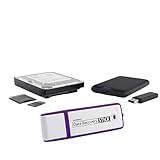
- The Data Recovery Stick requires no technical skills — simply plug it into your Windows computer, click Start, and the software automatically begins scanning and recovering lost files within minutes. Compatible with Windows Vista, 7, 8, 10, & 11, it's designed to be a reliable first step when accidental deletion occurs.
- Recover photos (JPG, BMP, PNG, TIFF), Microsoft Office documents (Word, Excel, PowerPoint, Publisher, Access), Open Office files, MP3 music files, PDFs, RTF documents, AutoCAD files, and HTML web pages. Whether it's personal memories or critical business files, the Data Recovery Stick covers the file types that matter most.
- Works with hard drives, USB drives, SD cards, memory sticks, and other common storage formats that use FAT or NTFS file systems — making it a single solution for hard drive recovery, USB drive recovery, SD card recovery, and more. Note: a media reader is required for micro SD cards and some mass storage devices.
- No Installation Required - The Data Recovery Stick runs entirely from the USB drive with no software installation on your computer — helping prevent new data from overwriting the files you're trying to recover. This also makes it ideal for use across multiple computers or in emergency situations where installation isn't practical.
- Use the Data Recovery Stick on as many computers as often as needed — simply clear the recovered data between uses to free up storage space. Software updates keep the tool compatible with newer systems and devices, backed by 25+ years of data software expertise from Paraben Consumer Software.
5. Pilot with real support cases and clear success criteria
Use representative customer questions, including cases that should escalate or remain unresolved. Define resolution so that a fast deflection is not counted as success if the customer returns or still needs help. Compare the pilot’s outcomes, human workload, and actual billed units with the cost model. This creates a more useful decision than relying on vendor customer stories or feature counts alone.
Independent reader supportYour contribution helps us test, update, and keep practical guides available for everyone.Verdict
Choose by operating model, not by a universal winner. For small and mid-size teams and online stores, Tidio is our top pick because its Lyro AI agent, live chat and help desk work in one inbox; Intercom Fin is oriented toward an AI agent that can work with an existing helpdesk; Amazon Connect Customer brings AI into a contact-center platform; Google Cloud Agent Assist supports human agents; and Zendesk AI combines helpdesk tooling with customer agents. Their different billing units and feature maturity mean the right shortlist is the one that matches both the support workflow and the organization’s usage model.
Frequently Asked Questions
Can these platforms be ranked by price alone?
No. The listed rates are charged per different units, and some introduce additional costs or commitments. A fair comparison requires estimating the same workload on each platform and including relevant add-ons and channel charges.
Does “outcome-based” pricing mean every resolved issue costs the same amount?
Not necessarily. For Fin, Intercom describes particular events that count as outcomes and charges once for a conversation even if it contains multiple questions. Other vendors’ definitions and contract terms should be checked separately.
Also popular on Amazon
Do vendor customer savings or resolution examples predict my results?
No. Customer examples published by Intercom and AWS describe those named customers’ experiences. They are not independent controlled comparisons or guarantees for other organizations.
Is there an independent overall winner among these five?
The available vendor capability and pricing information does not establish a controlled, like-for-like winner. A pilot using the organization’s own cases and full cost model is a sounder basis for selection.
Frequently Asked Questions
Can these platforms be ranked by price alone?
No. Their rates use different billing units, and some add commitments or channel charges. Estimate the same workload on each and include relevant extras.
What’s actually slowing this PC down?
Pick the symptom - the matching free tool is one click away.
Does outcome-based pricing mean every resolved issue costs the same amount?
Not necessarily. Intercom describes specific events that count as outcomes and charges once per conversation even if it contains multiple questions. Other vendors have separate definitions and terms.
Do vendor customer savings or resolution examples predict my results?
No. Intercom and AWS publish named customer experiences, not independent controlled comparisons or guarantees.
Is there an independent overall winner among these five?
The available vendor capability and pricing information does not establish a controlled, like-for-like winner. A pilot using your own cases and a full cost model is a sounder basis for selection.

