
Do these 3 things before closing this tab:
1Fix the driver behind crashes, sound loss and screen glitches2Clear out junk files and repair common Windows errors3Scan for outdated or missing drivers - takes under a minuteThe best change-management software depends on what is changing. Use an ITSM platform for infrastructure, service, release, approval, risk, and audit control; an organizational change-management platform for readiness, communications, training, adoption, and change saturation; a digital adoption platform for in-application guidance; a work-management tool for project tasks and approvals; and a PLM system for engineering changes, BOMs, revisions, and released product configurations.
Quick selector
- IT systems, infrastructure, releases, CABs, and audit trails: shortlist ServiceNow ITSM Advanced, Jira Service Management Cloud Premium, Freshservice Pro, SolarWinds Service Desk, or ManageEngine ServiceDesk Plus.
- People, readiness, communications, training, and adoption: evaluate Prosci Proxima, ChangePlan, Matae, or ChangeAnalytics.
- In-app guidance for an ERP, CRM, HRIS, or custom application: compare Whatfix and WalkMe.
- Project scope, tasks, forms, approvals, and portfolio coordination: consider ClickUp, Asana, or Smartsheet.
- Parts, BOMs, drawings, revisions, suppliers, and engineering releases: use a PLM platform such as Arena or PTC Windchill.
The recommendations in this guide are editorial fit recommendations based on published product information, not the result of independent hands-on testing. There is no defensible single winner across these incompatible categories.
What change-management software does
Change-management software is a broad label for systems that organize, assess, approve, communicate, implement, and measure change. The central record might be an IT change request, a business transformation initiative, an in-app user action, a project change, or an engineering change order. Those records have different data models and controls, so comparing all products in one undifferentiated ranking usually leads to a poor purchase decision.
In IT service management, the objective is to assess risk, authorize changes, schedule them, coordinate implementation, and learn from the result. PeopleCert describes ITIL 4 Change Enablement as maximizing successful service and product changes through accurate risk assessment, authorization, and change-schedule management. See the PeopleCert ITIL 4 Change Enablement overview. ISO also provides context on IT change management and ISO/IEC 20000-2:2019.
What’s actually slowing this PC down?
Pick the symptom - the matching free tool is one click away.
#1 Best Overall

- DRY ERASE PROJECT MANAGEMENT PLANNER: Be made of 250 gsm construction paper, laminated by special formula film that is erasable, make the surface resistant to ghosting or staining. We can erase easily even months later and use this work schedule board over and over again
- PRODUCTIVE PROJECT MANAGEMENT TOOLS: This project management board is a game changer and something physical for managing personal or team projects efficiently. It allows you or members to quickly view and share the status of up to 12 projects at the same time, a very good practical kit of team building
- SCRUM WHITEBOARD FOR OFFICE ESSENTIALS: This project organizer worth the investment for business use. It's easy to use for products development, marketing strategic projects or as a sales goal tracking whiteboard. You can easily measure budget, milestones, resources, inventory and timeline at a glance. It helps you plan, execute, assign tasks efficiently
- MOUNTING IS A BREEZE: This vision board is lightweight and comes with removable mounting stickers. You can mount this program Management Board easily without tools. On the other hand, you can take it down easily too if you need to remount your project board to other place later
- COMPLETE ACCESSORIES INCLUDED: Our huge project manager planner for wall is cost-efficient for daily use in office, home office or family. It comes rolled in a study tube with, premium dry erase eraser, reusable fluorescent colored tabs for entrepreneurs, managers or person working at home
In organizational change management, the objective is to help people and the organization adopt a new process, role, system, policy, structure, or behavior. That requires stakeholder and impact analysis, readiness measurement, communications, training, manager support, resistance management, adoption tracking, and benefits realization. The two disciplines often need to work together, but one platform is not automatically a substitute for the other.
The five categories buyers should separate
| Category | Core object | What it controls or measures | Typical examples |
|---|---|---|---|
| ITSM change management | A technical change to a service, application, infrastructure component, or configuration item | Risk, impact, approvals, change windows, implementation, rollback planning, deployment evidence, audit history, and post-implementation review | ServiceNow, Jira Service Management, Freshservice, SolarWinds Service Desk, ManageEngine ServiceDesk Plus |
| Organizational change management | A change initiative affecting people, processes, roles, or business outcomes | Stakeholders, impacted audiences, readiness, communications, training, resistance, adoption, saturation, and benefits | Prosci Proxima, ChangePlan, Matae, ChangeAnalytics |
| Digital adoption platform | A user interaction with a software application | Walkthroughs, contextual help, task completion, segmentation, behavior, friction, and feature adoption | Whatfix, WalkMe |
| General work management | A project, task, approval, issue, or deliverable | Owners, dates, dependencies, forms, communications, workflows, dashboards, and portfolio status | ClickUp, Asana, Smartsheet |
| Engineering change management | A controlled revision to a product, part, BOM, drawing, specification, or manufacturing configuration | Revision history, effectivity, multidisciplinary approvals, quality records, suppliers, and released configurations | Arena, PTC Windchill |
Best change-management tools by use case
Each recommendation below answers a narrower question than best overall. Before requesting a demo, confirm that the product supports the required edition, geography, deployment model, integrations, data volume, and security controls.
Best for complex enterprise IT change: ServiceNow ITSM Advanced
ServiceNow ITSM pricing presents a quote-based model rather than a simple public per-agent price. Its ITSM Advanced package includes Change Management alongside Problem Management, Major Incident Management, On-Call Management, Platform Analytics, Advanced Process Mining, and AI-related capabilities.
ServiceNow is the strongest shortlist candidate when change management is part of a large service-management operating model. It is a fit for organizations that need CMDB and dependency context, enterprise workflow, formal governance, service operations, analytics, and connections between incidents, problems, releases, assets, and changes. It is particularly logical for a large enterprise already standardized on the ServiceNow platform.
Free tools Windows power users keep installed
One-click scans. No signup required.
Main trade-off: expect a more involved commercial and implementation evaluation than with a lightweight service desk. ServiceNow does not publish a reliable universal price, so do not use an invented average as a budget figure. Request a quote that separates licenses, implementation, integrations, professional services, AI features, and ongoing administration.
Best for DevOps-native IT change: Jira Service Management Cloud Premium
Jira Service Management connects change records with software-development and infrastructure context. Atlassian documents integrations with CI/CD tools including Bitbucket Pipelines, Jenkins, and CircleCI. Premium supports automated creation of change records for standard changes, deployment tracking, automated risk assessment, approvals, and deployment gating. The Premium feature page describes the relevant capabilities.
This is the natural shortlist choice for engineering and DevOps teams already using Jira, Bitbucket, Confluence, or other Atlassian workflows. Developers can keep work close to pull requests, builds, deployments, incidents, and releases instead of entering technical context into a disconnected CAB system.
There is an important plan boundary. Jira Service Management Cloud has Free, Standard, Premium, and Enterprise plans, but Atlassian moved advanced change-management functionality from Standard to Premium and Enterprise on October 16, 2024. The affected functionality includes the Change work category, change queues, change calendar, and automated risk assessments. The Free plan is limited to three agents. Check the Atlassian plan-change notice and cloud licensing information before comparing costs.
Main trade-off: advanced change control is not available on Free or Standard. Exact pricing depends on users, plan, and billing frequency and should be calculated with Atlassian’s pricing tools. If considering a self-managed deployment, review the Jira Service Management Data Center licensing information; Atlassian states that the end of life for impacted Data Center products is scheduled for March 28, 2029, at 23:59 Pacific Time.
Best mid-market ITSM with public pricing: Freshservice Pro
Freshservice pricing lists the following US prices for annual billing:
- Starter: $19 per agent per month.
- Growth: $49 per agent per month.
- Pro: $99 per agent per month.
- Enterprise: custom pricing.
Freshservice lists Change Management, Problem Management, Major Incident Management, Workload Management, and Release Management under Pro. Freshworks also advertises a 14-day free trial. Its feature documentation describes service context for impact assessment and early risk identification.
Freshservice is a practical fit for a mid-sized IT team that wants a comparatively quick-to-deploy ITSM platform with a visible price and the standard service-management building blocks. Pro is the relevant starting point when change management is a core requirement rather than an optional add-on.
Main trade-off: verify whether the CMDB, asset management, AI, automation, sandbox, reporting, API, and enterprise-security features you need are included in Pro or require another edition or add-on. The published price is a list price for annual billing, generally before tax, implementation, and optional services.
Best public-price alternatives for cost-sensitive IT teams
SolarWinds Service Desk
SolarWinds Service Desk pricing lists annual-billing starting prices of $39 per technician per month for Essentials, $99 for Advanced, and $124 for Premier. All plans support unlimited users. Change Management is included in Essentials, while Change Templates & Workflows are listed under Advanced.
SolarWinds is worth evaluating when the buyer wants ITIL-oriented workflows, asset and service context, approvals, and published pricing. Check the plan matrix carefully if the project requires advanced automation, API access, sandboxing, audit features, or AI. SolarWinds’ June 30, 2026 release notes describe centralized change management using dynamic form rules for major change requests, illustrating why release-specific plan and capability checks matter.
ManageEngine ServiceDesk Plus
For the on-premises offering, ManageEngine ServiceDesk Plus pricing shows starting prices of $13 per technician per month for Standard, $27 for Professional, and $67 for Enterprise. Enterprise includes help desk, asset management, change management, and project management. The page also shows change and release management as an add-on for some editions.
Crashes, No Sound, or Screen Glitches?
Random freezes, missing sound and display glitches usually trace back to one bad driver. Find and replace yours safely.Free scan · under a minutePC Slower Than It Used to Be?
A free scan shows the junk files, broken settings and background clutter dragging Windows down - then fixes them in one click.Free scan · Windows 10 & 11ManageEngine describes separate customizable workflows for standard, emergency, and critical changes in its change-management documentation. It is a sensible shortlist candidate for cost-sensitive teams, especially those evaluating on-premises deployment or a broad ITSM feature set at published entry pricing.
Important pricing warning: do not compare these figures directly with a cloud quote without confirming deployment, technician counts, asset limits, add-ons, support, maintenance, and billing terms. The public pricing page contains multiple deployment and licensing contexts.
Best Prosci-methodology-based OCM execution: Prosci Proxima
Prosci Proxima is aligned with Prosci’s three-phase process: Prepare Approach, Manage Change, and Sustain Outcomes. It supports activities such as defining success, assessing impact, developing a change approach and formal plans, tracking performance, conducting PCT assessments, and tracking ADKAR-related outcomes.
Proxima is the most direct shortlist choice for an organization that already uses Prosci training, terminology, ADKAR, and governance. It can reduce the friction of translating a familiar methodology into project work, assessments, plans, and reporting. Prosci states that Proxima supports exportability, localization, accessibility-oriented design, and ongoing updates for active subscribers and license holders.
Main trade-off: methodology fit can become methodology lock-in. If your organization uses Kotter, Bridges, McKinsey’s Influence Model, a hybrid model, or a proprietary approach, compare Proxima with configurable and methodology-neutral products before buying. Public pricing is not provided in the dossier, so request a complete quote.
Rank #2
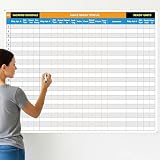
- Extra Large Surface: this large dry erase project management board provides 36 x 45 inches of reusable writing space for planning and tracking multiple projects; Whether applied as a property make ready board or office whiteboard, the generous size accommodates budgets, timelines, and task lists; It works nice in real estate offices, apartment communities, and corporate meeting rooms where visual project tracking is needed
- Smooth Dry Erase Surface: this make ready white board made from 250 g/M² cardstock paper with glossy lamination, this project vision board features a dry erase surface that writes smoothly and wipes clean without stains or shadows; Unlike standard paper planners, this reusable dry erase board with lines wall organizer allows for instant changes, keeping your project management tool accurate through multiple use cycles
- Pre-punched Corner Holes: each corner of this schedule board comes with pre-punched holes for simple wall mounting; You can hang it directly from the shipping tube without additional framing or hardware; This design allows busy property managers and real estate professionals to set up their project tracker board in minutes and begin organizing tasks right away
- Property Management Supplies: designed as a property make ready board, this visual planner helps real estate managers track maintenance status, cleaning schedules, and apartment turnover progress; Use it to monitor unit readiness and assign tasks to staff; The project management board format provides clear overview of properties, making it useful for apartment communities and housing facilities
- Works Across Different Settings: beyond real estate, this project planner board can be applied in construction, offices, and educational settings; Use it as a board to attach documents and photos, or write directly on the dry erase surface for quick updates; The design supports various tracking needs, from construction timelines to team tasks, making it a practical addition to any workplace
Best for enterprise change portfolio visibility: ChangePlan
ChangePlan positions itself around shared stakeholder and organizational data, cross-initiative timing and overlap, readiness signals, change load, and leadership-ready reporting. Its purpose is closer to change portfolio management than to technical approval workflow.
ChangePlan is a good evaluation candidate when a transformation office has outgrown spreadsheets and needs to see which initiatives affect the same audiences, where readiness is weak, and where timing creates overload or collisions. Ask for a demonstration using your organizational hierarchy and several concurrent initiatives rather than a prepared sample dashboard.
Main trade-off: public pricing is not displayed. Validate the data model, HRIS integration, readiness methodology, audience-level reporting, forecast logic, export capability, permissions, and the amount of manual data preparation required.
Best Microsoft-centered OCM and benefits-tracking candidate: Matae
Matae describes a suite containing Change Workspace, Portfolio Manager, Benefits Accelerator, Change Leader as a Microsoft Teams app, and Sherpa AI as an AI assistant for change management.
Matae states that it is methodology-agnostic and configurable for Prosci, Kotter, Bridges, McKinsey’s Influence Model, or proprietary approaches. It also describes integrations with Teams, Outlook, SharePoint, Microsoft Copilot, and Entra ID, with PowerPoint and CSV export. That makes it an interesting candidate for Microsoft-centric enterprises that need portfolio visibility, leader activation, benefits realization, and change work inside collaboration tools.
Main trade-off: claims about AI productivity, deployment speed, and outcome improvement are vendor claims unless supported by independent evidence or comparable customer references. During evaluation, ask what data Sherpa AI receives, how outputs are reviewed, and whether customer data is used to train models.
Other dedicated OCM platforms worth evaluating
ChangeAnalytics should be considered alongside ChangePlan and Matae when the priority is change-impact data, portfolio analysis, readiness, adoption, or executive reporting. Also consider ChangeSync, ChangeVU, and OCM Solution for additional demos. These products should be treated as shortlist candidates rather than ranked winners until you have verified their current data model, integrations, methodology support, security, pricing, and customer evidence against your use case.
The Tool Desk
Outbyte Driver Updater FREEFix the driver behind crashes, sound loss and screen glitchesFind Drivers →Outbyte PC Repair FREEClear out junk files and repair common Windows errorsFree Scan →Best for in-application adoption: Whatfix
Whatfix defines a digital adoption platform as software that sits on top of applications to provide in-app guidance, self-service support, and analytics. Its published capabilities include Flows, Smart Tips, Pop-Ups, Task Lists, in-app Self Help, audience targeting, content lifecycle management, approvals, QA, version control, rollback, controlled releases, and Guidance Analytics.
Whatfix also markets Mirror simulation environments, AI roleplay and assessments, and product analytics for usage, workflow performance, friction, and adoption. It is a strong candidate for ERP, CRM, HRIS, finance-system, frontline, field-worker, and customer-facing application rollouts where users need contextual help while performing real tasks.
Main trade-off: a DAP does not replace stakeholder strategy, governance, training design, project planning, or benefits management. Verify coverage for the actual applications and environments in use, including browsers, desktop applications, mobile, VDI, or Citrix. Also price the ongoing work of authoring, testing, localizing, approving, and maintaining guidance as the underlying application changes.
Best enterprise DAP alternative: WalkMe
WalkMe lists in-app guides, tooltips, notifications, personalized onboarding, product tours, targeted surveys, advanced analytics and reporting, audience segmentation, enterprise privacy and security, branding, localization, and web, mobile, and desktop menu experiences. It also describes Flow Analytics, behavioral segments, tracked events, reports, and custom dashboards. Pricing is quote-based.
Quick wins for a faster PC:
Clear out junk files and repair common Windows errorsFree Scan →Scan for outdated or missing drivers - takes under a minuteDriver Scan →Repair Windows errors before they cause bigger problemsFix Now →WalkMe is a good candidate for large, complex digital-adoption programs that span multiple applications and channels. Compare it directly with Whatfix using your real browser, desktop, VDI, mobile, and target-application requirements.
Main trade-off: the license is only part of the cost. Compare authoring governance, content maintenance, implementation services, application coverage, analytics depth, privacy controls, data retention, and the skills required to keep guidance accurate after application releases.
Best generalist options for project-based change: ClickUp, Asana, and Smartsheet
Use a general work-management platform when the main problem is coordinating a change plan rather than modeling technical dependencies, employee readiness, or engineering configuration. These tools can be excellent for a small team or PMO if the organization is willing to define its own process.
ClickUp
ClickUp pricing lists Free Forever at $0, Unlimited at $7 per user per month billed yearly, Business at $12 per user per month billed yearly, and Enterprise at custom pricing. Depending on the plan, relevant capabilities include forms, custom fields, automations, dashboards, goals, portfolio management, Gantt charts, resource management, permissions, audit logs, SSO, SCIM, and enterprise governance.
ClickUp also publishes a change-control template with custom statuses, fields, approval workflows, audit trails, dependencies, dashboards, and calendar views. It is a strong flexible option when the team needs to build a repeatable intake and task process at comparatively low public list pricing.
Limitation: ClickUp does not automatically provide a validated OCM methodology, a native enterprise change-saturation model, or ITSM-grade CMDB and deployment controls. The buyer must design and maintain those elements.
Asana
Asana pricing lists Personal at $0 for up to two users, Starter at $10.99 per user per month billed annually, Advanced at $24.99, and Enterprise at custom pricing. Starter includes forms, custom fields, templates, automations, reporting dashboards, timelines, and Gantt views. Advanced adds portfolios, goals, workload, approvals, proofing, formulas, and broader reporting integrations.
Asana’s change-management plan template makes the distinction clear: a project plan tracks tasks, timelines, and deliverables, while a change-management plan addresses communication, training, and adoption. Asana is appropriate when ownership, communication, approvals, and repeatable project templates are the priority.
Recommended Free Tools
Limitation: do not treat Asana as a dedicated OCM platform. It can manage a people-side change plan, but it does not inherently provide an enterprise change-saturation model or specialized readiness and adoption data.
Smartsheet
Smartsheet portfolio management and Control Center describe demand intake, standardized project blueprints, automated project provisioning, portfolio rollups, resource, budget, risk, and portfolio visibility, and change management at scale. Its spreadsheet-like structure suits PMOs and operations teams that want standardized portfolio governance without moving to a specialized OCM system.
Rank #3
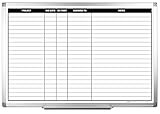
- MAGNETIC DRY-ERASE SURFACE — The whiteboard design is permanently printed onto durable, industrial‑quality dry‑erase vinyl that won’t smudge and is resistant to stains and ghosting. Its smooth, long‑lasting writing surface is also magnetic, giving you added functionality for notes, magnets, and accessories
- EASY INSTALLATION — Comes complete with durable mounting brackets and hardware, ensuring a secure and effortless wall‑mounting
- DURABLE ALUMINUM FRAME — Built with a sleek 1" aluminum border and a spacious 2.5" deep aluminum tray to keep markers and accessories neatly within reach
- SPACIOUS WRITING SURFACE — Ample writing space with a usable area that extends nearly edge‑to‑edge, measuring just 2" shy of the board’s total dimensions
- Please inspect your whiteboard upon arrival — If you notice any issues, please contact us through Amazon's Buyer-Seller Messaging system
Limitation: stakeholder, readiness, adoption, saturation, and benefits data may require custom configuration, integrations, or another system. Smartsheet can provide the workflow shell, but the buyer must test whether the resulting model is genuinely change-native rather than a collection of sheets and dashboards.
Best for engineering and product change: Arena or PTC Windchill
Arena
Arena engineering change management connects ECR and ECO workflows to items, BOMs, drawings, standard operating procedures, approval routes, and quality processes. It is designed for controlled product and manufacturing changes rather than employee adoption or IT service approvals.
Recommended Free Tools
PTC Windchill
PTC Windchill and its change-management documentation describe formal change requests, change notices, change tasks, configuration control, and product-data traceability.
Choose a PLM system when the change affects parts, assemblies, BOMs, CAD or drawings, specifications, manufacturing processes, quality records, suppliers, effectivity dates, serial-number applicability, or released configurations. An ITSM ticket or project task list cannot safely substitute for revision and configuration control in a regulated or manufacturing environment.
Comparison table
The following table summarizes editorial fit, not an independent score. Public prices are US list prices where published, generally before tax, add-ons, contract discounts, minimum seats, usage charges, and implementation services. Pricing and feature pages were checked against public information available on August 10, 2026.
| Product | Category | Best fit | Key capabilities | Public pricing | Main limitation |
|---|---|---|---|---|---|
| ServiceNow ITSM Advanced | Enterprise ITSM | Complex enterprise service operations | Change, problem, major incident, on-call, analytics, process mining, AI-related capabilities | Quote | Implementation complexity and no simple public list price |
| Jira Service Management Cloud Premium | DevOps-native ITSM | Jira and CI/CD-centered engineering teams | Change records, risk assessment, change calendar, approvals, deployment tracking, deployment gating | Plan and user dependent | Advanced change features require Premium or Enterprise |
| Freshservice Pro | Mid-market ITSM | Quick-to-deploy ITSM with public pricing | Change, problem, major incident, workload, and release management | $99 per agent/month annually | Verify CMDB, automation, AI, sandbox, and security entitlements |
| SolarWinds Service Desk | ITSM | Published-price ITIL-oriented service desk | Change management, asset context, approvals, templates and workflows by plan | $39, $99, or $124 per technician/month annually starting | Advanced requirements may require higher plans |
| ManageEngine ServiceDesk Plus | ITSM | Cost-sensitive or on-premises teams | Help desk, assets, change, project management, customizable change workflows | On-premises starting at $13, $27, or $67 per technician/month by edition | Cloud and on-premises prices and add-ons differ |
| Prosci Proxima | OCM | Prosci and ADKAR-based execution | Prepare Approach, Manage Change, Sustain Outcomes, PCT, ADKAR-related tracking | Quote | Less attractive for methodology-neutral organizations |
| ChangePlan | OCM and portfolio | Cross-initiative impacts, readiness, and change load | Stakeholder data, overlap, readiness signals, portfolio reporting | Quote or contact vendor | Validate model, integrations, thresholds, and exports |
| Matae | OCM and benefits | Microsoft-centered enterprise change teams | Portfolio, benefits, leader activation, configurable methodologies, Teams and Microsoft integrations | Quote or contact vendor | AI and outcome claims require validation |
| Whatfix | DAP | Enterprise software adoption and frontline guidance | Flows, tips, pop-ups, tasks, self-help, analytics, simulation, governance | Quote | Application coverage and content maintenance must be tested |
| WalkMe | DAP | Large multi-application adoption programs | Guides, tours, surveys, segmentation, analytics, web, mobile, and desktop experiences | Quote | Compare total implementation and maintenance cost |
| ClickUp | Work management | Flexible small and mid-sized change workflows | Forms, fields, automations, dashboards, portfolios, approvals, templates | $0; $7 or $12 per user/month annually by plan | Methodology, saturation, and ITSM controls are largely buyer-designed |
| Asana | Work management | Project-based change plans and communications | Forms, fields, templates, automations, dashboards, timelines, portfolios, approvals | $0 for up to two users; $10.99 or $24.99 per user/month annually by plan | Not a dedicated OCM or ITSM platform |
| Smartsheet | Work management and PMO | Portfolio intake, blueprints, rollups, and governance | Demand intake, project provisioning, portfolio, budget, risk, and resource visibility | Quote or contact vendor | Specialized OCM metrics may need custom design |
| Arena | PLM | Engineering changes tied to product data | ECR/ECO workflows, BOMs, drawings, SOPs, approvals, quality | Quote | Not designed for general OCM or ITSM |
| PTC Windchill | PLM | Formal configuration control and product-data traceability | Change requests, notices, tasks, revisions, configurations, product records | Quote | Specialized and potentially complex for small teams |
IT change management versus organizational change management
IT change management governs the technical action. It asks: What service or configuration item is changing? What could fail? Who approves it? When can it happen? How will it be tested? What is the backout plan? What happened afterward?
Organizational change management governs the human and business response. It asks: Which roles and groups are affected? What will they need to do differently? Are leaders and managers prepared? Have people received the right communication and training? Are they ready and adopting the new behavior? Is this initiative competing with several others?
A CRM implementation might need both. ITSM or release tooling can control the production deployment and related technical changes. OCM tooling can map sales teams, support teams, managers, regions, training, readiness, adoption, resistance, and benefits. A DAP can then guide users through the new CRM screens. These tools can be integrated, but they solve different problems.
Change management, change control, and related terms
- Change control
- The formal process for submitting, assessing, approving, implementing, documenting, and reviewing a proposed change. In project management, it usually means controlling changes to scope, schedule, cost, requirements, or deliverables. In IT, it usually means controlling technical changes.
- Change enablement
- The ITIL 4 term for the practice concerned with assessing, authorizing, scheduling, and learning from changes so that beneficial changes can be made with acceptable risk. It is not a guarantee that a product is formally ITIL certified.
- Release management
- Coordinating a collection of changes into a release, including planning, packaging, scheduling, communication, and readiness.
- Deployment management
- Moving a software release or change into a target environment. Deployment automation and rollback may happen in CI/CD tools; a change-management system may record evidence, approvals, risk, and the deployment relationship.
- Project change management
- Controlling changes to project scope, requirements, schedule, budget, and deliverables. It is not the same as preparing employees to adopt a new process or system.
- Organizational change management
- The people-side discipline covering impact, readiness, communications, training, resistance, adoption, and benefits.
- Digital adoption platform
- A layer over an application that gives users contextual guidance and measures behavior. It helps people use software but does not replace the overall change strategy or governance.
Feature checklist by category
ITSM feature checklist
- Configurable standard, normal, and emergency change types
- Standard-change templates and preauthorization
- Risk scoring and normal-change assessment
- Business and technical impact fields
- Approval groups, sequential approvals, delegated approvals, and reminders
- CAB or advisory workflows
- Change calendar, freeze periods, blackout windows, and collision detection
- CI/CD, monitoring, observability, and deployment integration
- CMDB relationships and dependency mapping
- Release and deployment linkage
- Implementation tasks, test evidence, validation, and communications
- Documented backout or rollback plan; distinguish this from automated technical rollback
- Post-implementation review and links to resulting incidents or problems
- Immutable audit history and change-success reporting
- Role-based access, SSO, SCIM, audit logs, and required data residency
OCM feature checklist
- Stakeholder, audience, role, location, and business-unit taxonomy
- HRIS, employee-directory, and organizational-hierarchy integration
- Impact assessments, including direct and indirect impact
- Readiness assessments, sentiment, and pulse surveys
- Communication planning and delivery tracking
- Training and enablement planning
- Sponsor and manager actions
- Resistance, feedback, issue, and risk tracking
- Adoption milestones and post-go-live measurement
- Benefits realization
- Embedded methodology support or genuine configurable methodology options
- Cross-initiative overlap analysis
- Change saturation and capacity modeling with defined thresholds
- Portfolio and executive dashboards
- Data export, localization, accessibility, and permissions for sensitive employee information
DAP feature checklist
- Coverage for the actual web, desktop, mobile, VDI, or Citrix environments
- No-code authoring and reusable content
- Walkthroughs, tooltips, embedded help, task lists, and checklists
- In-app announcements and targeted communications
- Role, region, behavior, and lifecycle segmentation
- Localization and accessibility
- Content approvals, QA, staging, versioning, controlled releases, and rollback
- Resilience when the underlying user interface changes
- Usage, workflow completion, friction, drop-off, and time-to-proficiency analytics
- Product and feature adoption metrics
- Simulation or sandbox environments
- Integrations with knowledge bases, LMS, CRM, ERP, identity systems, and service desks
General work-management checklist
- Change-request forms and custom fields
- Statuses for draft, assessment, approval, scheduled, implemented, rejected, and closed
- Task owners, due dates, dependencies, milestones, and templates
- Approval and notification workflows
- Risk, issue, decision, and communication tracking
- Dashboards, calendars, timelines, Gantt views, and portfolio rollups
- Permissions, SSO, SCIM, audit logs, and export appropriate to the organization
- A defined method for impact, readiness, adoption, saturation, and benefits rather than only task completion
Engineering-change checklist
- ECR, ECO, ECN, deviation, and waiver objects
- Revision control and released-configuration history
- BOM and product-structure linkage
- Effectivity dates or serial-number applicability
- Change tasks and multidisciplinary review
- Supplier collaboration
- Electronic approvals and signatures
- Quality-system integration
- Manufacturing, inventory, and cost impact
- CAD, PDM, ERP, MES, and QMS integration
- Complete audit trail
Use-case matching
| Scenario | Most suitable category | What to test |
|---|---|---|
| Routine infrastructure change | ITSM integrated with discovery, CMDB, monitoring, and automation | Standard-change templates, preapproval, evidence, scheduling, and collision detection |
| Emergency production change | ITSM plus incident and deployment tooling | Fast emergency route, post-implementation documentation, audit trail, and follow-up review |
| Software release or DevOps deployment | Jira Service Management Premium or enterprise ITSM linked to CI/CD | Deployment tracking, risk signals, approvals, gates, rollback plan, and resulting incidents |
| ERP, CRM, HRIS, or finance rollout | OCM plus project management; add a DAP for in-app help | Audience impacts, readiness, training, adoption, business outcomes, and guidance analytics |
| Merger, acquisition, restructuring, or policy change | OCM platform plus work management | Stakeholder mapping, communications, resistance, manager enablement, readiness, and benefits |
| Enterprise transformation portfolio | Change portfolio platform | Overlapping impacts, cumulative load, audience-level capacity, sequencing, and executive reporting |
| Agile product delivery | DevOps-native ITSM or project/change-control tooling | Low-friction integration with repositories, pipelines, releases, incidents, and approvals |
| Regulated quality or manufacturing change | PLM, often integrated with QMS, ERP, MES, and supplier systems | Revision, effectivity, signatures, traceability, released configuration, and quality evidence |
| Small-team change tracking | ClickUp, Asana, Smartsheet, or a controlled Microsoft 365 workflow | Whether a simple form, approval path, audit log, and dashboard solve the actual problem |
| Frontline or field-worker adoption | DAP plus OCM | Mobile or desktop coverage, offline or constrained environments where relevant, segmentation, and time to proficiency |
| Customer-facing product adoption | DAP, product analytics, and customer communications | Feature usage, task completion, friction, segmentation, support deflection, and retention or business outcomes |
How to choose the right platform
1. Define the object being managed
Write down the core record before looking at dashboards or AI features:
- A change request to an IT service or configuration item.
- A change initiative affecting people and processes.
- A user behavior inside an application.
- A project change affecting scope, schedule, cost, or deliverables.
- An engineering change affecting a product configuration.
If stakeholders use the same word for several of these, document the distinction. A single transformation program may need an OCM platform, a project system, an ITSM platform, a DAP, and a PLM system in different departments.
2. Evaluate the data model, not just the dashboard
A polished heatmap or executive dashboard is not proof that the underlying product can model change. Ask whether it can represent impacted audiences, roles, locations, and business units; distinguish direct from indirect impact; model overlapping initiatives; measure readiness at audience level; track adoption after go-live; connect technical changes to services, assets, and dependencies; or preserve product revisions and released configurations.
The Change Compass buyer’s guide makes an important point about change saturation: a three-color heatmap is not automatically a saturation model. A useful model should define thresholds, show audience-level load, explain each initiative’s contribution, and support forward-looking forecasts.
3. Check plan entitlements before comparing features
Vendor feature pages often describe the entire platform while the quote covers an entry edition. Confirm:
- Whether change management is included in the edition being quoted.
- How many agents, users, technicians, participants, or employees are included.
- Whether approvers, occasional users, contractors, and executives need paid licenses.
- CMDB, asset, automation, AI, analytics, API, storage, and data-retention limits.
- Sandbox, test, staging, and development environments.
- SSO, SCIM, audit logs, data residency, accessibility, and localization.
- Usage-based AI, conversation, event, or analytics charges.
- Minimum seats, annual commitments, implementation fees, and professional services.
4. Measure integration burden
Integration quality often matters more than the number of native features. For ITSM, test CI/CD, monitoring, observability, CMDB and discovery, identity, collaboration, asset management, incident and problem management, release, security, and vulnerability integrations.
The Tool Desk
Outbyte PC Repair FREEClear out junk files and repair common Windows errorsFree Scan →Outbyte Driver Updater FREEScan for outdated or missing drivers - takes under a minuteDriver Scan →For OCM, test HRIS, employee directory, organizational hierarchy, email, Teams or other collaboration tools, LMS, survey tools, project and portfolio systems, BI, executive reporting, and adoption analytics. For a DAP, test the target applications, browser and desktop environments, VDI or Citrix, knowledge repositories, LMS, service desk, identity segmentation, and analytics warehouse. For PLM, test CAD/PDM, ERP, MES, QMS, supplier portals, document control, manufacturing, and inventory integrations.
5. Evaluate governance and auditability
Ask who can create, edit, assess, approve, reject, schedule, implement, and close a change. Test whether approvers need full licenses, whether approval decisions are immutable, whether the original request is preserved, and whether the organization can reconstruct who changed what, when, and why.
For emergency changes, check whether the system permits rapid authorization while requiring complete documentation afterward. For OCM, restrict sensitive employee feedback to the appropriate roles. For a DAP, require staged content, testing, approvals, publishing controls, and rollback. For engineering, trace every change to the released configuration it affects.
6. Separate activity metrics from outcome metrics
Completed surveys, communications, walkthroughs, training sessions, and approvals are activity measures. They may be useful leading indicators, but they do not by themselves demonstrate adoption or success. Require a connection from activity to readiness, capability, usage, compliance, productivity, quality, customer outcomes, or financial and strategic benefits.
Do these 3 things before closing this tab:
1Scan for outdated or missing drivers - takes under a minute2Repair Windows errors before they cause bigger problems3Fix the driver behind crashes, sound loss and screen glitchesA practical weighted evaluation model
Score each product from 0 to 5 for every criterion, multiply by the weight, and record evidence for the score. Do not allow a vendor demo claim to count as proof until it works with your data in the proof of concept.
ITSM weighting
| Criterion | Weight |
|---|---|
| Change workflow depth | 20% |
| Risk and impact analysis | 15% |
| CMDB and dependency context | 15% |
| Automation and CI/CD integration | 15% |
| Audit and security | 15% |
| Reporting and continual improvement | 10% |
| Cost and implementation effort | 10% |
OCM weighting
| Criterion | Weight |
|---|---|
| Impact and stakeholder model | 20% |
| Readiness and adoption measurement | 20% |
| Portfolio overlap and saturation | 20% |
| Methodology flexibility | 10% |
| HRIS and collaboration integrations | 10% |
| Reporting and benefits realization | 10% |
| Cost and usability | 10% |
DAP weighting
| Criterion | Weight |
|---|---|
| Application coverage | 20% |
| Authoring and maintenance | 15% |
| Segmentation | 15% |
| Analytics | 20% |
| Governance, QA, and rollback | 15% |
| Security and privacy | 10% |
| Cost | 5% |
Pricing and licensing: what the list price leaves out
Prices below are US public list pricing where published, checked against public pages available on August 10, 2026. They are generally before tax, implementation, add-ons, contract discounts, minimum seats, usage charges, and regional adjustments. A quote can therefore differ substantially from the headline price.
| Pricing model | Commonly seen in | Questions to ask |
|---|---|---|
| Per agent or technician | ITSM platforms | Do approvers, requesters, occasional users, contractors, and asset users need licenses? |
| Per user | Work-management platforms | Are guests, external collaborators, viewers, automation users, and executives included? |
| Employee, participant, or audience based | OCM platforms | Is the price based on change practitioners, total employees, active participants, or data volume? |
| Quote-based enterprise licensing | ServiceNow, Prosci Proxima, ChangePlan, Matae, Whatfix, WalkMe, PLM platforms | What are the minimum commitment, implementation, integration, support, security, and renewal costs? |
| Usage-based features | AI, analytics, conversations, events, or automation | What counts as a billable interaction, event, generated output, or active user? |
| Deployment-specific licensing | Cloud and self-managed ITSM or PLM | Are hosting, maintenance, upgrades, infrastructure, backup, and security included? |
Budget for internal ownership as well as subscription cost. OCM systems need clean HR and initiative data. DAPs need content authors, application testing, approvals, localization, and maintenance. ITSM systems need service modeling, CMDB quality, workflow administration, and integration support. PLM systems need product-data governance and configuration discipline.
Rank #4

- Packages Includes: you will receive 1 magnetic task tracking poster with a size of 24 x 36 in, a Flannel blue and yellow wave eraser, 100 pages of arrow sticky notes, 1 Magnetic pen holder, a roll of Nano traceless double-sided tape and 6 colored erasable whiteboard pens
- Reusable and Quality: the full vacation schedule is made of magnetic material( note that the back is magnetic, while the front is less magnetic); With dry-erase design, write and wipe with ease, We can erase easily even months later and use this work schedule board over and over again
- Productive Project Management Tools: this project management board is a game changer and something physical for managing personal or team projects efficiently; It allows you or members to quickly view and share the status of up to 20 projects at the same time, a very good practical kit of team building
- Mounting is a Breeze: this vision board is lightweight and can be attached magnetically or with nano-traceless double-sided tape; ; You can mount this Board or take it down easily without tools; Notice : before use, please place heavy objects at the four corners of the poster and let it sit for 12-24 hours until the poster is flat again
- Practical and Versatile: it's easy to use for products development, marketing strategic projects or as a sales goal whiteboard for daily use in office, home or family; Whatever for entrepreneurs, managers or person working at home, buy the office white board for wall for try
Proof-of-concept test plan
Do not accept a feature tour as a proof of concept. Give every finalist the same realistic test data and require a pass or fail result for each scenario.
Test 1: Intake and workflow
Create one repeatable standard change, one normal high-risk change, one emergency change, one rejected change, and one change requiring multiple approvers. Confirm that each follows the intended process without spreadsheets, email workarounds, or administrator intervention that ordinary users cannot perform.
Test 2: Risk and impact
Use a change affecting multiple services, business units, and a known configuration item. Link it to a release or deployment and place it in or near a blackout window. Verify that the system captures business and technical impact, identifies dependencies where supported, and surfaces schedule conflicts rather than merely storing notes.
Test 3: Approval
Demonstrate individual, group, sequential, delegated, and reminder-based approvals. Reject and resubmit a request. Approve from email or a collaboration tool if that is a requirement. Inspect the audit history and confirm that the decision, identity, timestamp, comments, and subsequent edits are preserved.
Test 4: Implementation and recovery
Require implementation tasks, test evidence, communications, a backout plan, validation, a failed implementation path, a post-implementation review, and linkage to any resulting incident or problem. Ask the vendor to distinguish a documented rollback procedure from actual automated technical rollback in the target environment.
What’s actually slowing this PC down?
Pick the symptom - the matching free tool is one click away.
Test 5: OCM portfolio and people-side change
Import a sample organization and create several initiatives affecting the same group. Ask the vendor to show overlapping impacts, cumulative load, readiness by audience, communication and training gaps, executive reporting, benefits tracking, and options for resequencing or mitigation. Ask which values are calculated automatically and which are manually entered.
Test 6: Digital adoption
Create a walkthrough, target it by role or behavior, simulate a user-interface change, approve and publish content, then roll it back. Verify analytics for completion, drop-off, errors, and time to proficiency. Run the test across the actual browsers, desktops, VDI, mobile devices, and target applications used by your organization.
Test 7: Data export and exit
Verify full export of records and attachments, API access, retention after cancellation, reporting-data ownership, migration support, deletion controls, and privacy controls. Confirm that audit history remains readable outside the product. A platform that cannot provide a usable exit path creates long-term operational and legal risk.
Independent reader supportYour contribution helps us test, update, and keep practical guides available for everyone.Metrics a change-management dashboard should measure
ITSM metrics
- Change success rate and failed-change rate
- Incidents caused by change
- Emergency-change percentage
- Change lead time and approval time
- Rollback percentage
- Standard-change automation rate
- Post-implementation review completion
- Changes implemented during blackout periods
OCM metrics
- Stakeholder reach and communication completion
- Readiness score by audience, role, region, or business unit
- Training completion and manager enablement
- Adoption, compliance, and time to proficiency
- Resistance themes and unresolved concerns
- Change saturation and cumulative load
- Benefits realization and business-outcome attainment
DAP metrics
- Workflow completion and task error rate
- Feature usage and guidance engagement
- Search-to-resolution rate and support-ticket deflection
- Time to proficiency and drop-off points
- Repeat-task success
- Adoption by role, region, business unit, or customer segment
Engineering-change metrics
- ECR-to-ECO cycle time
- First-pass approval rate and change rework
- Supplier-review time
- Deviation and waiver volume
- Documentation completeness
- Inventory affected and manufacturing disruption
- Time from approval to released configuration
For each metric, define the denominator, owner, data source, refresh rate, target, and action when the result is poor. A real-time adoption claim is meaningful only when you know the event coverage, data latency, segmentation, and whether the metric measures user behavior or merely interaction with the guidance tool.
When a spreadsheet, Microsoft 365, or a general tool is enough
You may not need dedicated software if you have a small number of changes, a stable team, low regulatory risk, limited dependencies, and a clear owner. A controlled spreadsheet plus a form, SharePoint Lists plus Power Automate, Microsoft Planner, Teams, and Power BI can provide intake, assignments, approvals, reminders, and reporting. Jira, Azure DevOps, or an existing service desk may also be sufficient if the change record can be linked to the work and evidence already used by the team.
Use a lightweight approach only when you can still answer these questions: Who approved the change? What was the risk and impact? What was implemented? When did it happen? What evidence exists? What happened afterward? Who was affected? What adoption or business result was expected? If the answers depend on manually searching email or multiple uncontrolled files, the apparent low software cost is hiding a governance problem.
Move to a dedicated platform when changes are numerous, cross-functional, regulated, dependent on configuration items or product revisions, spread across a portfolio, or difficult to measure after implementation. A general tool can be an excellent workflow layer, but it does not become an OCM, ITSM, DAP, or PLM system merely because it has a change template.
Common buying mistakes and failure modes
Buying ITSM for an organizational change problem
An ITSM product may manage approvals, deployment windows, service dependencies, and audit records perfectly while offering little help with employee readiness, resistance, training, sentiment, adoption, or business benefits. Pair it with OCM or DAP capabilities when a system rollout affects people.
Crashes, No Sound, or Screen Glitches?
Random freezes, missing sound and display glitches usually trace back to one bad driver. Find and replace yours safely.Free scan · under a minutePC Slower Than It Used to Be?
A free scan shows the junk files, broken settings and background clutter dragging Windows down - then fixes them in one click.Free scan · Windows 10 & 11Buying OCM software for technical change control
An OCM platform may show that a group is overloaded or unready while lacking CMDB relationships, deployment gating, release integration, rollback controls, configuration-item history, or emergency technical-change workflows.
Treating a project-management tool as a complete OCM platform
ClickUp, Asana, Smartsheet, and similar products are flexible, but the buyer must create the impact model, readiness scale, audience taxonomy, adoption definition, saturation calculation, methodology workflow, and benefits measures.
Turning the CAB into a bottleneck
A CAB should not automatically review every low-risk routine change. Freshworks describes the CAB as an advisory body rather than simply an approval board in its CAB guidance. A more effective design is to preapprove repeatable low-risk standard changes, automate evidence and risk checks, reserve human review for high-risk, novel, business-critical, or poorly understood changes, and require post-implementation learning for failed and emergency changes.
Relying on an AI label without governance
Ask vendors what their AI actually does. It might summarize text, generate content, score risk, analyze sentiment, predict adoption, automate a workflow, or take an autonomous action. These are not equivalent. Require answers about data sent to the AI service, model-training use, prompt and output retention, explainability, human override, hallucination detection, advisory versus executable recommendations, and behavior when source data is incomplete or stale.
Quick wins for a faster PC:
Repair Windows errors before they cause bigger problemsFix Now →Fix the driver behind crashes, sound loss and screen glitchesFind Drivers →Ignoring data quality
OCM analytics are only as reliable as the HR hierarchy, stakeholder mappings, initiative dates, impact ratings, readiness responses, adoption data, and business-outcome definitions behind them. A stale HRIS hierarchy or inconsistent audience taxonomy can make an advanced portfolio dashboard misleading.
Underestimating DAP content maintenance
Guidance must change when screens, workflows, permissions, field names, business processes, localizations, or user groups change. Include content ownership, QA, testing, approval, localization, versioning, analytics review, and retirement in the total-cost calculation.
How leading comparison pages can mislead
Some comparison pages mix tools from incompatible categories. For example, the ClickUp comparison includes project tracking, Prosci methodology support, WalkMe and Whatfix digital adoption, communication tools, and ITSM products in one discussion while acknowledging that they serve different purposes. That is useful for discovering the market, but a single numerical ranking is misleading.
Directory rankings also require caution. Software Advice states that sponsored listings are sorted according to the amount vendors paid for active bidding campaigns, with unpaid listings handled differently. Such a directory can help build a longlist, but it is not a neutral best-product ranking.
Free tools Windows power users keep installed
One-click scans. No signup required.
ClickUp also discloses that its editorial hub is maintained by ClickUp and that some reviewed tools compete with ClickUp. This does not make the information useless, but it means scores and recommendations should be treated as attributed commercial content rather than independent testing.
Best Value

- Product Includes: you will receive 1 erasable project management planner, approximately 36"x 45", to meet your planning needs; The whiteboard planner comes with 4 colored whiteboard markers (you can choose your favorite color), 1 magnetic eraser, a set of reusable adhesive labels, 1 mesh storage bag, and 1 sufficient amount of removable mounting tape; The mesh storage bag is ideal for storing all markers and other accessories, making it easy to install the planner without damaging the wall
- Erasable Project Management Board: made of 250 gsm cardstock, covered with a specially formulated erasable film, making the surface resistant to marks and stains; It can be easily erased even after several months, allowing for repeated use of the planner
- Efficient Project Management Tool: this project board is a revolutionary product that helps you efficiently manage individual or team projects in physical form; It allows you or team members to quickly view and share the status of up to 12 projects simultaneously, making it a highly practical team building tool
- Office Essential: this project planner is a worthwhile investment; Especially suitable for business use; It's easy to use and can be applied for product development, marketing strategy projects, or as a sales target tracking whiteboard; You can easily view budgets, milestones, resources, inventory, and timelines at a glance; It helps you plan, execute, and assign tasks efficiently
- Easy and Convenient Installation: this vision task board is lightweight and portable, and comes with removable mounting stickers; No tools are required to easily install this project management board; Furthermore, it can be easily removed if you need to reinstall the project board in another location later
Prices on third-party pages are often stale or category-specific. For example, older comparison pages may show Freshservice plan names or amounts that differ from the current official page. Use the vendor pricing page, record the date, and ask what the quote includes.
Finally, do not confuse a Gantt chart, resource chart, or color-coded heatmap with genuine change portfolio management. Confirm audience-level saturation thresholds, forward-looking capacity analysis, conflict detection, readiness forecasting, adoption data, and benefits data.
Alternatives and combinations
| Approach | Works well when | Watch for |
|---|---|---|
| Spreadsheet plus forms | Small team, few changes, low risk, one accountable owner | Version conflicts, weak audit history, manual reminders, fragile reporting |
| SharePoint, Power Automate, Teams, Planner, and Power BI | Microsoft 365 is already available and the process is modest | Custom maintenance, permissions, data quality, and lack of native change models |
| Jira or Azure DevOps | Engineering work, releases, and deployments already live there | People-side readiness, communications, and enterprise change saturation |
| ServiceNow or Freshservice | IT services, incidents, assets, dependencies, and approvals are central | OCM depth, content adoption, and benefits realization |
| Dedicated OCM platform | Many initiatives affect the same workforce and leaders need portfolio visibility | HRIS data quality, methodology fit, adoption instrumentation, and cost |
| DAP plus ITSM | Technical rollout needs governance and users need in-app help | Two systems of record, integration ownership, privacy, and content maintenance |
| PLM plus QMS | Product configuration and regulated quality processes must remain linked | Implementation complexity and the need for disciplined product-data governance |
| Custom workflow plus BI | Existing systems contain the data and requirements are unusually specific | Security, support, upgrades, ownership, and the cost of recreating mature capabilities |
Research and recommendation limits
Vendor pages establish advertised capabilities and current public pricing, but they do not prove that a product is objectively superior in every implementation. Treat claims such as easy implementation, enterprise-ready, real-time adoption, replaces spreadsheets, automated CAB, and AI-powered as hypotheses to test.
Methodology support also varies. An embedded Prosci process is different from an editable template. A configurable platform is different from a product with validated calculations for readiness or saturation. Likewise, an approval notification is not the same as automated risk assessment, and a rollback plan is not necessarily an automated rollback.
Prosci reports that projects with excellent change management are up to seven times more likely to meet objectives. That figure should be presented as an observed relationship from Prosci research, not as a universal causal law or evidence that Prosci software produces a sevenfold improvement. Prosci also reports that 76% of respondents who measured compliance and overall performance met or exceeded objectives, compared with 24% who did not. That comparison is from Prosci’s research sample and should not be generalized without qualification. See the Prosci research center and its metrics article.
Frequently Asked Questions
What is the best change-management software overall?
There is no credible universal winner because the category includes ITSM, OCM, digital adoption, project management, and engineering-change systems. ServiceNow ITSM Advanced is the strongest enterprise ITSM shortlist candidate; Jira Service Management Cloud Premium fits DevOps teams; Freshservice Pro fits many mid-market IT teams; Prosci Proxima fits Prosci-based OCM; ChangePlan and Matae fit enterprise OCM and portfolio use cases; Whatfix and WalkMe fit in-app adoption; and Arena or Windchill fit engineering change.
What is the best ITIL change-management tool?
For complex enterprise IT operations, shortlist ServiceNow. For DevOps-native teams, shortlist Jira Service Management Cloud Premium. For published-price mid-market evaluation, shortlist Freshservice Pro, SolarWinds Service Desk, and ManageEngine ServiceDesk Plus. ITIL is a practice framework, so verify the actual workflows, risk controls, evidence, integrations, and continual-improvement reporting rather than relying on an ITIL marketing label.
Recommended Free Tools
What is the best organizational change-management tool?
Choose based on methodology and operating model. Prosci Proxima is the direct fit for organizations using Prosci and ADKAR. ChangePlan is worth evaluating for cross-initiative change load and readiness visibility. Matae is a candidate for Microsoft-centered organizations needing portfolio, benefits, and leader activation. ChangeAnalytics and other dedicated OCM products should be compared using your own audiences, initiatives, HRIS data, readiness measures, and benefits model.
Is Jira suitable for change management?
Yes, for IT change management, especially when development, repositories, CI/CD, releases, incidents, and service requests already use Atlassian tools. Jira Service Management Cloud Premium supports advanced change capabilities such as change calendars, risk assessment, deployment tracking, and deployment gating. It is not automatically a complete organizational change-management system for readiness, employee sentiment, training, or change saturation.
Is ServiceNow suitable for organizational change management?
ServiceNow can orchestrate workflows and service-related work around a transformation, but its core strength in this shortlist is enterprise ITSM and technical change control. Do not assume that ITSM Change Management supplies a full OCM data model for stakeholder impacts, employee readiness, resistance, adoption, and benefits. Evaluate a dedicated OCM product or an integrated OCM process if those are requirements.
Can Asana or ClickUp manage change?
Yes, when the requirement is a structured project workflow with intake, tasks, owners, approvals, communications, templates, dependencies, and dashboards. They can be cost-effective for small teams and PMOs. They do not inherently provide ITSM-grade CMDB and deployment control or a validated OCM model for audience-level readiness, saturation, adoption, and benefits. Your team must design and maintain those fields and calculations.
Quick wins for a faster PC:
Repair Windows errors before they cause bigger problemsFix Now →Fix the driver behind crashes, sound loss and screen glitchesFind Drivers →What is the difference between ITSM and OCM software?
ITSM software controls technical changes to services, applications, infrastructure, releases, deployments, and configuration items. OCM software manages the human and organizational response through impact analysis, stakeholder planning, readiness, communications, training, resistance, adoption, saturation, and benefits. A major ERP or CRM rollout may need both, plus a DAP for in-application guidance.
Do I need a CAB?
Not every change needs a meeting or manual CAB approval. Preapprove repeatable, low-risk standard changes and automate evidence and routing where possible. Reserve advisory or approval review for high-risk, novel, business-critical, or poorly understood changes. Emergency changes need a fast path with complete documentation and review afterward. The right question is how to apply risk-based governance, not whether every ticket should wait for a committee.
What is a standard versus emergency change?
A standard change is repeatable, well understood, documented, and low risk, so it can usually be preauthorized under defined conditions. An emergency change is needed urgently to restore service, address a serious risk, or prevent significant harm and therefore follows an expedited route. Exact labels and approval rules vary by organization and framework; your policy should define them, along with evidence and post-implementation requirements.
How much does change-management software cost?
Public examples checked on August 10, 2026 include Freshservice at $19, $49, or $99 per agent per month billed annually by plan; SolarWinds Service Desk at starting prices of $39, $99, or $124 per technician per month billed annually; ManageEngine’s on-premises editions at $13, $27, or $67 per technician per month starting by edition; ClickUp at $0, $7, or $12 per user per month billed annually by plan; and Asana at $0 for up to two users, $10.99, or $24.99 per user per month billed annually. ServiceNow, Prosci Proxima, ChangePlan, Matae, Whatfix, WalkMe, and PLM products use quote-based or otherwise non-comparable pricing. Add implementation, integrations, AI or usage fees, minimum seats, support, and data or asset charges to the budget.
Free tools Windows power users keep installed
One-click scans. No signup required.
Is digital adoption software the same as change-management software?
No. A DAP sits on top of an application and provides contextual walkthroughs, tips, task lists, self-help, announcements, segmentation, and behavior analytics. It is useful during software rollouts and for frontline or customer adoption, but it does not replace stakeholder strategy, readiness planning, communications governance, training design, technical change control, or benefits realization.
What should a change-management dashboard measure?
For IT, measure change success, failed changes, incidents caused by change, emergency-change percentage, lead and approval time, rollbacks, standard-change automation, post-implementation reviews, and blackout-period changes. For OCM, measure readiness, communication and training reach, manager enablement, adoption, time to proficiency, resistance, saturation, and benefits. For DAPs, measure workflow completion, errors, feature usage, guidance engagement, support deflection, drop-off, and adoption by audience. Connect activity measures to actual behavior and business outcomes.
How do I manage change in a regulated environment?
Choose the system category that matches the regulated object: ITSM for services, OCM for people and process adoption, and PLM or QMS-connected systems for products and manufacturing. Test role separation, electronic approvals or signatures where required, immutable audit history, revision and configuration traceability, evidence retention, data residency, access controls, export, and validated integrations. Map the product to your applicable regulatory and quality controls with your compliance team; a vendor label alone is not proof of conformity.
What software is best for engineering change orders?
A PLM system is usually the right category. Arena connects ECR and ECO workflows to items, BOMs, drawings, procedures, approvals, and quality processes. PTC Windchill provides formal change requests, change notices, change tasks, configuration control, and product-data traceability. Select based on CAD/PDM, ERP, MES, QMS, supplier, effectivity, revision, and released-configuration requirements rather than general task-management features.
Crashes, No Sound, or Screen Glitches?
Random freezes, missing sound and display glitches usually trace back to one bad driver. Find and replace yours safely.Free scan · under a minuteWindows Errors? Fix Them Before They Spread
Repair common Windows errors and clear accumulated junk for a smoother, more stable PC - no reinstall needed.Free scan · no reinstallHow should a small business manage change without buying enterprise software?
Start with a controlled form and register in an existing tool such as SharePoint Lists, Microsoft Planner, ClickUp, Asana, or a spreadsheet, provided the process captures requester, reason, impact, risk, owner, approver, implementation date, evidence, rollback or recovery plan, outcome, and review. Use separate statuses for standard, normal, emergency, rejected, implemented, and closed changes. Move to ITSM, OCM, DAP, or PLM software when volume, dependencies, regulation, cross-team impact, or audit needs exceed what the lightweight process can reliably manage.
The Bottom Line
Choose the tool category before choosing the brand. For technical IT change, start with ServiceNow, Jira Service Management Premium, Freshservice Pro, SolarWinds Service Desk, or ManageEngine. For organizational change, compare Prosci Proxima, ChangePlan, Matae, and ChangeAnalytics. Add Whatfix or WalkMe when users need in-app guidance, use ClickUp, Asana, or Smartsheet for general project coordination, and choose Arena or Windchill for engineering configuration control. Shortlist three products within the correct category, run the same proof-of-concept scenarios, verify plan entitlements and data export, and judge success by adoption, service stability, product quality, or business outcomes—not by the number of workflows or dashboards a vendor can demonstrate.
Quick Recap
Product prices and availability are accurate as of the date/time indicated and are subject to change. Any price and availability information displayed on Amazon at the time of purchase will apply.

