
There is no single best AV receiver for every system. As of August 10, 2026, the Denon AVR-X3800H is the strongest all-round choice for an enthusiast theater, the Sony STR-AN1000 is a compelling tested living-room option, the Onkyo TX-RZ50 offers excellent Dirac Live and gaming value, and the Marantz Cinema 30 is the high-end all-in-one pick.
Those recommendations synthesize published expert testing and manufacturer specifications. They are not claims of hands-on testing by iTechGuides. The right choice depends on your speaker layout, number of gaming sources, subwoofers, room, budget, and whether you need an external amplifier.
Quick verdict
| Best for | Receiver | Why it stands out | Main qualification |
|---|---|---|---|
| Best enthusiast all-rounder | Denon AVR-X3800H | 9 powered channels, 11.4-channel processing, four independent subwoofer outputs, Audyssey MultEQ XT32, optional Dirac Live, and six 8K HDMI inputs | It powers a maximum of 5.2.4 or 7.2.2 internally; 7.2.4 needs a two-channel amplifier |
| Best tested living-room receiver | Sony STR-AN1000 in the US; TA-AN1000 in some markets | Spacious presentation, Sony 360 Spatial Sound Mapping, Dolby Atmos, DTS:X, 8K, and 4K/120Hz support | Only two HDMI inputs support 4K/120Hz according to Tom’s Guide, and there is no phono input |
| Best gaming and Dirac value | Onkyo TX-RZ50 | 9 amplified channels, 11.2-channel processing, included Dirac Live, THX certification, and HDMI 2.1 gaming features | HDMI capabilities differ between inputs; the front HDMI input is only HDMI 2.0-class 4K/60 |
| Best sound-first mid-range option | Arcam AVR5 | What Hi-Fi? praises its movie and music performance | No HDMI 2.1 and no built-in room calibration |
| Best high-end all-in-one | Marantz Cinema 30 | 11 powered channels, 13.4-channel processing, four independent subwoofer outputs, seven 8K HDMI inputs, Audyssey XT32, and Dirac Live support | Expensive, large, and its power rating is measured under conditions that may differ from rivals |
| Best budget Atmos receiver | Denon AVR-S770H | 7 powered channels, 5.2.2 Dolby Atmos, six HDMI inputs, Audyssey MultEQ, HEOS, and guided setup | Not intended for large rooms, difficult speaker loads, or more than seven powered channels |
| Best compact receiver | Marantz Cinema 70s | Slim chassis, seven powered channels, Dolby Atmos, HEOS, and a 50W-per-channel rating | Less power and expansion than a full-size nine- or eleven-channel receiver |
| Best music-focused alternative | Anthem MRX 740 8K or MRX 1140 8K | ARC Genesis room correction and a music-oriented amplifier and processing design | Expensive; the MRX 740 has seven powered channels |
Prices, HDMI port counts, tuner versions, and availability vary by country. Manufacturer prices below are US list prices or approximate US pricing where stated, checked against the supplied August 2026 research; they are not guaranteed street prices.
Comparison of the best AV receivers
| Model | US price or position | Amplified channels | Processing | HDMI overview | Room correction | Subwoofer outputs | Test status |
|---|---|---|---|---|---|---|---|
| Denon AVR-X3800H | $1,799 | 9 | 11.4 | 6 inputs with 8K support; verify the detailed port matrix for your sources | Audyssey MultEQ XT32; Dirac Live upgradeable | 4 independently managed outputs according to Denon | Current, extensively covered platform |
| Sony STR-AN1000 / TA-AN1000 | $1,149.99 US | 7 | 7.1 decoding listed by Sony | 6 inputs; 2 support 4K/120Hz according to Tom’s Guide | Sony DCAC IX and 360 Spatial Sound Mapping | Check regional specification | Independently tested by What Hi-Fi? and covered by Tom’s Guide |
| Onkyo TX-RZ50 | Varies by retailer and region | 9 | 11.2 | Rear inputs 1–3 and Main/Sub outputs support 8K/60AB and 4K/120AB; inputs 4–6 have different signaling; front input is 4K/60 | Dirac Live included | 2; do not assume both are independently optimized | Independently tested and current |
| Denon AVR-X4800H | Approximately $2,799 US | 9 | 11.4 | 7 inputs and 3 outputs; check the current port specification | Audyssey MultEQ XT32; Dirac Live optional | 4 | Tom’s Guide overall pick |
| Arcam AVR5 | Varies by region | 7 | 7.1.4 processing listed | 7 inputs and 2 outputs; 4K/60 only, no HDMI 2.1 | None built in | Check specification | What Hi-Fi? mid-range recommendation |
| Marantz Cinema 30 | $4,800 US | 11 | 13.4 | 7 8K HDMI inputs | Audyssey MultEQ XT32; Dirac Live support | 4 independently managed outputs according to Marantz | Current high-end model with expert coverage |
| Yamaha RX-A6A | Varies by region | 9 | 11.2 | 7 HDMI 2.1 inputs listed by What Hi-Fi? | YPAO | Check regional specification | Independently reviewed; confirm latest firmware features |
| Denon AVR-S770H | Budget category; verify live price | 7 | Supports 5.2.2 Atmos | 6 HDMI inputs; verify which support the required gaming formats | Audyssey MultEQ | 2; independence is not implied | Current budget recommendation from Audio Advice |
| Marantz Cinema 70s | Compact category | 7 | Atmos-capable | Check exact regional HDMI matrix | Check current specification | Check exact regional specification | Current compact choice; limited expansion |
1. Denon AVR-X3800H: best all-rounder for an enthusiast system
Best for: buyers building a serious 5.1.4 or 7.1.2 theater, adding multiple subwoofers, or planning to expand to 7.1.4 with an external amplifier.
Free tools Windows power users keep installed
One-click scans. No signup required.
#1 Best Overall

- Beyond the basics - This 5.2-channel home theater AV receiver delivers standout performance and value with Dolby Atmos, 4K120/8K60 HDMI, Bluetooth Multipoint and effortless setup. Delivers 70W of authoritative power and flexible speaker layouts including 3.1.2-ch. with up-firing or in-ceiling heights.
- Step into lifelike sonic worlds - Dolby Atmos and DTS Virtual:X for deeply dimensional, lifelike sound that draws you into every moment of your favorite entertainment, plus crystal-clear dialogue so you can hear every word.
- Stunning visual realism - Supports ultra-high definition 4K/120 and 8K/60 video, high-performance HDMI switching, advanced Dolby Vision and HDR10+ dynamic range technologies, HDMI eARC/ARC and next-gen gaming features like ALLM and VRR.
- Room Correction - Experience perfect sound in any room. An included setup microphone measures your room’s acoustics and speaker characteristics, allowing the receiver to automatically optimize sound performance.
- Easy streaming with Bluetooth Multipoint - Stream all your favorite music, podcasts and audiobooks wirelessly. Built-in Bluetooth Multipoint lets you pair two source devices and instantly switch between them.
The AVR-X3800H is the most balanced recommendation in this group. It combines the features that matter in a real enthusiast installation rather than maximizing one headline specification: nine internal amplifier channels, 11.4-channel processing, four independently managed subwoofer outputs, Audyssey MultEQ XT32, optional Dirac Live, extensive pre-outs, and six 8K HDMI inputs. See Denon’s official X3800H specifications.
Its nine amplifiers can power a 5.2.4 or 7.2.2 system. The receiver can process an 11-channel layout, but 11.4-channel processing does not mean eleven internal power amplifiers. A fully amplified 7.2.4 system requires a separate two-channel amplifier connected to the receiver’s pre-outs.
Denon rates it at 105W per channel into 8 ohms, from 20Hz to 20kHz, at 0.08% THD with two channels driven. That is a useful specification, but it should not be compared directly with Onkyo’s 120W rating because the test conditions differ. Speaker impedance, efficiency, distortion limit, frequency range, and the number of driven channels all affect real performance.
Audyssey XT32 is a significant advantage over basic room-calibration systems, particularly for bass management. Dirac Live is available as a paid upgrade rather than included automatically. Neither system substitutes for sensible speaker placement, subwoofer positioning, acoustics, or careful microphone setup.
Buy it if: you want a mature, expandable receiver with unusually strong subwoofer and calibration options at a price below flagship models.
Skip it if: you need eleven built-in amplifier channels, want Dirac Live included, or have a small system where the extra processing and pre-outs will not be used.
Closest alternatives: choose the Onkyo TX-RZ50 for included Dirac Live and gaming value; choose the Denon X4800H for more HDMI inputs and a higher-tier feature set.
Price and status: Denon’s current US pages list approximately $1,799. It is a current, well-established recommendation rather than a newly announced model.
2. Sony STR-AN1000: best tested choice for many living rooms
Best for: small-to-medium rooms, Sony television owners, and listeners who want a spacious presentation without moving to a large nine- or eleven-channel chassis.
What Hi-Fi? names the equivalent Sony TA-AN1000 its overall pick, while the US version is generally sold as the STR-AN1000. The receiver supports Dolby Atmos, DTS:X, IMAX Enhanced, Sony 360 Reality Audio, 8K video, and 4K/120Hz gaming. Sony’s headline amplifier figure is 120W + 120W into 6 ohms with two channels driven, so it is not directly comparable to the 8-ohm, two-channel ratings used by other manufacturers. The Sony specification page lists the detailed regional features.
Sony’s 360 Spatial Sound Mapping is the receiver’s distinctive feature. It uses calibration and processing to create the impression of speakers in positions where physical speakers may not exist. What Hi-Fi? describes the result as spacious and precise. This is processing-assisted virtualization, not a replacement for correctly positioned physical height and surround speakers.
The main connectivity compromise is important for modern gaming: although the receiver has six HDMI inputs, Tom’s Guide reports that only two support 4K/120Hz. That may be enough for one console and a gaming PC connected elsewhere, but it is less flexible than a receiver with several full-bandwidth inputs. There is also no built-in phono input, so a turntable may need its own phono preamp.
Quick wins for a faster PC:
Fix the driver behind crashes, sound loss and screen glitchesFind Drivers →Repair Windows errors before they cause bigger problemsFix Now →Scan for outdated or missing drivers - takes under a minuteDriver Scan →Buy it if: you have one or two high-frame-rate gaming sources, value Sony’s spatial processing, or want a relatively modest-size receiver for a living room.
Skip it if: you need 5.1.4, 7.1.4, several 4K/120Hz sources, a built-in phono stage, or extensive external-amplifier expansion.
Closest alternatives: the Denon X3800H has much greater channel and subwoofer flexibility; the Onkyo TX-RZ50 is stronger for included Dirac Live and a nine-channel system.
Price and status: Sony lists the US STR-AN1000 at $1,149.99. It is independently tested by What Hi-Fi? and covered by Tom’s Guide.
The Tool Desk
Outbyte Driver Updater FREEScan for outdated or missing drivers - takes under a minuteDriver Scan →Outbyte PC Repair FREERepair Windows errors before they cause bigger problemsFix Now →3. Onkyo TX-RZ50: best gaming and Dirac Live value
Best for: gamers and home theater buyers who want nine amplified channels and full-bandwidth Dirac Live without purchasing a separate calibration license.
The TX-RZ50 has nine internal amplifiers, 11.2-channel processing and pre-outs, THX certification, Dolby Atmos, DTS:X, IMAX Enhanced, and HDMI features including VRR, ALLM, QFT, QMS, DSC, and eARC. Onkyo specifies 120W per channel under its own FTC two-channel test conditions. The official TX-RZ50 specification page is essential because its HDMI ports do not all have identical capabilities.
Rear HDMI inputs 1–3 and the Main/Sub outputs support 8K/60AB and 4K/120AB. Inputs 4–6 use different 8K signaling, and the front HDMI input is limited to HDMI 2.0-class 4K/60 capability. Do not summarize this receiver as having six identical full-bandwidth HDMI 2.1 inputs.
Dirac Live is included, which gives the RZ50 a strong value argument over receivers where Dirac is an optional paid upgrade. However, Dirac is not an automatic guarantee of a better result. Microphone placement, the number and location of measurements, target curves, subwoofer level, crossover settings, and the listening area all influence the outcome.
What’s actually slowing this PC down?
Pick the symptom - the matching free tool is one click away.
The RZ50 can power a 5.2.4 or 7.2.2 system internally and process eleven channels for a larger system with external amplification. Tom’s Guide’s high-resolution-video recommendation is the TX-NR7100, not the RZ50; the two should not be presented as the same independently tested product. The RZ50 is the higher-tier Onkyo alternative.
Tom’s Guide and other expert coverage generally make the Onkyo more compelling for movies and games than for two-channel music. That is an attributed listening assessment, not a universal measurement.
Buy it if: you want nine channels, THX features, strong gaming connectivity, and included Dirac Live.
Rank #2
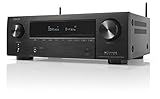
- HIGH-PERFORMANCE 7-CHANNEL AMPLIFIER WITH NEXT-GEN MOVIE IMMERSION - Enjoy Denon sound in movies, games, and music with full 3D audio support, Dynamic HDR, QMS, HDCP 2.3 & advanced video processing for the best 4K home theater (8K ready when you are)
- ADVANCED 8K HDMI VIDEO SECTION - 3 dedicated 8K inputs and 1 output (8K/60Hz and 4K/120Hz pass-through; 8K upscaling on all 6 inputs). Supports 4:4:4 Pure Color Sub Sampling, HDR10, HDR10+, Dolby Vision & HLG for exceptional color, contrast, and clarity
- MULTI-DIMENSIONAL AUDIO - In addition to Dolby Atmos, DTS:X and DTS Virtual:X, the AVR-X1700H also supports Dolby Atmos Height Virtualization Technology that creates virtual height effects even without the height channels for a truly immersive experience
- AWARD-WINING ON-SCREEN QUICK SETUP GUIDE walks you through simple, clear instructions to connect your TV, specify EQ settings and helps you optimize your surround sound. The back-panel is laid out with color-coded connections that makes organizing simple
- MULTI-ROOM, MULTI-SOURCE STREAMING, watch a movie in one room while another family member streams music from popular services like Spotify, Pandora, Amazon Music HD, and more via Wi-Fi, AirPlay 2, or Bluetooth in a different zone, without interruption
Skip it if: you need identical HDMI performance on every input, four independently managed subwoofers, or a music-first receiver with a particular stereo presentation.
Closest alternatives: the Denon X3800H offers four independent subwoofer outputs and an upgrade path to Dirac; the Yamaha RX-A6A offers seven HDMI 2.1 inputs and Yamaha MusicCast.
4. Denon AVR-X4800H: a high-capacity alternative to the X3800H
Best for: demanding 5.2.4 or 7.2.2 systems, multiple HDMI sources, vinyl and streaming in one system, and buyers who want a mature platform with room to add an amplifier.
Tom’s Guide names the X4800H its overall receiver. It has nine amplifier channels, 11.4-channel processing, seven HDMI inputs, three HDMI outputs, Dolby Atmos, DTS:X, Auro-3D, 360 Reality Audio, Audyssey MultEQ XT32, and optional Dirac Live. Denon rates it at 125W per channel under its stated two-channel conditions; that number is not a direct ranking against the Onkyo’s 120W or the Marantz Cinema 30’s 140W.
The X4800H is a sensible step up when seven HDMI inputs, three outputs, additional installation flexibility, or its higher-tier platform matter. Like the X3800H, it has nine internal amplifiers, so its 11.4 processing count still requires an external amplifier for a fully powered 7.2.4 system.
Do these 3 things before closing this tab:
1Clear out junk files and repair common Windows errors2Fix the driver behind crashes, sound loss and screen glitches3Repair Windows errors before they cause bigger problemsIts large chassis needs proper ventilation and an open installation. Dirac Live is optional and paid, while Audyssey XT32 is included. A turntable can be connected directly when using a suitable phono-equipped version or input; verify the exact regional specification before purchase.
Buy it if: you need more inputs and outputs than the X3800H provides and can justify the additional cost.
Skip it if: your system is 5.1.2 or 5.1.4 and the X3800H already meets your connectivity needs.
Price and status: approximately $2,799 in the US. It is a tested, current model and Tom’s Guide’s overall pick.
Windows Errors? Fix Them Before They Spread
Repair common Windows errors and clear accumulated junk for a smoother, more stable PC - no reinstall needed.Free scan · no reinstallCrashes, No Sound, or Screen Glitches?
Random freezes, missing sound and display glitches usually trace back to one bad driver. Find and replace yours safely.Free scan · under a minute5. Arcam AVR5: best when sound quality matters more than gaming features
Best for: movie and music listeners who prioritize the published sound-quality assessment over HDMI 2.1, automatic calibration, and convenience features.
What Hi-Fi? gives the AVR5 its mid-range recommendation and praises its movie and music performance, describing it as agile and rhythmic. Those are reviewer listening impressions, not universal measurements. The Arcam specification sheet lists seven amplifier channels, 7.1.4 processing, seven HDMI inputs, two HDMI outputs, and 4K/60Hz video support.
The trade-offs are decisive in 2026. The AVR5 has no HDMI 2.1 and no built-in room-calibration system. What Hi-Fi? also identifies the cost of adding HDMI 2.1 as a drawback. It is therefore a poor default recommendation for a PS5, Xbox Series X, or PC gamer who needs 4K/120Hz and VRR through the receiver.
Seven internal amplifiers are enough for 5.1.2 or 7.1, but not a fully amplified 5.1.4 system. Although it processes 7.1.4, the extra channels require appropriate external amplification.
Recommended Free Tools
Buy it if: you listen to music as seriously as movies and your sources do not require 4K/120Hz.
Skip it if: you need HDMI 2.1, automatic room correction, or an uncomplicated Atmos upgrade beyond seven powered channels.
Closest alternatives: the Anthem MRX 740 adds ARC Genesis; the Denon X3800H offers far more connectivity and expansion.
6. Marantz Cinema 30: best high-end all-in-one receiver
Best for: premium theaters with many speakers, multiple subwoofers, extensive source connectivity, and a budget that allows a large flagship-class receiver.
The Cinema 30 has 11 powered channels and 13.4-channel processing, with a manufacturer-stated 140W per channel, seven 8K HDMI inputs, four independently managed subwoofer outputs, Audyssey MultEQ XT32, and Dirac Live support. See the official Marantz Cinema 30 information.
Its 11 internal amplifiers make it a substantially more capable one-box option than the nine-channel Denon X3800H, X4800H, and Onkyo RZ50. It is suitable for buyers who want to avoid an external amplifier in a larger Atmos layout, provided the desired speaker assignment is supported by the receiver’s configuration options.
The four subwoofer outputs are useful because Marantz explicitly identifies them as independently managed. That is more meaningful than simply seeing a high subwoofer-output number on a specification sheet. Even so, multiple-subwoofer performance still depends on placement, measurement technique, crossover choices, and room acoustics.
The 140W rating should not be treated as proof that the Cinema 30 is automatically more powerful than every 125W or 120W rival. Amplifier measurements must be compared using the same impedance, frequency range, distortion limit, and number of channels driven.
Recommended Free Tools
Rank #3

- WATCH YOUR MOVIES IN 8K - At 70W x 5, Denon AVR-S570BT home theater receiver features (4) HDMI 2.1 8K inputs, (1) HDMI output, eARC up to 40 Gbps, successor to AVR-S540BT, ensuring HD audio playback, enhanced gaming, Power 310 W, Standby 0.1 W
- TRUE-TO-LIFE CINEMATIC EXPERIENCE - The AVR-S570BT supports HDR, HLG, Dolby Vision, HDR10+, Dynamic HDR for realistic display, VRR and QFT for lag-free exceptional gaming, DTS HD Master, Dolby TrueHD immersive audio, and 5.1 surround sound receiver
- YOUR FAVORITE MUSIC AT YOUR FINGERTIPS - With built-in Bluetooth stereo receiver, play tracks from various audio sources and create an integrated multi-room audio system. Allows wireless streaming from Spotify, TIDAL, Pandora, and more
- OUR EASY ON-SCREEN HD SETUP ASSISTANT walks you through clear, intuitive instructions to connect your TV and stereo receiver with bluetooth, while specific EQ settings help optimize surround sound so you make the most of movies, music, TV, or gaming
- CONVENIENT CONTROL - Connect Denon receiver to your Smart TV remote and access speaker sources & surround selections using just one handset, or download Denon Remote App for iOS and Android to control receiver through the phone
Buy it if: you need 11 internal amplifier channels, four-subwoofer management, seven 8K inputs, and a premium all-in-one installation.
Skip it if: your room and speakers do not require its channel count, or if a nine-channel receiver plus a modest external amplifier offers the same practical result at lower cost.
Price and status: approximately $4,800 in the US. It is the high-end current recommendation; the newer Cinema Series 2 models discussed below should not be assumed to outperform it until independent tests are available.
7. Denon AVR-S770H: best budget Atmos choice
Best for: a first 5.1.2 system, a modest living room, or a buyer who wants a modern receiver without paying for nine or eleven channels.
The Tool Desk
Outbyte PC Repair FREEClear out junk files and repair common Windows errorsFree Scan →Outbyte Driver Updater FREEFix the driver behind crashes, sound loss and screen glitchesFind Drivers →The S770H provides seven amplified channels and supports a 5.2.2 Atmos layout. It includes six HDMI inputs, Audyssey MultEQ, HEOS streaming, and guided setup. Denon’s manual and specification material should be checked for the precise regional input and video matrix.
Seven amplifiers are the practical minimum for a conventional 5.1.2 Atmos system: five ear-level speakers plus two height speakers. It is not a sensible choice for 5.1.4, 7.1.2, or any system that needs more than seven powered channels. It also may not be the right match for inefficient speakers, low-impedance loads, high listening levels, or a large room.
Audyssey MultEQ is useful for basic integration, but it is not the same as XT32. The two subwoofer outputs should not automatically be described as two independently calibrated subwoofer channels.
Buy it if: you need 5.1 or 5.1.2, have reasonably efficient speakers, and want a simple current platform.
Skip it if: you expect to expand beyond seven powered channels, need sophisticated multi-subwoofer control, or own demanding speakers.
Price and status: verify the live Denon price because the supplied research does not provide a fixed current US list price. Audio Advice recommends it for budget systems.
8. Marantz Cinema 70s: best compact receiver
Best for: slim furniture, apartments, and smaller systems where a full-size AVR will not fit.
The Cinema 70s uses a slim chassis and provides seven powered channels, Dolby Atmos, HEOS, and a 50W-per-channel rating. It is a practical choice for 5.1.2 when cabinet height is more important than amplifier reserves or future expansion.
The compromise is not merely cosmetic. Its seven channels and lower power rating make it fundamentally different from the full-size nine- and eleven-channel receivers in this guide. It cannot internally power 5.1.4 or 7.1.2, and a slim receiver should not be selected for difficult speaker loads simply because the room itself is small.
Buy it if: physical dimensions and a straightforward Atmos system are your priorities.
Skip it if: you need high output, several subwoofers, extensive pre-outs, or a path to a large 7.1.4 theater.
Other strong choices
Anthem MRX 740 8K and MRX 1140 8K
Anthem’s MRX receivers deserve consideration for music-first systems because ARC Genesis is a major part of their appeal. The MRX 740 specifications identify seven powered channels, while the MRX 1140 uses a mixed Class AB/Class D amplifier design. Audio Advice recommends the MRX 1140 8K for music, and the MRX 740 has been independently reviewed by AVForums.
Free tools Windows power users keep installed
One-click scans. No signup required.
These are expensive alternatives rather than automatic winners. The MRX 740’s seven amplifiers limit its one-box layouts, and buyers should compare its HDMI inputs, processing count, and pre-outs against the Denon and Marantz alternatives.
Yamaha RX-A6A
The RX-A6A is a feature-rich nine-channel receiver with 11.2-channel processing, seven HDMI 2.1 inputs, Dolby Atmos, DTS:X, Auro-3D, MusicCast, and Yamaha DSP modes. What Hi-Fi? describes its presentation as spacious and rhythmic in its RX-A6A review.
It is an attractive option for a Yamaha MusicCast household or anyone who needs numerous HDMI 2.1 inputs. However, it is older than the newer 2026 Denon and Marantz models, and some features, including QMS and QFT, were firmware-dependent at the time of the review. Confirm the current firmware state before buying.
New 2026 models to watch—not yet equivalent to tested winners
New specifications and launch announcements are not substitutes for independent testing. The following receivers may be worth investigating, but the supplied research does not establish the same review record available for the established recommendations above.
Denon AVR-X2900H and AVR-X3900H
Denon lists the X2900H at $1,349 in the US and the X3900H at $1,849. The X3900H has nine amplifiers, 11.4-channel processing, four independent subwoofer outputs, six HDMI inputs, three HDMI outputs, 105W per channel under Denon’s stated conditions, Audyssey room correction, and Dirac Live readiness. See the official X3900H page.
Rank #4

- Amplify and enjoy your home audio experience in the comfort of your home.Frequency band : 2,400 MHz – 2,483.5 MHz, Maximum output power : ≤ 5.0 dBm..Connector Type: Bluetooth
- 100 watts x 2 (8 ohms, 1 Kilo Hertz). Speaker impedance - 6–16 ohms
- Phono input, 4 stereo RCA audio inputs, 3.5 millimeter input, stereo RCA output
- Built in Bluetooth lets you wirelessly stream your favorite music service, podcasts, and more from other Bluetooth devices.
- Connect up to 4 speakers; A/B switching to play all at once, or in separate zones
Crutchfield selects the X3900H as its Dolby Atmos receiver, but What Hi-Fi?’s July 2026 X2900H coverage described the X3900H as expected to launch soon, showing that independent coverage was still catching up. Treat it as officially specified and available where sold, but do not imply that it has the same depth of independent testing as the X3800H or X4800H.
Regional versions also matter. What Hi-Fi? notes differences involving US custom-installation features and a UK-only DAB tuner. Denon may use AVR branding in the US and AVC branding elsewhere, sometimes reflecting tuner differences.
Marantz Cinema Series 2
Marantz announced the Cinema 50 Series 2, Cinema 60 Series 2, Cinema 60 DAB Series 2, and Cinema 70s Series 2 in August 2026. Reported upgrades include a new 32-bit, eight-channel DAC, optional Dirac Live across the range, 1440p passthrough, AMD FreeSync, HDMI Diagnostics 2.0, Web Control 2.0, and planned Bluetooth LE Audio support. Reported US prices are $3,000 for the Cinema 50 Series 2, $2,000 for the Cinema 60 Series 2, and $1,500 for the Cinema 70s Series 2. The launch reports are available from TechRadar and What Hi-Fi?.
Do these 3 things before closing this tab:
1Scan for outdated or missing drivers - takes under a minute2Repair Windows errors before they cause bigger problems3Fix the driver behind crashes, sound loss and screen glitchesAt the research date these were announcement-stage products rather than independently established replacements for the first-generation Cinema models. Check availability, final specifications, firmware, and independent tests before treating one as a best buy.
Yamaha RX300A and RX500A
The RX300A is a five-channel receiver that can be configured for 3.1.2, while the RX500A is a seven-channel model that can be configured for 5.1.2 Atmos. Reported features include Dolby Atmos, HDMI 2.1, 4K/120Hz, 8K/60Hz, VRR, ALLM, and eARC. The RX300A was announced at $399.95, and the RX500A was scheduled for September 2026 availability at $599.95. See the launch coverage.
Neither should be called a tested best buy until independent reviews establish performance, HDMI behavior, room correction, and reliability.
How many channels do you need?
| Desired layout | Minimum useful AVR class | Important detail |
|---|---|---|
| 5.1 | 5 amplified channels | Five ear-level speakers plus one or more subwoofers |
| 5.1.2 Atmos | 7 amplified channels | Five bed-layer speakers and two height speakers |
| 7.1 | 7 amplified channels | Seven ear-level speakers |
| 5.1.4 Atmos | 9 amplified channels | Five bed-layer speakers and four height speakers |
| 7.1.2 Atmos | 9 amplified channels | Seven bed-layer speakers and two height speakers |
| 7.1.4 Atmos | 11 amplified channels | Alternatively, use a nine-channel AVR with a two-channel external amplifier |
| 9.1.4 or larger | High-end processor/receiver plus external amplification | Check the exact processing and pre-out architecture |
The receiver must support the specific speaker assignment. A channel-count label alone does not guarantee that every theoretical layout is available in the setup menu.
Powered channels versus processing channels
AVR specifications use several numbers that are easy to misread:
- 5.2 usually means five amplified or processed main channels and two subwoofer outputs.
- 7.2 usually means seven main channels and two subwoofer outputs.
- 9.4 generally means nine main channels and four subwoofer outputs or subwoofer-processing paths.
- 11.4 can mean eleven processed main channels and four subwoofer outputs, even when the receiver has only nine amplifiers.
- 15.4 normally describes a much larger processing and subwoofer architecture, not necessarily fifteen amplifiers inside one chassis.
The first number does not always tell the whole story because manufacturers may be describing amplification, decoding, processing, or preamp outputs. Always look for separate lines labelled power amplifier channels, processing channels, and pre-outs.
For example, both the Denon X3800H and Onkyo RZ50 have nine internal amplifiers but process eleven main channels. A receiver can therefore decode and route a 7.1.4 soundtrack while using an external amplifier for two of those speakers.
Is HDMI 2.1 necessary?
HDMI 2.1 matters most if you use a PS5, Xbox Series X, gaming PC, 4K/120Hz display, VRR, or ALLM. It matters much less for movie and television sources that normally output 4K/24Hz or 4K/60Hz.
Quick wins for a faster PC:
Repair Windows errors before they cause bigger problemsFix Now →Fix the driver behind crashes, sound loss and screen glitchesFind Drivers →Clear out junk files and repair common Windows errorsFree Scan →Do not stop at the phrase HDMI 2.1. Check:
- How many HDMI inputs support 4K/120Hz.
- Whether those inputs also support VRR and ALLM.
- Whether the front input has lower bandwidth than the rear inputs.
- Whether the HDMI outputs support the desired display format.
- Whether eARC is available.
- Whether QMS, QFT, DSC, and other gaming features are supported on the exact ports you will use.
The Sony STR-AN1000 illustrates the issue: it has six HDMI inputs, but Tom’s Guide reports that only two support 4K/120Hz. The Onkyo TX-RZ50 has different signaling capabilities on different inputs, so its port-by-port table matters more than the number of HDMI sockets.
8K is not automatically useful. The source, receiver input, receiver output, cable, and display must all support the required signal. A receiver advertised as 8K-ready may still have a different number of full-bandwidth 4K/120Hz inputs.
Two ways to connect sources
- Sources into the AVR, AVR into the TV: this gives the receiver direct control of switching and audio decoding. It is usually the cleanest arrangement when the receiver supports every required video format.
- Sources into the TV, TV eARC into the AVR: this can avoid an AVR HDMI bandwidth limitation and is useful when the television has more suitable gaming inputs. It can introduce TV-dependent audio passthrough behavior, CEC switching problems, Dolby MAT or multichannel PCM compatibility issues, lip-sync variables, and loss of some receiver-based video processing.
Use certified cables suitable for the signal, enable eARC rather than ordinary ARC when lossless or object-based audio is required, and test each source separately.
Room correction: Audyssey, Dirac Live, ARC Genesis, Sony DCAC, and YPAO
Room correction measures speakers and the listening area, then applies filters and delays to improve integration. It does not repair poor speaker placement, eliminate room modes everywhere, or make an unsuitable subwoofer placement ideal.
| System | Where it appears | What to know |
|---|---|---|
| Audyssey MultEQ and MultEQ XT32 | Denon and Marantz | XT32 is the more advanced version and is particularly relevant to bass management and multi-subwoofer systems |
| Dirac Live | Included on Onkyo RZ50; optional on several Denon and Marantz models | Offers more user control but requires careful measurement and, on some receivers, a paid license |
| ARC Genesis | Anthem MRX receivers | A major reason to consider Anthem, especially for buyers who value its correction and music-focused system design |
| Sony DCAC IX and 360 Spatial Sound Mapping | Sony STR/TA-AN1000 | Combines calibration with speaker-relocation and virtualization processing |
| YPAO | Yamaha receivers | Works with Yamaha’s extensive DSP mode and MusicCast ecosystem |
For better results, place the microphone at ear height, keep it away from walls and seat backs, avoid placing the subwoofer gain excessively high before calibration, select the correct speaker layout, and measure the positions where people actually listen. Do not blindly change crossovers or apply filters outside the range where they are useful.
The X3800H includes Audyssey XT32 and can be upgraded to Dirac Live. The RZ50 includes Dirac Live. Anthem’s MRX 740 uses ARC Genesis. These are different ownership experiences, not a universal ranking of one system as best.
Independent reader supportYour contribution helps us test, update, and keep practical guides available for everyone.What does power per channel really tell you?
Power ratings are meaningful only when read with their test conditions. Look for:
- Speaker impedance, such as 8 ohms or 6 ohms.
- Frequency range.
- Total harmonic distortion limit.
- Number of channels driven.
- Duration and test standard.
- Whether the rating is for one channel, two channels, or all channels simultaneously.
Denon rates the X3800H at 105W per channel into 8 ohms across 20Hz–20kHz, at 0.08% THD, with two channels driven. Onkyo specifies 120W per channel under its own FTC two-channel conditions. Marantz lists 140W per channel for the Cinema 30 under its stated conditions. Those figures do not establish a direct power ranking.
What’s actually slowing this PC down?
Pick the symptom - the matching free tool is one click away.
Speaker sensitivity, nominal and minimum impedance, listening distance, room size, crossover frequency, and desired volume can matter more than a small difference in published wattage. Buyers with inefficient or low-impedance speakers should look for independent measurements, good ventilation, and an external amplifier path instead of relying on the front-panel wattage figure.
Do you need a separate amplifier?
An external amplifier is useful when:
- Your desired layout has more powered channels than the AVR contains.
- You want to grow from 5.1.2 to 7.1.4 later.
- Your room is large or listening levels are high.
- Your speakers are inefficient or present a difficult impedance load.
- You want additional headroom while retaining the AVR’s processing and switching.
- The receiver provides multichannel pre-outs and flexible amplifier assignment.
For a 7.1.4 system, a nine-channel receiver such as the X3800H or RZ50 can process the layout, but a two-channel amplifier is needed for the remaining speakers. For 9.1.4 or larger layouts, begin with the processor count and pre-out design, then budget for multiple external amplifier channels.
Which receiver is best for music?
There is no objective music winner, but the published recommendations point to different priorities:
Best Value

- Cinematic Sound at Home: Enjoy your favorite movies, TV shows and more with theater like sound in the comfort of your home.NOTE: Scroll down the catalog to find installation Manual and User Guide for trouble shooting steps..Frequency band : 2.4 GHz band
- Virtual Front Surround: S Force PRO delivers virtual surround sound with only a 2 speaker setup
- 4K Pass Through: 4K HDR Compatible with Hdcp 2.2 Support for Sharper Source to Screen Image Quality
- SMART CONNECTIVITY: Stream music and use Bluetooth Standby to turn on the receiver from your phone
- Multi Functional System: Enjoy a Multi Channel Stereo Setup, Fm Radio Tuner and 1/4 Inches Headphone Jack
- Arcam AVR5: What Hi-Fi? praises its movie and music performance and describes it as agile and rhythmic, but it lacks HDMI 2.1 and built-in calibration.
- Anthem MRX 740 or MRX 1140: ARC Genesis and Anthem’s amplifier design make them attractive music-first alternatives; they are expensive.
- Marantz Cinema 50 or Cinema 30: often considered by buyers seeking a music-friendly presentation alongside extensive theater features.
- Denon X3800H or X4800H: better suited when streaming, multi-subwoofer management, expansion, and broad system flexibility matter more than a particular tonal preference.
Descriptions such as warm, musical, dynamic, spacious, or cinematic are reviewer impressions. They should not be treated as universal measurements. Level matching and room correction can also change perceived differences between receivers.
Crashes, No Sound, or Screen Glitches?
Random freezes, missing sound and display glitches usually trace back to one bad driver. Find and replace yours safely.Free scan · under a minutePC Slower Than It Used to Be?
A free scan shows the junk files, broken settings and background clutter dragging Windows down - then fixes them in one click.Free scan · Windows 10 & 11Phono, streaming, zones, and the basic AVR job
An AV receiver combines several components:
- Multichannel power amplification.
- Dolby Atmos, DTS:X, and other surround decoding.
- HDMI switching and video passthrough.
- ARC or eARC audio return from a television.
- Network streaming and, often, Bluetooth.
- Room correction and speaker-distance management.
- Multi-zone audio and control on many models.
These features are not equivalent across brands. A receiver can have excellent HDMI switching but a basic calibration system, or strong amplification but no current gaming support. Likewise, the presence of a phono input varies by model and region. The Sony STR-AN1000 has no built-in phono input; verify the exact Denon, Marantz, Yamaha, Anthem, or Onkyo specification before connecting a turntable. A turntable without a phono preamp cannot normally be connected to a standard line-level input without an external phono stage.
Recommendations by system layout
- 5.1: Denon AVR-S770H is more than sufficient; a slim Marantz Cinema 70s is useful where cabinet space is limited.
- 5.1.2: choose a seven-channel model such as the S770H, Sony STR-AN1000, or Cinema 70s. The choice depends on gaming inputs, room correction, and physical size.
- 5.1.4: start with a nine-channel AVR such as the X3800H, X4800H, RZ50, or RX-A6A.
- 7.1: any suitable seven-channel receiver can work, but a nine-channel model may provide more expansion headroom.
- 7.1.2: use a nine-channel AVR. The X3800H is especially flexible because it can later add an amplifier for 7.1.4.
- 7.1.4: use an 11-channel AVR such as the Cinema 30, or a nine-channel AVR with a two-channel external amplifier.
- Multiple subwoofers: prioritize explicit independent subwoofer outputs and advanced calibration. The X3800H and Cinema 30 list four independently managed outputs; do not infer that two ordinary outputs provide two independent calibrations.
- Gaming: compare the exact HDMI ports on the RZ50, X3800H, X4800H, RX-A6A, and STR-AN1000. The Arcam AVR5 is not suitable when 4K/120Hz is required.
- Music first: consider Arcam or Anthem, then Marantz or Denon if streaming and theater flexibility are more important.
- Slim installation: the Cinema 70s is the obvious compact choice, but allow ventilation and do not expect the output or expansion of a full-size receiver.
- Large dedicated theater: consider the Marantz Cinema 30 or Denon AVR-A1H, with the room, speakers, external amplifiers, and installation budget justifying the cost. Audio Advice recommends the AVR-A1H for flagship installations.
Buying a used or discounted older AVR
Be especially careful with early HDMI 2.1 receivers. Several 2020 Denon, Marantz, and Yamaha models could produce a black screen with some 4K/120Hz Xbox Series X and Nvidia sources. The affected list included Denon AVR-X2700H, AVC-X3700H, AVC-X4700H, and AVC-X6700H; Marantz SR5015, SR6015, SR7015, and SR8015; and Yamaha RX-V4A, RX-V6A, RX-A2A, TSR-400, and TSR-700.
Yamaha offered a hardware-upgrade program for selected models, while Denon and Marantz offered an external adapter for affected units. Before buying, verify:
- The exact model and hardware revision.
- The serial number where the manufacturer requires it.
- Whether the upgrade or adapter was completed.
- Whether your intended source actually requires 4K/120Hz.
- Whether the seller accepts returns after testing your console, PC, display, and cable together.
An older receiver can be excellent value for 4K/60Hz movies and television, but a discount does not make it suitable for every HDMI 2.1 gaming chain.
Regional versions and availability
Do not assume that a model name means identical hardware everywhere:
- Denon commonly uses AVR branding in the US and AVC branding in some other regions. A tuner can account for some naming differences.
- Sony sells the US model as STR-AN1000 and uses TA-AN1000 in some markets.
- Marantz Cinema models can have tuner variants, including DAB versions.
- Prices, included services, HDMI specifications, warranty coverage, and room-correction licensing can vary by geography.
Check the manufacturer page for your country rather than importing a receiver solely because its US specification appears attractive. Voltage, tuner support, warranty service, and regional firmware can all matter.
Why expert guides disagree
The disagreement between leading guides reflects different definitions of best:
- What Hi-Fi? names the Sony TA-AN1000 overall, the Denon AVR-X2800H as a budget pick, and the Arcam AVR5 as a mid-range option.
- Tom’s Guide names the Denon X4800H overall, the X2700H for value, the Onkyo TX-NR7100 for high-resolution video, and the Sony STR-AN1000 for spatial audio.
- Crutchfield emphasizes the Marantz Cinema 30 as an all-around choice, the Denon X3900H for Dolby Atmos, the Yamaha RX-V4A for budget systems, and Anthem MRX 1140 8K for music.
- Audio Advice recommends the Denon S770H for budget systems, Onkyo RZ50 for mid-range Dirac Live, Denon X3800H for expandable systems, Marantz Cinema 30 for luxury systems, and Denon AVR-A1H for flagship installations.
Sony can win when spatial processing and living-room scale are prioritized. Denon is stronger for subwoofers, pre-outs, and system expansion. Onkyo is compelling for included Dirac Live and gaming. Marantz targets premium build, channel count, and a music-friendly presentation. Arcam makes more sense when sound quality is valued above current HDMI features.
The Tool Desk
Outbyte PC Repair FREERepair Windows errors before they cause bigger problemsFix Now →Outbyte Driver Updater FREEFix the driver behind crashes, sound loss and screen glitchesFind Drivers →Customer ratings can add useful information about setup frustrations and ownership patterns, but they are not controlled product tests. Keep customer feedback separate from measurements and expert listening evaluations.
Frequently Asked Questions
Do I need an AV receiver for Dolby Atmos?
No, but you need an Atmos-capable device that can decode and reproduce the format. An AVR is the most flexible option because it can power multiple speakers, switch sources, apply room correction, and support external amplifiers. A seven-channel AVR is generally the minimum for a 5.1.2 Atmos system.
Is 7.2 enough for Atmos?
It is enough for 5.1.2: five ear-level speakers, two height speakers, and one or two subwoofer outputs. It is not enough to power a 5.1.4, 7.1.2, or 7.1.4 system internally. For those layouts, use a nine- or eleven-channel AVR, depending on the layout.
Is 8K important when buying an AV receiver?
Only if your display and source need it. For most movie systems, 4K/24Hz and 4K/60Hz are more relevant. For gaming, count the exact HDMI inputs that support 4K/120Hz, VRR, and ALLM rather than assuming that an 8K label guarantees those features.
Are HDMI 2.1 ports necessary?
They are important for PS5, Xbox Series X, gaming PCs, 4K/120Hz, VRR, and ALLM. They are less important for conventional movie and TV sources. Check port-by-port capability because some receivers have only one or two full-bandwidth inputs, and front inputs may be slower.
Is Denon better than Marantz?
Neither is universally better. Denon often offers strong system flexibility, subwoofer management, and value. Marantz may appeal to buyers who prioritize premium construction, a music-friendly presentation, and high channel counts. Compare the specific models, not just the brands.
Is Dirac Live better than Audyssey?
Neither is automatically better in every room. Dirac Live provides extensive user control and is included with the Onkyo TX-RZ50, while it is a paid upgrade on several Denon and Marantz models. Audyssey MultEQ XT32 is included on receivers such as the Denon X3800H and is particularly capable for bass management. Measurement quality and setup choices strongly affect both.
Do I need an external amplifier?
Only when the layout exceeds the receiver’s internal amplifiers, the speakers are difficult to drive, the room is large, or you want more headroom. A nine-channel AVR can process 7.1.4 but needs a two-channel amplifier to power all eleven speakers.
Can I connect a turntable to an AV receiver?
Yes, if the receiver has a phono input or the turntable has a built-in phono preamp. The Sony STR-AN1000 has no built-in phono input, so it requires a turntable with a preamp or an external phono stage.
Can I connect a soundbar to an AV receiver?
Usually not in the way a conventional speaker system is connected. Soundbars generally contain their own amplification and processing. An AVR is designed to drive passive speakers. Some unusual products support line-level or preamp connections, but you must verify both manuals before combining them.
How many subwoofers can I use?
Use the number of outputs and the calibration architecture as separate questions. Two physical subwoofers can sometimes share one output with a splitter, but that does not create two independently calibrated channels. The Denon X3800H and Marantz Cinema 30 explicitly list four independently managed subwoofer outputs.
Should sources connect to the TV or the AVR?
Connect sources to the AVR when it supports every required video format and you want centralized switching. Connect them to the TV and return audio over eARC when the television has better gaming connectivity or the AVR lacks enough suitable HDMI inputs. The TV route can introduce passthrough, CEC, PCM, lip-sync, and switching issues.
What’s actually slowing this PC down?
Pick the symptom - the matching free tool is one click away.
What should I buy if I only need 5.1?
The Denon AVR-S770H is a sensible budget choice, while the Marantz Cinema 70s is useful when a slim chassis matters. A Sony STR-AN1000 or larger Denon receiver makes sense if you also need more HDMI inputs, stronger processing, or an upgrade path.
The Bottom Line
Choose the Denon AVR-X3800H for the best balance of channels, subwoofer management, room correction, HDMI connectivity, and expansion. Choose the Sony STR-AN1000 for a smaller living-room system and Sony’s spatial processing, the Onkyo TX-RZ50 for included Dirac Live and gaming, the Arcam AVR5 for sound-first non-4K/120Hz systems, the Denon AVR-S770H for budget 5.1.2, and the Marantz Cinema 30 when an expensive 11-channel all-in-one theater is justified.
Before buying, confirm four things on the exact regional model: the number of internal amplifiers, the supported speaker layout, the HDMI inputs that actually handle your gaming signal, and whether room correction is included or paid. Those details matter more than a receiver’s brand name or its largest wattage number.
Quick Recap
Product prices and availability are accurate as of the date/time indicated and are subject to change. Any price and availability information displayed on Amazon at the time of purchase will apply.
Free tools Windows power users keep installed
One-click scans. No signup required.

