
The Tool Desk
Outbyte Driver Updater FREEFix the driver behind crashes, sound loss and screen glitchesFind Drivers →Outbyte PC Repair FREERepair Windows errors before they cause bigger problemsFix Now →iTechGuides is reader-supported. When you buy through links on our site, we may earn an affiliate commission. As an Amazon Associate I earn from qualifying purchases. Learn more
There is no single best device for newly restored partial vision. The most reliable approach is to start with a comprehensive low-vision evaluation, identify the tasks you want to resume, and trial equipment with your own materials in realistic lighting and working distances. For many people, an illuminated handheld magnifier is a sensible first trial for short, portable tasks such as labels, menus, and price tags. A stand magnifier can make near work steadier, while an electronic video magnifier adds adjustable enlargement and contrast for sustained or difficult reading.
Technology works best as a combination rather than a single purchase. Phone and tablet accessibility features, optical-character-recognition (OCR) readers, text-to-speech, audiobooks, task lighting, and contrast adjustments can reduce the amount of visual effort required. Training and follow-up are part of the intervention: a device that works in a clinic can still fail at home if its focal distance, camera position, controls, or lighting are not adapted to the user.
What “best” means after partial vision returns
Newly restored sight can make familiar tasks possible again, but the useful level of vision may vary by distance, contrast, glare, visual field, fatigue, and the task itself. A device should therefore be judged by whether it lets you read a medication label safely, identify a bus sign, follow a recipe, use a phone, or complete a hobby—not by magnification power alone.
Outdated Drivers Are Slowing You Down
One free scan finds every outdated or missing driver and matches the right update for your exact hardware.Free scan · exact hardware matchWindows Errors? Fix Them Before They Spread
Repair common Windows errors and clear accumulated junk for a smoother, more stable PC - no reinstall needed.Free scan · no reinstallThe American Academy of Ophthalmology (AAO) says an initial evaluation should consider your goals, visual function, psychosocial status, and personal attributes, not visual acuity alone. Relevant factors include contrast sensitivity, visual field, glare, working distance, dexterity, cognition, and the environments in which you need to function. A person who can read large print at a desk may still need audio or a distance aid outside the home.
Popular on Amazon
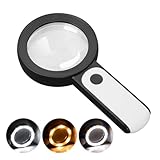
- HIGH POWER MAGNIFICATION: This magnifying glass provide Optical high magnification, allowing users with low vision to read text, no matter the size.
- ULTRA BRIGHT 18 LED WITH 3 MODES: The built-in energy-saving 18 LED lights provides extra luminance to ensure an overall better reading experience even at night or dark places. The stepless dimmable 3 lighting modes (cold, warm and mixed) can be switched based on different light condition, which can reduces visual fatigue, which is very useful for people with macular degeneration or far-sightedness/feyopia.
- EASY TO USE: Comes completely assembled, just requires 3x AAA batteries (not included). Easy to operate with a simple ON / OFF button switch, making it perfect for the elderly or those requiring an intuitive magnification system.
- LARGE LENS(Diameter 3.15"): Magnifies without optical distortion. Optimal to enhance reading and viewing very fine details in books, newspapers, magazines, photographs, maps, electronics, miniatures, jewelry, pill bottles, medications, hobbies, models, and crafts of all kinds.
- PERFECT GIFT FOR THE ELDERLY: Great magnifier for seniors, Most elderly have difficulty reading the small print on coupons, prescription,medical bottle.clear magnifier with light also a great choice for those who have low or impaired vision of most types.
A low-vision evaluation is not a sign that recovery has failed. It is a way to match the remaining vision to practical tools while the eye-care team continues to monitor the underlying condition. The National Eye Institute describes vision rehabilitation as a team effort that may include eye-care professionals, low-vision and vision-rehabilitation therapists, orientation-and-mobility specialists, counselors, and social workers.
Start with an evaluation and a task list
Ask your eye-care team for a low-vision or vision-rehabilitation evaluation after a major change in sight, including partial restoration. Bring the activities you most want to regain and the materials that make those activities difficult.
- Medication bottles, packaging, or appointment cards you must read accurately.
- Mail, bills, menus, recipes, labels, and other ordinary print.
- Your phone or tablet, including the apps you use for communication and banking.
- Work documents, tools, sewing materials, music, games, or other hobbies.
- A sample of distance information, such as a sign or presentation slide, if that is a priority.
Describe where and when the problem occurs. Reading may be adequate in daylight but fail under overhead glare; a label may be clear when held close but impossible at arm’s length; a tremor may make a handheld lens unusable even though its optics are suitable. These details determine whether lighting, a stand, electronic controls, audio, or a distance device should be trialed first.
Assistive-technology options by task
| Task or problem | Usually worth trialing | Why it can help | Main trade-off |
|---|---|---|---|
| Short, portable near print | Illuminated handheld magnifier | Combines a magnifying lens with task light for labels, menus, and price tags | Requires a steady hand and the correct focal distance |
| Hands-free near work or tremor | Stand magnifier with lighting | Holds the lens at a stable distance while leaving both hands available | Less portable, and the field of view may be limited |
| Sustained reading, low contrast, or need for polarity control | Electronic video magnifier | Provides adjustable magnification, brightness, contrast, and often reversed polarity | Larger and more costly than a simple lens; needs power or charging and practice |
| Mixed print and digital tasks | Smartphone or tablet accessibility | Offers text-size controls, camera magnification, contrast settings, and voice features | Small screens, setup demands, and app quality vary |
| Print that remains visually tiring | OCR with text-to-speech, audiobook, or e-book | Substitutes spoken output for prolonged visual reading | OCR can misrecognize text; audio preferences and access or licensing differ |
| Distance signs or intermediate displays | Telescope or digital zoom | Extends the useful viewing distance | Narrow field, focusing demands, and training requirements |
| Glare or poor contrast | Task lighting, contrast changes, reverse polarity, or prescribed tint solutions | Improves separation between the target and its background | Lighting and tint preferences are individual and must be tested in context |
Illuminated handheld magnifiers: the practical first trial
An illuminated handheld magnifier is often a sensible starting category for short near tasks. The built-in light can make dark print or unevenly lit labels easier to see, and the device can travel from a kitchen to a shop or clinic. It is most useful when you need a quick look rather than an hour of continuous reading.
Handheld magnifiers have a focal distance. You generally hold the lens at the distance where the image is sharp and move the material or your head to maintain that distance, rather than simply pressing the lens against the page. Your clinician or therapist should demonstrate the working distance and a comfortable grip. If the image swims, your arm tires, or you repeatedly lose focus, the category may be wrong even if the lens makes letters larger.
Try the magnifier with real labels and under the lighting you use at home. Check whether the light creates reflections on glossy packaging. A lens that works for a large, high-contrast label may not be suitable for thin gray print on a shiny medication box.
Stand magnifiers: stability for near work
A stand magnifier rests on a base or frame, keeping the lens at a more consistent distance from the page. This can help when tremor, reduced grip strength, or fatigue makes a handheld lens difficult. It also leaves both hands free to write, sort medication, thread a needle, or handle a craft.
Also popular on Amazon

- CRYSTAL CLEAR OPTICAL GRADE LENS: Enjoy a distortion-free image with our shatterproof and scratch-resistant 5.2-inch magnifying glass. Perfect for reading books, magazines, maps, and engage in hobbies and crafts.
- MAGNIFYING GLASS WITH 37 LED LIGHTS: Benefit from 37 super bright LED lights with adjustable brightness levels. Ideal for reading in low light conditions or for individuals with low vision or macular degeneration.
- VERSATILE MAGNIFICATION: Get 10X magnification with an additional 20X and 45X inlets for detailed inspection. Note: The 45X lens provides an upright image within 1.2in distance.
- UPGRADED RECHARGEABLE DESIGN: Enjoy fast charging and long battery life (1000mAh) from our magnifying glass with light and rechargeable USB cable. Take it wherever you go! No need to buy batteries. It takes 2 hours to charge fully and can be used for 5h of maximum brightness. And the power indicator light lets you know when it's time to recharge.
- THOUGHTFUL GIFT FOR SENIORS: Elevate their reading experience with our lighted magnifying glass handheld featuring a built-in book light. Perfect gift for Christmas, birthdays, and special occasions.
The trade-off is portability. The stand takes space and may cover less of a page at one time than an electronic display. Ask the rehabilitation professional to position the stand, chair, and reading material so your neck and shoulders remain relaxed. A built-in or nearby task light should illuminate the page without shining into your eyes.
Electronic video magnifiers: adjustable enlargement and contrast
An electronic video magnifier uses a camera and display to enlarge print or objects. Compared with a fixed optical lens, it can offer a wider range of magnification, brightness and contrast controls, and sometimes polarity options such as light text on a dark background. Those controls are valuable when the difficulty is low contrast or glare rather than letter size alone.
Video magnifiers are suited to sustained reading, writing, viewing photographs, or tasks that require a larger working distance. Some designs place the camera above a table; others are portable. The device must be positioned so the camera sees the target, the display is at a comfortable angle, and your hands can move beneath it. Higher magnification can reduce the amount of text visible at once, so the fastest setting is not always the most useful.
Expect a learning period. You may need to adjust focus, brightness, contrast, polarity, and magnification for each material. Charging or a power connection is part of daily planning. Electronic magnifiers are medical devices in some regulatory contexts; the U.S. Food and Drug Administration classifies handheld low-vision magnifiers as Class I devices, but that classification describes regulatory risk, not proof that one model is clinically best.
Free tools Windows power users keep installed
One-click scans. No signup required.
Phones and tablets: make the device you already own more accessible
A smartphone or tablet can supplement dedicated equipment for both print and digital tasks. Built-in accessibility settings commonly include larger text, display magnification, increased contrast, color or polarity adjustments, and spoken feedback. The camera can provide temporary magnification for a label or menu, while reading applications can speak selected or captured text.
Set up the device with a rehabilitation professional or someone who understands your vision pattern. A setting that helps one eye condition may make another task harder. Test text size, bold text, contrast, screen brightness, and voice speed with messages, web pages, and forms—not only with a settings screen. Keep frequently used accessibility controls easy to reach so you can change them when lighting or fatigue changes.
Phone cameras need a steady angle and enough light. Reflections, curved packaging, decorative fonts, and a page that is partly outside the camera frame can reduce readability. Use a stand or rest when possible, and verify important information visually or with another source before acting on an uncertain result.
Also popular on Amazon

- Broader Visual Areas: Our magnifying glass feature rectangular lenses that are easier to read and improve the edge distortion common with round lenses. The improved and enlarged 4.72" x 3" lens provides a larger viewing area. Whether you're reading a book, looking at a map, or working on a detailed project, your reading experience will be smoother and more enjoyable.
- Crystal Clear Acrylic Lenses: Our lenses are made from high-quality optical grade acrylic with 5X/500% magnification. Not only is it lighter than traditional glass lenses, making it easier to hold for longer periods, but it is also more scratch-resistant. And it maintains the same or even greater magnification for a distortion free viewing experience. Ideal for reading fine print, newspapers, magazines, photos, electronics, miniatures, jewelry, and crafts of all kinds.
- Easy To Charge: Our handheld magnifying glass has a built-in rechargeable battery that charges with a C-cord. Say goodbye to the inconvenience and expense of constantly changing batteries and reduce your environmental impact.
- Touch Switch & Adjustable Lighting: The full page magnifier has 12 super-bright LEDs. Easily illuminate your reading material. Simply touch the on/off switch on the magnifier handle to set the desired brightness easily. The LEDs provide bright, even light to ensure every detail is visible, reducing eye fatigue and improving the overall viewing experience. A perfect aid for seniors suffering from ageing eyes and macular degeneration.
- Comfortable Hand Feel: Comfort in use has been fully considered with an ergonomic handle for long periods of use without discomfort. The handle is designed to ensure a secure grip, making it easy to place the magnifier exactly where you need it.
OCR and text-to-speech for print that remains exhausting
OCR devices and apps scan printed text and read it aloud. The AAO describes OCR devices as tools that scan and read printed text back to you. They can be useful for long mail, instructions, or books when visual reading is possible but too slow or tiring.
Recognition quality depends on lighting, focus, page alignment, print quality, and the language or layout. Receipts, columns, handwriting, small type, and glossy surfaces can produce errors. Listen for names, numbers, dosage instructions, and dates carefully; repeat the scan or compare with the original when a mistake would matter. Audio is an access option, not a guarantee that every document will be interpreted correctly.
Text-to-speech on a phone, tablet, or computer can read selected text, while audiobooks and accessible e-books provide an alternative for sustained reading. Availability, formatting, and licensing vary by title and service. Choose audio when it reduces fatigue, not because you must abandon visual reading altogether.
Telescopes and digital zoom for distance
Near magnifiers do not solve distance problems. A telescope or digital-zoom function may help with signs, classroom or meeting displays, transit information, or an intermediate task such as reading a television guide. Telescopic devices have a narrower field of view than ordinary vision, so locating the target and keeping it centered takes practice.
Ask for instruction in finding, focusing, and switching between the telescope and ordinary viewing. Use a secure grip or support when appropriate. A distance aid should not be used while walking or crossing roads if it narrows your awareness of obstacles; stop in a safe place, view the sign, then resume mobility with your normal visual strategy.
Lighting, contrast, and glare control
Lighting is an intervention in its own right. A reading stand, adjustable task lamp, or repositioned light can improve visibility without increasing magnification. Aim light at the material rather than directly at your eyes, and test the arrangement at different times of day. Glossy pages and screens may need a change in angle instead of more brightness.
Contrast changes can be as important as enlargement. Dark print on a light, matte background is easier for some people; others prefer reverse polarity or a darker background. Increase contrast on a phone or video magnifier and compare several settings with the same page. Tinted solutions should be considered only with professional guidance because a tint that reduces glare in one environment may distort colors or reduce visibility elsewhere.
Also popular on Amazon

- LED Lighted Hand Held Aspheric 7x Magnifier | Lens Diameter: 1.5 inches
- The aspheric lens allows for increased magnification and image clarity while greatly reducing edge to edge distortions
- Features an ultra bright LED light to brighten your viewing area | Powered by 3 AAA Batteries (Not Included)
- Great magnifying glass for reading fine print, viewing details on coins and stamps, model building and other low vision needs
- Perfect magnifier for people with macular degeneration
How to trial equipment safely
- Define the priority task. Choose one activity that matters now, such as reading medication labels, checking mail, or seeing signs. Record the distance, lighting, duration, and accuracy required.
- Arrange a low-vision evaluation. Ask the eye-care team for a vision-rehabilitation referral. The assessment should consider acuity, contrast sensitivity, visual field, glare, working distance, dexterity, cognition, and your goals.
- Bring representative materials. Use your own labels, phone, documents, hobbies, and clothing or household items. Generic clinic charts cannot reproduce every real-world difficulty.
- Trial more than one category. Compare a handheld lens, stand, electronic display, phone feature, or audio option as appropriate. Keep the lighting and working distance similar to home.
- Learn the technique. Practice focal distance for optical magnifiers; camera position, posture, and controls for electronic devices; and page alignment and lighting for OCR.
- Use the device in several environments. Try it at the kitchen table, in a shop, outdoors, and during the time of day when you normally struggle. Note fatigue, headaches, frustration, and errors.
- Review the trial. Ask the rehabilitation team to adjust the setup or change categories if the device is uncomfortable, unsafe, or too slow. Do not assume a more powerful magnifier will fix a poor match.
Build a combination rather than forcing one device to do everything
A practical toolkit often has separate solutions for quick, sustained, digital, and distance tasks. For example, an illuminated handheld magnifier can stay in a bag for brief labels; a stand or electronic magnifier can support longer reading at home; and a phone’s accessibility features or OCR can handle mail and digital forms. Audio or e-books can take over when visual concentration becomes tiring.
Choose the smallest combination that covers your priority activities. Too many controls or devices can create frustration, while relying on one tool for every situation can leave important gaps. Label chargers, keep the optical aid where the task occurs, and establish a routine for cleaning lenses, charging electronics, and storing the equipment safely.
What’s actually slowing this PC down?
Pick the symptom - the matching free tool is one click away.
Training, confidence, and follow-up
AAO guidance emphasizes that once a person can use a device in a clinical setting, sufficient training is essential for confidence and successful use in the person’s environment. Training may cover posture, focal distance, scanning a page, locating a target with a telescope, changing contrast, or deciding when to switch from visual reading to audio.
Vision rehabilitation can also address daily-living skills, orientation and mobility, employment or job training, and emotional support. A counselor or support group may be useful when the change in sight affects independence, work, or social activities. These services are not replacements for medical follow-up; they address the practical consequences of vision loss or recovery.
Schedule a review if your vision changes, the device causes headaches or eye strain, you avoid using it, or a new task becomes important. A setting that was comfortable immediately after restoration may need adjustment as your visual function and confidence evolve.
Troubleshooting common problems
The image is enlarged but still unclear
Check focus, working distance, lighting, and contrast before increasing magnification. Optical lenses must be held at their focal distance; electronic cameras may need repositioning. If only one type of print is difficult, bring that material to the clinician rather than assuming the device is defective.
Recommended Free Tools
My hand shakes or I lose the page
Try a stand, a support surface, or a video magnifier with a camera platform. Reduce the amount of page movement by using a reading guide or moving the material in small sections. Practice while seated before attempting the task in a busy environment.
Also popular on Amazon
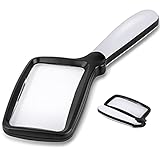
- 【Natural Reading with Page Lens】Large & Wide rectangular magnifying lens especially simulated the way we naturally view things. The main lens is measured 4.35" x 2.52" that covers large viewing area, without having your hands move all the time. A clear lens magnifies up to 5X(500%), really helpful for reading small prints!
- 【Lightweight Folding Handle】With an comfortable handle, easy to hold. Ideal for anyone who loves to read for a longer period. The handle can be folded, easy to carry and receive. Take it with you anywhere! Perfect gift for your parents, friends or partners.
- 【Bright 5 Leds Dimmable Lighting】Energy-efficient LED to the perfect lighting for various tasks, based on you needs. With “strong light” and “soft light” two brightness options, adapt to different lighting conditions. Read in bed or a dark bookroom with ease. Powered by 3 *AAA batteries(not included). Enjoy a clear view and reduced eyestrain.
- 【Clear Optical Grade Lens】Shatterproof & scratch-resistant. Lighter than glass lens while provides clear and distortion-free image. The high-quality magnifier is ideal for reading tiny prints in bottles, magazines, newspapers, documents, maps,etc. And also great for seniors with aging eyes, macular degeneration.
- 【Exquisite Product Design】Place the power switch at the connection between the frame and the handle. It is integrated with the handle and has a beautiful appearance. The power button is flexible and convenient and comfortable to use.
Glare makes the screen or page worse
Change the angle and direction of the light, lower reflective brightness, and test a different contrast or polarity setting. Tints should be evaluated with a professional because their effect depends on the environment and your visual needs.
OCR reads the wrong words or numbers
Improve lighting, flatten the page, center the camera, and rescan. Compare critical names, dates, and quantities with the printed source. If the layout remains unreliable, use a human reader or another access method for that document.
The device works in the clinic but not at home
Recreate your home lighting, chair height, table depth, and working distance during a follow-up visit. Ask the therapist to observe the exact technique. The solution may be a different category, a simpler control layout, or a change in placement rather than a stronger magnifier.
Do these 3 things before closing this tab:
1Repair Windows errors before they cause bigger problems2Fix the driver behind crashes, sound loss and screen glitches3Clear out junk files and repair common Windows errorsCosts, coverage, and purchasing decisions
Prices, insurance coverage, product models, and app features change, and they vary by country and plan. Confirm current details locally before buying. Ask whether a clinic, rehabilitation service, library, or community program offers demonstrations or loan equipment, especially for electronic video magnifiers and OCR readers. A trial or return period is valuable because comfort and usefulness cannot be predicted from a specification sheet.
When comparing products, verify the actual magnification range, display size, contrast and polarity controls, lighting, battery or power requirements, weight, warranty, repair route, and accessibility of the controls. For optical magnifiers, check lens diameter, built-in light, handle comfort, and the focal distance demonstrated by your clinician. For phone or tablet apps, check language support, privacy permissions, offline use, and whether text can be exported or replayed.
When to seek urgent medical advice
Assistive technology does not diagnose or treat a new eye problem. Contact your eye-care professional promptly if vision suddenly worsens, pain or marked redness appears, flashes or a curtain-like shadow develops, or you notice a new symptom that is different from the expected recovery pattern. Use rehabilitation equipment to support function while maintaining the medical follow-up recommended for your condition.
Quick Recap
Product prices and availability are accurate as of the date/time indicated and are subject to change. Any price and availability information displayed on Amazon at the time of purchase will apply.
Quick wins for a faster PC:
Clear out junk files and repair common Windows errorsFree Scan →Fix the driver behind crashes, sound loss and screen glitchesFind Drivers →
