
Shut the computer down and unplug it if the hissing is accompanied by crackling, sizzling, a burning or ozone smell, smoke, sparks, unusual heat, repeated shutdowns, or a melted connector. Do not open the PSU. A clean, high-pitched tone that changes with GPU load can be ordinary coil whine, but coil whine does not explain genuinely low voltage, instability, or overheating. Treat the combined symptom as a possible PSU fault until you isolate the sound and verify the power.
First decide whether continued use is safe
Stop using the system immediately when any of these signs are present:
- Smoke, sparks, charring, or an electrical, ozone, or burned-plastic smell.
- Crackling, sizzling, popping, intermittent snapping, or a suddenly worsening noise.
- A PSU, cable, or connector that is unusually hot, browned, melted, loose, or discolored.
- Repeated clicking, power cycling, shutdowns, black screens, or crashes under normal load.
- Recent liquid exposure, a surge, physical damage, or a failed PSU fan with rising temperature.
Switch off the PSU, unplug the AC lead, and arrange warranty service or a replacement. ATX supplies contain hazardous high-voltage sections and stored energy; manufacturer manuals warn against opening them (manufacturer safety manual).
If the sound is only a mild, steady tone and the PC is stable, you can perform the external checks below. Avoid unnecessary gaming or stress testing until the cause is known.
#1 Best Overall

- Delivers 500 Watt Continuous output at plus 40 degree. Compliance with Intel ATX 12 Volt 2.31 and EPS 12V 2.92 standards
- 80 PLUS Certified, 80 percentage efficiency under typical load
- Supports (2) PCI E 6plus2pin Connectors. Active (PFC) Power Factor Correction, MTBF: 100,000 hours
- Industry Grade Protections: (OPP) Over Power Protection, (OVP) Over Voltage Protection, (SCP) Short Circuit Protection
- High Quality Components
What the noise may mean
| Sound or behavior | Possible source | What to do |
|---|---|---|
| Clean high-pitched tone that changes with frame rate, GPU load, mouse movement, or power-state changes | Coil whine from an inductor in the PSU, graphics card, or motherboard | Usually nuisance-level if voltages and stability are normal; isolate the source and monitor it |
| Rushing air | Normal fan airflow | Check that the fan and vents are unobstructed |
| Grinding, scraping, or rattling | Fan bearing, obstruction, or cable contact | Power down and service or replace the affected part |
| Crackling, sizzling, popping, or rough electrical hiss | Possible arcing or component failure | Unplug immediately; do not continue testing |
| Intermittent clicking followed by shutdown or restart | Protection circuitry tripping or an electrical fault | Stop use and test with a known-good PSU or request an RMA |
Coil whine is vibration caused by changing current through magnetic components; it is not automatically a defect (Corsair explanation). Intel notes that inductors on the graphics card, motherboard, or PSU can all produce it (Intel support). A PSU should therefore not be blamed solely because the sound seems to come from the rear of the case.
“Low output power” can describe different faults
The PSU is undersized
The system may shut down when the CPU or GPU draws heavily, even though the PSU is functioning normally. Compare the system’s estimated demand with the PSU’s continuous rating, +12 V capacity, required GPU connectors, CPU power limits, and likely transient demand. Nameplate wattage alone is not enough.
The PSU cannot deliver its rated output
Aging capacitors, damaged switching or regulation components, overheating, or premature protection trips can prevent a defective unit from supplying its advertised power. Rated wattage is a maximum for the specified operating conditions, not a promise that every rail can provide that amount independently.
Rank #2
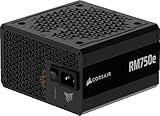
- Fully Modular PSU: Reliable and efficient, low-noise power supply with fully modular cabling, so you only have to connect the cables your system build needs.
- Intel ATX 3.1 Certified: Compliant with the ATX 3.1 power standard, supporting PCIe 5.1 platform withstands 2x transient power excursions from the GPU.
- Keeps Quiet: A 120mm rifle bearing fan with a specially calculated fan curve keeps fan noise down, even when operating at full load.
- 105°C-Rated Capacitors: Delivers steady, reliable power and dependable electrical performance.
- Modern Standby Compatible: Extremely fast wake-from-sleep times and better low-load efficiency.
The reported voltage is low
Voltage and wattage are different: power is approximately P = V × I. A monitoring program may show an inaccurate rail value. Direct measurement or comparison with a known-good PSU is more useful.
Do these 3 things before closing this tab:
1Repair Windows errors before they cause bigger problems2Scan for outdated or missing drivers - takes under a minute3Clear out junk files and repair common Windows errorsThe PSU is not the root cause
A loose ATX, EPS, or PCIe connector; damaged cable; faulty GPU; overloaded outlet; bad surge protector or UPS; motherboard fault; or unsafe adapter can mimic PSU failure. A hot connector can be the danger point even when the PSU itself is healthy.
Safe external troubleshooting sequence
1. Record exactly what happens
- Describe the sound and whether it occurs at idle, boot, menus, or sustained load.
- Note changes with GPU load, CPU load, frame rate, mouse movement, or fan speed.
- Record crashes, restarts, black screens, display corruption, and shutdown timing.
- Write down the PSU model, continuous wattage, age, warranty status, and recent hardware or cable changes.
2. Locate the sound without opening anything
With the PC off, inspect the likely area. During only a brief powered observation, keep hands and tools away from fans and electrical parts. Compare the PSU, GPU, motherboard VRM, case fans, pump, and hard drives. A semi-passive PSU fan may intentionally remain stopped at low load; check the model’s manual before treating that as a failure.
Rank #3

- 80 PLUS GOLD CERTIFIED
- 10-year limited warranty, guaranteeing long term reliable operation
- Fully modular design
- ATX 3.1 & PCIE 5.1
3. Simplify the AC path
- Test from a known-good wall outlet.
- Temporarily bypass a questionable power strip, UPS, or surge protector.
- Inspect the AC cable and replace it if damaged.
- Confirm the rear PSU switch is fully on.
- If the unit has a manual voltage selector, verify it against the manual; do not move it on an auto-ranging model.
AMD recommends checking the outlet and cable when investigating PSU symptoms (AMD troubleshooting guidance).
4. Reseat power connectors
Power off, switch the PSU off, unplug AC power, and reseat the 24-pin motherboard, 4+4/8-pin EPS, GPU PCIe or 12V-2×6/12VHPWR, SATA, and peripheral connectors. Inspect for looseness, discoloration, or heat damage. Never reuse modular cables from another PSU unless the manufacturer explicitly confirms compatibility; pinouts are not universal.
Crashes, No Sound, or Screen Glitches?
Random freezes, missing sound and display glitches usually trace back to one bad driver. Find and replace yours safely.Free scan · under a minuteWindows Errors? Fix Them Before They Spread
Repair common Windows errors and clear accumulated junk for a smoother, more stable PC - no reinstall needed.Free scan · no reinstall5. Check airflow and dust
Keep the PSU intake and exhaust clear, verify case airflow, and remove external dust safely. Do not insert a tool or compressed-air nozzle into the PSU enclosure. AMD includes airflow and dust checks in its guidance (AMD guidance).
Rank #4
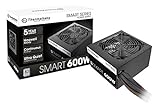
- Delivers 600W Continuous output at plus 40℃. Compliance with Intel ATX 12V 2. 31 and EPS 12V 2. 92 standards
- 80 PLUS Certified – 80% efficiency under typical load. Power good signal is 100-500 millisecond
- Supports (2) PCI-E 6 plus 2pin Connectors. Active (PFC) Power Factor Correction, MTBF: 100, 000 hours
- Industry Grade Protections: (OPP) Over Power Protection, (OVP) Over Voltage Protection, (SCP) Short Circuit Protection
- Hold up time is 16 millisecond minimum within 60 percent load. Input frequency range 50 - 60 in Hz
6. Estimate demand realistically
Use the PSU manufacturer’s calculator or a reputable calculator as an estimate, then compare continuous wattage, +12 V output, GPU requirements, connector type, CPU limits, transient demand, age, and operating temperature. A calculator cannot detect bad regulation, a damaged cable, or a failing component.
How to verify the electrical output
Software and BIOS readings
UEFI or motherboard software is useful for screening, but motherboard sensors can be inaccurate. PC Power & Cooling advises external testing rather than treating software readings as proof of PSU health (PC Power & Cooling FAQ).
Multimeter checks
Only attempt this if you are comfortable making measurements around a powered PC. Use the DC-voltage range, insulated probes, and extreme care not to short adjacent pins. Measure accessible connectors, never the inside of the PSU.
Quick wins for a faster PC:
Scan for outdated or missing drivers - takes under a minuteDriver Scan →Clear out junk files and repair common Windows errorsFree Scan →Fix the driver behind crashes, sound loss and screen glitchesFind Drivers →Best Value

- 80 PLUS GOLD CERTIFIED
- 10-year limited warranty, guaranteeing long term reliable operation
- Fully modular design
- ATX 3.1 & PCIE 5.1
| Rail | Nominal | Approximate ±5% range |
|---|---|---|
| +12 V | 12.0 V | 11.40–12.60 V |
| +5 V | 5.0 V | 4.75–5.25 V |
| +3.3 V | 3.3 V | 3.135–3.465 V |
| −12 V | −12.0 V | −10.8–−13.2 V |
| +5VSB | 5.0 V | 4.75–5.25 V |
These commonly cited ranges are listed in EVGA’s ATX reference (EVGA rail tolerances). A single idle reading cannot prove load regulation, ripple, transient response, or intermittent reliability. An out-of-range result is a reason to stop trusting the unit; a normal result does not clear it.
PSU testers
A plug-in tester can identify missing rails and some wiring faults, but it does not reproduce GPU transients or measure ripple. A passing result is not proof that the PSU is healthy under load.
Independent reader supportYour contribution helps us test, update, and keep practical guides available for everyone.The most practical confirmation: a known-good PSU
- Choose a reputable, compatible unit with sufficient continuous capacity, the correct ATX form factor, and native GPU connectors.
- Disconnect the original PSU completely.
- Install the replacement and use only its own modular cables.
- Reproduce the workload that previously caused the noise or instability.
- Compare temperatures, noise, crashes, and shutdown behavior.
If the symptoms disappear, the original PSU or its cables are the leading suspects. If they remain, investigate the GPU, motherboard, cooling, drivers, outlet, UPS, or adapters. AMD specifically recommends testing with a known-working PSU of equal or greater wattage (AMD guidance).
When coil whine can be tolerated
Mild coil whine is generally reasonable to leave in service only when the tone is clean and predictable, the PC is stable, temperatures are normal, there is no smell or visible damage, and measurements or manufacturer support do not indicate an electrical fault. To reduce resonance, try a frame-rate cap or V-sync, avoid uncapped menus, or adjust GPU power-management settings. Fractal Design discusses load interactions between PSU, GPU, and motherboard VRM and distinguishes ordinary fan noise from electrical noise that may qualify for warranty service (Fractal Design support). These steps reduce sound; they do not repair defective regulation or damaged components.
When replacement or warranty service is the right answer
- Any clearly out-of-range voltage, repeated protection shutdown, or instability under ordinary load.
- New or worsening noise combined with heat, smell, crackling, or visible damage.
- A failed or obstructed fan causing overheating.
- An unknown-brand, counterfeit, recycled, or severely aged unit.
- Missing or unsafe connectors for the installed GPU, or a damaged adapter.
- A known-good PSU resolves the problem.
Modern ATX-family designs include over-voltage, under-voltage, over-current, over-power, short-circuit, and over-temperature protections, but those protections do not make a visibly failing PSU safe to operate indefinitely (Intel ATX design guidance; Seasonic protection overview). If the unit is under warranty, request an RMA rather than opening or repairing it.
Choosing a replacement PSU
- Capacity: Select adequate continuous wattage with headroom for GPU transients; do not buy the largest unit automatically.
- Electrical capability: Check +12 V capacity, documented regulation and ripple performance, protection features, and independent testing.
- Compatibility: Confirm ATX generation, native PCIe or 12V-2×6 connector, cable count, case length, and proprietary prebuilt-system requirements.
- Acoustics and support: Review fan-stop behavior, noise characteristics, warranty duration, and manufacturer support.
- Cabling: Fully modular units ease cable management; semi-modular units retain essential cables; non-modular units cost less but leave unused cables in the case. Modularity does not prove electrical quality.
- Efficiency: 80 PLUS tiers describe efficiency at defined test points, not overall regulation, ripple, transient response, acoustics, or reliability.
ATX 3.1 guidance addresses regulation, ripple, power-good timing, protection, and transient behavior, so those specifications matter more than a badge or peak-wattage claim (Intel design guide).
Quick Recap
Common diagnostic mistakes
- Calling every hiss coil whine before checking for arcing, heat, or instability.
- Equating one low software voltage reading with low wattage.
- Relying on a paperclip start test or basic PSU tester as a health certificate.
- Assuming a higher-wattage replacement fixes a defective unit.
- Reusing modular cables from the old PSU.
- Assuming a stopped fan is faulty without checking zero-RPM behavior.
- Replacing the PSU without considering GPU or motherboard coil whine, a bad outlet, or a hot connector.
Product prices and availability are accurate as of the date/time indicated and are subject to change. Any price and availability information displayed on Amazon at the time of purchase will apply.

