
iTechGuides is reader-supported. When you buy through links on our site, we may earn an affiliate commission. As an Amazon Associate I earn from qualifying purchases. Learn more
Probiotics are usually tolerated by healthy people, but they are not automatically safe for everyone. Gas, bloating, and other mild gastrointestinal symptoms are the most common effects. Rare bloodstream or invasive infections have occurred, mainly in people who are severely ill or immunocompromised. Premature infants are a special high-risk group: the U.S. Food and Drug Administration (FDA) warns that probiotic microorganisms have caused invasive, potentially fatal disease in preterm infants.
Safety depends on the exact microorganism (genus, species, and strain), dose, age, medical condition, reason for use, and care setting. A healthy school-age child and a child with a central venous catheter should not be treated as having the same risk. Anyone with a weakened immune system, serious illness, or a premature infant in their care should speak with the treating clinician before using a probiotic supplement.
What a probiotic is—and why the answer is not one-size-fits-all
A probiotic is a live microorganism taken with the intention of providing a health benefit. Products may contain bacteria, such as strains of Lactobacillus or Bifidobacterium, or yeast such as Saccharomyces boulardii. Effects demonstrated for one strain cannot be assumed for another strain, even when the genus and species are similar.
Unlike a prescription drug, a supplement’s presence on a retail or online marketplace does not establish FDA approval, effectiveness for a particular condition, or suitability for an immunocompromised person. Labels and clinical evidence must be evaluated together. The practical question is not simply “Are probiotics safe?” but “Is this identified strain, at this dose and duration, appropriate for this person’s risk profile and purpose?”
Popular on Amazon

- Max Strength General Purpose Probiotic: Our non-refrigerated probiotic is designed to support digestive health & gut health. A great choice for those looking to support a diverse healthy microbiome w/ 60B CFU - Probiotics for Women & Men alike. One Month Supply
- Support Your Gut: Our probiotic contains 10 diverse high-quality probiotic strains and organic prebiotics - synergistically working together to support your gut health. Expertly crafted to support occasional constipation, diarrhea, gas & bloating!
- Survives the Gut: From start to finish - this probiotic is designed to survive the gut & maximize the colonization of our strains. We use a shelf-stable bottle, acid-resistant capsules, and 60 Billion Colony forming units (CFU) to achieve this!
- Backed By Science - Our probiotics are crafted based on scientific research. We have partnered with a network of expert physicians to help review our products & research. We strive to educate & help you with informed decisions regarding your health.
- Safety Assured Standard of Quality: Our 60B probiotic is 3rd-party tested for purity and potency. Each bottle is manufactured with love & care in the USA with strict quality control - using imported and domestic ingredients.
Risk by population
| Person or setting | What is established | What to do before use |
|---|---|---|
| Generally healthy child | Trials usually did not show an excess of serious adverse events, but pediatric evidence is limited and strain-specific. Mild gas or gastrointestinal upset can occur. | Discuss the product, dose, and intended use with a pediatric clinician or pharmacist, especially for prolonged use. |
| Hospitalized, postsurgical, catheterized, or medically complex child | Invasive infections have been reported. A CDC report described six probiotic-strain bacteremia cases among 5,034 exposed children after cardiac surgery during 2019–2024. | Do not start or continue a supplement without the hospital team’s explicit approval. |
| Premature or very-low-birth-weight infant | FDA reports invasive, potentially fatal disease from live bacteria or yeast in probiotic products. No probiotic is FDA-approved as an infant drug or biological product. | Never give one routinely without the neonatology team’s decision. Evidence does not support universal administration, particularly below 1,000 g birth weight. |
| Older adult living independently | Limited trial data have not shown a general increase in adverse events, but very few studies enrolled older adults and benefits vary by strain and indication. | Review kidney, liver, heart, cancer, immune, and medication issues with a clinician or pharmacist. |
| Immunocompromised or severely ill person | Higher risk of bacteremia (bacteria in blood), fungemia (fungi in blood), and severe infection has been reported. | Do not self-start. The treating clinician should make an individualized risk-benefit decision. |
Children: when a supplement may be reasonable and when it is not
Healthy children
Most healthy children enrolled in probiotic trials did not experience more serious adverse events than comparison groups. That finding is reassuring but does not prove that every commercial product is safe for every child. Pediatric studies often involve a particular strain, dose, age range, and condition; changing any of those variables changes how confidently the result can be applied.
For a healthy child, occasional gas, bloating, constipation, or loose stools may occur after starting a product. Stop and seek medical advice if symptoms are severe, persistent, or accompanied by fever, blood in stool, repeated vomiting, dehydration, unusual sleepiness, or worsening abdominal pain. A clinician can also determine whether the symptoms are from the supplement or from an illness that needs proven treatment.
Hospitalized or medically complex children
Extra caution is warranted after surgery, during intensive care, with a central line or other indwelling catheter, or when a child has major heart, intestinal, kidney, liver, or immune problems. In a CDC report covering 2019–2024, six children developed bacteremia caused by a probiotic strain after cardiac surgery among 5,034 probiotic-exposed children. A 2021 review summarized 49 pediatric cases of invasive probiotic-associated infection. These reports do not show that infection is common, but they demonstrate that a product’s organisms can enter the bloodstream in vulnerable circumstances.
Recommended Free Tools
For a hospitalized child, the care team must know about every supplement. The team may withhold a probiotic, select a specific preparation under institutional policy, or avoid live organisms altogether. Parents should not bring an unreviewed product into a hospital or restart one at home after discharge without asking the treating clinician.
Also popular on Amazon

- Max Strength General Probiotic 2 Month Supply (60ct) : Our probiotic is designed to support digestive health & gut health. A great choice for those looking to support a diverse healthy microbiome w/ 60B CFU - Probiotics for Women & Men alike. Same great product you love, with a new look. Packaging May Vary!
- Support Your Gut: Our probiotic contains 10 diverse high-quality probiotic strains and organic prebiotics - synergistically working together to support your gut health. Expertly crafted to support occasional constipation, diarrhea, gas & bloating!
- Survives the Gut: From start to finish - this probiotic is designed to survive the gut & maximize the colonization of our strains. We use a shelf-stable bottle, acid-resistant capsules, and 60 Billion Colony forming units (CFU) to achieve this!
- Backed By Science - Our probiotics are crafted based on scientific research. We have partnered with a network of expert physicians to help review our products & research. We strive to educate & help you with informed decisions regarding your health.
- Safety Assured Standard of Quality: Our 60B probiotic is 3rd-party tested for purity and potency. Each bottle is manufactured with love & care in the USA with strict quality control - using imported and domestic ingredients.
Premature and very-low-birth-weight infants
FDA’s 2023 safety communication states that live bacteria or yeast in probiotic products have caused invasive, potentially fatal disease in preterm infants. FDA also explains that these products have not undergone the agency’s rigorous premarket review for safety and effectiveness and that no probiotic is FDA-approved as a drug or biological product for infants.
The American Academy of Pediatrics statement reproduced by FDA says current evidence does not support routine universal administration, particularly for infants whose birth weight is below 1,000 grams. A neonatal intensive-care unit may have a protocol for a narrowly defined situation, but that is a medical decision based on the infant’s gestational age, weight, intestinal condition, feeding plan, and infection risk. Caregivers should never use an over-the-counter infant product as a substitute for that assessment.
Older adults: age alone is not the deciding factor
Being older does not automatically make probiotics dangerous, but neither does it establish that they are beneficial or well studied. An AHRQ evidence review found no increased adverse-event risk in the limited adult and elderly trial data, while noting that very few studies specifically enrolled elderly people.
Quick wins for a faster PC:
Clear out junk files and repair common Windows errorsFree Scan →Scan for outdated or missing drivers - takes under a minuteDriver Scan →NCCIH cites a 2016 review of 30 studies involving 7,260 participants. It found no demonstrated benefit from probiotics for antibiotic-associated diarrhea in elderly people; only five of the studies focused on participants aged 65 or older. That finding applies to the evidence reviewed, not to every strain or future trial, and it means an older adult should not assume that a product prevents diarrhea simply because it helped a younger population.
Also popular on Amazon

- 【180 Billion CFUs & 18 Strains Per Capsule】: Our 180 Billion Probiotics provides the highest number of CFUs and the richest strains possible. They are specially selected for both men and women with unsurpassed quality & value. All CANLIST products are contain no GMOs, gluten, dairy, soy, eggs, fish, shellfish, tree nuts, or peanuts.
- 【Probiotics + Prebiotics + Digestive Enzymes】: Our Once Daily Probiotics is enhanced with natural plant-based digestive enzymes and water-soluble prebiotics fiber to help reduce gas and bloating. The three works synergistically to maximize their strength and help maintain natural gastrointestinal tract balance.
- 【Digestive & Immune Support 】: Our 18 Strains Probiotics is naturally sourced and scientifically proven to work in harmony with your body, helping support regular and healthy digestion, boost the immune system as well as promote optimal nutrient bioavailability and absorption.
- 【Shelf Stable & Delayed Release】: Our shelf-stable probiotics is protected in a moisture-tight bottle to ensure probiotics stability. Delayed-Release Technology allows probiotics to survive stomach acid and reach deep into the intestine. Refrigeration recommended but not required.
- 【Safe & Guaranteed】: The products are tested by the third party for purity and potency to ensure that each and every bottle of CANLIST products represents the highest standards.
Medical context matters more than the birthday on the calendar. Frailty, recent hospitalization, a feeding tube, a central line, cancer treatment, organ disease, diabetes, or immune-suppressing medicines can increase concern. Before use, have a pharmacist or clinician check the person’s diagnoses, medicines, swallowing ability, fluid status, and the reason the supplement is being considered.
Weakened immune systems and serious illness
NIH’s Office of Dietary Supplements and NCCIH identify people with compromised immunity or severe illness as higher-risk probiotic users. Reported complications include bacteremia, fungemia, and severe infection. “Immunocompromised” can include people with HIV, autoimmune disease, cancer receiving chemotherapy or radiation, diabetes, liver disease, kidney disease, or alcohol-use-related immune impairment; the degree of risk differs across conditions and treatments.
A person receiving a transplant, intensive chemotherapy, high-dose steroids, biologic immune suppression, or treatment for a serious infection should not make an independent trial of a live-microorganism supplement. The treating clinician may judge that a specific strain is acceptable, may recommend a nonliving alternative, or may advise against probiotics entirely. A product marketed as “high potency,” “medical grade,” or containing a large colony-forming-unit (CFU) number is not automatically safer or more appropriate.
What the evidence does—and does not—show about benefits
Evidence for a possible benefit is condition- and strain-specific. For antibiotic-associated diarrhea, an NIH ODS summary describes a meta-analysis of 12 randomized trials with 1,499 participants. In those studies, Lactobacillus rhamnosus GG (LGG) reduced diarrhea incidence from 22.4% to 12.3%. When children and adults were analyzed separately, the statistically significant result was in children. The result cannot be generalized to every probiotic, every antibiotic, an older adult, or a hospital setting.
Also popular on Amazon
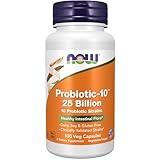
- 10 PROBIOTIC STRAINS: Offers a balanced spectrum of live organisms consisting of acid-resistant probiotic bacterial strains that are known to naturally colonize the human GI tract*
- CLINICALLY VALIDATED STRAINS*: Utilizes bacterial strains that have been clinically validated for their support of healthy immune system function*
- HEALTHY INTESTINAL FLORA*: Probiotic bacteria are critical for healthy digestion, helping maintain the integrity of the intestinal lining, support proper intestinal motility, and participate in the detoxification process*
- GMP Quality Assured: NPA A-rated GMP certification means that every aspect of the NOW manufacturing process has been examined, including our laboratory/testing methods (for stability, potency, and product formulation)
- Packaged in the USA by a family owned and operated company since 1968
A separate ODS summary reports that Saccharomyces boulardii reduced antibiotic-associated diarrhea in pooled studies of adults and children. Again, the finding belongs to that strain and the studied circumstances. It does not show that taking any probiotic prevents all diarrhea, treats an infection, or replaces rehydration and medical care.
How to compare a probiotic product
Do not choose by CFU count alone. Compare the factors that determine whether the evidence and safety information actually match the intended user.
| Label or decision point | What to verify | Why it matters |
|---|---|---|
| Identity | Genus, species, and strain, not just a broad category such as “acidophilus.” | Clinical results are tied to exact strains; organisms with similar names may not have the same effects. |
| Purpose | Evidence for the specific condition, such as antibiotic-associated diarrhea, and for the person’s age group. | A result in children may not apply to adults or older adults, and a result with one antibiotic may not apply to another. |
| Dose and duration | Daily amount, timing relative to medicines, and planned length of use. | Higher doses are not proven to be better and may not match the studied regimen. |
| Quality dates | Use-by or expiration date and the manufacturer’s storage instructions. | Live organisms can lose viability when stored incorrectly or used past the stated date. |
| Age and setting | Whether the product is intended for the user’s age and whether a hospital or neonatal unit permits it. | Infants, inpatients, and people with lines or severe disease have different risks from healthy outpatients. |
| Clinical review | A clinician or pharmacist has reviewed the choice, especially for a child, older adult with medical conditions, or immunocompromised person. | Individual diagnoses and medicines can change the balance of benefit and harm. |
A safer decision process
- Define the goal. Write down the symptom or condition, how long it has lasted, and what treatment has already been tried. Do not use a probiotic to delay evaluation of fever, bloody diarrhea, dehydration, severe pain, or suspected infection.
- Screen for high-risk features. Ask whether the person is premature, hospitalized, recently operated on, has a central line, has severe illness, or takes chemotherapy, radiation, steroids, biologic immune suppressants, or other immune-affecting treatment.
- Ask a clinician or pharmacist. Provide the complete medication and supplement list. Ask whether a live organism is appropriate, which exact strain has evidence, what dose and duration to use, and when to stop.
- Inspect the package. Confirm genus, species, strain, dose, use-by date, storage temperature, age indication, and tamper-evident packaging. Reject a container with unclear identity or damaged seals.
- Use only as directed. Follow storage and dosing instructions. Do not give an adult formulation to a child or infant unless the treating clinician specifically directs it.
- Monitor and document. Record the start date, dose, symptoms, bowel changes, fever, and any new medical treatment. This makes it easier to identify benefit or an adverse effect.
- Stop and seek advice when the situation changes. New hospitalization, surgery, a central line, severe illness, immune-suppressing therapy, or an unexplained fever warrants prompt contact with the treating team.
Warning signs that need medical attention
Contact a clinician promptly for persistent vomiting or diarrhea, inability to keep fluids down, signs of dehydration, severe or increasing abdominal pain, blood in stool, high or persistent fever, confusion, fainting, breathing difficulty, or marked weakness. In a high-risk person, fever or sudden deterioration after starting a probiotic deserves urgent assessment because bloodstream infection can initially resemble the underlying illness.
The Tool Desk
Outbyte Driver Updater FREEScan for outdated or missing drivers - takes under a minuteDriver Scan →Outbyte PC Repair FREEClear out junk files and repair common Windows errorsFree Scan →Keep the product container available for the clinician. The exact strain, lot information, dose, storage history, and start date can help determine whether the supplement should be stopped and whether testing is needed.
Also popular on Amazon

- Max Strength General Probiotic 12 Week Supply (84ct) : Our probiotic is designed to support digestive health & gut health. A great choice for those looking to support a diverse healthy microbiome w/ 60B CFU - Probiotics for Women & Men alike - Packaging Mary Vary!
- Support Your Gut: Our probiotic contains 10 diverse high-quality probiotic strains and organic prebiotics - synergistically working together to support your gut health. Expertly crafted to support occasional constipation, diarrhea, gas & bloating!
- Survives the Gut: From start to finish - this probiotic is designed to survive the gut & maximize the colonization of our strains. We use a shelf-stable bottle, acid-resistant capsules, and 60 Billion Colony forming units (CFU) to achieve this!
- Backed By Science - Our probiotics are crafted based on scientific research. We have partnered with a network of expert physicians to help review our products & research. We strive to educate & help you with informed decisions regarding your health.
- Safety Assured Standard of Quality: Our 60B probiotic is 3rd-party tested for purity and potency. Each bottle is manufactured with love & care in the USA with strict quality control - using imported and domestic ingredients.
Bottom line for each reader question
Are probiotics safe for kids?
They are generally tolerated by healthy children in studied circumstances, but evidence is limited and strain-specific. Medical supervision is important for hospitalized, postsurgical, catheterized, or medically complex children.
Can elderly people take probiotics?
Some older adults may be able to, but older age does not guarantee benefit and the evidence base is small. Review medical conditions and medicines first, particularly when the person is frail or recently hospitalized.
Should someone with a weak immune system avoid probiotics?
They should not self-start one. Because severe infection, bacteremia, and fungemia have been reported in immunocompromised or severely ill people, the treating clinician must make the individualized decision.
Do these 3 things before closing this tab:
1Repair Windows errors before they cause bigger problems2Fix the driver behind crashes, sound loss and screen glitches3Clear out junk files and repair common Windows errorsAre probiotics dangerous for premature babies?
They can be. FDA reports potentially fatal invasive disease in preterm infants and says no probiotic is FDA-approved for infants. Use only under a neonatal team’s direction, if at all.
Quick Recap
Product prices and availability are accurate as of the date/time indicated and are subject to change. Any price and availability information displayed on Amazon at the time of purchase will apply.

