
AMD’s EPYC 9996 is a 256-core, 512-thread server processor with 1,024 MB of L3 cache, PCIe 6.0, and support for DDR5 RDIMM and MRDIMM memory. AMD lists it at $14,904 for orders of 1,000 units; that is not a confirmed single-processor retail price. AMD specifies 600W Default CPU Power, with a 400W–600W range. The claim that PCIe 6.0 and MRDIMM will not reach consumer products until after 2030 is speculation, not an established AMD forecast.
What is the AMD EPYC 9996?
The EPYC 9996 is part of AMD’s EPYC 9006 server-processor family and uses the SP7 platform. It is designed for server deployments, not as an upgrade for a typical desktop PC. AMD describes EPYC systems as serving enterprise, cloud, telecom, small and medium-sized businesses, high-performance computing, and AI workloads.
AMD lists the 9996 for one- or two-socket configurations (1P/2P). Its specifications make it a high-core-count option for systems that need substantial compute capacity and memory bandwidth, but those figures describe the processor and supported platform—not the performance of every server built around it.
EPYC 9996 specifications
| Specification | AMD-listed value |
|---|---|
| CPU cores / threads | 256 / 512 |
| Base / maximum boost clock | 2.55 GHz / up to 4.1 GHz |
| L3 cache | 1,024 MB (1 GB) |
| Default CPU Power | 600W; CPU power range 400W–600W |
| Platform and socket configurations | SP7; 1P/2P |
| Memory | DDR5 RDIMM or MRDIMM; 16 channels |
| Maximum memory speed | Up to 8,000 MT/s with RDIMM / 12,800 MT/s with MRDIMM |
| Memory bandwidth per socket | 1,024 GB/s / 1,638 GB/s |
| PCI Express | PCIe 6.0 x96 |
| Published price | $14,904 at 1,000-unit pricing |
These specifications are listed on AMD’s EPYC 9996 product page. Maximum memory speed and bandwidth depend on the supported platform and installed memory configuration; they should not be read as guaranteed results for every system.
Do these 3 things before closing this tab:
1Clear out junk files and repair common Windows errors2Fix the driver behind crashes, sound loss and screen glitches3Repair Windows errors before they cause bigger problems#1 Best Overall

- For AMD EPYC 9754 128 Core Bergamo 2.25GHz (100-000001234) EPYC 9004 Series Socket SP5 ZEN4 256MB L3 Bulk / Tray Pack (Unlocked) Server Processor
What does the EPYC 9996 cost?
AMD lists the EPYC 9996 at $14,904 for 1,000-unit orders. That figure establishes AMD’s published bulk pricing, not what an individual buyer will pay through a server vendor or reseller. A verified single-unit retail price is not established here.
TechRadar compares the price with the EPYC 9965, which it reports launched at $14,813—a $91 difference—and describes the 9996 as AMD’s most expensive processor to date. That is TechRadar’s historical comparison, not an all-time record claim made by AMD. TechRadar’s report also discusses the uncertain consumer timeline for these technologies.
Rank #2

- Dual Processor Support: Supports and includes 2 AMD EPYC processors installed for enhanced computing performance
- Processor Configuration: Features 2 installed AMD EPYC processors for powerful server operations
- AMD Processor Technology: Equipped with AMD processor manufacturer components for reliable performance
- EPYC Processor Type: Utilizes AMD EPYC processor type designed for enterprise-level server applications
- 5th Generation Processing: Powered by 5th Gen AMD EPYC 9115 processors running at 2.60 GHz with hexadeca-core architecture
What does “600W” mean?
AMD calls the 600W figure “Default CPU Power,” not TDP, and lists a CPU power range of 400W–600W. AMD says that for its 6th Gen EPYC processors, Default CPU Power replaces its historical TDP reference and reflects power consumed across the processor’s compute and I/O dies for the stated performance target. It is a processor power specification, not a complete server’s wall-power estimate.
AMD explains the terminology in a company blog post by Madhu Rangarajan, its Corporate VP, Server Product: AMD’s EPYC 9006 overview. The same post’s workload and platform descriptions are AMD’s own statements, not independent benchmark results.
The Tool Desk
Outbyte PC Repair FREEClear out junk files and repair common Windows errorsFree Scan →Outbyte Driver Updater FREEScan for outdated or missing drivers - takes under a minuteDriver Scan →Rank #3

- High Performance Server: Features an AMD EPYC 7313 processor with a speed of 1.44 GHz and 32 GB of DDR4 memory for fast performance.
- Expandable Storage: Includes an P408i-a storage controller and 8 SFF drive bays for flexible storage options.
- Modern Design: Has a sleek, modern style with a black finish and ergonomic keyboard for comfortable use.
- Easy Setup: Comes with an 800W power supply and pre-installed operating system for quick installation.
- Reliable Connectivity: Offers multiple USB and Ethernet ports for seamless connectivity to other devices.
How do PCIe 6.0 and MRDIMM fit into SP7?
On the EPYC 9996, AMD lists PCIe 6.0 x96 and 16 memory channels with DDR5 RDIMM or MRDIMM support. MRDIMM is a server-memory option intended to deliver higher memory transfer rates; AMD lists support up to 12,800 MT/s for the 9006 family. The processor’s memory specification does not by itself determine how much memory a particular server will have or what speed it will achieve.
SP7 and SP8 are distinct platforms within the 9006 generation, with different trade-offs. TechSpot describes SP7 as emphasizing memory bandwidth and MRDIMM support, while SP8 offers more PCIe lanes. The EPYC 9996 is an SP7 model; these platform descriptions do not mean SP7 and SP8 processors are interchangeable.
Rank #4

- HPE ProLiant DL145 Gen11 – P87460-005 – SMART CHOICE MODEL – COMPACT EDGE SOLUTION: Preconfigured and factory-tested for fast deployment and cost efficiency. Includes AMD EPYC 8024P (8 cores, 2.40 GHz), 16GB DDR5 ECC SmartMemory, 2 SFF chassis, 480GB SATA 6G Read Intensive SSD, Broadcom 1GbE OCP NIC, and single 700W Platinum PSU—ideal for IoT gateways, retail POS, and light virtualization.
- PERFORMANCE AND MEMORY – EFFICIENT FOR LIGHT WORKLOADS: The AMD EPYC 8024P delivers 8 cores at 2.40 GHz for edge compute tasks. Includes 16GB DDR5 RDIMM ECC (1x16GB) and supports up to 768GB across six DIMM slots—ideal for small-scale virtualization and real-time analytics.
- STORAGE – READY FOR OS AND DATA Includes one HPE 480GB SATA 6G Read Intensive SSD for quick deployment. Supports additional SFF drives for storage flexibility—perfect for edge workloads and local data storage.
- ENTERPRISE DESIGN – POWER AND CONNECTIVITY: Single 700W Platinum hot-plug power supply ensures reliable power delivery. Broadcom BCM5719 OCP NIC offers four 1GbE ports for edge networking and connectivity.
- SECURITY AND MANAGEMENT – BUILT-IN PROTECTION: HPE iLO6 with Intelligent Provisioning, TPM 2.0, Silicon Root of Trust, and secure boot protect against threats. Compatible with HPE OneView and Compute Ops Management for simplified lifecycle management.
| Platform characteristic | SP7 (EPYC 9996) | SP8 (other EPYC 9006 models) |
|---|---|---|
| Memory channels | 16 | 8 |
| MRDIMM | Supported | Not supported, according to TechSpot |
| PCIe lanes | 96, per AMD’s 9996 specification | Up to 128, according to TechSpot |
| Emphasis | Memory bandwidth and capacity | More PCIe connectivity |
Platform comparison details are reported by TechSpot; AMD’s product page is the source for the 9996’s SP7 and PCIe 6.0 x96 specifications.
Independent reader supportYour contribution helps us test, update, and keep practical guides available for everyone.Will PCIe 6.0 and MRDIMM reach consumer PCs after 2030?
There is no established basis for treating “after 2030” as a firm arrival date for either technology in consumer products. TechRadar frames PCIe 6.0’s consumer arrival around 2030 and suggests MRDIMM may never make the jump, but that is an outlook, not an AMD commitment or confirmed release schedule. Enterprise adoption today does not establish when—or whether—consumer systems will adopt the same technologies.
Best Value
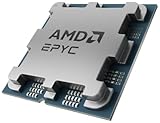
- The processor features Socket AM5 socket for installation on the PCB
- EPYC product line processor for better usability and increased efficiency
- Dodeca-core (12 Core) processor core allows multitasking with great reliability and fast processing speed
- 64 MB of L3 cache memory provides excellent hit rate in short access time enabling improved system performance
- Processor with 3.40 GHz clock speed for reliable and fast execution of instructions to ensure maximum convenience and feasibility
PCI-SIG lists the PCI Express Base Specification Revision 6.0.1, Version 1.0, dated September 13, 2022. That date identifies a standards revision; it does not forecast when consumer processors, motherboards, or devices will support it. PCI-SIG’s specifications listing is the relevant standards reference.
What the specifications do—and do not—tell you
The 9996’s core count, cache, power terminology, memory support, and PCIe configuration are published product specifications. They do not, on their own, show how it performs against another processor in a specific application. AMD’s 9006-family blog describes the platform as suited to emerging AI workloads, but those are vendor characterizations; performance depends on workload, software, system configuration, and test method. No independent EPYC 9996 benchmark results are established here.
Quick Recap
Product prices and availability are accurate as of the date/time indicated and are subject to change. Any price and availability information displayed on Amazon at the time of purchase will apply.

