
iTechGuides is reader-supported. When you buy through links on our site, we may earn an affiliate commission. As an Amazon Associate I earn from qualifying purchases. Learn more
Severe trouble breathing, chest pain, or possible signs of a heart attack or stroke require emergency care now—call emergency services or go to an emergency department. Smoke-related irritation that is mild and improving usually calls for exposure reduction and observation. Contact a clinician for shortness of breath, trouble breathing, a cough that will not stop, or symptoms that persist, worsen, or concern you, especially if you have heart or lung disease.
What air-pollution symptoms can feel like
Wildfire smoke contains fine particles and gases that can affect the eyes, upper airway, lungs, and cardiovascular system. The U.S. Environmental Protection Agency (EPA) states: “Wildfire smoke and ash can irritate your eyes, nose, throat, and lungs.” Symptoms vary with the amount and duration of exposure, the type of pollution, and a person’s health.
Breathing and lung symptoms
- Coughing, including a cough that becomes frequent or persistent
- Wheezing or a whistling sound when breathing
- Shortness of breath or a feeling that breathing is difficult
- Tightness or discomfort in the chest
- An asthma flare or attack
Smoke can make an existing asthma or chronic obstructive pulmonary disease (COPD) problem worse. A person who normally manages symptoms may notice that usual activities now cause breathlessness, or that prescribed rescue medicine is needed more often.
What’s actually slowing this PC down?
Pick the symptom - the matching free tool is one click away.
Eye, nose, and throat irritation
- Stinging, burning, or watery eyes
- A scratchy or irritated throat
- Runny or irritated sinuses
- Nasal congestion or discomfort
Other reported effects
CDC wildfire-smoke guidance also lists chest pain, a fast heartbeat, headache, tiredness, and general discomfort among possible effects. These symptoms can have causes other than pollution, so a symptom alone cannot establish that smoke is responsible. Pollution-control equipment reduces exposure; it does not diagnose the cause of symptoms.
#1 Best Overall

- 𝗪𝗛𝗬 𝗖𝗛𝗢𝗢𝗦𝗘 𝗔𝗛𝗔𝗠 𝗩𝗘𝗥𝗜𝗙𝗜𝗗𝗘 𝗔𝗜𝗥 𝗣𝗨𝗥𝗜𝗙𝗜𝗘𝗥𝗦: AHAM (Association of Home Appliance Manufacturers) is an ANSI-accredited organization that sets strict standards for appliance performance. Air purifiers with the AHAM VERIFIDE seal have been independently tested for air cleaning performance, safety, and energy efficiency. When you choose an AHAM certified air purifier, you're choosing a product trusted for reliable and effective indoor air quality improvement
- 𝗥𝗘𝗠𝗢𝗩𝗘 𝗣𝗢𝗟𝗟𝗨𝗧𝗔𝗡𝗧𝗦 𝗘𝗩𝗘𝗥𝗬𝗪𝗛𝗘𝗥𝗘: Our Pre-Filter and Main Filter capture lint, hair, pet dander, fine airborne pollutants, and smoke particles, helping achieve a cleaner environment for you
- 𝗛𝗘𝗟𝗣𝗦 𝗠𝗔𝗞𝗘 𝗢𝗗𝗢𝗥𝗦 𝗢𝗗𝗢𝗥𝗟𝗘𝗦𝗦: The air purifier helps neutralize smoke, odors, and fumes. You'll love the feeling of breathing clean air at home
- 𝗨𝗦𝗘 𝗜𝗧 𝗔𝗡𝗬𝗪𝗛𝗘𝗥𝗘: With the Levoit Core Mini-P, you can focus on your activities in the bedroom, kitchen, or office. It offers an auto-off display, sleep mode for fewer interruptions, and relaxing aromatherapy, all while operating more quietly than a whisper
- #𝟭 𝗔𝗜𝗥 𝗣𝗨𝗥𝗜𝗙𝗜𝗘𝗥 𝗕𝗥𝗔𝗡𝗗: Levoit has sold over 6.5 million products worldwide and has been a pioneer in air purification technology for 6 years.
When to seek emergency care
Do not try to manage a medical emergency with an air cleaner, a mask, or by waiting for the smoke to clear. Call emergency services or go immediately to an emergency department for:
- Severe trouble breathing or rapidly worsening breathing
- Chest pain, pressure, or discomfort that is severe, persistent, or accompanied by other concerning symptoms
- Suspected heart attack or stroke
People with heart or lung disease should use a lower threshold for urgent evaluation because smoke can aggravate those conditions. If you are unsure whether breathing difficulty or chest discomfort is severe, treat it as urgent rather than attempting to judge the cause at home.
Why chest symptoms need caution
Smoke exposure can irritate airways, but chest pain and a fast heartbeat can also signal a cardiovascular problem. You cannot reliably distinguish an emergency from irritation by looking at the air-quality reading or by testing an indoor filter. Emergency evaluation is the safer choice when chest symptoms are significant or unfamiliar.
When to contact a healthcare professional
Arrange medical advice when you have trouble breathing, shortness of breath, a cough that will not stop, or symptoms that do not go away. Contact a clinician sooner if you have asthma, COPD, another chronic lung condition, heart disease, or a history of serious reactions to smoke.
Rank #2
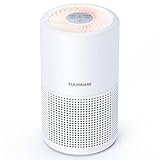
- Efficient Particle Filtration: FULMINARE air purifier uses an H13 HEPA filter. Simply turn it on and maintain a clean and peaceful environment and give families health.
- High Circulation Rate: The air purifier for home adopts dual-channel technology with a 360° air outlet, evenly covering rooms up to 1,086 ft² (based on 5 air changes per hour). The small portable air purifier is easy to place anywhere you want. One is enough to effectively improve your indoor air quality.
- Low Decibel Operation: FULMINARE H13 air purifiers for bedroom is so nice to light sleepers, allowing investors to sleep soundly each night. Set your air purifiers to sleep mode and, the air purifier will run at a near-silent noise level is around 20db at low fan speed. Ultra-quiet but enough to clean your room air at night, bringing you a smooth and sweet sleep.
- Independent Night Light and 5 Timers: It is designed to serve both as an air purifier and a night light. Dual function design makes it a good choice for babies and young children, who can find the softly glowing light or a soothing night time companion. Besides, the air purifiers come with 2-4-8-10-12 five-timers that fit your needs while you're away from home.
- Notice:1. Please open the bottom base cover to get the charging adapter(Plug-in design no battery required). 2 Remove the plastic packaging of the filter before running the air purifier. 3. The air purifiers for pets in time to replace them (3 Months Normally, Search FULMINARE PU-P05 Air Purifier Replacement Filters to get independent filter replacements).
Public guidance does not establish one universal number of hours or days that defines “too long.” Instead, judge the pattern: symptoms that persist after you leave smoky air, keep returning with exposure, interfere with normal activity, or are getting worse deserve professional advice. Follow your clinician’s instructions if your personal action plan sets a different threshold.
Who needs extra protection during smoke events?
People with chronic heart or lung disease
Smoke can worsen asthma, COPD, and other lung diseases and can place additional stress on the cardiovascular system. Keep prescribed medicines available, follow your written asthma, COPD, or heart-disease action plan, and ask your healthcare team in advance what changes warrant a call or urgent visit.
Children
Children need additional protection during smoke events. They may spend less time recognizing or reporting symptoms, and their activity can increase the amount of polluted air they breathe. Reduce outdoor play when smoke is present, watch for coughing or wheezing, and seek advice if breathing becomes difficult or symptoms persist.
Older adults
Older adults are also emphasized by CDC and EPA guidance as needing extra protection. Help them limit exposure, keep windows closed during heavy smoke, and monitor for breathing changes, chest discomfort, unusual tiredness, or other new symptoms.
Rank #3

- Personal Air Purifier: Designed for small space use, this convenient, portable travel air purifier cleans 6ft² of air in 12 minutes*, so you can breathe fresher air in your personal space and tackle common issues, such as allergies, sinus problems, colds, nasal swelling, and more.
- True HEPA Filter: The 2-stage filtration system eliminates 99.97% of germs. Stage 1 is an Activated Carbon Pre-Filter that traps odors and harmful gasses, while the Stage 2 True HEPA Filter eliminates dust, dander, pet hair, pollen, mold spores, and smoke in the air.
- CORDLESS & TRAVEL-FRIENDLY: The rechargeable lithium-ion battery lasts up to 12 hours on low setting, so you can use the purifier with or without an outlet. You can even purify the air inside your car for cleaner air to and from any location. Weighing less than 1 pound, it’s a lightweight and portable option for anyone on-the-go.
- Customized Features: The adjustable handle allows you to place the air purifier either upright or on its side to find the best position, or even remove the handle when you don’t need it. Choose from 3 fan speeds (low, medium, or high) to find the air purification that works best for you. Place the fan speed on high and the purifier can even double as your own personal cooling fan.
- 5-Year Manufacturer's Warranty: This mini air purifier comes with a 2-in-1 filter, USB charging cable, and Pure Enrichment’s guaranteed 5-Year Manufacturer’s Warranty. Our customer support team provides daily quality service and peace of mind to millions worldwide all from a brand you can trust. *Coverage area based on AHAM standard of CADR (4 CFM) x 1.55.
What to do at the first sign of symptoms
- Check current conditions. Use your local air-quality index (AQI) and smoke map. AQI is a planning tool: when smoke is present, reduce time outdoors and avoid strenuous outdoor activity.
- Move to cleaner indoor air. Close windows and doors during heavy smoke. Keep them closed until outdoor conditions improve enough for ventilation.
- Filter indoor air. Run a properly sized portable air cleaner, such as a portable HEPA air cleaner, or use a high-efficiency filter in your heating, ventilation, and air-conditioning system. Match the unit to the room or system’s rated capacity.
- Avoid creating more fine particles indoors. Do not add smoke or particle pollution with activities such as burning candles or incense, smoking, or other indoor sources while outdoor air is smoky.
- Use your medical action plan. Follow the asthma, COPD, or heart-disease plan and take prescribed medicines as directed. Do not change doses or add medicines unless your clinician has instructed you to do so.
- Escalate when symptoms meet the warning signs. Severe breathing trouble or chest pain overrides every exposure-control step: seek emergency care immediately.
Choosing between source avoidance, filtration, and a respirator
These measures solve different problems. Avoiding polluted air is the most direct way to reduce exposure. Filtration can lower particle levels in an indoor space. A properly fitted particulate respirator can reduce what you inhale when you must be outdoors, but it does not make hazardous conditions safe for unlimited activity and does not treat illness.
| Option | Best use | What to check | Important limitation |
|---|---|---|---|
| Source avoidance | Stay indoors and postpone outdoor activity while smoke is present | AQI, smoke maps, and whether windows and doors can remain closed | Indoor air can still be polluted if particles enter or are generated inside |
| Portable air cleaner | Reduce particles in a room or designated clean-air space | Manufacturer-rated room size, clean air delivery rate (CADR), filter replacement needs, and noise | It reduces exposure; it does not diagnose or treat a breathing or cardiac emergency |
| HVAC filtration | Filter air circulated through a compatible home system | Filter efficiency, correct size, system compatibility, and replacement schedule | A filter cannot clean rooms that the system does not circulate air through |
| NIOSH-approved N95 or P100 particulate respirator | Short periods outdoors when exposure cannot be avoided | NIOSH approval, correct model and size, and a tight facial seal | It must seal to work and may be unsuitable for some people; it does not replace medical care |
The CDC and EPA specifically advise a properly fitting N95 or P100 particulate respirator when outdoor exposure cannot be avoided. A loose-fitting mask or a respirator worn with gaps cannot provide the same protection. Facial hair, an incorrect size, or poor positioning can prevent a seal. If wearing a respirator makes breathing harder or you have a medical condition that affects its use, ask a healthcare professional for advice before relying on it.
How to tell whether pollution may be worsening asthma
Pollution is more likely to be contributing when symptoms begin or intensify during smoky conditions and improve after moving to cleaner air, but that pattern is not a diagnosis. Warning changes include new wheezing, increased chest tightness, shortness of breath with ordinary activity, nighttime symptoms, or needing your prescribed reliever more often than your action plan allows.
The Tool Desk
Outbyte PC Repair FREERepair Windows errors before they cause bigger problemsFix Now →Outbyte Driver Updater FREEFix the driver behind crashes, sound loss and screen glitchesFind Drivers →- Move away from smoke and check the AQI.
- Follow the medication and monitoring steps in your written asthma plan.
- Contact your clinician if symptoms do not settle, repeatedly return, or exceed the plan’s instructions.
- Seek emergency care for severe breathing difficulty or chest pain.
Do not wait for an air cleaner or respirator to work if breathing is severely impaired. Those devices reduce exposure; they are not asthma treatment.
Rank #4
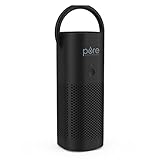
- Personal Air Purifier: Designed for small space use, this convenient, portable travel air purifier cleans 6ft² of air in 12 minutes*, so you can breathe fresher air in your personal space and tackle common issues, such as allergies, sinus problems, colds, nasal swelling, and more.
- True HEPA Filter: The 2-stage filtration system eliminates 99.97% of germs. Stage 1 is an Activated Carbon Pre-Filter that traps odors and harmful gasses, while the Stage 2 True HEPA Filter eliminates dust, dander, pet hair, pollen, mold spores, and smoke in the air.
- CORDLESS & TRAVEL-FRIENDLY: The rechargeable lithium-ion battery lasts up to 12 hours on low setting, so you can use the purifier with or without an outlet. You can even purify the air inside your car for cleaner air to and from any location. Weighing less than 1 pound, it’s a lightweight and portable option for anyone on-the-go.
- Customized Features: The adjustable handle allows you to place the air purifier either upright or on its side to find the best position, or even remove the handle when you don’t need it. Choose from 3 fan speeds (low, medium, or high) to find the air purification that works best for you. Place the fan speed on high and the purifier can even double as your own personal cooling fan.
- 5-Year Manufacturer's Warranty: This mini air purifier comes with a 2-in-1 filter, USB charging cable, and Pure Enrichment’s guaranteed 5-Year Manufacturer’s Warranty. Our customer support team provides daily quality service and peace of mind to millions worldwide all from a brand you can trust. *Coverage area based on AHAM standard of CADR (4 CFM) x 1.55.
Practical monitoring for children and older adults
During a smoke event, check in at regular intervals rather than relying on a single symptom report. For a child, look for persistent coughing, wheezing, unusual effort to breathe, reduced activity, or difficulty speaking normally. For an older adult, watch for new breathlessness, chest discomfort, unusual fatigue, confusion, or a noticeable decline in usual function. Any severe breathing problem or chest pain warrants emergency evaluation.
Keep prescribed medicines, a written action plan, and emergency contact information accessible. If a household member has a chronic condition, decide in advance which indoor room will be the cleaner-air space and how you will receive AQI or smoke updates.
Common mistakes that increase risk
- Waiting for a “dangerous” AQI number before reducing exposure: Smoke can irritate airways even when symptoms initially seem minor. Use local guidance and your own health history.
- Opening windows during heavy smoke: Ventilation helps only when outdoor air is cleaner than indoor air.
- Assuming any face covering is a respirator: The CDC and EPA guidance refers to a NIOSH-approved N95 or P100 particulate respirator with a tight seal.
- Using a cleaner as a substitute for care: Filtration cannot rule out heart attack, stroke, severe asthma, or another emergency.
- Ignoring persistent symptoms because the smoke has cleared: Symptoms that do not go away still warrant clinician contact.
What the guidance can—and cannot—tell you
EPA and CDC guidance identifies common smoke effects and practical exposure-reduction steps, but it does not provide a single symptom-duration cutoff that applies to every person. It also cannot determine from symptoms alone whether pollution, infection, allergy, medication effects, or another condition is responsible. A clinician may need to assess persistent, worsening, or unusual symptoms.
Do these 3 things before closing this tab:
1Fix the driver behind crashes, sound loss and screen glitches2Clear out junk files and repair common Windows errors3Scan for outdated or missing drivers - takes under a minuteThe key decision is urgency: severe breathing trouble, chest pain, or suspected heart attack or stroke means emergency care; ongoing or worsening breathing symptoms mean prompt professional advice; mild irritation that improves after exposure reduction can be monitored while you continue to limit smoke exposure.
Quick Recap
Sources
- U.S. Environmental Protection Agency, “Protect Yourself From Wildfire Smoke and Ash.”
- U.S. Environmental Protection Agency, “Wildfires and Indoor Air Quality (IAQ).”
- Centers for Disease Control and Prevention, “Wildfire Smoke and People with Chronic Conditions.”
- Centers for Disease Control and Prevention, “Wildfire Smoke Tips.”
Product prices and availability are accurate as of the date/time indicated and are subject to change. Any price and availability information displayed on Amazon at the time of purchase will apply.

