
Free tools Windows power users keep installed
One-click scans. No signup required.
Hospitals should compare specific flu forecasts on the same admissions target, geography, lead time and real-time data—not assume that AI or traditional epidemiological models win as a class. The most useful comparison measures probabilistic accuracy and calibration, performance during surges and turning points, data timeliness, and whether the forecast fits a real staffing, bed or supply decision.
What counts as an AI or traditional flu model?
Those labels are not clean opposites. A forecast can combine statistical or time-series methods, mechanistic epidemiology, machine learning and ensemble components. In its FluSight evaluations, CDC classifies model components from submitted metadata; its categories can overlap, and “AI/ML” covers descriptions such as neural networks, deep learning, random forests, support vector machines and LightGBM. A label alone does not reveal a model’s assumptions, inputs, training history or suitability for a hospital’s data.
Hospitals should therefore compare named models and their actual forecast outputs, not broad method families. A simple statistical forecast, a mechanistic model, an AI model or a hybrid may be more or less useful depending on the target, horizon, available data and operational decision.
What current public evaluations do—and do not—show
CDC’s 2025–2026 FluSight evaluation
CDC’s 2025–2026 FluSight evaluation, published September 30, 2026, assessed weekly influenza hospital-admission forecasts for the current week through three weeks ahead, nationally and for U.S. states, Puerto Rico and Washington, D.C. Its baseline carried forward the previous week’s admissions. Of 53 submitted models from 34 teams, 39 met the analysis criteria; 33 of those 39 performed better than the baseline. The CDC ensemble ranked seventh of 39 by average relative weighted interval score (WIS), and was among 12 models that beat the baseline in every jurisdiction.
The Tool Desk
Outbyte Driver Updater FREEScan for outdated or missing drivers - takes under a minuteDriver Scan →Outbyte PC Repair FREERepair Windows errors before they cause bigger problemsFix Now →#1 Best Overall

- FDA Authorized 15-Minute Flu A&B, COVID Test Kit: Over-the-counter flu and COVID test for home use with rapid results in just 15 minutes.
- Made for Ages 2 and Above; Parents Can Stop Guessing: Quickly identify whether you or your kids are dealing with coronavirus or influenza A & B. Adult-collection is required for those aged 2-13 years, and self-collection by individuals aged 14 years and older.
- Same Ease-of-Use; Get 3 Results in 1 Test: Utilizing the familiar 4 user-friendly steps of at-home COVID tests, you can now get all 3 results for COVID-19 and Flu A & B at once with 5 drops of sample.
- Fast and Convenient COVID and Flu Tests for Home: Use this COVID and influenza rapid test kit in the comfort of your home. Bypass the need for a doctor's visit and protect your loved ones from potential exposure to contagious illnesses at school, work, or public gatherings.
- Compact Design for On-the-Go Testing: Stay safe wherever you go with our COVID-19, Flu A & B 3-in-1 self-test. Its compact design ensures easy storage and convenient portability for your travel bag.
These are results for individual submissions in a mixed field, not a controlled finding that AI/ML or traditional epidemiological models are superior as categories. Jurisdiction-level results also varied, so a national or state ranking does not establish how a model will perform for one hospital.
Why peak-period performance needs its own review
Season averages can hide a forecast’s weakest moments. In the 2025–2026 evaluation, CDC reported that its ensemble’s prediction intervals struggled during rapid changes. In the preceding season, the ensemble performed better than the baseline in every jurisdiction and led submitted models on average relative WIS, yet its two-week intervals covered only 6% of observed values across jurisdictions at the first peak, for the January 4, 2025 observation. Coverage later stabilized. That is a peak-specific result from the 2024–2025 FluSight evaluation, not a whole-season coverage rate.
Rank #2

- FDA Authorized 15-Minute Flu A&B, COVID Test Kit: Over-the-counter flu and COVID test for home use with rapid results in just 15 minutes.
- Made for Ages 2 and Above; Parents Can Stop Guessing: Quickly identify whether you or your kids are dealing with coronavirus or influenza A & B. Adult-collection is required for those aged 2-13 years, and self-collection by individuals aged 14 years and older.
- Same Ease-of-Use; Get 3 Results in 1 Test: Utilizing the familiar 4 user-friendly steps of at-home COVID tests, you can now get all 3 results for COVID-19 and Flu A & B at once with 5 drops of sample.
- Fast and Convenient COVID and Flu Tests for Home: Use this COVID and influenza rapid test kit in the comfort of your home. Bypass the need for a doctor's visit and protect your loved ones from potential exposure to contagious illnesses at school, work, or public gatherings.
- Compact Design for On-the-Go Testing: Stay safe wherever you go with our COVID-19, Flu A & B 3-in-1 self-test. Its compact design ensures easy storage and convenient portability for your travel bag.
What earlier and hybrid studies add
A 2019 collaborative assessment examined 22 models across seven seasons and found that more than half consistently beat a historical seasonal-average baseline for several influenza-like-illness targets and peak timing or magnitude. It also found reporting delays were strongly and negatively associated with accuracy in some regions. Because the study covered multiple public-health targets, it is useful context on data access and timing, but it is not a contemporary head-to-head evaluation of hospital-admission forecasts. See Reich et al., PNAS, 2019.
A 2025 retrospective study tested “epimodulation,” adding epidemiological structure to five empirical models forecasting U.S. influenza hospital admissions from January 2022 to May 2023. The authors reported an average accuracy improvement of 32.9% across the studied period (range 24.2–43.7%) and 43.8% during the December 2022–March 2023 seasonal wave (range 30.2–54.5%) compared with the base versions of those models. This supports testing hybrid designs; it does not show that every hospital should expect those gains or that hybrids universally outperform mechanistic models. See Gibson et al., PNAS, 2025.
Rank #3

- 3-In-1 Flu A B And COVID-19 Test Kit: Designed to check for multiple respiratory targets in one test, allowing users to complete a single test instead of using separate kits at home.
- Simple At-Home Testing Process: Step-by-step format with nasal swab, buffer tube, and test cassette designed for straightforward use during everyday situations when testing is needed.
- Quick Results In About 10 Minutes: Provides results in a short timeframe, making it a convenient Covid home test to use before travel, or gatherings.
- Designed For Family Use Ages 2 And Up: Suitable for a wide range of users, including adults and children, making it a practical option for shared household use.
- Compact Single-Test Kit For On-Demand Use: The portable design on these covid tests allows for easy storage in a drawer, bag, or travel kit for quick access when needed.
What hospitals should compare
| Comparison | What to specify or measure | Why it matters |
|---|---|---|
| Outcome and denominator | For example, weekly influenza admissions, emergency-department visits, positive tests or total census; define relevant units and patient groups. | A forecast for a different target cannot directly answer the operational question. CDC’s FluSight target is weekly influenza hospital admissions. |
| Forecast horizon | Current week and each lead time through the point at which the decision must be made. | A forecast useful for near-term staffing may not be useful for capacity planning several weeks out. Score each lead time separately. |
| Geography | Hospital, catchment area, region, state or national level. | Aggregated performance may not transfer to local patient flows. |
| Accuracy and uncertainty | Relative WIS or another proper probabilistic score, interval coverage, and suitable point-error metrics. | A score for expected accuracy alone does not tell decision-makers how well the forecast represents uncertainty. |
| Epidemic phase | Onset, acceleration, peak timing and height, decline, and unusual waves. | Errors at a turning point may be more consequential than errors in a quiet period. |
| Inputs and latency | Local admissions, surveillance feeds, data revisions and reporting delays, plus any auxiliary predictors. | Delayed or unavailable-at-the-time information can undermine real-world performance; additional inputs help only if they are reliable and timely. |
| Method and assumptions | Statistical/time-series, mechanistic, AI/ML or hybrid components; assumptions, training history and update method. | Method labels do not establish fit, and components can coexist. |
| Operational usability | How uncertainty is explained, update cadence, maintenance, access, and connection to staffing, bed or supply decisions. | A forecast has value only if decision-makers can interpret and use it appropriately. |
How to judge accuracy and calibration
For probabilistic forecasts, compare both the quality of the forecast distribution and whether its stated uncertainty matches what happens. CDC uses relative WIS to compare probabilistic forecast performance with its carry-forward baseline; a value below one indicates performance better than that baseline. Coverage measures how often the prediction interval contains the observed outcome. Neither metric should be read alone: CDC reports that models with high coverage were often, but not always, those with the lowest relative WIS.
Where forecasts include point estimates, hospitals can also track point-error metrics, but should keep them distinct from interval performance. For operational decisions, add errors in peak timing and magnitude: a forecast that is reasonably accurate on average may still mislead a hospital about when demand will rise or how high it will go.
Rank #4
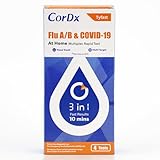
- 3-in-1 Multiplex Detection: Detects SARS-CoV-2, Influenza A, and Influenza B antigens from a single anterior nasal swab sample.
- Designed for Symptomatic Testing: Intended for individuals experiencing symptoms of respiratory infection within the first 5 days of symptom onset.
- Simple Nasal Swab Collection: Uses a short anterior nasal swab sample with step-by-step instructions included in the kit.
- Fast Results in 10 Minutes: Provides results in approximately 10 minutes when used according to the instructions for use.
- 10 minute accuracy —why wait 15? With our rapid testing kit, get peace of mind in 10 minutes and precise results without the extra wait. Proven higher PPA than major competitors, based on IFUs.
A practical evaluation for a hospital
- Define the decision and target. State whether the forecast will inform staffing, beds, supplies or another action; specify the outcome, patient group, geography and actionable lead time.
- Recreate real-time forecast conditions. Compare candidates at the same historical forecast cutoffs using only data that would have been available then. Preserve reporting delays and data revisions instead of letting later information leak into the test.
- Set a simple benchmark. Include a baseline such as carrying forward the previous week’s admissions, as in FluSight, so a complex candidate must demonstrate value beyond a straightforward reference.
- Score every horizon and important failure mode. Calculate probabilistic accuracy and interval coverage separately by lead time, and include peak timing and magnitude errors. Do not rely on a single pooled average.
- Test across seasons and local units. Report results by geography and epidemic phase where possible. CDC’s evaluations show that performance can vary by jurisdiction and that peak-period interval weaknesses may not be visible in season-wide summaries.
- Require a clear model description. Ask providers to disclose inputs, update schedule, assumptions, handling of missing data, uncertainty and maintenance requirements.
- Monitor before relying on it for consequential changes. If a forecast may prompt major staffing or capacity decisions, prospectively monitor it alongside usual planning and retain a human decision process. The published evidence summarized here does not establish a site-specific operational benefit for any one model class.
What the evidence means for model choice
The practical conclusion is to select by local, decision-specific validation rather than by the “AI” or “traditional” label. Public evaluations show that many submitted methods can improve on a simple baseline, while scores differ by model, jurisdiction, horizon and epidemic phase. Hybrid models are a plausible candidate to test, not a guaranteed upgrade. No cited evaluation establishes a universal winner or quantifies the staffing or bed outcomes of deploying a particular model at an individual hospital.
Forecasts are decision-support tools, so their purpose and limitations need to be understood by the people using them. CDC’s 2016 guidance puts the value of that exchange plainly: “Because models should only be used for the purpose for which they were intended, the back-and-forth dialogue required to ensure decision-makers understand the limitations of a specific model creates opportunities for leaders to articulate public health goals and better understand factors contributing to the dynamics of the modeled outbreak.” See CDC Grand Rounds: Modeling and Public Health Decision-Making.
Best Value
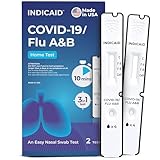
- Comprehensive 3-in-1 Test: The INDICAID COVID-flu test combo is a convenient way to detect COVID-19, Flu A, and Flu B. Everything you need is in this test home kit. It’s a must-have over-the-counter solution for anyone experiencing cold and flu symptoms.
- Fast, Reliable Results: This rapid influenza and COVID home test kit gives you 3 results in just 10 minutes, and it’s incredibly easy to use. All it requires is a shallow nasal swab, and the test can be completed in four simple steps. No more guessing!
- Trusted Technology: This flu and COVID test kit at home is FDA 510(k)-cleared, ensuring high-quality and accurate results. The combo test uses the same technology as COVID-19 rapid tests and can detect multiple COVID-19 and Flu A&B variants and strains.
- Versatile Use: The INDICAID COVID and flu test kit comes in a compact package, perfect for travel, school, work, and home. It’s also family-friendly. Individuals ages 14 and over can self-check, while children ages 2-14 require adult assistance.
- Extended Shelf Life: The shelf life of the INDICAID COVID-19/Flu A and Flu B Rapid Antigen Test has been extended to 16 months and is regularly extending. Simply scan the QR code on the box to find out the tests’ expiry date. Made in the USA.
Ensembling is another option to test if a hospital has several credible forecasts: a 2024 Emerging Infectious Diseases analysis found that more than three forecast models were needed for robust ensemble accuracy across the historical hub datasets it analyzed. That finding is dataset-specific, not a universal prescription for the number of models a hospital should combine. See Optimizing Disease Outbreak Forecast Ensembles.
Quick Recap
Product prices and availability are accurate as of the date/time indicated and are subject to change. Any price and availability information displayed on Amazon at the time of purchase will apply.

