
Recommended Free Tools
iTechGuides is reader-supported. When you buy through links on our site, we may earn an affiliate commission. As an Amazon Associate I earn from qualifying purchases. Learn more
For most everyday situations, a smartphone is the safer privacy default. Taking out a phone and aiming its camera gives people a visible recording cue. AI glasses are worn continuously, so a camera or microphone can operate without an obvious gesture. That discretion is useful for accessibility and hands-free work, but it increases the risk that bystanders do not know when they are being recorded or when their data is being analyzed.
Neither device is automatically private. A phone can secretly record, and AI glasses can keep captures local for some functions while sending images, text or voice to cloud services for AI features. Your safest choice depends on the setting, the feature you use, who else is present and whether you have meaningful consent.
The short answer: phones usually provide a clearer privacy signal
A smartphone held at chest or eye level and pointed at someone is hard to miss. People may not know whether the camera is actually recording, but they can recognize the action and object. Glasses remove that cue: the wearer can keep looking normally while a camera captures the scene. The Australian eSafety Commissioner notes that smart glasses eliminate the visible signal of holding up a phone, while small recording lights can be missed, covered or disabled.
Quick wins for a faster PC:
Repair Windows errors before they cause bigger problemsFix Now →Fix the driver behind crashes, sound loss and screen glitchesFind Drivers →Clear out junk files and repair common Windows errorsFree Scan →The European Data Protection Board (EDPB) says bystanders may be unaware that information about them is being processed. Its chair, Anu Talus, has called for warnings that are “reliable, hard to ignore, and always up to date,” such as bright LEDs, audio signals, voice cues, phone notifications or distinctive designs. The EDPB also says people in public spaces should clearly understand when someone is filming or photographing them.
#1 Best Overall

- #1 SELLING AI GLASSES* – Tap into iconic style and advanced technology with Ray-Ban Meta, the #1 selling AI glasses*. Capture photos and videos, listen to music, make hands-free calls or ask Meta AI questions on the go. *Based on IDC historical sales data up to Q3’25, released December 2025.
- META AI – Get more done and stay connected without reaching for your phone with AI glasses powered by Meta AI. Capture video recordings, translate languages while traveling and manage nutrition, wellness and everyday tasks hands-free.
- OPEN-EAR AUDIO – Listen to music and more with discreet open-ear speakers that deliver rich, quality audio and Bluetooth connectivity without blocking out conversations or the ambient noises around you.
- BATTERY LIFE – On a full charge, AI glasses can last up to 8 hours with moderate use for everyday activities like listening to audio, video recording and using Meta AI. Plus, the charging case provides an additional 48 hours of charging on the go.
- LENS OPTIONS – Choose from a wide range of lenses for men and women designed to match your style with options ranging from fully tinted sunglasses, fully clear, blue light or Transitions lenses. Experience ultimate adaptability with Transitions lenses on Ray-Ban Meta. Enjoy continuous visual performance in changing light environments, with lenses that darken with sunlight and fade to clear indoors, you'll be ready for whatever your day brings.
That does not make every phone private or every pair of glasses unsafe. A phone may be recording from a pocket, and a glasses indicator may function correctly. The practical difference is social detectability: people around you are more likely to notice a phone being aimed than glasses being worn.
How the two devices move personal data
Privacy is not only about whether a camera is on. It also concerns where a capture goes, how long it remains there, who can access it and whether software derives new information from it.
Smartphone camera and microphone paths
- A photo or video normally remains in the phone’s local gallery until an app or operating-system service backs it up or shares it.
- A camera or microphone permission can allow an app to capture data in the background, depending on the operating system and the app’s design.
- Uploading to a messaging, storage or social app creates a second copy outside the phone. Recipients may download, forward or re-share it.
- On-device features can analyze images or speech locally, but cloud-based assistants and transcription tools may transmit the request.
AI-glasses capture paths
Documented behavior for Ray-Ban Meta AI glasses illustrates why the answer is conditional. Meta says gallery photos and videos stay on the glasses until the wearer imports them to a phone. The front capture LED blinks while recording. Those statements describe ordinary gallery capture; they do not mean every AI feature is local.
When a photo is processed with AI, the product FAQ says the image is stored and used to improve Meta products and train Meta AI, with trained reviewers involved. A follow-up voice interaction can also leave the microphone active briefly after the initial request. In other words, a glasses capture that begins as a local photo can become a cloud-processing event when you ask an assistant to identify, describe or act on it.
Meta’s responsible-innovation information says users can control capture, voice and notification preferences. Firmware, app defaults, regional features and retention practices can change, so check the privacy information for the exact generation and country before relying on a setting.
Rank #2

- #1 SELLING AI GLASSES* – Tap into iconic style and advanced technology with Ray-Ban Meta, the #1 selling AI glasses*. Capture photos and videos, listen to music, make hands-free calls or ask Meta AI questions on the go. *Based on IDC historical sales data up to Q3’25, released December 2025.
- META AI – Get more done and stay connected without reaching for your phone with AI glasses powered by Meta AI. Capture video recordings, translate languages while traveling and manage nutrition, wellness and everyday tasks hands-free.
- OPEN-EAR AUDIO – Listen to music and more with discreet open-ear speakers that deliver rich, quality audio and Bluetooth connectivity without blocking out conversations or the ambient noises around you.
- BATTERY LIFE – On a full charge, AI glasses can last up to 8 hours with moderate use for everyday activities like listening to audio, video recording and using Meta AI. Plus, the charging case provides an additional 48 hours of charging on the go.
- LENS OPTIONS – Choose from a wide range of lenses for men and women designed to match your style with options ranging from fully tinted sunglasses, fully clear, blue light or Transitions lenses. Experience ultimate adaptability with Transitions lenses on Ray-Ban Meta. Enjoy continuous visual performance in changing light environments, with lenses that darken with sunlight and fade to clear indoors, you'll be ready for whatever your day brings.
Head-to-head comparison
| Privacy factor | Smartphone | AI glasses | What it means in practice |
|---|---|---|---|
| Recording visibility | Holding and aiming the phone is usually conspicuous. | Glasses remain on the face; a small indicator may be missed or obstructed. | Phones generally give bystanders a stronger opportunity to notice and object. |
| Local gallery capture | Photos and videos normally start in local storage. | For documented Ray-Ban Meta gallery capture, media remains on the glasses until import to a phone. | Local storage limits immediate cloud exposure, but import or backup can create additional copies. |
| AI image processing | Depends on the app; cloud assistants may upload the image. | AI-processed photos are documented as stored and used to improve products and train Meta AI, with trained reviewers. | Assume an AI request may leave the device unless the provider explicitly states on-device processing. |
| Microphone behavior | App permissions and assistant sessions determine capture. | Voice requests and follow-up interaction can keep the microphone active briefly after a request. | Disable voice functions when you do not need them and end assistant sessions. |
| User indicator | Screen, camera preview and physical aiming are visible cues. | Capture LED and app controls are the main cues; research finds LEDs can be socially ineffective. | A working indicator is not the same as a warning people notice or understand. |
| Sharing and retention | Controlled by the operating system, apps, backups and recipients. | Controlled by on-glasses storage, companion-app import, AI-service retention and sharing settings. | Review every copy: glasses, phone, cloud account, AI service and recipient devices. |
Why a recording light is not a complete consent system
Technical operation and human awareness are different tests. A CHI ’24 study found that camera-glasses wearers considered existing privacy indicators, including faint LEDs, ineffective at communicating recording clearly and unequivocally in everyday situations. A person may not see a small light in bright conditions, may not know what it means, or may assume it indicates power rather than recording. Someone could also cover or disable it.
That is why the EDPB favors warnings that are difficult to ignore and recommends more than one channel. In a high-sensitivity setting, tell people before capture, show the device, and follow the venue’s rule rather than relying on an LED.
What research says about perceived privacy
A 2025 survey involving participants in the United States and Germany did not find a simple device winner in perceived privacy. The study used four groups with sample sizes of 48, 525, 48 and 525 and compared smartphones with augmented-reality glasses. Privacy concern rose when participants understood that a device could infer additional information or when other people could consume their data. The result is a warning against treating form factor alone as a complete privacy measurement: people react to what they think the system can infer and who can receive the result.
For everyday decisions, combine that finding with the visibility problem. A phone may feel less discreet because its recording action is obvious, while glasses may create greater bystander-consent risk even when the wearer believes the feature is harmless.
When a smartphone is the safer choice
Sensitive conversations and private meetings
Use a phone, and ask before recording, when discussing health, finances, employment, legal matters, family conflict or confidential business. Keep the phone visible rather than concealing it, and stop recording when the conversation ends.
Rank #3

- #1 SELLING AI GLASSES* – Tap into iconic style and advanced technology with Ray-Ban Meta, the #1 selling AI glasses*. Capture photos and videos, listen to music, make hands-free calls or ask Meta AI questions on the go. *Based on IDC historical sales data up to Q3’25, released December 2025.
- META AI – Get more done and stay connected without reaching for your phone with AI glasses powered by Meta AI. Capture video recordings, translate languages while traveling and manage nutrition, wellness and everyday tasks hands-free.
- OPEN-EAR AUDIO – Listen to music and more with discreet open-ear speakers that deliver rich, quality audio and Bluetooth connectivity without blocking out conversations or the ambient noises around you.
- BATTERY LIFE – On a full charge, AI glasses can last up to 8 hours with moderate use for everyday activities like listening to audio, video recording and using Meta AI. Plus, the charging case provides an additional 48 hours of charging on the go.
- LENS OPTIONS – Choose from a wide range of lenses for men and women designed to match your style with options ranging from fully tinted sunglasses, fully clear, blue light or Transitions lenses. Experience ultimate adaptability with Transitions lenses on Ray-Ban Meta. Enjoy continuous visual performance in changing light environments, with lenses that darken with sunlight and fade to clear indoors, you'll be ready for whatever your day brings.
Schools, hospitals and care settings
These locations commonly restrict photography, audio capture or identifiable patient and student information. A phone’s visible action makes it easier for staff to enforce a rule; glasses can look like ordinary eyewear. Follow the institution’s policy and obtain the required consent before any capture.
Outdated Drivers Are Slowing You Down
One free scan finds every outdated or missing driver and matches the right update for your exact hardware.Free scan · exact hardware matchPC Slower Than It Used to Be?
A free scan shows the junk files, broken settings and background clutter dragging Windows down - then fixes them in one click.Free scan · Windows 10 & 11Workplaces, courts and restricted facilities
Employers, courts, laboratories, secure sites and transport operators may ban cameras or require authorization. Do not substitute a glasses LED for permission. Leave the device outside a restricted area or disable capture as the policy requires.
Bathrooms, changing areas and other high-privacy spaces
Do not use either device to record in places where people reasonably expect privacy. The fact that a camera is small, hands-free or technically signaled does not make capture acceptable.
When AI glasses can be reasonable
Glasses can provide genuine benefits for accessibility, navigation, hands-free notes, remote assistance and situations where reaching for a phone is unsafe or impractical. They are more defensible when the wearer limits capture, explains the device to people nearby and avoids identifiable recording unless consent is clear.
- Use them for a task that genuinely benefits from hands-free operation.
- Keep the capture indicator unobstructed and tell nearby people what it means.
- Prefer non-recording or on-device functions when available.
- Do not invoke image or voice AI around confidential material unless the service’s data handling is acceptable.
- Stop the feature immediately when someone objects.
Privacy checklist before using AI glasses
- Identify the feature. Decide whether you need a still photo, video, voice assistant, call, live sharing or AI interpretation. Each can have a different data path.
- Read the exact model’s privacy controls. In the companion app, review capture, voice, notification, sharing and deletion settings. Labels and defaults can vary by generation, firmware and region.
- Disable unnecessary voice features. Turn off wake-word or assistant functions when you only need ordinary eyewear. End active assistant sessions and remember that follow-up interaction may keep the microphone active briefly.
- Check the capture signal. Confirm that the front LED works, is not covered and is visible in the conditions where you plan to use the glasses. Treat this as a notice, not as consent.
- Ask before recording identifiable people. Explain what you will capture, why, whether audio is included and who will receive it. Respect a refusal.
- Keep sensitive scenes out of AI requests. Do not ask an assistant to analyze a confidential document, face, conversation or location unless you accept possible storage, review and product-improvement use.
- Review copies after capture. Delete unwanted media from the glasses, companion phone, synchronized gallery, cloud backup and any service to which you shared it.
- Re-check after updates. Firmware and app changes can alter controls, defaults and available AI features.
Smartphone privacy checklist
- Open the operating system’s privacy settings and audit camera, microphone, photos, Bluetooth and location permissions.
- Set sensitive apps to “while using” or one-time access where the platform offers it; remove permissions from apps that no longer need them.
- Check cloud-photo backup and shared albums before recording confidential material.
- Use a visible recording action and announce capture when another person is identifiable.
- Review the destination before sharing: a message recipient, group, workplace account or public post can all create different retention and forwarding risks.
- Delete both the original and synchronized copies when deletion is required, and remember that recipients may already have downloaded a copy.
Legal and venue responsibility
Privacy law depends on location, purpose and audience. The EDPB says public sharing or professional or political use can make the person operating a device a data controller. Purely personal household activity may fall under the European Union’s household exemption, but other civil, criminal, employment and sector-specific rules can still apply. The exemption is not a universal permission to record people.
Rank #4
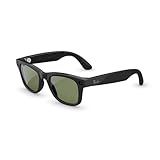
- #1 SELLING AI GLASSES* – Tap into iconic style and advanced technology with Ray-Ban Meta, the #1 selling AI glasses*. Capture photos and videos, listen to music, make hands-free calls or ask Meta AI questions on the go. *Based on IDC historical sales data up to Q3’25, released December 2025.
- META AI – Get more done and stay connected without reaching for your phone with AI glasses powered by Meta AI. Capture video recordings, translate languages while traveling and manage nutrition, wellness and everyday tasks hands-free.
- OPEN-EAR AUDIO – Listen to music and more with discreet open-ear speakers that deliver rich, quality audio and Bluetooth connectivity without blocking out conversations or the ambient noises around you.
- BATTERY LIFE – On a full charge, AI glasses can last up to 8 hours with moderate use for everyday activities like listening to audio, video recording and using Meta AI. Plus, the charging case provides an additional 48 hours of charging on the go.
- LENS OPTIONS – Choose from a wide range of lenses for men and women designed to match your style with options ranging from fully tinted sunglasses, fully clear, blue light or Transitions lenses. Experience ultimate adaptability with Transitions lenses on Ray-Ban Meta. Enjoy continuous visual performance in changing light environments, with lenses that darken with sunlight and fade to clear indoors, you'll be ready for whatever your day brings.
Consent requirements also differ by jurisdiction. Some places regulate the recording of audio more strictly than images; others distinguish public from private conversations or impose workplace and health-sector duties. Check the law where the recording occurs and the rules of the venue. If you are unsure, do not record, or ask the responsible organization for written guidance.
Common privacy mistakes and fixes
“The LED is on, so consent is covered.”
Why it fails: People may not see or understand a small light. Fix: provide a verbal warning, obtain consent where required and use a more visible device or no recording in sensitive settings.
“The photo stayed on the glasses, so it was never shared.”
Why it fails: Importing to a phone, enabling backup or invoking AI can create new copies or transmit data. Fix: distinguish ordinary local capture from every later transfer and service request.
“I only asked the assistant one question.”
Why it fails: AI processing may store the image and use it for product improvement, and follow-up voice interaction can extend microphone activity. Fix: treat every AI image or voice request as a potential cloud-processing event and avoid confidential content.
What’s actually slowing this PC down?
Pick the symptom - the matching free tool is one click away.
“A phone is always private because everyone can see it.”
Why it fails: Phones can record from a pocket, grant broad app permissions or upload automatically. Fix: audit permissions, backups and sharing destinations just as carefully as you would with glasses.
A practical decision rule
Choose a smartphone when consent is uncertain, the setting is sensitive, or the recording must be obvious to others. Choose AI glasses only when the hands-free benefit is important, the venue permits them, people understand what is happening and you have disabled data flows you do not need. In both cases, separate three decisions: whether to capture, whether to send the capture for AI processing and whether to share the result. Saying no to any one of those steps can materially reduce exposure.
Product behavior, app defaults, retention policies and recording laws change. Before using a particular pair of glasses, read its current privacy FAQ and companion-app controls for your region, then check the venue’s policy and local consent rules.
Quick Recap
Product prices and availability are accurate as of the date/time indicated and are subject to change. Any price and availability information displayed on Amazon at the time of purchase will apply.
The Tool Desk
Outbyte Driver Updater FREEScan for outdated or missing drivers - takes under a minuteDriver Scan →Outbyte PC Repair FREERepair Windows errors before they cause bigger problemsFix Now →
