
Quick wins for a faster PC:
Clear out junk files and repair common Windows errorsFree Scan →Scan for outdated or missing drivers - takes under a minuteDriver Scan →AI-assisted chip design can raise intellectual-property questions, but using AI does not itself establish infringement. The evidence cited here shows that AI tools can optimize parts of physical chip design and that a Chinese court found infringement when a company directly copied protected integrated-circuit layout portions. It does not establish that an AI tool copied a protected design or that an infringement spread across thousands of chips.
What AI does in chip design—and what that does not prove
Chip designers optimize power, performance and area (PPA). Deloitte’s 2023 analysis says advanced AI tools can identify placement errors, suggest changes, simulate their effects and learn from prior design iterations. It describes tools that can autonomously optimize PPA, sometimes completing work in hours that could take engineering teams weeks or months using traditional electronic-design-automation (EDA) methods. The same analysis characterized AI tools as complementary to human designers and said they were being used in real-world designs at the time.
Those capabilities describe a design workflow, not a legal conclusion. An optimizer may generate or modify design choices without copying anyone’s protected work; conversely, automation would not by itself make copying lawful. The cited material does not establish that a particular AI tool produced infringing output, or that an AI-generated design has been found to infringe a patent.
What the 2023 market figures can—and cannot—show
Deloitte Global projected US$300 million in spending on internal and third-party AI tools for chip design in 2023, and forecast more than US$500 million in 2026 based on an expected 20% annual growth rate over four years. The latter is a forecast published in 2023, not a verified 2026 result. Deloitte Insights also put the EDA tools industry above US$10 billion in 2022 and estimated that making a new advanced chip design could cost more than US$500 million, as stated in its 2023 analysis. These dated figures help explain the commercial stakes of design automation; they do not measure infringement rates, copied designs or affected chip volumes.
What’s actually slowing this PC down?
Pick the symptom - the matching free tool is one click away.
#1 Best Overall

- ESP32-S3-ePaper-1.54 development board onboard 1.54inch e-paper display, 200 × 200 resolution, features high contrast and wide viewing angle. Onboard audio codec chip, supports voice capture and playback, enabling AI voice interaction applications
- ESP32-S3 1.54inch e-Paper AIoT development board adopts high-performance 32-bit LX7 dual-core processor, up to 240MHz main frequency. Supports 2.4GHz Wi-Fi (802.11 b/g/n) and Bluetooth 5 (LE), with onboard antenna
- Onboard PCF85063 RTC chip and SHTC3 temperature & humidity sensor for accurate RTC management and environmental monitoring
- Built-in 512KB Static RAM, 384KB ROM, with integrated 8MB Flash and 8MB PSRAM
- Onboard TF card slot for external storage of images or files. Onboard programmable PWR and BOOT side buttons for customized function development. Reserved 2 × 6 2.54mm pitch pin header for convenient external expansion
Patent infringement and IC layout-design rights are different questions
“Patent infringement” is not a catch-all label for every dispute over a chip design. Patent rights and integrated-circuit (IC) layout-design rights protect different legal subjects. The Chinese case discussed below concerned an IC layout design under China’s layout-design rules; it was not a patent-infringement judgment. The sources cited here do not establish whether the unnamed expert in the quoted warning was referring to patents, layout-design rights or both.
| Legal subject | What it concerns here | What the cited sources establish |
|---|---|---|
| Patent | A separate legal question from protection of an IC layout design. | The USPTO source below addresses U.S. patent inventorship when AI is used; it does not decide whether a chip infringes a patent. |
| IC layout-design right | In China, protection for a qualifying three-dimensional configuration of circuit elements and interconnections, or a configuration prepared to manufacture an integrated circuit. | China’s regulation and a Chinese court case address registration-based layout-design protection, reproduction and commercial use. |
| Inventorship | Who qualifies as an inventor for a U.S. patent when AI is part of the inventive process. | The USPTO says the same inventorship standard applies with or without AI. That does not resolve infringement, ownership of output or liability. |
China’s Regulation on Protection of Integrated Circuit Layout Designs excludes ideas, processes, operating methods and mathematical concepts from this particular protection. It provides the right holder with rights concerning reproduction of the protected design or its original portions, and commercial use of protected designs, chips containing them or products containing those chips. These are statements about China’s layout-design regime, not a general account of patent law worldwide.
What the Chinese layout-design case actually decided
The Supreme People’s Court of China’s English summary, published July 7, 2026, describes HiTrend Technology (Shanghai) Co. v. Renergy Micro-Technologies (Shenzhen) Co. and Shanghai Yachuang Texin Electronics Co. The underlying Shanghai Higher People’s Court judgment was issued on September 23, 2014. The dispute involved HiTrend’s ATT7021AU layout design and RN8209/RN8209G chips.
Rank #2

- This is is 1.54inch e-Paper AIoT development board. Onboard 1.54inch e-paper display, 200 x 200 resolution, features ultra-low power consumption and ambient light readability, suitable for portable devices and long-battery-life scenarios. Supports 2.4GHz Wi-Fi (802.11 b/g/n) and Bluetooth 5 (LE), with onboard antenna.
- Integrated with an RTC chip, SHTC3 temperature and humidity sensor, TF card slot, low-power audio codec chip circuit, and Lithium battery recharge management circuit. Reserved interfaces including USB, UART, I2C, and GPIO for easy functionality expansion and sensor connectivity, providing a flexible and reliable development platform for IoT terminals, electronic tags, portable displays, and other applications.
- Supports AI Speech Interaction: Allows access to online large model platforms such as ChatGPT, DeepSeek, Doubao, etc. Onboard audio codec chip, supports voice capture and playback, enabling AI voice interaction applications.
- Built-in 512KB Static RAM, 384KB ROM, with integrated 8MB Flash and 8MB PS RAM. Onboard PCF85063 RTC chip and SHTC3 temperature & humidity sensor for accurate RTC management and environmental monitoring.
- Onboard TF card slot for external storage of images or files. Onboard programmable PWR and BOOT side buttons for customized function development. Reserved 2 × 6 2.54mm pitch pin header for convenient external expansion.
According to the court summary, Renergy admitted it had not obtained the design through reverse engineering and had directly copied two original portions of the layout for manufacture and sale. The appellate court upheld the infringement finding and compensation award. The case is evidence of a specific dispute over copying protected layout-design material in China; it does not show that AI was involved, establish patent infringement, or quantify how often such conduct occurs.
Recommended Free Tools
Analysis is not the same as copying
The court summary says Chinese law does not prohibit photographing another party’s chip layout and analyzing circuit principles through reverse engineering. It also says direct copying of another party’s layout through reverse engineering is not allowed. The distinction in that case is between studying a chip to understand its principles and reproducing protected original layout material. It is a case-specific statement under Chinese law, not a universal rule for every jurisdiction or type of intellectual property.
The court also said protected original portions may qualify regardless of their size or role in the overall design. The rights holder must substantiate originality, while the other party may challenge that showing with evidence. That point concerns layout-design protection in the case, not the scope or validity of a patent claim.
Rank #3
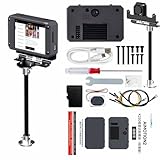
- 【Flagship performance, extremely fast response】Equipped with a 1.6GHz main frequency chip, the KPU computing power is 13.7 times that of the K210 visual module, and the CPU computing power is 8.5 times that of the K210. It supports real-time operation of complex AI models and can easily cope with high-load tasks such as image recognition and voice processing.
- 【Flexible expansion development】A new 12Pin GPIO interface is added, which is compatible with a variety of sensors and modules; pre-installed GUI program, a large program based on the RTSmart system, contains 30+ functional gameplay, integrates most of the core functions, and each function comes with instructions, so you can experience the fun of AI without programming basics.
- 【Multi-controller compatibility】Equipped with a serial communication interface, it can be seamlessly connected to various controllers, and supports connection to PC computers, MSPM0, STM32, ESP32, PICO, Raspberry Pi, UNO, Microbit, Jetson, RDK and other mainstream controller development. You can easily output the visual recognition results to an external controller through the serial port without delving into complex visual algorithms, making it easy to create innovative AI projects.
- 【Multi-function AI visual camera】The K230 visual module is equipped with a 2.4-inch LCD capacitive touch screen with clear display and a 2MP camera for quick debugging and control. The module integrates a serial port, which can easily connect various sensors to expand functions. , with color recognition, road sign recognition, visual line patrol, face recognition, label recognition, QR code and barcode recognition, feature detection, digital recognition and other functions.
- 【Developers from entry to mastery】Provides original model training tutorials+self-developed upper computer toolkits, compatible with ESP32 ecology, suitable for education, maker and industrial visual project development. Yahboom provides technical Q&A + lifetime firmware updates to help your AI project from prototype to landing without worry!
What the USPTO’s AI inventorship guidance does—and does not—say
The USPTO’s AI-related resources page, last updated March 4, 2026, summarizes its November 2025 inventorship guidance: “There is no separate or modified standard for AI-assisted inventions.” In context, the agency says the same legal standard for determining inventorship applies whether or not AI systems were used in the inventive process.
This is a limited U.S. patent-inventorship point. It does not answer whether an AI-generated chip design infringes an existing patent, who owns a particular AI-assisted output, or whether a model provider, designer or manufacturer would be liable in a specific dispute.
How to assess a claim that an AI-designed chip infringes
A useful first step is to identify what right is allegedly involved and what conduct is at issue. An AI tool’s role—assistance, optimization or generation—is relevant context, but it cannot substitute for identifying the protected subject and comparing the relevant design or conduct under the law that applies.
Rank #4

- High-Performance AI Voice Interaction Development Board: Features a dual-core RISC-V processor (up to 160MHz), onboard dual microphone array, speakers, and an ES8311 audio codec chip, supporting noise reduction and echo cancellation. It can easily connect to large online models like DeepSeek for intelligent voice dialogue.
- Integrating Advanced Wireless Connectivity: ESP32-C6 supports Wi-Fi 6, Bluetooth 5.0, and Zigbee 3.0/Thread protocols, boasting excellent RF performance and multi-protocol compatibility, making it suitable for wireless communication development in IoT and wearable devices.
- Equipped with a 1.83-inch capacitive touchscreen LCD: (240×284 resolution, 65K colors), it offers high responsiveness and light transmittance. Combined with an onboard six-axis sensor (accelerometer + gyroscope) and RTC chip, it supports motion monitoring, step counting, and low-power real-time clock applications.
- Low Power Design: built-in Batt. recharge chip, a Type-C interface, and supports flexible clock and power control, enabling low-power operation in various scenarios, making it convenient for carrying around and long-term use.
- Rich Interfaces: It offers a wealth of expansion interfaces and customization features, including GPIO, I2C, and UART pads, two programmable side buttons, support for external sensors and debugging, and facilitates rapid prototyping and functional verification.
- Name the right and jurisdiction. Determine whether the allegation concerns a patent, a registered IC layout-design right or another form of protection, and identify the country whose law governs. The Chinese case cannot settle a U.S. patent question.
- Identify what is claimed to be protected. For a patent allegation, the question is not the same as whether a layout-design right covers original physical layout portions. The cited sources do not analyze any particular patent claims or chip.
- Separate development, analysis and copying. Independent development, reverse-engineering analysis and direct reproduction are not interchangeable descriptions. The Chinese case specifically distinguishes analysis of circuit principles from direct copying of protected layout portions.
- Locate the relevant stage and conduct. Ask whether the concern is in design files, a foundry handoff, manufacturing, or commercial distribution. In the Chinese case, the stated conduct included copying for manufacture and sale.
- Check the evidence before repeating a scale claim. A claim that copied or infringing designs have reached thousands of chips requires evidence identifying the speaker, the alleged right, the design or products involved, and the basis for the volume estimate.
Is the “thousands of chips” warning established?
The available cited sources do not identify the expert behind the quoted warning or verify the statement that copied designs or infringed patents could spread across thousands of chips before detection. They also do not document a particular AI tool copying protected material or a resulting run of manufactured chips. The figure should therefore not be presented as an established incident or measured risk without a traceable original interview, article, transcript or recording that confirms the speaker’s identity, wording and meaning.
What can be said on this evidence is narrower: AI tools can automate parts of chip design; design automation is commercially significant; and a Chinese court has found infringement involving direct copying of original IC layout-design portions. Those facts illustrate why provenance and rights checks can matter, but they do not establish an AI-caused infringement event or its scale.
Quick Recap
Product prices and availability are accurate as of the date/time indicated and are subject to change. Any price and availability information displayed on Amazon at the time of purchase will apply.

