
Recommended Free Tools
iTechGuides is reader-supported. When you buy through links on our site, we may earn an affiliate commission. As an Amazon Associate I earn from qualifying purchases. Learn more
An AI assistant is usually the user-facing interface that responds to your request; an AI agent is usually a system that pursues a goal by managing a workflow, using tools, and taking bounded steps. The terms overlap: one product can act as an assistant in conversation and run agent-like workflows when given the right tools and permissions. To tell them apart, look at what the system can control—not just what it is called.
What is the difference between an AI assistant and an AI agent?
“Assistant” typically describes a role from the user’s perspective: you ask for help through a chat or embedded interface. “Agent” typically describes behavior from the system’s perspective: it works toward a goal by deciding which steps to take, using tools, and checking whether the task is complete.
For example, an assistant might explain how to prepare a report. An agent-style workflow might gather information from approved sources, draft the report, and submit it for review. The distinction is about how much of the workflow the system manages, not whether it uses a particular model or has a chat window.
There is no universal naming rule. Google Cloud describes assistants as agents designed to collaborate with users, while Anthropic notes that there is no agreed-upon definition of an agent. Treat the labels as useful descriptions, not mutually exclusive product categories.
#1 Best Overall

- ENHANCED CONTEXT WITH MULTIMODAL INPUT: Capture audio, type notes, add images, and press to highlight key moments for richer context. During recording, instantly mark key moments with a single button press. Simultaneously enrich your audio by snapping photos of important documents or typing in ideas
- CHAT WITH YOUR RECORDINGS USING "ASK Plaud": Unlock deeper insights with this interactive AI. Ask questions, extract key points, draft emails, and get next-step suggestions—all grounded in your original audio for reliable, ready-to-use answers
- INTELLIGENT RECORDING WITH AI DIRECTIONAL AUDIO: Enjoy seamless, intelligent recording with Plaud Note Pro. Its AI automatically switches between call and meeting modes while recording, while directional audio and real-time spatial awareness minimize noise to capture voices with crystal clarity
- Everything Included: Includes Plaud Note Pro, magnetic case, magnetic ring, charging cable, and a free Starter Plan with 300 transcription minutes per month. Upgrade anytime in the Plaud app to Pro Plan (1,200 min/mo) or Unlimited Plan(Up to 24 hours of transcription per user per day)
- PREMIUM ULTRA-SLIM DESIGN WITH INSTANTVIEW DISPLAY: Meticulously designed, the AI Note Taker is just 0.12 inches thin and 1.06 oz —about the size of a credit card. Its sleek aluminum body with a textured wave finish features a vivid AMOLED display, letting you check battery and recording status at a glance, while it seamlessly works with Apple Find My to ensure you never misplace it
How do assistants and agents differ in practice?
| What to compare | Assistant-oriented pattern | Agent-oriented pattern |
|---|---|---|
| Main role | Responds to a user’s request in a direct interface | Pursues a goal through an orchestrated workflow |
| Workflow control | The user commonly chooses and carries out the next step | The system may select the next bounded step and detect when work is complete |
| Tools | May answer directly or use tools when requested | Uses connected tools to gather context or take actions as part of the workflow |
| Trigger and persistence | Often prompt-led and turn-by-turn | May run across multiple steps or start on a schedule or event |
| Oversight | The user directs each interaction | Instructions, permissions, review, and handoffs constrain what it can do |
These are common patterns, not a formal classification test. An assistant can have tools, and an agent need not be fully autonomous. OpenAI’s practical guide draws a useful operational boundary: a simple chatbot or single-turn LLM application that does not control workflow execution is not an agent in its framing. That is OpenAI’s definition, not a universal standard.
What makes a system agent-like?
Look for a system that has a goal, some control over the sequence of work, and permission to take defined actions. Agent-style behavior may involve planning steps, selecting tools, acting, checking progress, correcting an action, and stopping or handing control back when necessary.
Rank #2
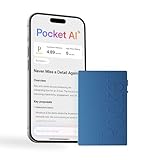
- YOUR AI PERSONAL ASSISTANT FOR EVERYDAY PRODUCTIVITY: More than a voice recorder, Pocket works as your AI personal assistant to capture, transcribe, and summarize meetings, calls, and ideas instantly. Core features are included out of the box, with optional advanced tools available for power users.
- ONE-TAP RECORDING FOR REAL-LIFE MOMENTS: Capture meetings, phone calls, and in-person conversations instantly with a simple tap, no typing, no interruptions, just effortless note-taking anywhere you go.
- SMART AI INSIGHTS & ORGANIZATION: Pocket automatically turns recordings into clear summaries, key action items and structured conversation maps so you can quickly review what matters without digging through audio.
- TURN CONVERSATIONS INTO ACTION WITH “ASK POCKET”: Don’t just record, understand. Instantly ask questions across your meetings, extract key insights and generate next steps in seconds. All grounded in your recordings, so answers stay accurate and reliable.
- MAGSAFE COMPATIBLE FOR SEAMLESS USE: Easily attach Pocket to your iPhone or other MagSafe compatible devices for convenient, hands-free recording on the go. Perfect for capturing meetings, calls, and ideas without needing to hold your device.
- Goal and instructions: The system is given an outcome to pursue and boundaries for how to pursue it.
- Workflow control: It can decide which step comes next rather than only generating a response for the user to act on.
- Tool access: It can use approved connections to retrieve information or perform actions.
- Completion checks and handoffs: It can recognize when the task is complete, or pause and return control when it needs approval or cannot proceed safely.
Tool use by itself does not settle the question. Anthropic uses a narrower definition for its autonomy study: an AI system equipped with tools that allow it to take actions. Other organizations emphasize goal pursuit and workflow control as well. OpenAI’s API documentation likewise presents an agent as a configured system—model and instructions, with optional tools, guardrails, handoffs, MCP servers, and structured outputs—not simply a model name.
What’s actually slowing this PC down?
Pick the symptom - the matching free tool is one click away.
When should you use an assistant instead of an agent?
Choose an assistant for one-off or exploratory work
A conversational assistant is generally a better fit when you want an explanation, a brainstorm, help exploring options, or a draft you will shape yourself. Open-ended thinking and single requests do not necessarily benefit from giving software control over a multi-step process.
Rank #3
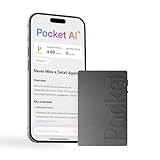
- YOUR AI PERSONAL ASSISTANT FOR EVERYDAY PRODUCTIVITY: More than a voice recorder, Pocket works as your AI personal assistant to capture, transcribe, and summarize meetings, calls, and ideas instantly. Core features are included out of the box, with optional advanced tools available for power users.
- ONE-TAP RECORDING FOR REAL-LIFE MOMENTS: Capture meetings, phone calls, and in-person conversations instantly with a simple tap, no typing, no interruptions, just effortless note-taking anywhere you go.
- SMART AI INSIGHTS & ORGANIZATION: Pocket automatically turns recordings into clear summaries, key action items and structured conversation maps so you can quickly review what matters without digging through audio.
- TURN CONVERSATIONS INTO ACTION WITH “ASK POCKET”: Don’t just record, understand. Instantly ask questions across your meetings, extract key insights and generate next steps in seconds. All grounded in your recordings, so answers stay accurate and reliable.
- MAGSAFE COMPATIBLE FOR SEAMLESS USE: Easily attach Pocket to your iPhone or other MagSafe compatible devices for convenient, hands-free recording on the go. Perfect for capturing meetings, calls, and ideas without needing to hold your device.
Consider an agent for repeatable, structured workflows
An agent-style workflow can be useful when the task follows a defined process, happens repeatedly, starts at a particular time or event, or requires approved connections to work systems. OpenAI Academy describes workspace agents in terms of a trigger, a process that may include skills, and tools or systems the agent can connect to. The key question is whether automating the workflow is worth configuring and governing those connections.
Keep a person in control of consequential actions
For actions that affect people, money, access, or important records, define permissions and review points before delegating work. Agent behavior should stay within explicit instructions and guardrails; a system that can take action should not automatically be allowed to take every action. Use approval or handoff steps where a person needs to verify a decision or authorize the next step.
Rank #4

- AI-POWERED TRANSCRIPTION & SUMMARIES: Plaud Note Pro is your professional voice transcriber, delivering high-accuracy transcription in 112 languages with auto speaker labels. Powered by top AI models and thousands of templates, Note Pro instantly creates structured summaries, mind maps, To-Do lists, and proposals tailored to your role and industry
- ENHANCED CONTEXT WITH MULTIMODAL INPUT: Capture audio, type notes, add images, and press to highlight key moments for richer context. During recording, instantly mark key moments with a single button press. Simultaneously enrich your audio by snapping photos of important documents or typing in ideas
- CHAT WITH YOUR RECORDINGS USING "ASK Plaud": Unlock deeper insights with this interactive AI. Ask questions, extract key points, draft emails, and get next-step suggestions—all grounded in your original audio for reliable, ready-to-use answers
- INTELLIGENT RECORDING WITH AI DIRECTIONAL AUDIO: Enjoy seamless, intelligent recording with Plaud Note Pro. Its AI automatically switches between call and meeting modes while recording, while directional audio and real-time spatial awareness minimize noise to capture voices with crystal clarity
- Everything Included: Includes Plaud Note Pro, magnetic case, magnetic ring, charging cable, and a free Starter Plan with 300 transcription minutes per month. Upgrade anytime in the Plaud app to Pro Plan (1,200 min/mo) or Unlimited Plan(Up to 24 hours of transcription per user per day)
How to evaluate an AI product’s label
Rather than relying on a product’s name, check its actual behavior for the task you want to complete:
Free tools Windows power users keep installed
One-click scans. No signup required.
- Identify the goal. Is the system answering a question, or is it expected to complete an outcome across several steps?
- Check workflow control. Can it choose and sequence steps, or does it stop after producing a response?
- Review tool connections and permissions. Which systems can it access, and what actions can it perform in each one?
- Find out how it starts and runs. Does it wait for each prompt, or can a schedule or event trigger a workflow that continues across steps?
- Locate oversight and recovery controls. Can you review actions, require approval, stop execution, or take control when the system reaches a limit?
These questions give a more practical answer than asking whether a product is “really” an assistant or an agent. The same product may serve both roles, depending on the task and the capabilities you enable.
Quick Recap
Product prices and availability are accurate as of the date/time indicated and are subject to change. Any price and availability information displayed on Amazon at the time of purchase will apply.

