
Use workflow automation when a process is predictable and its steps can be written as explicit rules. Use an AI agent with tool calling when the task requires contextual judgment or must choose among actions based on changing inputs. For many business processes, the strongest fit is hybrid: keep the repeatable stages in a workflow and give an agent one bounded decision to make.
What is the difference?
Workflow automation follows a defined process
A workflow encodes triggers, steps, conditions, and actions. Given the same inputs and unchanged logic, it follows the specified path. That makes it a natural fit for known processes that need consistent routing or repeatable actions. OpenAI describes the contrast between deterministic workflows and more flexible agents in its practical guide to building agents and Workspace Agents guide.
Tool calling lets a model request an operation
Tool calling is an interface between a model and an application. A developer makes functions available with descriptions and input formats; the model may return a structured request to use one. A tool call is a request, not proof that the model itself performed the operation. In common client-executed setups, application code runs the function and returns its result to the model. Some providers also offer server-executed tools. See OpenAI’s function-calling documentation and Anthropic’s tool-use documentation.
An agent uses tools as part of a bounded task
An agent uses a model to make decisions as it works toward a task. OpenAI describes the foundations as a model, tools, and instructions. Agents can be useful when context matters or fixed, rule-based approaches are not enough, but the agent still needs defined capabilities and limits. The distinction is not “AI versus automation”: an agent can be one component in an automated process.
The Tool Desk
Outbyte Driver Updater FREEScan for outdated or missing drivers - takes under a minuteDriver Scan →Outbyte PC Repair FREEClear out junk files and repair common Windows errorsFree Scan →#1 Best Overall

- Valued Carpenter Pencil Set: You will get 2 pcs solid carpenter pencils with 26 piece 2.8 mm refills, 1 replaceable sharpener, 1 plastic storage box.The complete carpenter pencils combination allows you to finish your work faster and more easily
- Deep Hole Marker Pencil: The deep-hole construction pencils adopts 45mm elongated tip design, which is more convenient to mark in the small hole or in other tight areas that other carpenter markers cannot reach
- Carpenter Pencils with Sharpener: The sharpener is screwed into the top of the work pencil, which won't get lost either. Built-in pencil sharpener that keep the lead with pointed and smooth to Improves line of sight in fine work
- Stronger Solid Lead: This work pencil is matched with a 2.8 mm thick lead , which is much thicker and stronger during the drawing process of construction work, it will not break or damage easily
- Marks on Various Surfaces: 3 colors solid construction pencil can marks on various surfaces,such as metal, plastic, wood, paper etc. Ideals for woodworkers, contractors, craftsmen, builders, merchants and masons
Which approach should you choose?
| Approach | Best fit | Important consideration |
|---|---|---|
| Fixed workflow | Inputs, steps, and conditions are predictable and can be stated explicitly. | Changing context and exceptions may require extra branches or changes to the defined logic. |
| Agent with tool calling | Inputs vary, context affects the answer, or the system must select among available actions. | Validate proposed calls and results, constrain available tools, and define what happens when a call fails or the answer is uncertain. |
| Hybrid | Most stages are stable, but one stage needs interpretation, classification, or exception handling. | Keep the agent’s authority narrow and pass its decision back into explicit workflow steps when the next action must be predictable. |
Before choosing, consider how ambiguous the inputs are, how often the process repeats, how much discretion is needed, who owns execution and state, how easily results can be checked, what a wrong action could cost, and the integration and maintenance effort. Include latency and cost in your own evaluation: the cited official materials do not provide a universal quantitative ranking of agents and workflows.
How tool calling works in practice
- Make tools available. The application or service describes permitted functions and their input formats to the model.
- Receive a proposed call. The model returns a structured request when it determines a tool may help.
- Execute the operation. In a client-executed setup, application code runs the requested function; in a server-executed setup, the provider’s service performs the operation.
- Return the result. The result is sent back to the model, which can produce a response or request another tool call.
This cycle, documented by OpenAI and Anthropic, makes tool calling an application-design responsibility as well as a model capability. Decide which operations are available, how authorization applies, what results are reliable, how errors are handled, and when a person must approve an consequential action. A tool schema defines an interface; it does not replace the security and validation choices required by the application.
Rank #2

- Ergonomically Designed: Work in tight areas with a compact design that gets into tough spots
- Compact and Lightweight: Both tools are designed to fit into difficult to reach spaces. The 1/4" impact driver has a length of 5.55 in. and weighs just 2.8 lbs, while the 1/2" drill/driver measures only 7.5 in. and weighs 3.6 lbs
- Both the DEWALT impact driver and electric drill driver feature integrated LED work lights with a convenient 20-second delay, ensuring enhanced visibility in dimly lit or challenging work areas
- One-Handed Loading - Keep one hand free with a 1/4 in. hex chuck that accepts 1 in. bit tips
- Power drill cordless with 1/2" single sleeve ratcheting chuck provides tight bit gripping strength, making bit changes faster and more secure
How to combine an agent and a workflow
Start with the process stages that can be specified in advance. Keep those in the workflow, then introduce an agent only where a bounded judgment is needed. For example, a workflow can receive a support request, ask an agent to interpret and classify it, then use defined steps to update the ticket and send the appropriate notification. This separates flexible interpretation from repeatable execution.
If the next action genuinely depends on what the agent learns or decides, an agent loop may be more appropriate than a fully prescribed sequence. It still needs tools, instructions, and defined limits. In the OpenAI Agents SDK documentation, “agents as tools” lets a manager retain the conversation while calling a specialist for a bounded task; a “handoff” transfers control to a specialist. Choose based on which agent should own the user-facing response, and monitor and evaluate the resulting behavior.
Recommended Free Tools
Quick Recap
Best Value
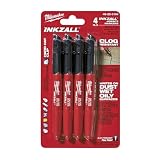
- Milwaukee Ink all Fine Point Marker, Black, 4 Per Pack
- 4 per pack Features Clog Resistant Marker Tip Writes through Dusty, Wet and Oily Surfaces Durable Marker Tip for Writing on Concrete, OSB and Rough Surfaces
- Clog resistant tip writes on dusty, wet and oily surfaces and is optimized for rough surfaces such as OSB, cinderblock and concrete
- Hard hat clip- attaches for easy access
- Quick dry time with reduced smearing and marking
Rank #4

- Long Nib and Deep Hole Marker: Our mechanical carpenter pencil with 45mm nib is designed for easy marking of deep holes or narrow areas. These construction pencils are the great choice for woodworking tools, construction tools, carpenter tools, contractor tools, wood carpentry tools and architect tools
- Extra Refills in 2 Colors for Versatile Marking: The construction mechanical pencil comes with 12 extra 2.8mm refills, including 6 red and 6 black refills. The black refill is suitable for light surfaces, while the red wax is perfect for dark surfaces. Our carpenter mechanical pencil makes sure that you'll have an ample supply for extended use
- Built-in Sharpener: Our construction pencil comes with a built-in sharpener to ensure the mechanical pencil tip is always sharp and ready for use. Never buy an extra pencil sharpener again. A great tool for any woodworker pencil, contractor pencils. The refill can easily be extended or retracted with a simple click of the pencils mechanical, allowing you to work more efficiently and accurately
- Portable Clip Design: Our deep hole construction pencil features a portable clip design, easy to carry and attach to your pocket or tool box, so that you can keep the carpenter pencils mechanical close at hand, making it a convenient tool to have on the go. Great gifts choice for carpenters
- Stronger Pencil Lead: The black refills are made of lead, sturdy and smooth. The red refills are made of wax, clear and light. These marking pencils are much thicker and stronger than normal pencils during the marking process of construction work, suitable for various surfaces, such as glasses, metal, boards, floors, walls, furniture, etc. The written marks can be easily wiped with a wet paper towel when needed
Rank #3

- 【Great Compatibility】This Katerk 1/4 inch hex shank bit holder is specifically designed for 1/4 inch hex shank drill bits. It's compatible with most 1/4 fast hex handles, hex sockets, various electric screwdrivers, and handheld screwdrivers. The bit holder makes it a valuable addition for any handyman.
- 【Secure and Safe】Built with a secure backup nut design, each drill bit holder securely locks onto your bits, ensuring they stay firmly in place. Additionally, our bit holder incorporates a high-quality steel ball rolling design that holds up to several kilograms of weight, ensuring your various drill bits don't fall off.
- 【Easy One-Handed Operation】The bit holder for impact driver allows you to change bits single-handedly, simplifying your workflow. Its multi-color design further allows for quick identification of the drill bit you need.
- 【Compact and Convenient】Thanks to its compact size, this 1/4 inch bit holder is easy to carry around. The bit holder allows for easy attachment to various tools, making this a convenient addition to your construction accessories. The Katerk bit holder is cast from high-quality alloy material, promising a long product lifespan. Despite its rugged strength, the bit holder remains lightweight, making it portable.
- 【Cool Christmas Gift For Men Stocking Stuffers】 This screwdriver bit holder, driver bit holder, impact bit holder, can be given as a gift to your loved one, especially for anyone involved in construction or electrical work. It's a must-have for stocking stuffers for men and women, tools gifts for dad, tech gadgets for men, gifts for dad, gifts for him, gifts for husband, gifts for boyfriend, cool gadgets for men, and cool gifts for dad.
Examples: when each approach fits
- Use a workflow: A form submission always needs validation, a record created, and a notification sent in a known sequence. These explicit, repeatable steps do not need an agent to decide what happens next.
- Use an agent step inside a workflow: Support requests arrive in varied language and need interpretation before routing, while ticket updates and notifications should follow a controlled process.
- Use tool calling in an agent: An assistant needs to retrieve current account information or request an application operation, then explain the result. OpenAI’s function-calling examples include weather, account lookup, and refund operations.
- Skip tool calling for a trivial answer: If the model can answer from its existing context and no external action or fresh data is needed, a tool round trip may add latency without helping. Anthropic identifies this as a poor fit for tool use.
Common misconceptions
- “Tool calling means the AI runs my function.” In a client-executed setup, the model requests a call and the application runs it. Check whether a given provider instead offers server-executed tools.
- “An agent and a workflow are alternatives.” They can be combined: a workflow can control predictable stages while an agent handles a bounded judgment step.
- “Agents are always better because they are flexible.” Flexibility helps with contextual decisions; it is unnecessary when the process is already predictable and its rules can be stated clearly. The official sources describe these different fits but do not establish a universal benchmark.
- “Every task benefits from an agent.” A one-shot answer that needs neither fresh information nor an external action may not justify tool-use overhead.
Product prices and availability are accurate as of the date/time indicated and are subject to change. Any price and availability information displayed on Amazon at the time of purchase will apply.

