
Neurosymbolic AI combines neural networks, which learn patterns from data, with symbolic methods for representing knowledge and performing formal reasoning. It is not one model or a single design: systems can connect the two in different ways, and the combination alone does not guarantee correct conclusions or faithful explanations.
What neurosymbolic AI combines
Neural approaches are often effective at working with unstructured data such as images, audio, and text. Symbolic AI represents information in explicit forms—such as rules, relations, or logical statements—and can use those forms to support inspectable, formal inference. These are broad tendencies, not guarantees: a neural model can fail to recognize a pattern, and a symbolic reasoner can only reach sound conclusions if its representations, rules, and inputs are appropriate.

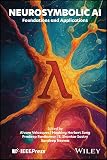


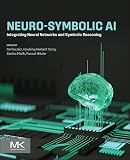
The NeSy 2024 organizers describe the field’s aim as building AI models and applications by combining neural and symbolic learning and reasoning. Their conference topics included knowledge representation with deep neural networks, symbolic knowledge extraction, explainability, logic and probability in neural networks, and structured background knowledge. NeSy 2024
The practical motivation is complementarity. A system might use a neural model to interpret noisy input, then use explicit rules to check whether an interpretation fits known constraints. In another design, symbolic knowledge might guide how a neural model learns. In either case, the value depends on how well the components work together for the task.
The Tool Desk
Outbyte PC Repair FREEClear out junk files and repair common Windows errorsFree Scan →Outbyte Driver Updater FREEScan for outdated or missing drivers - takes under a minuteDriver Scan →#1 Best Overall
How neural learning and symbolic reasoning can connect
There is no canonical neurosymbolic architecture. The neural and symbolic components can meet in the system’s representations, its model design, its training process, or a sequence of separate processing stages. A survey of approaches describes several common patterns, including knowledge-graph-based methods, while noting challenges such as scalability. The survey in Neurosymbolic Artificial Intelligence
| Integration pattern | How it works | Key consideration |
|---|---|---|
| Neural support for a symbolic solver | A neural component supplies predictions or other support to a symbolic problem solver. | The handoff must preserve the information the solver needs, and the solver’s guarantees apply only to its own formalized inputs and rules. |
| Perception-to-reasoning pipeline | A neural model turns unstructured input into a structured representation; a symbolic reasoner checks or reasons over that representation. | Errors in perception can propagate into later reasoning. |
| Rules or constraints in training | Symbolic rules or constraints influence neural training, for example by shaping which outputs are encouraged or penalized. | A constraint can guide learning without ensuring every output will satisfy it, depending on how the method is implemented. |
| Tighter architectural integration | Logical operations, rules, or structured representations are encoded into parts of a model. | Closer coupling can make the system harder to design, analyze, or scale. |
These patterns are not mutually exclusive. Nor does “neurosymbolic” necessarily mean that a system contains an explicit knowledge graph or a separate logic engine. The label covers a family of designs, and the details determine what the system can actually do.
How knowledge can move through a system
A recurring idea is an iterative cycle: put relevant knowledge into a neural system, extract or distill learned structure into a symbolic form, reason over that form, and use the results to refine the system. This can allow data-driven learning and formal reasoning to inform one another rather than treating them as isolated stages.
A Dagstuhl report illustrates the idea with medical diagnosis: domain experts could explain the system’s knowledge, ask what-if questions, and intervene in the neural model. The scenario clarifies a possible interaction between experts and a system; it is not evidence that a particular system has been clinically validated or deployed. Dagstuhl report on neurosymbolic AI
What reasoning and explanations do—and do not—mean
A symbolic component may make some steps inspectable: a person can examine the rules or relations used in a formal inference. That is different from proving that the full system is correct. If a neural component supplied a wrong perception or an incomplete representation, a reasoner may draw a formally valid conclusion from bad premises. A visible rule trace also does not necessarily explain why the neural component produced its input.
Claims about explainability should therefore be specific. Ask whether an explanation shows the symbolic inference, the neural model’s behavior, or both—and whether it is faithful to the actual computation. Likewise, a formal guarantee may concern a defined set of rules or constraints, not the reliability of the entire end-to-end application.
Rank #4
How to assess a neurosymbolic system
Compare systems in the context of a particular task rather than assuming that one integration style is best. Useful questions include:
- Where do the components meet? Identify whether integration happens in representations, architecture, training, or a pipeline.
- What is the status of the symbols? Determine whether they are hard rules, soft constraints, or learned representations.
- What is formally guaranteed? Separate properties proved about a reasoner or constraint from empirical performance of the complete system.
- How does information pass between components? Check what is preserved, converted, or lost at each handoff.
- Can it scale to the intended task? Consider data needs, computation, and inference cost. The cited survey specifically identifies scalability as a challenge for knowledge-graph approaches.
- Are explanations useful and faithful? Check which parts of the process they expose and whether they match the system’s actual behavior.
There is no standardized head-to-head evaluation in the cited sources that ranks these architectures across tasks. Performance, guarantees, and trade-offs need to be assessed for the specific implementation and use case.
What the term tells you
“Neurosymbolic AI” signals an effort to combine learning from data with structured knowledge or reasoning. It does not, by itself, tell you what was learned, which formal methods are used, whether conclusions are reliable, or how explainable the result will be. Those answers come from the architecture, its evidence and evaluation, and the boundaries of its guarantees.
Quick Recap
Product prices and availability are accurate as of the date/time indicated and are subject to change. Any price and availability information displayed on Amazon at the time of purchase will apply.

