
Recommended Free Tools
Captured carbon dioxide (CO2) is usually dried, conditioned for transport, and moved to a site where it can be used or injected deep underground. Geological storage can be safe when the site, wells, operating conditions, and monitoring are managed appropriately; it is not automatically safe or risk-free simply because CO2 is placed underground.
What happens to CO2 after capture?
Capture separates CO2 from an industrial or other source. The gas then has to be prepared for transport and delivered to its destination. The U.S. Department of Energy describes this general sequence as capture and separation, conditioning, transport, and then use or storage.
- Separate it: CO2 is captured from the source stream.
- Condition it: Water is removed to reduce corrosion risk, and the CO2 is compressed or refrigerated so it can be transported in a dense phase.
- Transport it: Pipelines are the usual method; ships, rail, and trucks can also move CO2.
- Deliver it: At its destination, the CO2 may be used in products or injected into a geological formation for storage.
- Monitor it: For geological storage, operators monitor the storage complex over the project lifecycle.
Use is currently an outlet for only a small fraction of captured CO2, according to the Department of Energy; most captured CO2 over the coming decades is expected to be stored. That expectation is not a count of current global storage.
Where is captured CO2 stored?
Geological storage places CO2 in porous rock formations deep underground, beneath layers that can help keep it contained. The U.S. Department of Energy identifies three settings: oil and gas reservoirs, unmineable coal seams, and deep saline reservoirs.
#1 Best Overall

- Multifunctional Indoor Thermometer & CO2 Monitor: This all-in-one device continuously measures CO2 (400–5000 PPM), acts as a precise indoor thermometer (-10°C to 60°C / 14°F to 140°F), and tracks humidity (0–99% RH). Perfect for any room
- High-Precision NDIR Sensing: Powered by a Swiss-engineered CO₂ sensor with advanced NDIR technology, this monitor delivers outstanding accuracy of ±40 ppm +5% of reading within the critical 400–2500 ppm range. With 1 ppm resolution and a rapid 5‑second refresh rate, it reliably captures subtle CO₂ fluctuations, ensuring trustworthy real‑time air quality assessment for health‑sensitive environments
- 70 Days Standby: The recently introduced photoacoustic CO2 sensor has dual detection modes, a sophisticated algorithm, and a 70-day battery life! This efficient CO2 detector delivers apt results with minimal resource use
- Mini and Multi-Application: This portable CO2 monitor's slim design, coupled with its versatile mounting options and smart alert system, enables convenient air quality monitoring anywhere. Use it as an indoor thermometer in nurseries, offices, grow tents, or schools
- No Disturbance: Designed with comfort in mind, this monitor features customizable settings that promote undisturbed rest. Users can disable both the audio alerts and display illumination, creating an ideal environment for peaceful sleep
A formation’s name alone does not establish whether it is suitable. The National Energy Technology Laboratory (NETL) describes a storage complex as needing sufficient porosity and permeability to accept CO2, appropriate depth, and a confining zone with sealing layers above the storage zone. The storage formation and its seals must also have integrity. In practice, suitability depends on the characteristics of the specific site and how the project is designed and operated.
How does CO2 stay underground?
One important mechanism is structural trapping. CO2 moves through connected pores in the storage rock; because it is buoyant relative to the surrounding fluids, it tends to move upward until an impermeable sealing layer blocks its path. NETL also describes other trapping mechanisms. These processes can work together, and their relative importance depends on the rock, the fluids, and time.
The confining layer is therefore only one part of containment. The storage formation, seals, and wells are all relevant to whether CO2 remains within the intended storage complex. A well can provide a possible pathway for migration if its integrity is compromised, which is why well design, maintenance, and monitoring matter.
What makes geological storage safe?
NETL says the accumulated evidence suggests CO2 storage is safe when sites are well selected, designed, and operated appropriately. That is a conditional assessment, not a guarantee that every formation or operating plan is safe. Projects must account for the possibility that CO2 or brine could migrate out of the storage complex, as well as physical or chemical changes underground.
Free tools Windows power users keep installed
One-click scans. No signup required.
Rank #2

- 5-in-1 Multi-Functional Display Screen: SwitchBot Meter Pro CO2 features a 92-millimeter large screen that simultaneously displays CO2 levels, temperature & humidity, time, date, and comfort level. This indoor air quality monitor makes it easy to monitor your environment and decide when to ventilate for a healthier living space.
- High Precision Sensor: Built with Swiss-made NDIR sensors, this CO2 monitor accurately monitors air quality by measuring CO2 levels every 1 second with an accuracy of ±50 ppm and a range of 400-9000 ppm. Its high sensitivity and stability ensure rapid and precise air quality feedback.
- 3 Alert Methods: Customize CO2, temperature, and humidity range with trigger alerts. When limits are exceeded, you'll be notified via sound audible alerts, visual screen alerts, and app notifications (SwitchBot Hub required). With this air quality monitor, you can continuously and effectively track air quality.
- Portable and Durable: Our air quality detector measures 92mm x 79mm x 25mm and weighs just 154g. It has a built-in battery with up to 12 months of life and a low battery warnings. Features wall-mount holes and an adjustable bracket for versatile placement in any environment.
- Sleek Design for Any Space: Featuring a modern, minimalist look, SwitchBot Meter Pro CO2 blends effortlessly into your living room, bedroom, or greenhouse. Also perfect for offices, gyms, classrooms, factories, or hotels, its versatile design ensures it fits seamlessly while keeping you informed about air quality.
Safety depends on several connected safeguards:
- Site selection: Confirm the formation, confining layers, and overall storage complex are suitable.
- Engineering and well integrity: Design and operate wells and related systems to limit potential migration pathways. NETL describes work on leak detection, remediation, and materials intended to maintain well integrity.
- Injection and pressure management: Manage injection and subsurface pressure as part of operating the project.
- Monitoring and response: Track expected CO2 movement and other changes, and investigate indications that conditions differ from expectations.
These safeguards are interdependent: monitoring can identify changes, but it does not replace an appropriate site or sound engineering. Likewise, a suitable formation still needs project-specific management throughout its lifecycle.
How do operators check for migration or leaks?
Monitoring is planned before, during, and after injection. A project’s plan can track the CO2 plume’s location and movement, containment, pressure or other physical changes, and possible migration beyond the storage complex. The methods selected depend on the site and what the project needs to observe.
| Monitoring approach | What it can help assess |
|---|---|
| Atmospheric sensors | Changes in CO2 in the air near the project. |
| Soil, groundwater, or surface-water geochemistry | Changes in near-surface chemistry that could indicate migration. |
| Surface displacement monitoring | Ground movement that may reflect changes underground. |
| Well logging, downhole instruments, and fluid sampling | Conditions in wells and formations, including changes in formation fluids. |
| Tracers | Information about fluid movement and the behavior of injected CO2. |
| Seismic imaging, gravity, and electrical methods | Subsurface changes that can help infer where CO2 is moving. |
Many subsurface methods do not measure CO2 directly. They detect changes—such as seismic velocity, electrical resistivity, or formation-fluid chemistry—and use those signals to infer CO2 behavior. Interpreting those measurements is different from directly observing every part of a plume, so monitoring plans use methods suited to the site and the questions being checked.
Household CO2 alarms and generic consumer hardware are not substitutes for professional subsurface monitoring. Assessing a storage complex requires site-specific instruments, sampling, and interpretation.
Quick wins for a faster PC:
Fix the driver behind crashes, sound loss and screen glitchesFind Drivers →Clear out junk files and repair common Windows errorsFree Scan →Scan for outdated or missing drivers - takes under a minuteDriver Scan →Rank #3
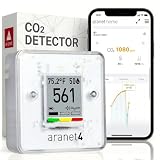
- BREATHE EASILY: Aranet4 CO2 meter measures CO2 levels, temperature, relative humidity, and atmospheric pressure in real-time, empowering you to make informed decisions for healthy ventilation. No wonder it's the top-rated indoor air quality monitor in Amazon's CO2 monitor segment!
- CABLE-FREE: The power-efficient e-ink display guarantees an extended battery life of up to 4 years for this wireless air quality monitor, ensuring worry-free monitoring without the hassle of cables and cords.
- EASY-TO-USE: The color coding, prominent CO2 number on the display, and optional buzzer of this air quality meter alert you when the CO2 concentration becomes too high.
- FREE & INTERACTIVE APP: A smartphone application for viewing and analyzing up to 90 days of historical data from your indoor air quality meter, complete with user-friendly graphs.
- PREMIUM QUALITY: Aranet4 carbon dioxide detectors use nondispersive infrared sensor (NDIR) technology for the most precise and reliable CO2 measurements. Made in the European Union.
What does the published project record show?
A 2020 U.S. Department of Energy and NETL review reported that DOE-supported and other projects injected more than 25 million metric tons of CO2 in 2019. The review said those projects had shown no adverse impacts to human health or the environment, and that no DOE-supported project had observed migration outside the intended storage reservoir or confining cap rock at the time the report was published. Those are findings about the projects and period covered by that report—not a current global total or a guarantee about every project.
The IPCC’s Carbon Dioxide Capture and Storage report was published in 2005. It covers capture, transport, underground geological storage, mineral carbonation and industrial uses, and greenhouse-gas inventories and accounting. Its publication date is relevant when using it as a reference; it should not be treated as a current project-by-project accounting.
How to assess a particular storage project
For a specific project, the useful questions are about its site and operating evidence, not just the general storage method:
- What formation and confining zone will be used, and what supports the assessment of their suitability?
- How will the project manage injection and subsurface pressure?
- How will well integrity be maintained and potential migration pathways addressed?
- Which monitoring methods will be used, what changes are they designed to detect, and how will unexpected results be handled?
- Is the CO2 intended for geological storage or for use?
- What stage is the project in, and what monitoring is planned across its lifecycle?
These questions help distinguish a general claim about geological storage from evidence about the design and performance of an individual site.
Quick Recap
Product prices and availability are accurate as of the date/time indicated and are subject to change. Any price and availability information displayed on Amazon at the time of purchase will apply.

