
What’s actually slowing this PC down?
Pick the symptom - the matching free tool is one click away.
An industrial safety audit should pair a review of records and worker input with a physical inspection of the work. Inspectors need to examine the hazards, equipment, tasks, and work areas that actually exist at the site, then document findings and verify corrective actions. OSHA’s sample checklists are useful prompts—not a universal checklist or proof of compliance.
Prepare the audit around the work being done
Before the walkthrough, define what the audit will cover: work areas, shifts, jobs, equipment, materials, vehicles, contractors, and nonroutine tasks such as maintenance or process changes. A checklist that omits a shift, temporary work area, or contractor activity can miss hazards even if it is otherwise thorough.


Review relevant records and involve workers who understand how tasks are performed and where things can go wrong. OSHA’s Hazard Identification and Assessment guidance describes proactive hazard identification as an ongoing process. Useful preparation materials include:
- Prior inspection findings and records of injuries and illnesses.
- Hazard reports, complaints, incident and near-miss investigations, and job hazard analyses.
- Equipment manuals, Safety Data Sheets, exposure assessments, and existing safety programs.
- Information about planned or recent changes to equipment, processes, materials, workstations, or workflow.
Walk the site and observe actual conditions
Inspect operations as they are performed, not just the paperwork describing them. OSHA recommends regular inspections that include operations, equipment, work areas, facilities, plant vehicles, and transportation vehicles, with worker participation. Include storage, warehousing, maintenance, and contractor work where they are part of the site’s activities. OSHA’s Job Hazard Analysis booklet also supports examining work tasks to identify hazards and controls.
Recommended Free Tools
#1 Best Overall
Build the checklist for the facility rather than copying a generic list. OSHA’s general examples include:
- Housekeeping and slips, trips, and falls.
- Electrical hazards.
- Equipment operation, maintenance, and machine safeguards.
- Fire protection and emergency procedures.
- Workflow, work organization, and work practices.
- Workplace violence and ergonomics.
Document conditions clearly. Photos or video can help explain a finding and later confirm whether it was corrected. Record where the issue occurred, what task or equipment was involved, and who may be exposed, while following site rules for recording people or sensitive information.
Rank #2

- Vehicle inspection report book helps document and report needed repairs to help maintain safe workplace utility vehicles.
- Heavy equipment inspection report contains a checklist of 36 common vehicle items and space for additional comments. Easy to use for reporting vehicle condition.
- This equipment maintenance log book set comes with 25 books. Each book contains 31 sets of forms. In total, you will receive 775 forms.
- The maintenance book is 2-ply and carbonless.
- Driver inspection books measure 5.5" x 8.5".
Check machinery and hazardous-energy controls
Machine guarding
Look for exposure to ingoing nip points, rotating parts, flying chips, and sparks. Check whether guards are appropriate for the hazard, securely attached, in good condition, and arranged so workers cannot reach the danger zone. Also consider point-of-operation protection and whether fixed machinery is securely anchored. OSHA’s Machine Guarding publication includes sample questions about preventing contact with dangerous moving parts, keeping guards firmly secured, and stopping objects from falling into moving parts.
Lockout/tagout and other energy control
For servicing and maintenance, review the site’s hazardous-energy control program against the work and equipment in scope. Check whether written procedures cover relevant equipment and energy sources; whether isolation and verification steps are clear; whether workers receive training appropriate to their roles; and whether periodic inspections, deficiency correction, and required certifications are documented.
Rank #3
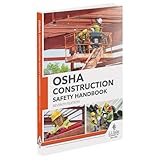
- 2024 OSHA Construction Safety Book is the seventh edition with the new OSHA HazCom final rule on 5/20/24. While the rule takes effect 7/19/24, the compliance dates don’t begin until 1/19/26 per 29 CFR 1910.1200(j).
- Construction Site Book offers quick access to essential OSHA regulations, jobsite hazards, and practical safety tips. It also helps employees identify hazards and prevent injuries and illnesses.
- Features easy-to-read format, full-color images, chapter quizzes with answer key, and comes in a compact size making it a convenient reference for employees.
- Critical topics include Confined Space Entry; Cranes & Derricks; Electrical Safety; Emergency Response; Ergonomics & Back Safety; Excavations; Fall Protection; First Aid & Bloodborne Pathogens; HazCom; Health & Wellness; Jobsite Exposures; Lockout/Tagout; Ladders & Stairways; Materials Handling/Storage; Motor Vehicles; PPE; Scaffolds; Site Safety & Security; Slips, Trips & Falls; Tool Safety; Welding, Cutting & Brazing; and Work Zone Safety.
- Specifications: 5 1/4” x 7 1/4", English, Soft bound. 7th Edition. Copyright 2024.
OSHA’s lockout/tagout enforcement instruction describes a periodic inspection performed at least annually by an authorized employee other than the employee using the procedure being inspected. Apply that requirement in the context of the applicable standard and operation rather than treating it as a rule for every kind of safety inspection.
Assess health exposures and nonroutine hazards
A visual walkthrough alone cannot reliably identify every chemical, physical, biological, or ergonomic exposure. Depending on the hazard, an audit may need to review exposure monitoring, industrial-hygiene assessments, medical trends, or other records. Ask whether changing conditions—such as new materials, altered workflows, equipment modifications, or temporary tasks—have introduced risks not captured by an older checklist.
Include emergency and nonroutine work in the scope. A routine production walkthrough may not reveal hazards during equipment breakdowns, cleaning, maintenance, contractor work, or other infrequent activities. Use worker knowledge and task-specific hazard analyses to identify what happens outside normal operations.
Independent reader supportYour contribution helps us test, update, and keep practical guides available for everyone.Prioritize findings and verify corrections
For each finding, assess the potential severity and likelihood of harm, and provide interim protection where needed while a lasting correction is arranged. Assign a responsible person and a clear action; then follow up to confirm the hazard was actually controlled. If a straightforward hazard such as a housekeeping or trip problem can be corrected safely and feasibly during the inspection, address it rather than leaving it open.
Do these 3 things before closing this tab:
1Fix the driver behind crashes, sound loss and screen glitches2Repair Windows errors before they cause bigger problems3Scan for outdated or missing drivers - takes under a minuteReview injuries, illnesses, near misses, complaints, and repeat findings for root causes and weaknesses in the safety program. A recurring problem may point to a work-design, maintenance, training, or supervision issue—not just an isolated defect. Keep the finding, action, and verification record together so the audit produces a traceable closeout rather than a list of observations.
Use the checklist as a prompt, not a compliance certificate
OSHA provides sample checklists and hazard-specific standards and eTools, but there is no single checklist that establishes compliance for every industrial site. Requirements vary with the industry, processes, hazards, and jurisdiction. Identify which standards apply to the work being audited and tailor inspection questions to those requirements and actual site conditions.
This is a general U.S. workplace-safety explainer, not legal advice or a complete compliance checklist. In particular, the inspection-conduct rule at 29 CFR 1960.26 applies to federal-agency occupational safety programs; its specific process should not be generalized to every private employer. Use the relevant OSHA standards and qualified safety expertise when determining obligations for a particular workplace.
Quick Recap
Product prices and availability are accurate as of the date/time indicated and are subject to change. Any price and availability information displayed on Amazon at the time of purchase will apply.
Quick wins for a faster PC:
Repair Windows errors before they cause bigger problemsFix Now →Fix the driver behind crashes, sound loss and screen glitchesFind Drivers →
