
MEMS microphones can be an excellent fit for projects that need compact packaging, consistent component behavior, low-power options or multiple microphones for beamforming and noise cancellation. They are not automatically better than electret condenser microphones (ECMs): the right choice depends on your acoustic targets, interface, enclosure, power budget and manufacturing constraints.
What a MEMS microphone is
A MEMS microphone combines a micromachined acoustic sensor with an application-specific integrated circuit (ASIC) in one package. Sound pressure changes capacitance in the sensor, and the ASIC converts that signal to an analog or digital output. The package may have a top-facing or bottom-facing sound port, which determines how its opening must align with the circuit board and enclosure. STMicroelectronics describes the component and its package options.
The microphone is only one part of the audio path. Enclosure acoustics, the port and board layout, power, interface electronics and signal processing all influence the system’s result. Component specifications are useful for screening candidates, but they do not by themselves guarantee the performance of the finished device.
Why designers choose MEMS
- Compact integration: Sensor and ASIC share a small package, potentially simplifying placement in space-constrained products. ST describes MEMS microphones in small metal or plastic packages.
- Consistent behavior for arrays: Sensitivity matching can help multiple microphones work together for beamforming, sound-source localization and noise cancellation. ST and Infineon identify matching and response consistency as useful in array designs.
- Low-power choices: Vendors offer parts and operating modes aimed at battery-powered systems. Compare the current draw in the mode your device will actually use, rather than relying on a generic low-power claim.
- Manufacturing integration: An Analog Devices EngineerZone answer notes that MEMS microphones can use reflow assembly like many ICs. Its broader claims about vibration sensitivity and response uniformity versus ECMs are vendor-authored generalizations, not a guarantee for every pair of parts.
These are reasons to evaluate MEMS, not proof that it wins on every dimension. An ECM can remain suitable when an existing design’s mechanical, electrical or sourcing constraints favor it. The cited sources do not establish a universal winner for cost, acoustics, reliability or assembly.
Recommended Free Tools
#1 Best Overall

- INMP441 is a high-performance, low-power, digital output, omnidirectional MEMS microphone with a bottom port
- The INMP441 module includes MEMS sensors, signal composition adjustment, analog-to-digital converters, anti-aliasing filters, power management, and an industry-standard 24-bit I2S interface
- The I2S interface allows INMP441 to be directly connected to digital processors, such as DSPs and microcontrollers, without the need for audio codecs used in the system
- The INMP441 has a high signal-to-noise ratio of 61dBA, making it an excellent choice for near-field applications
- INMP441 has a flat broadband frequency response, resulting in high sound clarity
How to choose a MEMS microphone
Start with the sounds the product must capture and the environment in which it will operate. Then compare candidate parts using the conditions behind each specification.
- Set the noise-floor target. Signal-to-noise ratio (SNR) compares a reference acoustic signal with residual microphone noise. ST’s AN4426 tutorial defines the reference as the output for 1 Pa at 1 kHz and describes residual-noise measurement as typically performed in an anechoic environment with A-weighting. Check that the resulting noise floor suits the quietest sound you need to capture; system performance will also depend on the rest of the audio path.
- Check acoustic overload and distortion. Acoustic overload point (AOP) is the maximum acoustic input at which a part meets a stated distortion criterion. Compare values only when the total harmonic distortion (THD) condition is specified. For example, Infineon’s 2026 selection guide lists the IM68D128B at 128 dBSPL AOP for 10% THD and 122 dBSPL for 1% THD.
- Match frequency response to the signal. Voice, music, active noise cancellation (ANC) and ultrasound sensing do not have the same bandwidth needs. Check the specified response and low-frequency roll-off against the application, not just a headline audio-quality claim.
- Review sensitivity and tolerance. Confirm nominal sensitivity and part-to-part tolerance. Matching matters particularly when an algorithm compares signals from multiple microphones.
- Choose the interface with the host in mind. Analog output may allow a lower-power microphone with a smaller ASIC structure. A digital PDM microphone includes an ADC and can offer robust transmission and improved EMI rejection, according to ST. Either choice affects host circuitry, routing, clocking, processing and power.
- Compare current in the intended mode. Use the current figure for the operating mode the product will use, and account for mode changes in its power budget.
- Confirm mechanical and environmental fit. Match top- or bottom-port geometry to the PCB and enclosure. Check package dimensions, soldering constraints, temperature limits, shock requirements and any dust- or water-protection rating in the part’s datasheet.
- Check phase and group delay for coordinated processing. Infineon’s ANC headset application note identifies phase response, group delay and their part-to-part tolerance as selection factors for noise-cancelling and array applications.
Analog or digital output?
Neither interface is inherently the better choice. ST describes analog MEMS microphones as potentially lower power, with a smaller ASIC structure. Digital MEMS microphones add an ADC and produce PDM output; ST says this can enable robust transmission and better EMI rejection. Decide based on the host audio subsystem, noise coupling, routing, clock requirements, processing architecture and power budget.
Rank #2
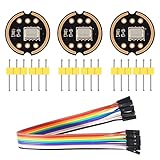
- The INMP441 is a high-performance, low power, digital-output, omnidirectional MEMS microphone with a bottom port.
- The INMP441 is available in a thin 4.72 x 3.76 x 1 mm surface mount package. It is reflow- solder compatible with no sensitivity degradation. The INMP441 is halide free.
- The INMP441 has a high signal-to-noise ratio and is an excellent choice for near field applications. The INMP441 has a flat wideband frequency response that results in high definition of natural sound.
- SCK: Serial data clock for I2S interface; WS: Serial data word selection for I2S interface; L/R: Left/Right channel selection.
- Applications: Teleconferencing Systems; Remote Controls ; Gaming Consoles; Mobile Devices ;Laptops Tablets ;Security Systems
Where MEMS microphones are used
Manufacturer materials identify personal electronics, industrial systems, automotive products, computers and peripherals as application areas. Examples include hands-free calling, e-Call, in-car communications, beamforming, sound-source localization, ANC, smartphones, hearing enhancement, smart speakers, home automation and other voice interfaces. These are examples of plausible applications, not evidence that any particular microphone meets every product’s requirements.
Two manufacturer examples—and what their figures mean
The specifications below illustrate how to read individual product data; they are not a head-to-head test or a benchmark for MEMS microphones as a class.
Rank #3

- Product Overview: The INMP441 is a high-performance omnidirectional MEMS microphone with digital output and a bottom-port design. Combining low power consumption with superior acoustic performance, it delivers exceptional audio capture quality for professional applications
- Compact Design: Housed in an ultra-thin 4.72 × 3.76 × 1 mm surface-mount package, this microphone retains consistent sensitivity after reflow soldering. Its halide-free construction ensures reliable performance and seamless PCB integration
- Acoustic Excellence: Featuring an impressive 61 dBA signal-to-noise ratio and a flat wideband frequency response, the INMP441 reproduces natural, high-definition audio with outstanding clarity, making it an ideal choice for near-field sound applications
- Digital Interface: Equipped with a built-in 24-bit I²S interface, the microphone connects directly to digital processors—such as DSPs and microcontrollers—without the need for external audio codecs, greatly simplifying system design
- Application Versatility: Suitable for a wide range of uses including teleconferencing systems, gaming peripherals, mobile electronics, laptops, and security systems, the INMP441 provides consistent performance across diverse operating conditions
| Part | Published specifications | Important context |
|---|---|---|
| Infineon IM68D128B | 67.5 dB(A) SNR; 128 dBSPL AOP at 10% THD and 122 dBSPL at 1% THD; PDM digital interface; 20 Hz low-frequency roll-off; 580 µA high-power mode and 190 µA low-power mode; 3.5 × 2.65 × 0.98 mm package | Figures are from Infineon’s 2026 product selection guide. The two AOP figures use different THD conditions; the two current figures correspond to different power modes. |
| Infineon IM69D129FV01 | 69 dB(A) SNR; 129 dBSPL AOP; 450 µA current; ±1 dB sensitivity tolerance; IP57 rating; 3.5 × 2.65 × 0.98 mm package | Figures are from Infineon’s product page, accessed in 2026. Confirm the current datasheet revision, exact ordering code and supply availability before design-in. |
See the Infineon XENSIV microphone selection guide and the IM69D129F product page for the manufacturer-published details. The IM69D129FV01 designation above is an example; check the linked product information and current ordering documentation when selecting a part.
Independent reader supportYour contribution helps us test, update, and keep practical guides available for everyone.Before committing to a part
- Read the current datasheet for the exact ordering code, interface, package, port, electrical limits and environmental ratings.
- Check how specifications were measured and compare like with like, especially for SNR, AOP and current.
- Evaluate the microphone in the intended enclosure and audio chain, including placement and signal processing.
- For arrays or ANC, assess channel matching and phase or group-delay behavior required by the algorithm.
- Verify current status and availability with the manufacturer or supplier before design-in.
For the ECM comparison, Analog Devices EngineerZone discusses MEMS microphones versus electret microphones; treat its general comparison claims as vendor commentary rather than independent controlled test results.
Quick Recap
Best Value

- Package Includes: You will receive 5 INMP441 microphone modules, featuring a bottom-port design with digital output, delivering superior acoustic performance, low power consumption, and exceptional audio capture quality for professional applications like voice assistants and IoT devices.
- Product Material: Built with a good-quality PCB and precision soldered pins using premium tin (solder), ensuring strong electrical conductivity, stable signal transmission, and excellent durability for long-term reliable performance in electronic applications.
- I2S Digital Output Interface: Features a built-in 24-bit I2S interface for direct digital audio transmission, ensuring low noise and easy integration with ESP32 and other microcontrollers.
- High Sensitivity & Omnidirectional Pickup: Equipped with a high-performance MEMS sensor, the INMP441 captures clear and balanced audio from all directions, ensuring accurate voice recognition even in noisy environments, making it ideal for smart assistants, DIY audio projects, and embedded voice control systems.
- Versatile Application Range: Perfect for teleconferencing systems, gaming peripherals, smart home devices, security systems, mobile electronics, and voice recognition projects. This module offers consistent performance across diverse operating conditions for makers, engineers, and developers.
Rank #4

- INMP441 is a high performance, low power consumption, digital output, omnidirectional MEMS microphone with bottom port
- The complete INMP441 solution consists of a MEMS sensor, signal composition conditioning, analog-to-digital converter, anti-aliasing filter, power management and industry standard 24-bit I²S interface.
- The I²S interface allows INMP441 to connect directly to digital processors, such as DSPs and microcontrollers, without the need for the audio codec used in the system
- INMP441 has a high signal-to-noise ratio and is an excellent choice for near-field applications. INMP441 has a flat broadband frequency response, resulting in high definition of natural sound.
Product prices and availability are accurate as of the date/time indicated and are subject to change. Any price and availability information displayed on Amazon at the time of purchase will apply.

