
Quick wins for a faster PC:
Clear out junk files and repair common Windows errorsFree Scan →Scan for outdated or missing drivers - takes under a minuteDriver Scan →Repair Windows errors before they cause bigger problemsFix Now →To keep an AI agent from taking an action you did not authorize, limit its tools and data access, treat outside content as untrusted, and put an independent policy check between the model and any consequential action. Use human approval for actions that are high-impact or hard to reverse, then test and monitor those controls. A prompt alone is not an authorization system: these safeguards reduce risk, but they cannot guarantee that an agent will never make a mistake or be manipulated.
What should guardrails control?
Guardrails should control the agent’s authority and the path from its suggestion to an executed action. Instructions can tell an agent what to do, but permissions determine what it can access, and an execution or policy layer can decide whether a proposed action is allowed to run.
This distinction matters because agents may read web pages, emails, documents, and tool responses that contain instructions written by someone other than the user. Prompt injection is a form of social engineering in which such third-party text tries to redirect the system. Treat that text as data to assess, not as authority to expand the task.
OpenAI’s Designing AI agents to resist prompt injection (March 11, 2026) describes the security expectation that potentially dangerous actions or transmissions of sensitive information should not happen silently or without appropriate safeguards. Anthropic’s Trustworthy agents in practice (April 9, 2026) emphasizes that agent safety needs defenses at multiple levels. Neither framing promises a perfect defense; the practical goal is to limit the damage if an agent is mistaken or manipulated.
Do these 3 things before closing this tab:
1Repair Windows errors before they cause bigger problems2Fix the driver behind crashes, sound loss and screen glitches3Clear out junk files and repair common Windows errors#1 Best Overall
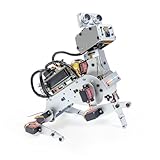
- AI-Powered Raspberry Pi Robot Dog — PiDog: Powered by Raspberry Pi (5/4B/3B+/3B/Zero 2W), OpenClaw, and multi-LLMs like ChatGPT, Gemini, Grok, DeepSeek, Qwen & Ollama. With 12 servos, camera, gyroscope, hearing & touch sensors, PiDog can see, listen, talk, move, and interact intelligently. Supports OpenCV, MediaPipe, TTS & STT, app control, FPV & Python. A great STEM robotics gift for students, makers & tech enthusiasts—perfect for birthdays and holidays. (Raspberry Pi not included)
- Realistic Dog-like Movements: PiDog's 12 powerful servos enable 32 dog-like actions, including walking, sitting, standing, shaking its head, wagging its tail, and performing playful tricks, closely mimicking a real dog and providing an engaging experience. This is an AI development robot product designed for engineers, suitable for ages 15 and above
- Rich Sensor Suite for Interactive Experiences: PiDog features ultrasonic, touch, gyroscope, sound, camera, speaker and microphone. These provide it with advanced hearing, vision, and touch, enabling it to see, detect obstacles, respond to touch, and recognize sounds, making interactions highly engaging
- AI-Powered Interactions with OpenClaw & Multi-LLMs. PiDog combines voice, vision, and gesture recognition for immersive AI experiences. Powered by OpenClaw and multi-LLMs like ChatGPT, Gemini, Grok, DeepSeek, Qwen, Doubao, and Ollama (local LLMs), it can understand questions, respond naturally through TTS & STT, recognize math problems, interpret hand gestures, and hold smart conversations. OpenClaw also enables customizable AI behaviors and personalized robotics development, helping users create their own intelligent robotic companion
- Comprehensive Learning Resources and Support: PiDog offers detailed online documentation, video tutorials, prompt technical support, and an active forum community, ensuring beginners can easily complete all projects and enjoy a great experience
How do I set guardrails for an AI agent?
Work from the agent’s intended task outward: define the boundary, restrict access, decide which actions need approval, and verify each action independently before execution.
-
Define the task and trust boundaries
Write down the agent’s permitted objective, whose identity or account it acts for, which data sources it may use, and what actions it may take. Prefer a narrow assignment over open-ended authority. For example, “summarize these messages and draft a reply for review” is more bounded than “review my messages and take whatever action is needed.” OpenAI’s prompt-safety guidance warns that broad requests can give malicious content more room to mislead an agent.
Mark which inputs are trusted instructions and which are untrusted content. A page, message, document, or API response does not become an instruction merely because the agent reads it. Keep the user’s task and the agent’s operating policy separate from content being analyzed.
-
Inventory tools, data, and permissions
For every tool the agent can call, record what it can read, create, change, send, delete, or purchase; which resources it can reach; which credentials it uses; and whether its effects can be reversed. OpenAI’s practical guide identifies read-versus-write access, reversibility, required permissions, and financial impact as useful factors when assessing an action.
Special offer. See more information about Outbyte and uninstall instructions. Please review EULA and Privacy policy.Rank #2
 AI Robotic Arm Kit with Servo Motors – LeRobot SO-ARM101 Pro Low-Cost (Without 3D Printed Parts) | 6-DOF, Open-Source, Compatible with NVIDIA Jetson
- Optimized AI Arm Kit for LeRobot & Hugging Face Projects – The SO-ARM101 is an upgraded low-cost robotic arm servo motor kit designed for AI robotics enthusiasts and developers. Fully compatible with LeRobot and Hugging Face frameworks, it supports imitation learning and reinforcement learning, making it ideal for real-world robotics applications. (3D-printed parts not included.)
- Enhanced Wiring & Performance – Compared to the SO-ARM100, the SO-ARM101 features improved wiring to prevent disconnection at joint 3 and eliminates range-of-motion limitations. The leader arm uses optimized gear ratio motors for smoother performance—no external gearboxes required.
- Real-Time Leader-Follower Functionality – New real-time tracking allows the leader arm to follow the follower arm, enabling human intervention and correction during reinforcement learning (RL) training. Perfect for hands-on AI robotics development and research.
- Open-Source, DIY-Friendly & Nvidia-Compatible – Developed by TheRobotStudio, this open-source AI Arm kit integrates seamlessly with the LeRobot platform, offering PyTorch-based datasets, simulation, training, and deployment tools. Fully compatible with Nvidia Jetson edge devices, including reComputer Mini J4012 Orin NX 16 GB.
- Comprehensive Learning Resources – Includes detailed open-source assembly and calibration guides, testing tutorials, and deployment instructions. From wiring to AI training, get everything you need to start building, teaching, and optimizing your robotic arm for grasping and placing tasks.
Grant only the tools and resource scope needed for the task. Separate read and write capabilities where possible, and use distinct tools or credentials for different trust levels. A model’s confident request to use a tool is not proof that the request is authorized.
-
Classify actions by consequence
Set categories that fit your system rather than relying on one universal threshold; the cited guidance does not prescribe a single classification. Consider whether an action writes data, affects other people, needs elevated privileges, is visible outside your organization, involves money, or is difficult to undo.
Action class Typical treatment Examples of the distinction Read-only and within scope May proceed under the established task and access limits. Reading an authorized document is different from changing its contents. Writes or affects other people Apply stronger checks; require review or approval when the effect warrants it. Editing a shared record or sending a message changes what others see. High-impact or hard to reverse Pause for explicit human approval or an independently enforced policy decision. Financial, administrative, destructive, externally visible, or difficult-to-reverse operations deserve the strongest gate. These are practical policy categories, not a vendor-defined standard. Decide the thresholds for your use case and document them before deployment.
-
Bind approval to the exact action
When an action needs human approval, show the person the exact operation, target or destination, and information that will be shared. Ask them to approve that concrete action, not a blanket grant of authority for future actions. If the proposed target or parameters change, require a fresh check against the policy.
Recommended Free Tools
Special offer. See more information about Outbyte and uninstall instructions. Please review EULA and Privacy policy.Rank #3
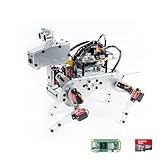 SunFounder AI Robot Kit with Raspberry Pi Zero 2 W+32G TF Card, ChatGPT-4o Enabled with Voice Command & Video Recognition, App Control, FPV, 12 Servos, Gyroscope, Camera, Mic
- Raspberry Pi AI Robot: powered by Raspberry Pi (5/4B/3B+/3B/Zero 2W), features 12 servos and sensors for vision, hearing, and touch. Integrated with ChatGPT-4o, it responds to complex queries. With app control and FPV, users can manage and see its view in real-time. It supports Python programming
- Realistic Movements: 12 powerful servos enable 32 actions, including walking, sitting, standing, shaking its head, wagging its tail, and performing playful tricks, closely mimicking a real and providing an engaging experience
- Rich Sensor Suite for Interactive Experiences: features ultrasonic, touch, gyroscope, sound, camera, speaker and microphone. These provide it with advanced hearing, vision, and touch, enabling it to see, detect obstacles, respond to touch, and recognize sounds, making interactions highly engaging
- Engaging Interactions with ChatGPT-4o: with ChatGPT-4o enables voice interactions and visual recognition, making it smarter and more responsive. Users can have natural conversations, solve math problems via the camera, and interpret gestures, creating diverse and fun interactions
- Comprehensive Learning Resources and Support: offers detailed online documentation, video tutorials, prompt technical support, and an active forum community, ensuring beginners can easily complete all projects and enjoy a great experience
-
Validate the action outside the model
Treat the model as a proposer, not the final authority. Before execution, a separate policy or execution component should validate the actor, requested tool, target resource, normalized parameters, allowed scope, and approval state. If a critical authorization or audit check fails, deny or pause rather than proceeding. OWASP’s agent guidance also recommends short-lived approvals and replay protection for high-impact operations where appropriate, and idempotent operations where feasible.
Keep the model from bypassing this gate. A sensitive tool should not execute solely because the model produced a plausible call, and untrusted text should not be able to grant a permission that the policy layer has not granted.
-
Use layered prompt-injection defenses
Maintain clear boundaries between instructions and data, limit available tools, and validate inputs and outputs. A policy check can compare a proposed action with the user’s intended task and block scope drift. OWASP’s prompt-injection guidance discusses quarantined parsing and capability tracking as design approaches, while noting that some approaches remain early-stage; they are not universal, mature product features.
Do not make a text filter or classifier the only barrier. OpenAI’s security discussion focuses on limiting the impact of manipulation even if it succeeds, while Anthropic’s guidance describes defenses at multiple levels. Access limits, execution checks, and approval gates provide controls beyond the model’s interpretation of text.
Special offer. See more information about Outbyte and uninstall instructions. Please review EULA and Privacy policy.Rank #4
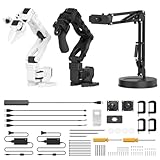 AI Robotic Arm Kit Hiwonder SO-ARM101 Embodied Imitation Learning Open Source 6-Axis Robot Arm 12 High-Torque Bus Servo Motors AI Vision Recognition (Advanced Kit, Included 3D Printed Part, Assembled)
- 【End-to-End Imitation Learning】Hiwonder SO-ARM101 robot arm is an embodied intelligent hardware platform compatible with the Lerobot open-source framework. It provides developers with streamlined access to shared code, templates, and pre-trained models to explore the latest advancements in AI research.
- 【Dual-Camera Vision System】Equipped with both a gripper-mounted camera and an external camera, the system supports both precise manipulation and environmental awareness for accurate imitation learning.
- 【Hiwonder High-Performance Bus Servos】Featuring 12 high-torque bus servo motors with magnetic feedback, the Hiwonder SO-Arm101 robotic arm delivers smooth, stable motion, eliminating issues like power deficiency and jitter.
- 【Professional Control & Debugging】Integrated with the Hiwonder BusLinker V3.0 debugging board, the system supports servo scanning, real-time status monitoring, and trajectory control. The professional PC software simplifies device calibration and debugging, making it accessible for both researchers and hobbyists.
- 【Open-Source Compatibility】The SO-ARM101 robotic arm is designed to be fully compatible with the LeRobot open-source project. We acknowledge the contributions of the open-source community; all trademarks and copyrights belong to their respective owners.
-
Log, monitor, and test
Keep audit trails for high-risk decisions and actions, but avoid storing credentials or sensitive personal information unnecessarily. Where the platform supports it, provide a way for a person to interrupt execution. Monitor for unexpected tool use, changes in scope, repeated retries, and unusual data flows.
Create repeatable abuse-case tests before production and after material changes to prompts, tools, memory, retrieval, policies, or providers. Include attempts at prompt override, unauthorized tool use, privilege escalation, data leakage, memory poisoning, recursive tool use, and retry or cost exhaustion. Check the application’s controls as well as model behavior.
How can I compare guardrail designs?
Use these questions to assess competing designs. They are comparison criteria drawn from the control recommendations, not a ranking of products.
| Design question | Stronger control pattern | Weaker pattern to scrutinize |
|---|---|---|
| Where is authorization enforced? | A separate policy or execution layer checks the proposed action before it runs. | Instructions or a classifier are the only barrier. |
| How broad is the agent’s authority? | Narrow, task-specific tools and resource access. | Broad shared credentials and access to unrelated resources. |
| What happens on a consequential action? | Risk-based checks, with approval or independent policy enforcement for high-impact actions. | Writes, financial operations, or destructive actions run like ordinary reads. |
| What does approval cover? | The precise action, destination or target, and information to be shared. | A blanket approval detached from the operation eventually executed. |
| What happens when a control fails? | The operation is denied or paused if critical authorization or audit validation fails. | The operation proceeds despite a missing or failed check. |
| How are controls verified? | Repeatable adversarial tests run again after material system changes. | One-off manual checks with no retest plan. |
What is established—and what is still evolving?
OWASP, OpenAI, and Anthropic guidance supports layered risk reduction, not a guarantee that every attack or error can be prevented. The specific permission, approval, logging, and sandbox features available vary by agent platform, so verify what your chosen platform actually enforces rather than assuming a feature exists.
NIST’s February 2026 announcement describes exploratory work on how identity standards and practices might apply to software agents, including identification, authorization, auditing, non-repudiation, and prompt-injection mitigation. It is standards-development context, not a finalized agent-specific standard. No effectiveness rate or prevalence statistic is established by the cited guidance.
Quick Recap
Product prices and availability are accurate as of the date/time indicated and are subject to change. Any price and availability information displayed on Amazon at the time of purchase will apply.

