
Do these 3 things before closing this tab:
1Scan for outdated or missing drivers - takes under a minute2Clear out junk files and repair common Windows errors3Fix the driver behind crashes, sound loss and screen glitchesChoose an anti-jamming system by matching its documented performance to your vehicle’s threat environment, navigation needs and integration limits—not by relying on a single suppression claim. A resilient design may combine a protected antenna, a multi-constellation receiver, inertial navigation, integrity monitoring and operational procedures. These layers address different problems: riding through some interference does not by itself prove that a system can detect spoofing or preserve trustworthy position data.
Start by separating jamming from spoofing
Jamming is radio-frequency interference that disrupts a receiver’s ability to acquire or track GNSS signals. It can deny navigation, positioning and timing functions. Spoofing uses GNSS-like signals to induce false or misleading position or timing information; a receiver may continue reporting a solution even when that solution is wrong. Effects can persist after the spoofing signal stops, according to the FAA’s GPS and GNSS Interference Resource Guide, last updated December 8, 2025.

That distinction changes what to buy. Antenna and receiver measures can help maintain reception under some interference conditions, while spoofing protection also depends on detecting suspect data, checking its integrity and deciding how the vehicle should respond. Ask vendors to identify which threat types each claimed feature addresses.
Define the mission and failure tolerance first
Before comparing equipment, write down what the vehicle must do when GNSS degrades or becomes untrustworthy. A system suitable for a vehicle that can pause and await recovery may not suit one that must continue safely through a navigation outage. The right choice depends on vehicle type, installed receiver and antennas, mission, operating geography, acceptable outage and procurement constraints; no product can be selected responsibly from the broad category alone.
#1 Best Overall
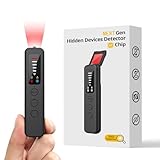
- 【AI-Powered Intelligent Detection System】Equipped with an upgraded AI chip and a patented 360° full-range real-time scanning system, this detector delivers faster scanning and enhanced anti-interference performance. 5-level adjustable sensitivity allows precise positioning of hidden cameras, listening devices, and GPS trackers within a 32-foot detection range. It captures suspicious signals quickly without omission, delivering reliable detection you can count on.
- 【7-in-1 Comprehensive Privacy Protection】This 1MHz to 6.5GHz detector integrates 7 core modes: RF signal detection, wireless camera scanning, red-light lens detection, infrared night vision, magnetic field detection, audio recording jamming, and SOS alert. It quickly locates hidden cameras, GPS trackers, and other devices, and clearly identifies reflections from pinhole lenses with its HD optical sensor. LED indicators provide clear real-time status feedback, keeping you informed at every step.
- 【Real-Time Vibration & Sound and Light Dual Alarm System】It instantly triggers sound and vibration alerts when suspicious signals or devices are detected. It performs reliably in both noisy and quiet environments, and supports a discreet silent mode for meetings and private occasions, ensuring timely warnings without drawing attention. Portable and easy to operate, it serves as a dependable privacy protector for travel, business trips, and daily use.
- 【Portable and Long Battery Life】The device weighs only 1.06 oz, is compact and portable, and can fit in your pocket. It features 1-hour Type-C fast charging and a built-in 800mAh battery, delivering up to 25 hours of continuous working time and 30 days of standby. There is no need for frequent charging during travel and daily use, and privacy protection can be activated at any time.
- 【Smart Signal Filtering & Multi-Scenario Protection】Built-in intelligent background filtering blocks interference from WiFi routers, Bluetooth devices, and microwaves, significantly reducing false alarms. Suitable for hotels, cars, offices, bathrooms, rentals, conference rooms, and public spaces. Trusted by over 1000,000 professionals and privacy-conscious users, it provides all-round privacy protection and peace of mind in any environment.
- Vehicle and installation: Record available mass, space, power, mounting locations, antenna separation and environmental requirements.
- Navigation needs: Specify the required position, velocity and timing outputs, continuity needs, allowable outage and what the vehicle should do if confidence falls.
- Threat and operating context: Identify whether the concern is jamming, spoofing, multipath, accidental RF interference or a combination, and which signals and bands are relevant to the mission.
- Operational constraints: Check authorized signal access, jurisdictional rules, supply-chain and export requirements, maintenance arrangements and operator alert procedures.
Compare the protection layers
| Layer | What to assess | Role and limitation |
|---|---|---|
| Multi-constellation, multi-frequency receiver | Signals tracked simultaneously; required constellations and frequencies; compatibility with the installed navigation stack | Provides more signal options and can support accuracy and multipath mitigation. It does not make a vehicle immune to capable jamming or spoofing. |
| Controlled reception pattern antenna (CRPA) | Array configuration, element count, dimensions, placement, receiver pairing and evidence for the stated threat scenario | An adaptive array can suppress interference arriving from particular directions. Its fit and measured performance depend on the specific installation and test conditions. |
| Inertial navigation and sensor fusion | IMU integration, calibration and alignment requirements, drift and continuity characteristics, interfaces and fusion behavior | An IMU is not affected by RF interference in the same way as GNSS and can bridge a GNSS gap, depending on system design. It cannot provide an unlimited substitute for GNSS, and a compromised GNSS input must not be allowed to corrupt the fused solution. |
| Integrity monitoring and alerts | Interference or spoofing detection, confidence and integrity outputs, cross-check logic, alerting and operator response | Helps identify data that should not be trusted. Continued signal tracking is not evidence that the reported position is genuine. |
| RF filtering and operational measures | Filtering for out-of-band emissions; networked alerts; route or operating-mode contingencies | These measures can complement equipment protection and planning. Filtering described for signals outside GNSS bands is not a replacement for receiver and antenna resilience. |
The ANSI UASSC Standardization Roadmap for Unmanned Aircraft Systems, Version 2 (June 2020), treats multi-signal reception, CRPAs, IMU integration, cross-checks, alerts and flight planning as distinct countermeasure categories. Use that as engineering context, not as a product qualification standard.
Ask for comparable test evidence, not just a headline figure
A vendor’s suppression number is meaningful only alongside the equipment configuration, test method and threat scenario that produced it. The National Space-Based PNT Advisory Board’s April 2024 presentation, Approaches to Toughen GPS for Critical Infrastructure, recommends standard testing, defined threat scenarios and reporting tested resilience levels. The reviewed material does not establish a common independent UAV anti-jam benchmark that supports a general ranking across products.
Rank #2

- Part Number: ZED-F9P GPS-RTK HAT
- ZED-F9P GPS-RTK HAT for Raspberry Pi, centimeter level accuracy, multi-band RTK differential GPS module
- multi-band RTK technology, centimeter level accuracy positioning in seconds, concurrent reception of 4 GNSS systems, high update rate with minor drifting, low power consumption, outstanding ability for anti-spoofing & anti-jamming
- This is a precise centimeter level Raspberry Pi GNSS HAT based on ZED-F9P. It provides features like multi-band RTK with fast convergence times, high update rate, moving base RTK mode support, concurrent reception of 4 GNSS systems, augment positioning systems support, accurate & fast positioning with minor drifting, and outstanding ability for anti-spoofing & anti-jamming.
Request a configuration-specific test record from the vendor or integrator. It should identify what was tested, how the test was conducted, what counted as a pass or failure, and whether the results apply to the equipment and installation proposed for your vehicle. Compare claims only when scenarios and configurations are materially comparable. Confirm the final integrated system—not just a component—against the mission’s requirements using lawful, controlled evaluation procedures; do not conduct operational tests with an unauthorized jammer.
Check vehicle integration before selecting a configuration
Specifications vary by product and configuration, so verify them against the actual vehicle and navigation stack. Ask the vendor or integrator to confirm:
Free tools Windows power users keep installed
One-click scans. No signup required.
Rank #3
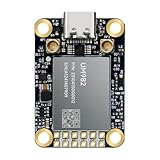
- Equipment Feature:MJRTK-UM982 supports GPS/BDS/GLONASS/Galileo/QZSS All-constellation Multi-frequency, supports on-chip RTK positioning and dual-antenna heading solution, GPS antenna is designed with π-type network impedance matching (50Ω), VSWR below 1.78, and it can converge quickly within 20 seconds to achieve centimeter-level positioning
- Anti-Jamming:Built-in advanced anti-interference unit,60 dB narrowband interference suppression and interference detection, delivers reliable and accurate positioning data even in complex electromagnetic environments.
- Application Areas:26*38*7.6mm compact size is designed for easy integration. Ideal choice for high-precision applications such as UAVs, autonomous machines, gps and gnss for land surveyors and precision agriculture.
- Connection Interface:MJRTK-UM982 GNSS Receiver integrates TYPE-C and XH2.54x6PIN dual interface connection. The TYPE-C interface can realize plug-and-play and convenient connection, and the PIN interface is easy to integrate.
- Product Support: You will get MJRTK-UM982 module×1, SMA cable×2, Heat sink×1, Pins×2; Rich software documentation will provide extensive visualization and evaluation features. Professional technical support team ensures worry-free after-sales.
- Mass, dimensions, mounting and antenna placement, including any required clearance or separation.
- Power requirements, electrical interfaces and expected power behavior in normal and degraded modes.
- Supported GNSS frequencies, constellations and signal types, and compatibility with the receiver and antenna arrangement already installed.
- Digital and RF interfaces, output formats, latency, software dependencies and how integrity or alert data reaches the vehicle’s control system.
- Environmental and vibration qualification, maintenance needs, calibration or alignment requirements, and configuration-specific test evidence.
- What the vehicle does when GNSS is flagged as unreliable or lost, including operator alerts and the transition to an alternate navigation mode.
Do not treat “anti-jam” as a complete interface specification. A component that fits the payload budget can still be unsuitable if it cannot connect to the receiver, expose integrity information or work with the vehicle’s navigation logic.
Use product examples as leads, not a ranking
The following examples illustrate different product approaches. Their descriptions are manufacturer statements, not independent comparative test results; verify the current configuration and applicability directly with the supplier.
| Example | What the cited product information describes | What to verify |
|---|---|---|
| NovAtel GAJT-310 | An integrated or federated anti-jam system marketed for small platforms such as UAVs, with product-specific configurations and L1/L2 protection listed on the product page. | Selected configuration, supported bands, CRPA arrangement, receiver compatibility, mass and power for that configuration, mounting and qualification. |
| NovAtel GAJT-AE3 | A multi-constellation, multi-frequency system marketed for UAVs, missiles and military aircraft; the vendor publishes signal-band, physical and power specifications, along with jammer-direction and suppression claims. | Whether the specified bands and CRPA pairing suit the vehicle, and whether claimed performance was tested under conditions comparable to alternatives being considered. |
| Safran BlackNaute | A July 7, 2025 datasheet describes an embedded GNSS and inertial navigation system for high-end military airborne carriers, including UAVs, with GNSS-challenged operation, interference detection and mitigation, and CRPA compatibility. | Whether the specialized system fits the specific platform, interfaces and mission; the datasheet does not establish independent comparative performance or fit for a particular UAV. |
Plan for GNSS degradation and loss
Protection equipment cannot remove the need for a contingency plan. GPS.gov’s Resilience Through Responsible Use of PNT reproduces U.S. Space-Based PNT Policy guidance that users should plan for signal loss and take reasonable steps to verify or authenticate received data integrity. Translate that principle into the vehicle’s operating procedures: define which integrity alerts change mission behavior, who receives them, what fallback navigation is available and when the vehicle should hold, return, land or stop.
The FAA guide reports that the International Air Transport Association found a 65% increase in the rate of loss of GNSS per 1,000 flights in the first half of 2024 compared with 2023. That is an aviation reporting statistic, not the probability that a UAV will be jammed and not a benchmark for anti-jam equipment.
Best Value

- With a USB interface, you can directly use the phone data cable on the computer point of view positioning effect; With IPEX antenna interface, the default distribution of active antenna, can be quickly positioned;
- GT-U7 main module GPS module using the original UBLOX 7th generation chip, Software is compatible with NEO-6M. GT-U7 module, with high sensitivity, low power consumption, miniaturization, its extremely high tracking sensitivity greatly expanded its positioning of the coverage;
- USB directly connected to the computer, That is, with the host computer-owned serial port function, no need for external serial module, send IPX interface active antenna;
- If you have any issue when using our product,or you need product use documentation, please contact us directly for assistance.we will reply your problem in 24 hours.We try our best to provide the most professional service for each customer.
- How to use the GPS module better, the link is obtained in the Product guides and documents, please download it before use
Keep procurement and testing within legal limits
In the United States, GPS.gov says federal law generally prohibits operating, marketing or selling jamming equipment that interferes with authorized radio communications, subject to limited federal exceptions under applicable statutes. This article concerns protective navigation equipment and lawful procurement—not using an operational jammer to test it. Rules and permissions vary by jurisdiction, and the FAA guide is informational rather than formal FAA policy or regulation; for a specific aircraft and avionics installation, consult the applicable flight manual and supplements.
Quick Recap
Product prices and availability are accurate as of the date/time indicated and are subject to change. Any price and availability information displayed on Amazon at the time of purchase will apply.

