
Quick wins for a faster PC:
Clear out junk files and repair common Windows errorsFree Scan →Fix the driver behind crashes, sound loss and screen glitchesFind Drivers →Repair Windows errors before they cause bigger problemsFix Now →Choose fall fertilizer by grass type and local extension guidance—not by the season printed on the bag. Cool-season lawns such as fescue and bluegrass are commonly fed in late summer or autumn; warm-season lawns such as bermudagrass and zoysia are generally fertilized during active growth in late spring and summer. Check soil-test results, use a locally appropriate schedule, and follow the product label.
Start with your grass type
“Fall fertilizer” is not a universal prescription. A product marketed as a fall or winterizer fertilizer does not make late-season feeding appropriate for every lawn.
- Cool-season grass: Fescues and bluegrass are commonly fertilized in late summer into autumn. The exact window and rate depend on regional guidance and what the lawn has already received.
- Warm-season grass: Zoysia and bermudagrass are generally fertilized in late spring and summer, while actively growing—not simply because autumn has arrived.
- Buffalograss: Nebraska Extension advises waiting until spring green-up to fertilize and not applying after the season’s last fall mowing.
These grass-type distinctions are reflected in University of Maryland Extension’s established-lawn guidance and University of Nebraska–Lincoln Extension’s lawn fertilization guidance. For Colorado lawns, Colorado State University Extension’s turf-management guidance likewise emphasizes the turf’s growth cycle and local schedule.
Use a local calendar, not a national date
Regional recommendations illustrate why there is no single fall application date for every lawn. Iowa State University Extension recommends two nitrogen applications for cool-season lawns in its region; Delaware Extension describes a different regional window. Treat these as local examples, not a schedule to transfer unchanged to another climate.
Free tools Windows power users keep installed
One-click scans. No signup required.
#1 Best Overall
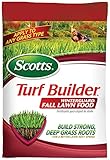
- FALL LAWN FERTILIZER: Scotts Turf Builder WinterGuard Fall Lawn Food is a fertilizer that builds strong, deep grass roots for a better lawn next spring
- SUMMER LAWN RECOVERY: Our fertilizer provides nutrients lawns need to help recover from summer heat, drought, and regular activity while preparing roots to take on harsh winter conditions
- APPLY IN FALL TO PREPARE YOUR LAWN FOR WINTER: Apply this grass fertilizer to a wet or dry lawn in the fall
- USE ON ANY GRASS TYPE: This lawn care product is a lawn food for grass that can be used on any grass type
- SMALL LAWN COVERAGE: One 10 lb. bag of Scotts Turf Builder WinterGuard Fall Lawn Food covers 4,000 sq. ft.
| Regional guidance | Timing or rate | How to apply it |
|---|---|---|
| Iowa cool-season lawns | 1 pound of actual nitrogen per 1,000 square feet in mid-September and again in late October or early November, according to Iowa State University Extension’s fall-lawn FAQ. | This is Iowa-specific advice. Consider previous feeding and lawn condition, and check current local guidance before using the schedule. |
| Delaware cool-season lawns | Early fall—September to mid-October—is a useful nitrogen window; Delaware Extension says to complete existing cool-season turf applications by November 15, in its 2024 fall lawn guidance. | The timing and deadline are for Delaware, not a national cutoff. |
| Delaware, solely quick-release fertilizer | Do not exceed 1 pound of actual nitrogen per 1,000 square feet per application, according to the same Delaware guidance. | This is a Delaware recommendation for solely quick-release fertilizer, not a universal limit for every product or location. |
| Warm-season lawns | Maryland Extension places fertilization in late spring into summer; Nebraska Extension says not to fertilize buffalograss after its last fall mowing. | Use active-growth timing for the particular grass and your region; do not infer a fall feeding from a product name. |
Choose a fertilizer based on nutrient need
For a cool-season lawn that local guidance says to feed in autumn, select a product that supplies the recommended nitrogen at the appropriate rate. There is no single N-P-K ratio or branded “winterizer” that these regional recommendations establish as best for every lawn.
Use a soil test and local recommendations to decide whether phosphorus or potassium is needed. Maryland Extension says routine maintenance fertilizers are generally phosphorus-free; starter fertilizer for a new lawn is an exception. Do not choose a phosphorus-heavy product by default.
Rank #2
- FALL LAWN FERTILIZER: Scotts Turf Builder WinterGuard Fall Lawn Food is a fertilizer that builds strong, deep grass roots for a better lawn next spring
- SUMMER LAWN RECOVERY: Our fertilizer provides the plant food nutrients lawns need to help recover from summer heat, drought, and regular activity while preparing roots to take on harsh winter conditions
- APPLY IN FALL TO PREPARE YOUR LAWN FOR WINTER: Apply this grass fertilizer to a wet or dry lawn in the fall
- USE ON ANY GRASS TYPE: This lawn care product is a lawn food for grass that can be used on any grass type
- SMALL LAWN COVERAGE: One 32.3 lb. bag of Scotts Turf Builder WinterGuard Fall Lawn Food covers 12,000 sq. ft.
Compare products by their guaranteed nutrient analysis, nitrogen release type, package directions, and suitability for your grass and local schedule. The amount of fertilizer to spread depends on its nitrogen percentage and the target amount of actual nitrogen—not just the weight of the bag. A granular lawn fertilizer is one product category to consider; follow its label rather than assuming all granular products have the same rate or application instructions.
Quick Recap
Rank #4
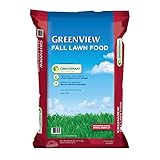
- GreenSmart Enhanced Efficiency Fertilizer - This fertilizer for grass provides continuous feeding for up to 8 weeks
- Fall Application - Apply this fall grass fertilizer for lawn in fall while grass is actively growing
- Lawn Fertilization - This grass fertilizer improves water and nutrient absorption
- Lawn Food for Grass - Restores nutrients to the soil that were lost during summer
- Grass Feed - Builds a deeper, stronger root system to protect during winter
Rank #3

- FALL LAWN WEED & FEED: Scotts Turf Builder WinterGuard Fall Weed & Feed3 is a lawn weed killer and lawn fertilizer that controls weeds and feeds grass in the fall for a better lawn next spring
- KILLS CLOVER AND DANDELION: Fall weed and feed is a dandelion weed killer and kills over 50 listed lawn weeds, including clover, plantain, morningglory, chicory, eveningprimrose, and purslane
- APPLY IN FALL TO PREPARE YOUR LAWN FOR WINTER: Apply weed control plus grass fertilizer to a moist lawn when weeds are actively growing and temperatures are consistently between 60°F and 90°F
- LAWN GRASS TYPES: This lawn care product is for use on Bahiagrass, Bermudagrass, Bluegrass, Centipedegrass, Fescue, Ryegrass, and Zoysiagrass (see label for restrictions)
- SMALL LAWN COVERAGE: One 11.43 lb. bag of Scotts Turf Builder WinterGuard Fall Weed & Feed3 covers 4,000 sq. ft.
Calculate and apply the label rate carefully
- Measure the lawn area. Base the calculation on the area being treated, rather than spreading by handfuls or treating the whole property as one assumed size.
- Find the nitrogen percentage and directions. Read the guaranteed analysis and package rate. Actual nitrogen is the nutrient amount delivered, not the total weight of fertilizer product.
- Check the locally recommended nitrogen amount. Use the recommendation for your grass and region, accounting for applications already made. Regional figures such as Iowa’s two 1-pound applications per 1,000 square feet are not automatically appropriate elsewhere.
- Apply uniformly at the package rate. A spreader can help distribute granular fertilizer evenly; calibrate or set it according to the product label. Do not estimate the dose by eye.
- Follow the product’s after-application directions. Nebraska Extension notes that rain or irrigation after application can move nitrogen off leaf blades and into the soil. Some combination products may have different directions, so the label takes precedence.
Know when not to fertilize
- Do not apply fertilizer to frozen soil. Virginia Cooperative Extension’s fall lawn care guidance warns against it.
- Do not use a “winterizer” label to override grass timing. Warm-season grass should be fertilized during active growth according to local guidance, not given a late-season nitrogen application just because a package is marketed for fall.
- Check local fertilizer restrictions. Rules differ by jurisdiction; check the requirements where you live rather than assuming a nationwide rule.
- Follow the label for combination products. Weed-and-feed and other combined products can have handling directions that differ from those for a plain lawn fertilizer.
Product prices and availability are accurate as of the date/time indicated and are subject to change. Any price and availability information displayed on Amazon at the time of purchase will apply.

