
A failing capacitor can contribute to an unstable power supply, but symptoms alone cannot identify one. A bulged or vented capacitor is a clear warning; a normal-looking one may still have degraded electrically. Because an unplugged PSU can retain hazardous charge, do not open it unless you are qualified to service electronics. For most readers, the safe next step is professional diagnosis or replacement of the PSU.
Can bad capacitors cause PSU problems?
Yes. A capacitor that no longer performs within the circuit’s requirements can contribute to unstable operation. But symptoms such as unexpected shutdowns or unreliable startup do not prove that a capacitor is the cause; other PSU or system faults can produce similar behavior.
Diagnosis therefore has two parts: look for visible damage, then assess whether the component’s electrical characteristics remain suitable. Visual inspection is a clue, not a complete test.
How to tell whether a PSU capacitor is bad
Look for visible warning signs
A bulged capacitor or one showing signs of venting should be treated as a warning of failure. Do not keep relying on a PSU with visibly damaged components. However, a capacitor that looks normal is not necessarily electrically healthy.
#1 Best Overall
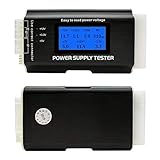
- [8-in-1 ATX Power Supply Tester] -- Support test 20-pin ATX / 24-pin ATX / HDD (IDE) / Floppy 4-pin / PCI-e 6-pin / 4-pin / EPS 8-pin (NOTE: can not fit for PCI-e 8-pin) / SATA connectors
- [Aluminum Alloy Enclosure] -- Light and Easy to Carry, High Strength, Nice Thermal Conductivity & Corrosion Resistance
- [1.8'' LCD Screen] -- Outputted Voltages shows on the 1.8'' LCD Screen, Easy to Read ( The 1.8'' LCD Screen was Powered by 20-pin / 24-pin Connector ), Note: The Product Screen Has a Load of Scratches All Over It?Because The Screen is Easy to Scratch, We Put a Protective Film on It, If You Think It's Not Beautiful, You Can Tear It Off by Yourself
- [Beep Alarm] -- When your power supply test value is beyond normal range, the Power Supply Tester would issue a buzzer alarm, Easy to Know
- NOTE: The voltage of 20pin / 24pin connectors is displayed by the LCD Screen, as "+3.3V", "+12V1", "+5V", "-12V", "5VSB", "PG" (except "+12V2" on LCD Screen); The voltage of PCI-e 6P / 4P / EPS P8 connectors is displayed by the LCD Screen as "+12V2"
Electrical checks require more than appearance
Capacitance alone may not answer whether a capacitor still works properly in its circuit. Tom’s Hardware’s PSU capacitor guide recommends considering equivalent series resistance (ESR) as well as capacitance, using an appropriate instrument. Readings need to be interpreted against the component data and circuit requirements; there is no universal ESR pass/fail threshold for every PSU capacitor.
ESR and other electrolytic-capacitor characteristics vary with factors including temperature and frequency. A reading is meaningful only in the context of the part and the conditions under which it is specified or measured. Owning an ESR meter does not make opening a PSU safe.
Rank #2
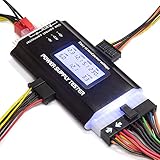
- ✅Comprehensive Power Supply Testing: Efficiently test a wide range of power supply units (PSUs) including ATX, ITX, IDE, HDD, SATA, and BTX, ensuring your components are functioning correctly.
- ✅Digital LCD Display: The clear LCD screen provides real-time readouts of voltage levels, allowing you to easily monitor and diagnose potential issues with your power supply.
- ✅User-Friendly Interface: Designed for both beginners and professionals, this power supply tester is easy to use, with simple plug-and-play functionality that requires no advanced technical knowledge.
- ✅Accurate Voltage Readouts: Get precise measurements of various voltage rails including +12V, +5V, +3.3V, and more, ensuring your power supply is delivering the correct voltage to your PC components.
- ✅Portable and Compact Design: Lightweight and compact, this tester is easy to carry and store, making it an essential tool for system builders, repair technicians, and PC enthusiasts.
Why opening a PSU is hazardous
A PSU may retain a dangerous electrical charge after it has been unplugged. A repair guide for the IBM PC AT specifically warns about stored charge in that model; that warning illustrates the hazard, but it is not a general service procedure for other power supplies. No broadly applicable official discharge or repair procedure is established here.
If you lack electronics-service training and model-specific instructions, do not open the PSU or attempt to discharge it with an improvised method. Waiting or pressing the computer’s power button should not be treated as proof that an opened PSU is safe. Have a qualified technician assess it, or replace the whole unit.
Free tools Windows power users keep installed
One-click scans. No signup required.
Rank #3

- LCD DISPLAY: LCD liquid crystal display, the output voltage is clear at a . If there is any defect, the buzzer will automatically alarm.
- VOLTAGE DISPLAY: It can also measure the output wire P4/P6/P8/SATA/IDE, and the external DIE/SATA/P6/P8 is the light display, there is no LCD voltage. There is LCD voltage display only when connecting to the 24pin or 20pin.
- MINI and PRACTICAL: Now the number of power output groups is increasing. As long as one of them has problem, the hardware of the computer system may work abnormally or even burn out. To measure whether the output voltage output of the power supply is stable, the player usually uses a multimeter. But for the average user is still a little troublesome.
- ATX POWER SUPPLY TESTER: We have developed a portable computer power tester for the power supply market that cannot judge the quality of the power supply. It has LCD intuitive and accurate display voltage (+/-0.01V), automatic fault alarm, complete test interface, small and beautiful appearance, and more test functions. It is your best choice and helper to quickly detect PC power.
- WIDE APPLICATION: ATX Power Tester is a powerful power test device that can detect ATX, BTX, ITX, TFX computer power supplies, and can display various groups of voltage and PG values in the LCD screen, and quickly detect computer power supply to facilitate the instrument.
What a qualified repairer should verify
Repair should be based on the PSU’s circuit requirements and reliable service information, not on a generic capacitor kit or a guess based on physical size. The replacement must suit the original component’s ratings and actual operating conditions.
- Use the original component data or an appropriate model-specific service source to determine the required electrical ratings and operating conditions.
- Account for ripple current and operating temperature. Panasonic warns that excessive ripple current can increase internal heating, shorten capacitor life, or activate the pressure vent.
- Use appropriate measurement equipment and interpret ESR readings against the relevant component and circuit specifications, rather than a one-size-fits-all cutoff.
Panasonic’s 2014 aluminum electrolytic capacitor application guide says capacitor life is approximately doubled when temperature decreases by 10 °C under the guide’s application assumptions. That is a component-level rule of thumb, not a PSU failure statistic or a prediction for a particular repaired power supply. The guide also discusses how temperature, frequency, and ripple current affect capacitor behavior and life.
Rank #4
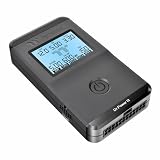
- 【Right Tool for the Job】A great addition to any tool kit for someone working on a PC. The Dr. Power III Pro can check a connection for continuity, provide real-time voltage and PG readings, and alert for detected faults with audible and display alerts.
- 【Real-Time Data】Capable of delivering real-time data for +12V, +5V, +3.3V, and +5Vsb outputs as well as providing a PG (power good) signal measured in ms (milliseconds) for help identifying issues with power supplies.
- 【PCIe Gen 5.1 Sense】Able to detect the the sideband SENSE0/SENSE1 signals for the correct identification of power able to be delivered (150W, 300W, 450W, 600W) to a modern GPU.
- 【Fault Warnings】 Easily identify issues thanks to the active alert system, able to alert the user with both an audible beep to draw attention along with the display turning red and indicating where the fault was detected.
- 【Color Display】On top of being updated to test the newest ATX 3.1 v3.1 spec PSUs, the Dr. Power III Pro also brings a color screens for some extra eye grabbing notifications.
Repair, replace, or continue diagnosing?
There is no universal repair-versus-replace rule. The sensible choice depends on your ability to work safely, whether reliable service information exists for the PSU, how extensive the fault is, and whether a qualified repair service or correctly specified replacement is available.
- Choose qualified repair if a competent electronics technician can diagnose the fault and identify correctly specified components using reliable service information.
- Replace the PSU if you cannot arrange safe, model-specific diagnosis or if a suitable replacement is the practical option.
- Continue diagnosis without opening the PSU if the cause is still uncertain. A symptom by itself is not evidence that a capacitor has failed.
For a technician, an ESR meter is one tool that may help assess capacitors; it is not a substitute for safe service practices, component specifications, or circuit-level diagnosis.
Do these 3 things before closing this tab:
1Fix the driver behind crashes, sound loss and screen glitches2Clear out junk files and repair common Windows errors3Scan for outdated or missing drivers - takes under a minuteQuick Recap
Best Value
- The LCD power tester is a powerful power test device. This power tester only needs to be connected to the ATX connector of the power supply to easily and intuitively know whether the output of each power supply is normal. It can detect ATX, BTX, ITX, TFX computer power supply, and can display various voltage and PG values in liquid crystal to quickly detect the performance of computer power supply.
- The LCD displays various parameters such as output voltage and PG. When each parameter exceeds the normal value, the buzzer will sound a warning and the corresponding value will flash.
- It can measure the voltage of each group of power supply 3.3V/+5V/+12V/-12V/SB+5V/PG, and also measure the output wire P4/P6/P8/SATA/IDE, external DIE/SATA/P6/P8 is the light Displayed, there is no LCD voltage. Only the 24pin or 20pin will have the LCD voltage.
- It has LCD intuitive and accurate display voltage (+/-0.01V), automatic fault alarm, complete test interface, small and beautiful appearance, and many test functions. It is the best choice for quickly detecting PC power.
- Support 20Pin, 24Pin ATX interface / SATA interface / 4Pin, 8Pin interface / PCI-E graphics card 6Pin interface / floppy drive interface / ATE hard disk interface.
Product prices and availability are accurate as of the date/time indicated and are subject to change. Any price and availability information displayed on Amazon at the time of purchase will apply.

