
Recommended Free Tools
Yes, Debian userspace has been reported running on TI-Nspire calculators through a community Linux port. This is a low-level experiment, not a standard Debian installer or a Debian Project-supported calculator. The documented route targets particular TI-Nspire hardware, especially CX-era models; the exact model and project compatibility notes matter.
What “running Debian” means on a calculator
A working Linux setup needs three pieces: a way to start Linux, a kernel built for the calculator’s hardware, and a root filesystem containing user-space programs. The TI-Nspire project’s loader runs from the calculator’s existing Nspire OS, then passes a kernel and related boot data to Linux. It is not the same as installing Debian from a normal desktop installer.
Debian publishes ARM builds, but architecture availability alone does not make a device compatible. The calculator still needs a suitable boot process, kernel, memory configuration, and support for its hardware. Debian’s current port information describes supported architectures, not a promise that a specific calculator will boot them: Debian Ports.
How the TI-Nspire Linux setup fits together
Bootloader
The loader is launched within the Nspire OS and provides commands to load and start Linux. Depending on the kernel path, boot data can include a kernel, an initrd (initial RAM filesystem), and a device-tree blob (DTB). The loader’s options for boot parameters such as machine identification and physical memory reflect how specific this work is to the target device. See the nspire-linux-loader2 project.
#1 Best Overall

- Designed for learning: Educators helped develop TI graphing calculators to challenge and inspire students, not just get answers
- Connect multiple visualizations of the same concept on a high resolution full-color display and computer-like features
- Easy and portable: Internet not required and comes with a long-lasting rechargeable battery
- Approved for key exams, including the PSAT/NMSQT, SAT, ACT, AP and IB Diploma Programme exams
- Includes a 4-year license of the computer software
Calculator-compatible kernel
The kernel must match the calculator and the boot method. Hackspire documents both legacy and newer device-tree kernel paths. Its notes indicate that the newer rewrite has better USB support but somewhat less hardware support in some areas; some hardware features remain works in progress or have not been extensively tested. Kernel choice therefore affects what peripherals and functions are usable, not just whether Linux starts.
Root filesystem
The root filesystem supplies the programs and system files that make the environment usable. For an initial experiment, Hackspire describes using a small initrd. A larger filesystem can be placed on a USB drive and selected as the root device, such as /dev/sdaX. The kernel may need a rootdelay parameter so the drive has time to initialize. USB OTG behavior and the exact setup depend on the kernel and calculator.
Rank #2

- Color Screen. The screen size is 320 x 240 pixels (3.5 inches diagonal) and the screen resolution is 125 DPI; 16-bit color
- Rechargeable battery included. Can last up to two weeks on a single charge
- Handheld-Software Bundle. Includes the TI-Inspire CX Student Software delivering enhanced graphing capabilities and other functionality.
- Thin Design and lightweight with easy touchpad navigation.Quick alpha keys
- Six different graph styles and 15 colors to select from for differentiating the look of each graph drawn
Which graphing calculators are supported?
The evidence-backed example is the TI-Nspire Linux effort, not a general method for every graphing calculator or every TI-Nspire generation. Hackspire’s Linux guide and the loader repository are the places to check exact compatibility:
- Hackspire’s Linux guide describes setup components, kernel branches, root filesystems, and hardware status.
- The loader repository documents loader commands and CX-specific implementation details.
Before attempting it, compare the exact calculator model and generation against the project’s compatibility information. Brand name alone is not enough: kernel configuration, device-tree or machine support, usable memory, image limits, and USB requirements can differ.
The Tool Desk
Outbyte PC Repair FREEClear out junk files and repair common Windows errorsFree Scan →Outbyte Driver Updater FREEScan for outdated or missing drivers - takes under a minuteDriver Scan →Quick Recap
Best Value

- Tool for engaging students
- Slide case and faceplate
Rank #4

- Backlit Color Display
- Deeper understanding of abstract concepts in math and science
- Construct and explore geometric figures and create animations
Rank #3
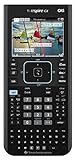
- Ideal for Pre-Algebra, Algebra 1 & 2, Trigonometry, Geometry, Pre-calculus, Statistics, Business & Finance, Biology, Physics, Chemistry, Calculus, AP Statistics, AP Physics, AP Calculus, and Linear Algebra.
- Full-color screen with backlit display.
- All the functionality of the TI-Nspire CX handheld plus a built-in Computer Algebra System (CAS)
- Eleven interactive zoom features
What to expect—and what not to assume
- It is a community project. It is not a supported Debian installation path or an official TI Linux product.
- Booting is not the same as having a complete desktop. Loader image limits documented for CX hardware are implementation-specific and do not establish that a full Debian system, desktop environment, or every peripheral will run well.
- Hardware support varies. The project documentation flags work-in-progress and incompletely tested areas, and kernel branches differ in their support.
- TI’s programming support statement is not Linux-project endorsement. TI says it supports downloading and executing programs on its graphing calculators, while excluding certain third-party shell programs known to cause lockups or malfunction; that does not amount to support for this Linux port. See TI Education’s support note.
A sensible way to evaluate the project
- Identify the exact model and generation. Do not rely on a listing that merely says “TI-Nspire.”
- Check the loader and kernel documentation for that hardware. Look for a matching machine configuration or device tree and note any unfinished or untested features.
- Decide whether an initrd is enough for your experiment. For a larger root filesystem, check the project’s USB and kernel-command-line guidance, including any need for
rootdelay. - Keep expectations narrow. Treat successful Linux startup or a working shell as a project milestone, not proof of a full-featured Debian computer.
Product prices and availability are accurate as of the date/time indicated and are subject to change. Any price and availability information displayed on Amazon at the time of purchase will apply.

