
TempestSDR is an open-source software-defined-radio (SDR) toolkit for studying whether unintended electromagnetic emissions from a display can be used to reconstruct screen video. A documented experiment shows a controlled, equipment-dependent approach—not a universal way to read any monitor from any distance. The result depends on the display, receiver, environment and processing setup.
What TempestSDR does
Display electronics and their signal paths can emit electromagnetic energy that varies with the image being shown. This creates a physical side channel: an SDR receives emissions, and software processes the measurements in an attempt to infer the displayed picture. There is no direct connection to the target computer, and the image is reconstructed from signal measurements rather than decoded from an HDMI file.
TempestSDR is a research platform for exploring that process. Its project repository and accompanying dissertation describe the software and a controlled monitor-focused demonstration.
How the documented experiment approaches reconstruction
The dissertation describes a workflow that begins without prior knowledge of the target display for the experiment. That does not mean the method works on every unknown display: the reported results are not exhaustive, and the source does not establish universal success.
Outdated Drivers Are Slowing You Down
One free scan finds every outdated or missing driver and matches the right update for your exact hardware.Free scan · exact hardware matchPC Slower Than It Used to Be?
A free scan shows the junk files, broken settings and background clutter dragging Windows down - then fixes them in one click.Free scan · Windows 10 & 11#1 Best Overall

- Includes 1x RTL-SDR Blog brand R860 RTL2832U 1PPM TCXO HF Bias Tee SMA Dongle (V3) (Dongle Only)
- Several improvements over other brands including use of the R860 tuner, improved component tolerances, a 1 PPM temperature compensated oscillator (TCXO), SMA F connector, aluminum shielded case with thermal pad for passive cooling, and an activatable bias tee circuit.
- Can tune from 500 kHz to 1.7 GHz and has up to 3.2 MHz of instantaneous bandwidth (2.4 MHz stable). (HF reception below 24 MHz in direct sampling mode with reduced performance). Please note RTL-SDR dongles are RX only.
- Please follow the quickstart guide linked in the included the manual for installation of the drivers and free software. Please feel free to contact us via Amazon messaging for technical support - we're happy to help
- Find a useful emission. The experiment searches for a frequency at which the display’s emission strength peaks.
- Estimate display parameters. The captured signal is analyzed to infer parameters such as screen resolution and refresh rate.
- Attempt video recovery. Software processes the received signal to reconstruct an approximation of the screen image.
The system can also work from pre-recorded raw IQ samples, according to the dissertation. It describes input paths including Mirics, UHD and ExtIO. Actual performance depends on receiver characteristics and host hardware; the dissertation also notes that receiver front ends differ, including in noise figure.
Receiver trade-offs in the dissertation’s setup
The dissertation compares equipment used or considered for its historical demonstration. These figures describe that source’s setup comparison, not guaranteed image quality or current universal product specifications.
Rank #2
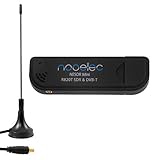
- Included: Nooelec USB dongle & antenna
- RTL2832U interface IC & R820T tuner IC on USB dongle
- These are custom USB devices tuned for SDR and include much better components than generics
- Full 1-year warranty & installation support available!
| Receiver example | Bandwidth stated in dissertation | Trade-off described |
|---|---|---|
| USRP B200 | 32 MHz | Chosen for the demonstration when higher bandwidth was sought. |
| Mirics FlexiTV MSi3101 | 8 MHz | Presented as a smaller, more mobile option. |
Bandwidth is only one factor. Wider acquisition bandwidth can affect capture conditions and the detail available for processing, but the number alone does not establish that a readable image can be recovered. Antenna arrangement, display mode, distance, interference, the particular monitor and host processing can all matter. The dissertation documents a controlled setup rather than an exhaustive evaluation.
Anyone evaluating hardware should verify current operating-system, driver and supported-input compatibility rather than assume the historical examples remain supported by current software. The relevant category is a software-defined radio receiver; neither cited source verifies current product listings or guarantees compatibility for a particular model.
Quick wins for a faster PC:
Scan for outdated or missing drivers - takes under a minuteDriver Scan →Clear out junk files and repair common Windows errorsFree Scan →Fix the driver behind crashes, sound loss and screen glitchesFind Drivers →Rank #3

- Includes 1x RTL-SDR Blog brand R860 RTL2832U 1PPM TCXO HF Bias Tee SMA Dongle (V3) (Dongle Only) (USB-C)
- Several improvements over other brands including use of the R860 tuner, improved component tolerances, a 1 PPM temperature compensated oscillator (TCXO), SMA F connector, aluminum shielded case with thermal pad for passive cooling, and an activatable bias tee circuit.
- Can tune from 500 kHz to 1.7 GHz and has up to 3.2 MHz of instantaneous bandwidth (2.4 MHz stable). (HF reception below 24 MHz in direct sampling mode with reduced performance). Please note RTL-SDR dongles are RX only.
- Please follow the quickstart guide linked in the included the manual for installation of the drivers and free software. Please feel free to contact us via Amazon messaging for technical support - we're happy to help
How reliable is a TempestSDR reconstruction?
There is no general success rate, prevalence figure or reliable distance claim established by the cited material. The dissertation’s experiment demonstrates a method under particular conditions; it does not show that ordinary emissions compliance guarantees confidentiality, or establish that any particular monitor is vulnerable. A reconstruction’s quality should therefore be treated as setup-dependent rather than assumed from the presence of an SDR or a bandwidth specification.
Related work: reconstruction research and mobile displays
Deep-TEMPEST and HDMI leakage
Deep-TEMPEST studies HDMI emissions as an inverse problem: infer displayed images from observed electromagnetic signals. Its learned reconstruction approach is intended to improve recovery, with particular interest in text; the surfaced abstract reports an improvement in character error rate, but does not establish a verified figure here.
Rank #4
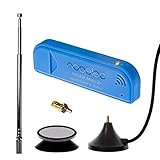
- New! Redesigned for lower noise, better sensitivity and lower power consumption.
- Design changes include RF-suitable 3.3v power supply with 1/10th of the noise of other SDRs, shielded power inductor for improved EMI rejection, and more!
- A male MCX to female SMA adapter and strong magentic antenna mount included as standard.
- R820T2 tuner provides substantial performance improvements over R820T-based devices
- Full support and service directly through Nooelec!
Screen Gleaning and mobile devices
Screen Gleaning examines a related electromagnetic side channel involving mobile displays, including an antenna-and-SDR screen-reading demonstration and security-code example. It is separate work, not evidence that TempestSDR supports all mobile screen technologies.
Independent reader supportYour contribution helps us test, update, and keep practical guides available for everyone.What this means for security
Electromagnetic display leakage is worth considering when sensitive information is shown in a setting where physical access or nearby signal reception is part of the threat model. The cited work supports treating this as a specialized side-channel concern to evaluate in context—not as proof that routine monitor use is readily observable.
Recommended Free Tools
Best Value

- Contains RTL2832U interface IC and the new, improved R820T2 tuner! This tuner has improved sensitivity and SNR compared to devices using the R820T. Unmatched price-performance.
- Contains all the same improvements on the 'generic' design as were made on the popular and well-tested NESDR Mini, including higher-accuracy clock, low-ESR capacitors, high-Q inductors, and more!
- 1-year warranty direct from Nooelec! With locations in both the US & Canada, and full technical support services, your investment is a safe and wise one.
- Frequency capability is approximately 24MHz-1750MHz, with no gaps within that range. Expansion to HF, all the way down to 100kHz, is available with the Ham It Up upconverter (sold separately).
- Free high-quality telescopic antenna, much improved over the older thin-whip style antenna. Turn on, tune in and...listen!
For authorized security evaluation, focus on the actual environment and equipment, document the display mode and receiver configuration, and avoid drawing conclusions from a single setup. For protection, assess whether sensitive screens need additional physical separation or shielding under the organization’s threat model; the cited sources do not establish a universal mitigation or certify any particular product.
Quick Recap
Product prices and availability are accurate as of the date/time indicated and are subject to change. Any price and availability information displayed on Amazon at the time of purchase will apply.

