
To keep bats from returning, find every active way into the roost, let the animals leave through one-way exclusion devices, then permanently seal the openings. Never plug an active exit: it can trap bats inside, including flightless young or hibernating animals. The safe timing and applicable rules depend on your location, so check with your state wildlife agency before starting.
Where to look for bat entry points
Inspect the entire exterior from the ground, walking around every side of the building. Bats commonly use existing gaps rather than making a conspicuous hole. Check:
- Eaves, soffits, roof edges, ridge caps, and gaps beneath shingles
- Gable ends, dormers, attic vents, and chimney junctions
- Loose siding or trim and joints where building materials meet
- Openings around pipes, wires, and other utility penetrations
The likely locations depend on the building. A visible crack alone does not prove bats use it, and finding one opening does not rule out others. See the Illinois Department of Public Health’s entry-point and exclusion guidance and Washington Department of Fish & Wildlife’s examples of building openings.
Watch for bats at dusk
On a suitable evening, observe the roofline from outside around dusk and note where bats emerge. Repeat the observation if possible: a single evening may not reveal every route. New Jersey’s wildlife agency recommends watching on a warm, rain-free evening of at least 50°F for its local guidance; that temperature is not a universal threshold. Its Bats in Buildings page also covers signs of activity.
#1 Best Overall

- 【Perfect One‑Way Tapered‑Cone Design】This bat exclusion device features a tapered‑cone design to guide bats outward. The one‑way bat door is constructed from premium plastic, delivering a smooth surface with a gradually narrowing 15‑degree downward angle. This helps bats exit faster while preventing them from re‑entering, providing a humane, safe and bat‑friendly solution
- 【Application Scenarios】This humane one‑way exclusion tool is ideal for homes where bats enter through house gaps, stay active in attics, or cause noise at night. The compact bat cone can be installed in attics, under eaves, gable vents, ridge vents, along rooflines, and other narrow or irregular access points. This exclusion tool fits perfectly for common bat entry and exit areas
- 【Easy Installation】Simple bat exclusion starts by placing the device over a confirmed bat entry and exit point. Secure it with the included screws or use tape on suitable surfaces. The included tape also helps seal uneven edges around the opening. After bat activity has stopped, remove the bat cones and seal the opening
- 【Sturdy-Built & Reusable】Made of strong yet lightweight plastic, the one way bat exclusion device is designed for repeated use. After one opening is clear, simply remove it and move it to another area. For shoppers looking for a bat door one way solution, the two units can also be used on separate active openings for better value
- 【Complete DIY Installation Kit】Kit includes 2 units for bat cones, bat removal, 1 roll of heavy-duty cloth-backed tape, 9 self-tapping screws, and 1 installation instruction manual. The all-in-one kit makes setup easier, even for first-time users
Look for corroborating signs
From an attic or other roost area, daylight showing through a crack can reveal a gap. Illinois guidance also suggests turning on a bright light inside at night and checking outside for light escaping through openings. Dark marks may come from dirt or oils rubbed off as bats pass; droppings beneath a gap are another clue. To distinguish fresh deposits from old ones, clear away the old material or place paper below the spot and check it later.
Bats can pass through small gaps: U.S. Fish & Wildlife Service says they can squeeze through a crevice as small as a quarter, while Michigan guidance describes openings around half an inch. These are illustrative descriptions, not a reliable cutoff; whether a bat can pass depends on the animal and shape of the gap. The U.S. Fish & Wildlife Service’s bat safety guidance and Michigan DNR’s bat guidance provide regional context.
Rank #2

- [One-Way Channel Design] The bat cone features a one-way door mechanism that allows bats to easily exit from the inside, but once they fly out, they cannot re-enter. This clever design ensures bats can leave safely.
- [Right Angle Design] The 90-degree right angle shape allows for flush installation against walls, eaves, or rooflines without requiring additional spacers or modifications. Perfect for tight spaces where straight tubes cannot be installed, easily adapting to various complex positions.
- [Long-Lasting Use] The bat cone is made of heavy-duty material, maintaining structural stability throughout the entire exclusion process. Resistant to cracking and reusable.
- [Easy to Install] This bat removal cone is cleverly designed and easy to install. It protects building surfaces from damage while maintaining the structural appearance.
- [Packaging Includes] 2 Bat cones and 8 screws.
Do not enter an unsafe attic or disturb a roost if you are not equipped to do so. If the inspection requires risky access, or you cannot tell where bats are getting in, seek help from a qualified local operator.
Check interior routes and local rules before exclusion
Before setting up an exclusion, identify routes from the roost into occupied rooms as well as exterior exits. Pennsylvania Game Commission guidance recommends checking interior connections; closing those routes can reduce the chance of bats entering living spaces while exterior exits remain available. Do not block an exterior route until the exclusion is correctly arranged.
Recommended Free Tools
Rank #3
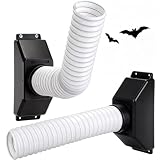
- 2 Pack One-Way Bat Excluder Device: Includes 2 black one way bat doors, each about 19 x 9 x 7 cm; Suitable for covering multiple attic, roof, soffit, vent, siding or wall gap entry points around homes, barns and sheds
- Single Direction Outlet: The bat exclusion tube allows bats to leave through the opening while helping reduce re-entry; A humane bat removal device for outdoor wildlife control without trapping bats inside the structure
- Retractable Flexible Tube: Designed with a stretchable tube to adapt to different gaps, angles and surfaces; Useful for roof edges, eaves, attic vents, siding cracks, chimney gaps and other common bat access areas
- Heavy-Duty Recyclable Plastic: Made of black plastic for repeated outdoor use; Lightweight, compact and easy to store after removal, making this bat deterrent device practical for seasonal pest control and property maintenance
- User-Friendly DIY Setup: Suitable for homeowners, landlords, farm owners and pest control workers; Install over the main bat exit after sealing nearby gaps, then remove once activity stops and complete final gap repairs
Contact your state wildlife agency or department of natural resources to confirm whether exclusion is allowed and appropriate now. Timing depends on local maternity periods and hibernation: excluding bats while flightless pups are present can leave them trapped, while sealing a winter roost can harm hibernating bats. U.S. Fish & Wildlife Service advises leaving hibernating bats in a building and waiting until spring for one-way exclusion.
Dates differ by jurisdiction, so do not apply another state’s calendar to your building. For example, Illinois Department of Public Health guidance gives exclusion windows of March 15–May 15 and August 5–October 30, with dusk temperatures above 50°F. New Jersey Department of Environmental Protection lists April 1–May 14 and August 1–October 15. Michigan advises avoiding its typical May-to-mid-August maternity season, while Pennsylvania’s guide says not to exclude between April and late August and notes winter hibernation concerns. Check the current local guidance before acting; these examples are not a national schedule. Sources: Illinois, New Jersey, Michigan, and Pennsylvania.
Rank #4

- Note: the installation angle should be greater than 60° to prevent bats from flying in again
- Compact and Portable: the bat exclusion reusable tool is compact and lightweight, measuring approximately 5.7 x 2 inches and weighing only about 30 g, making it easy to carry and install; Its lightweight design can bring less burden on the structure of the area it is installed in, ideal for those who are looking for a low impact solution to their bat problems
- Polyethylene Material: mainly made of polyethylene, our bat exclusion device is built to last, resistant to wear and tear, making it an ideal choice for long term use, ideal for both indoor and outdoor use
- Easy to Install: the bat tube is easy to install in just a few simple steps; It is recommended that the installation be angled downward, preferably more than 60 degrees for a better exclusion effect, making the bat leave the structure through the Cylinder as quickly as possible
- Wide Range of Applications: this bat trap can be applied in a variety of settings, including residential and commercial properties; It's ideal for attics, crawl spaces, sheds, garages, and other enclosed spaces where bats like to roost, and you can use U type nails, silicone, or tapes (not included) to fix the Cylinder, preventing the bats from coming back
Bat protections and operator licensing can also vary by species and place. Ask the relevant wildlife agency about requirements before excluding a colony, and verify local credentials if hiring a wildlife-control professional.
Independent reader supportYour contribution helps us test, update, and keep practical guides available for everyone.How to exclude bats and seal the openings
- Map the active exits. Record all confirmed exterior openings and interior connections. Do not assume the most obvious gap is the only one.
- Close interior routes to living areas. Seal openings between the roost and occupied rooms without blocking exterior exits that bats still need to use.
- Install one-way devices on active exits. Depending on the opening and surface, official guidance describes tube-style devices, plastic netting, or a plastic flap. These let bats leave but prevent reentry. Seal other confirmed openings with suitable materials, taking care not to trap bats inside or redirect them into occupied spaces. A large colony or connected roost areas may require multiple exits and devices.
- Monitor the exits. Check that bats can leave freely and that activity is ending. If bats appear blocked or confused, or you cannot verify they have left, get professional help rather than sealing the route.
- Remove devices after bats have left and close the openings permanently. Follow the locally recommended monitoring period. Pennsylvania Game Commission specifies five to seven nights for the devices in its guide; Washington guidance also gives five to seven days, with longer periods in cool or rainy conditions. These are local recommendations, not a guarantee that every building is clear. Remove temporary devices promptly once all bats have exited, then make durable repairs.
Choose a permanent seal suited to the opening
Official guidance identifies caulk, flashing, hardware cloth or suitable mesh, mortar, and repair or replacement of deteriorated wood as possible closure methods. Match the material to the opening and building surface. Keep vents appropriately screened and chimneys capped rather than blocking their intended function.
Windows Errors? Fix Them Before They Spread
Repair common Windows errors and clear accumulated junk for a smoother, more stable PC - no reinstall needed.Free scan · no reinstallCrashes, No Sound, or Screen Glitches?
Random freezes, missing sound and display glitches usually trace back to one bad driver. Find and replace yours safely.Free scan · under a minuteBest Value
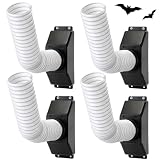
- 4 Pack One-Way Bat Excluder Device: Includes 4 black one way bat doors, each about 19 x 9 x 7 cm; Suitable for covering multiple attic, roof, soffit, vent, siding or wall gap entry points around homes, barns and sheds
- Single Direction Outlet: The bat exclusion tube allows bats to leave through the opening while helping reduce re-entry; A humane bat removal device for outdoor wildlife control without trapping bats inside the structure
- Retractable Flexible Tube: Designed with a stretchable tube to adapt to different gaps, angles and surfaces; Useful for roof edges, eaves, attic vents, siding cracks, chimney gaps and other common bat access areas
- Heavy-Duty Recyclable Plastic: Made of black plastic for repeated outdoor use; Lightweight, compact and easy to store after removal, making this bat deterrent device practical for seasonal pest control and property maintenance
- User-Friendly DIY Setup: Suitable for homeowners, landlords, farm owners and pest control workers; Install over the main bat exit after sealing nearby gaps, then remove once activity stops and complete final gap repairs
Do not apply expanding foam to an active bat route: Pennsylvania Game Commission warns bats can become entangled as it hardens. Complete permanent sealing only after exclusion, using a durable repair appropriate to the building component.
When to call a professional—and how to stay safe
Consider a qualified bat-exclusion professional when access is high or hazardous, the structure has many possible openings, activity suggests a substantial colony, you cannot confirm the bats have exited, or local timing and legal requirements are unclear. State agencies can point you toward wildlife specialists or licensed operators; confirm applicable credentials in your area.
- Do not touch bats with bare hands.
- If someone may have been bitten or otherwise exposed, keep the bat contained only if safe and contact the state or local health department promptly for instructions about testing or medical care.
- If a pet had contact with a bat, call a veterinarian and the local health department.
For a single bat found in an occupied room, follow the encounter guidance from the U.S. Fish & Wildlife Service; a colony in an attic or wall calls for a different exclusion plan. A bat house installed before exclusion is an optional nearby roost, not a guaranteed replacement or a substitute for sealing after bats have left. Federal guidance notes bat houses may help where roosts are lost but are not always helpful; see also Washington’s bat guidance.
Quick Recap
Product prices and availability are accurate as of the date/time indicated and are subject to change. Any price and availability information displayed on Amazon at the time of purchase will apply.

