
Free tools Windows power users keep installed
One-click scans. No signup required.
If your home floods after a storm, stay out until local authorities say it is safe to return. Once re-entry is allowed, check for structural, electrical, gas, and sewage hazards before documenting damage, contacting your insurer, and beginning cleanup. Floodwater can remain dangerous after it recedes, so do not treat a dry-looking room or street as proof of safety.
1. Wait for official permission to return
Follow evacuation orders and local emergency instructions. If authorities have not cleared your area or building, do not go back inside to retrieve belongings or start cleanup. For U.S. flood guidance, see Ready.gov’s flood safety guidance and the CDC’s Preparing for Floods.
- Do not walk or drive through floodwater. The CDC’s August 24, 2026 guidance says, “Do NOT drive or walk across flooded roads.” Water can conceal hazards and may be contaminated.
- Keep away from downed power lines and wet electrical equipment. Do not touch switches or appliances while standing in water.
- Do not enter standing water to reach a breaker. Turn off electricity only if you can do so safely; otherwise contact the utility or emergency authorities.
- If you suspect a gas leak, damaged utility line, or sewer problem, leave the area and contact the relevant utility or local authorities. Do not operate equipment or attempt repairs in a hazardous area.
Floodwater may contain sewage, chemicals, debris, or other contaminants. Follow local health department directions about whether tap water is safe for drinking, cooking, and cleaning.
2. Check who should stay out during cleanup
Even after officials permit re-entry, the home may not be safe for everyone. Do not send children into disaster cleanup. The CDC advises that people with asthma or other lung conditions, or with a weakened immune system, should not enter buildings with visible or smelled mold or indoor water leaks. Anyone with health concerns should consult a health professional before taking part in cleanup.
Quick wins for a faster PC:
Fix the driver behind crashes, sound loss and screen glitchesFind Drivers →Clear out junk files and repair common Windows errorsFree Scan →#1 Best Overall

- Efficient Sump Pump: Aquastrong sump pump with 1HP powerful motor. Draining water up to 4500GPH Per Hour( 75 gallons per minute) at 5ft. Lift water up to 30ft of vertical height
- Portable Design: Plug in to play while unplug to stop. Bottom suction design filters debris and removes water down to 1/5 inch from the surface. It can handle up to 1/5″solids , ideal for draining hot tub and flooded basement window wells
- Easy Installation: 1-1/4'' NPT discharge comes with 1-1/2'' elbow adapter and snap coupling adapter of 3/4'', 1'' or 1-1/4'', which makes Submersible pump easy to install. 10ft UL power cord provides safety and convenience
- Safe & Durable: The submersible water pump is made of reinforced engineering thermoplastic casing resists corrosion and abrasion. Quality mechanical seal prevents leakage effectively for long service life. Built-in thermal overload protector will keep the motor from burning out when dry running
- Quality Service: Aquastrong customer service provides professional technical supports, keeps your water system stable and worry-free
When cleanup is appropriate, use protective clothing. CDC guidance names rubber boots and plastic gloves; Ready.gov also recommends heavy work gloves, protective clothing, boots, and an appropriate face covering or mask when cleaning mold or debris. Choose protection suited to the hazard, and do not handle contaminated water or materials if you lack appropriate protection.
3. Document the damage before disposing of items
Once it is safe to enter, record the condition of the home before cleanup changes it. Take photos and video of each affected room, water marks, damaged belongings, and appliances. Make an itemized list of damaged contents and record appliance make, model, and serial numbers when practical. Keep samples of damaged flooring or carpet if it is safe and sensible to do so.
Rank #2

- GET RID OF WATER QUICKLY - Multi-Flo technology allows for easy selection of the best water removal option. This WWB water pump will get your basement or yard virtually dry by pumping up to 1350 GPH and removing water down to 1/16”.
- REMOVAL OPTIONS - Top discharge is perfect for removing water from small or tight spaces: window wells, buckets, etc. Side discharge is ideal for easy water removal from flat open surfaces: flat roofs, flooded basements, standing water in yard, etc.
- ADDITIONAL FEATURES - non-corrodible plastic discharge outlets, with tethered cap seals, fit any standard garden hose. Multi-ring suction strainer filters debris, keeping it clear from the suction intake to preventing blockages.
- QUALITY YOU DESERVE - Proudly assembled in the USA for quality you can trust. Please note: the pump should be unplugged once the water is gone or pump will run dry.
Do not keep a dangerous or contaminated item in place just to preserve evidence. Photograph it first if you can do so safely, then follow health guidance and ask your adjuster how to document the loss. The NFIP/FloodSmart claim guidance recommends documenting damage and contacting the insurer promptly.
4. Contact your insurer and clarify what kind of water caused the loss
Notify your insurer as soon as possible and ask how to start the claim, what documentation is needed, and when an adjuster can inspect the property. Check the adjuster’s identification, and be cautious of people who arrive unsolicited claiming to represent an insurer or government agency. Ask your insurer or adjuster how to proceed before signing repair contracts.
Rank #3

- Powerful Water Flow - This 1/3HP high-flow utility pump moves up to 2450 gallons of water per hour, making it perfect for handling large volumes of water. Whether it's draining a pool, basement flooding, or other significant water sources, it quickly and efficiently removes water to prevent further damage.
- Low Suction Capability - This pump features an impressive low suction design, capable of drawing water down to just 1/25''(1mm). This is particularly beneficial for applications that require almost complete water removal, ensuring no residual water is left behind. Whether you're draining flooded areas or transferring water from tight spaces, this pump can reach areas that other pumps can’t, giving you a clean, dry surface.
- Versatile and Multi-purpose Design - The pump's 1-inch NPT discharge and included 3/4-inch garden hose adapter offer flexibility, allowing it to be used in various situations. It’s ideal for water removal from basements, crawl spaces, window wells, tubs, buckets, stock tanks, boats, standing water, and more. Whether for flood cleanup or general water transfer, this pump does it all.
- Durable and Oil-Free Motor - Designed with tough thermoplastic construction, this pump is built to last and withstand harsh environments. The oil-free motor design is environmentally friendly and ensures reliable performance without the need for constant maintenance or refilling. It's a hassle-free solution that reduces your impact on the environment.
- Complete Package Contents - This pump comes with everything you need for immediate use, including: the utility pump, a 3/4-inch NPT threaded adapter, a nylon mesh filter bag, a check valve to prevent backflow, and a multi-hose adapter compatible with 1-1/2-inch, 1-inch NPT, and 1-inch hoses. These accessories ensure quick setup and adaptability for diverse water removal tasks.
Coverage depends on your actual policy and the facts of the loss. FloodSmart distinguishes qualifying floodwater that enters from the ground from water entering from above, such as wind-driven rain or a roof leak. Ask the insurer to assess the specific source and damage under your policy; do not assume that every type of storm water damage is covered by flood insurance. Basement coverage is limited, so confirm how the policy treats each damaged item.
FloodSmart reports an average NFIP claim of $82,614 for claims between 2020 and 2024. That historical average is not a forecast or estimate of what any individual policyholder will receive; payment depends on policy terms and claim documentation. Federal disaster assistance may also be available after a presidential disaster declaration, subject to the event’s eligibility rules and current program requirements. It can be applied for in addition to a flood insurance claim.
Rank #4
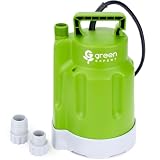
- Fast Emergency Water Removal for Basement Flooding & Water Damage Cleanup - Designed for rapid removal of unwanted water in flooded basements, garages, crawl spaces, and emergency water damage situations.
- Powerful 1800 GPH High Efficiency Pump for Fast Drainage - 1/4HP motor delivers strong and consistent water flow for efficient drainage in emergency flooding and routine household use.
- Multi-Purpose Utility Pump for Home Water Management - Suitable for sump pump replacement use, water transfer, pool draining, hot tub water removal, and general household drainage applications.
- Ideal for Basement, Pool, Hot Tub, Garage & Standing Water Removal - Supports a wide range of applications including yard flooding, window wells, garage water buildup, and crawl space drainage.
- Lightweight Portable Design for Easy Plug-and-Use Operation - No installation required. Simply place in water, plug in, and start pumping immediately for fast water removal. *For best performance, standard hoses are recommended, as expandable or retractable hoses may reduce overall water flow efficiency.
5. Decide whether to clean, discard, or call a professional
The right response depends on the water source, the material, the amount of damage, and the health and safety of the people involved.
| Situation | What to do |
|---|---|
| Sewage or other contaminated water | Do not treat it as ordinary household cleaning. EPA recommends hiring an experienced professional for sewage or other contaminated-water cleanup. EPA mold cleanup guidance also advises professional help for these conditions. |
| Mold covering more than about 10 square feet, or extensive water damage | Consult more specialized remediation guidance or an experienced professional. EPA’s approximate 10-square-foot threshold is a guide for when a person may generally handle mold cleanup themselves; contamination and extensive water damage are separate reasons to seek help. |
| Hard surfaces that are not contaminated | EPA says hard surfaces can be scrubbed with detergent and water, then dried completely. |
| Porous materials such as carpet, ceiling tiles, or some wall coverings | These may be difficult or impossible to clean fully. CDC advises discarding items that cannot be disinfected, including some rugs, cloth, wall coverings, and drywall. |
If hiring a contractor, verify relevant experience and references. Do not run an HVAC system that may be contaminated with mold; get qualified advice about inspection and cleaning first.
Best Value

- ONE PUMP FOR EVERY HOME. COUNTLESS USES: Ideal for almost all water removal needs such as flooded basements, window wells, yards, flat roofs, garages, patios, and more. Designed for homeowners who want one dependable solution for a wide range of water removal needs
- ONE PUMP FOR EVERY HOME. COUNTLESS USES: Ideal for almost all water removal needs such as flooded basements, window wells, yards, flat roofs, garages, patios, and more. Designed for homeowners who want one dependable solution for a wide range of water removal needs
- AUTOMATICALLY STARTS WHEN YOU NEED IT & SHUTS OFF WHEN WATER IS GONE: Built-in technology automatically turns the pump on when water reaches the activation level of 1 in. and shuts it off when the water drops to 1/16" in. – that’s virtually dry, meaning no mop needed to absorb leftover water.
- POWERFUL WATER REMOVAL IN A COMPACT DESIGN: Moves up to 1,350 GPH / 23 GPM @ 0 ft. | 1,010 GPH / 17 GPM @ 10 ft.; Designed to move water quickly, helping you tackle flooding, storm cleanup, routine maintenance, and outdoor drainage projects with confidence.
- READY FOR THE UNEXPECTED: Whether it's a flooded basement after heavy rain or standing water in your yard, the WWBA helps you stay prepared before water becomes a costly problem. Delivers up to 30 feet of lift for tough water removal jobs.
6. Clean and dry without creating another hazard
Only begin work when the structure and utilities are safe and the water source is understood. Use fans, air-conditioning, or dehumidifiers to dry the home when it is safe to operate them. Do not use electrical equipment in wet areas or while standing in water. If there is any doubt about power or equipment safety, wait for the utility or a qualified professional.
- Follow local public-health directions for water safety, cleaning, and disinfectants.
- Wash your hands after cleanup, even when you have worn gloves.
- Remove materials that cannot be disinfected rather than trying to salvage them.
- Dry cleaned hard surfaces completely to limit ongoing moisture and mold growth.
- Use professionals for sewage, other contaminated water, extensive water damage, or mold beyond the EPA’s approximate threshold.
For broader flood recovery instructions, consult FEMA’s Spring Flooding: Risks and Protection fact sheet alongside local emergency and health department directions.
Quick Recap
Product prices and availability are accurate as of the date/time indicated and are subject to change. Any price and availability information displayed on Amazon at the time of purchase will apply.

