
Windows Errors? Fix Them Before They Spread
Repair common Windows errors and clear accumulated junk for a smoother, more stable PC - no reinstall needed.Free scan · no reinstallCrashes, No Sound, or Screen Glitches?
Random freezes, missing sound and display glitches usually trace back to one bad driver. Find and replace yours safely.Free scan · under a minuteYou can build and test a small Android app with an AI coding agent by giving it a narrow, testable specification, reviewing the code it proposes, then building and launching the project on an Android Virtual Device (AVD). Use Android Studio for a local project with integrated build and debugging tools, or Google AI Studio for a browser-based prototype. In either route, a successful build is only the start: check the app’s actual screens and behavior, and use logs to investigate failures.
Choose a local or browser-based workflow
Android Studio is the better fit when you want a project on your computer and access to local Android build, emulator, deployment, and debugging tools. Its Gemini Agent Mode is designed for multi-stage project work; it can plan tasks, edit files, build and deploy, inspect the display, capture screenshots, read Logcat, and interact with a running app. You review and approve its changes rather than treating them as automatically trustworthy. These are documented Android Studio capabilities; tools available to a third-party agent or a different installed version may vary. Android Studio Agent Mode documentation
Google AI Studio is an alternative if you want to describe an Android app in a browser and preview the generated project in a cloud emulator without installing Android Studio, an SDK, or a local emulator. It is aimed at a more constrained kind of prototype, not a complete replacement for every Android Studio workflow. Google AI Studio Android documentation
| Consideration | Android Studio | Google AI Studio |
|---|---|---|
| Setup | Install Android Studio and the local Android SDK; create or select an AVD. | Build and preview in a browser-hosted environment; no local SDK, Android Studio, or emulator is needed for this route. |
| Project scope | Local Android project workflow with IDE build and debugging tools. | As documented on the page updated 2026-08-18: client-side only, one activity and one module, and Kotlin with Jetpack Compose. Java/XML layouts, native C/C++, Wear OS, and Android TV are unsupported. |
| Agent workflow | Gemini Agent Mode is integrated; a separate Android Developers post from September 2026 describes a Bring Your Own Agent preview in Android Studio Canary, listing Codex, Claude Agent, and Antigravity. Check current release-channel availability before relying on that preview. | Describe the app in Build mode, select Android, and work with the generated project through the prompt-and-chat flow. |
| Verification | Run on a configurable local virtual device and inspect the app with Android Studio tools. Use physical hardware for capabilities the emulator cannot represent reliably. | Preview in a cloud emulator, but use a physical device for unsupported hardware and services such as Bluetooth or Google Play services. |
| Export | Work with the regular local Android project. | The cited documentation describes ZIP-only Android project download; GitHub export is unavailable on that page. |
The Google AI Studio limits and export details above reflect its documentation as updated 2026-08-18 and may change. The Canary agent integration is a preview, not a claim about availability in stable Android Studio. Neither option is established by these sources as producing better code than the other.
Do these 3 things before closing this tab:
1Clear out junk files and repair common Windows errors2Fix the driver behind crashes, sound loss and screen glitches3Repair Windows errors before they cause bigger problems#1 Best Overall
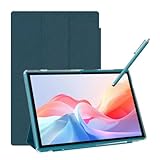
- 【Multi-function Configuration】Android 15 portable tablet with stylus and foldable protective case. You can enter text directly using a stylus, easy response to various scenarios, making your work and study get twice the result with half the effort.
- 【Android 15 Tablet】10 inch Tablet PC is equipped with the latest Android 15.0 system, built-in powerful Quad-core processor, 32GB ROM 8GB RAM(Including 5GB expansion), 1024GB expansion, support Wi-Fi, Bluetooth, GPS and more, enough memory allows you to store more favorite e-books, movies, music, pictures, videos, games
- 【Broad Vision and Responsiveness】The Android tablet uses a 10.1 inch 1280*800 full HD IPS display, which can present a clearer picture effect and richer colors, bringing you a more realistic viewing experience, bringing you clearer and brighter Image. Equipped with 10.0-inch capacitive touch, five-point capacitive touch G+G, to ensure smoother motion in movies and games
- 【Long Battery Life】 The Android tablets powered by a 6000mAh battery, can stand by 360 hours and continuous use up to 6-8 hours, easily charge via the 5V2A Type-C port. Super power and long battery life, say goodbye to the trouble of insufficient power and give you a full sense of security.
- 【Coexistence of Beauty and Strength】 Our Android tablet equipped with a protective leather case. With a slim design, wear-resistant and resistant to falling, a delicate feel, unique texture, easy to carry, and more comfortable to hold with one hand. It's a good companion for your leisure and entertainment, as well as the best gift for various festivals and birthdays.
Define a small first version the agent can verify
A bounded first build is easier to review and test than a broad request such as “make a complete productivity app.” Specify the app’s purpose, the first screen, the main action, the expected states, and what is deliberately out of scope. Ask the agent to explain its plan and identify the files it expects to change before it edits the project.
For example, a first task-tracker version might ask for:
- A single screen that lists tasks and has an obvious empty state when the list has no items.
- A way to add a task and mark it complete, with the completed state visible in the list.
- Local sample data only: no account, server, or synchronization in this first version.
- A build after the changes, followed by a launch on the selected emulator so the screen and main interactions can be checked.
In Android Studio Agent Mode, the documented process includes reviewing and approving changes as work proceeds. Read the proposed plan and inspect the edits; ask for a narrower change if the agent is modifying unrelated files or expanding the task beyond the behaviors you requested. Android Studio Agent Mode documentation
Build and run the project on a local Android emulator
An Android Virtual Device (AVD) is a configured virtual device profile paired with an Android version. It lets you run an app against a chosen screen and API level without having that physical device. Android Developers describes the emulator as simulating Android devices so you can test across device types and Android API levels without owning each one. Run apps on the Android Emulator
Quick wins for a faster PC:
Repair Windows errors before they cause bigger problemsFix Now →Scan for outdated or missing drivers - takes under a minuteDriver Scan →Clear out junk files and repair common Windows errorsFree Scan →Rank #2
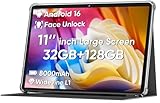
- 【Stable Android 16 System & Octa-core CPU 】This 2026 Stable Android 16 tablet is equipped with a high-performance Unisoc octa-core CPU, a stable Android 16 system with AI, and all functions have been strengthened to a new level. You will enjoy the smooth running of 32GB (4GB+28GB) RAM and 128GB ROM. Perfect for watching videos, learning, video chatting, and reading e-books easily .
- 【11 Anti-blue Eyes Protection Screen 】11-inch tablet not only bigger screen, also features specific eyes protection HD 1280*800 fully-in-cell screen resolution, but the wide viewing angle also provides a more realistic viewing experience. With automatic brightness adjustment combined anti-blue light design for protecting your eyesight, you will be safer and more comfortable while using the tablet.
- 【Dual Stereo Speakers】Dual box stereo speakers sound quality reducing distortion to give you a great audiovisual experience. You will love this Android tablet , enjoy your music , video while traveling with surrounding clear and loud audio.
- 【8000mAh LARGE BATTERY+18W Fast Charging 】This rugged kids tablet built-in a 8000mAh large battery, you will freely enjoy reading or watching videos for 8-10hours on a full charge. No need to worry about the battery while you are traveling on the way .
- 【128GB ROM LARGE STORAGE 】32GB RAM 128GB ROM storage, running stably. It easily expands to 1TB with a MicroSD card (sold separately) for storing photos, music, and videos without worrying about running out of space.
- Create an AVD: In Android Studio, open the device-management interface, create a virtual device, and choose a device profile and Android version relevant to your first test. The exact available profiles depend on the installed SDK components.
- Select the target: Choose the new AVD in Android Studio’s toolbar target-device menu.
- Build and launch: Click Run. Android Studio builds the app, installs it on the selected AVD, and launches it. The first emulator start can take about a minute; later starts may be faster when a snapshot is available.
- Exercise the app: Use the emulator as a person would: follow the main flow, try empty and populated states, and check that buttons and displayed results match the specification.
- Deploy later edits: Click Run again for a fresh build and deployment. For eligible incremental edits, use Apply Changes as described below.
Android Developers lists 16 GB of RAM and 16 GB of disk space as requirements for the best Android Emulator experience; the page does not show a publication date in the opened content. These are best-experience recommendations, not a guarantee that lower-spec machines cannot run an emulator. Higher API levels and larger virtual screens can need more resources. If the emulator does not run smoothly, Android Developers suggests trying a physical device. Run apps on the Android Emulator
Iterate by checking the screen, behavior, and logs
After the first launch, make one meaningful change at a time. Ask the agent to implement that change, review the resulting edits, build and deploy again, then verify the outcome on screen. A clean build does not prove the app’s user flow works: interact with the app and look for runtime errors in Logcat. Android Studio Agent Mode documentation describes screenshot inspection, Logcat checks, and adb shell input among its available tools. Whether an agent can use those tools depends on the workflow and installed version.
Use Apply Changes only when the edit qualifies
Android Studio’s Apply Changes can deploy some code and resource edits without restarting the app or its current activity. The build-and-run documentation specifies a debug APK and Android 8.0 (API level 26) or higher as conditions. Use Run for initial deployment or when you need a clean build and launch; not every edit can be applied incrementally. Compose Live Edit is separately described as experimental in that documentation. Build and run your app
Turn a failure into a specific next request
- The project does not build: Read the build error and ask the agent to address that error, then review its edits before rebuilding.
- The app installs but a screen or action is wrong: Describe the visible mismatch and the steps that reproduce it. Ask for that bounded correction rather than a broad rewrite.
- The app closes or behaves unexpectedly: Check Logcat for runtime details, then give the agent the relevant symptom and reproduction steps. Rebuild and repeat the same interaction to verify the fix.
Use Google AI Studio when you want a browser-based prototype
In Google AI Studio, open Build mode, select Android, describe the app, and let the agent generate and launch it in the cloud emulator. The browser emulator streams to the browser and is documented to refresh automatically after agent changes. This route avoids local SDK and emulator setup, but its generated Android projects have a narrower scope than a general local Android project. Google AI Studio Android documentation
Rank #3
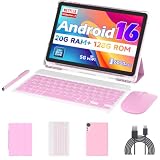
- 【Newest Android 16 Tablet】With the latest Android 16 OS and 2.0GHz octa-core processor, this 10 inch tablet smoothly handles daily apps and games, removes bloated ads, enhances user privacy, and more features for you to explore. Please note: Android 16 is the official version, not the go version.
- 【HD IPS Touch Screen + Widevine L1】Tablets features a 10.1 inch 1280x800 HD IPS display to enhance screen clarity and immerse you in vivid visuals.10.1 inch tablet is Widevine L1 certified for Netflix, Prime Video, TikTok, Disney+ and Youtube, among other popular platforms for smooth viewing of Full HD content.
- 【20GB + 128GB + 2TB Expandable】The Android tablet comes with a memory combination of 20GB (4GB + 16GB virtual memory) RAM + 128GB ROM, which allows you to easily run a wide range of software and keep multiple applications running smoothly. It supports 2TB of expandable memory for saving tons of pictures, videos and music. The tablet is Google GMS certified and allows you to download tons of apps from the app store.
- 【5G WiFi 6 + BT5.0+ 6000mAh】Our Android 16 Tablet supports 2.4G/5G WiFi 6 and Bluetooth 5.0 for a more stable and faster connection, with a 6000 mAh high-capacity battery, it's the best companion for outing and traveling. With 2MP front camera and 8MP rear camera, you can take beautiful photos and enjoy clear video chat.
- 【Portable 2 in 1 Tablet with Keyboard】This 2-in-1 tablet comes with a Bluetooth keyboard, Bluetooth mouse, stylus, protective case, charger, and type-c cable. Easily switch between tablet and laptop modes. An ideal gift choice for birthdays, Christmas, family, children, or friends.
AI Studio’s browser emulator does not support camera or photo capture, NFC, Bluetooth, or Google Play services; location is simulated. If your feature depends on one of these capabilities, a successful browser preview cannot establish that it works on a real device. The documentation describes physical-device installation using a Chrome or Edge browser with WebUSB support, with Developer Options and USB Debugging enabled and the device connected over USB. Google AI Studio Android documentation
Expand testing beyond one virtual device
An AVD is a useful, configurable test environment, but a single profile and Android version cannot establish compatibility across the Android device range. When compatibility matters, create additional AVDs with different device profiles or API levels and repeat the key flows. Try real hardware when a feature or service is not represented reliably by the emulator, and specifically for the browser-emulator gaps listed above.
Keep the review cycle explicit for each change: inspect the agent’s edits, build and deploy, reproduce the important user flow, and check the screen and logs. That gives you evidence about the app beyond the fact that it compiled or opened once.
Quick Recap
Product prices and availability are accurate as of the date/time indicated and are subject to change. Any price and availability information displayed on Amazon at the time of purchase will apply.
Recommended Free Tools

