
Don’t trust the incoming text or call to prove who sent it. Stop replying or end the call, then check the claim through your bank’s app or website, or call the number on your card or a recent statement. Don’t click the message’s link, call a number the sender provides, share a password or verification code, or move money to “protect” it.
Why a convincing bank message can still be fake
Scammers can spoof caller ID and make texts, emails, and websites look like they came from a bank. A familiar number, the bank’s name or logo, accurate personal details, or a convincing voice does not authenticate the contact. The CFPB warns that voices can be cloned, too. Verify consequential claims through a channel you choose independently, not one supplied by the sender. The FDIC’s bank-impersonation guidance and the CFPB’s overview of common fraud and scams explain these tactics.
Urgency is another warning sign. A message may claim there is a suspicious purchase or account problem and insist you act immediately. A real bank may send legitimate alerts, but an alert cannot authenticate itself; confirm any consequential claim with the bank independently. The FDIC reported in June 2025 that FTC findings identified bank impersonation as the most reported scam carried out through text messages in 2022, nearly twenty times the 2019 level. That is a historical finding, not a current-year statistic.
Warning signs to take seriously
- A demand for sensitive information: Be wary of requests for your password, Social Security number, account or card details, or verification code. A text or email asking you to “verify” account information may be phishing; the CFPB advises contacting the bank through a trusted channel instead. See its guidance on bank or credit-union verification messages.
- A one-time code request: Never read a verification code to an incoming caller or send it in a reply. The FTC says, “Anyone who asks you for your account verification code is a scammer.” Only enter a code into the genuine bank sign-in or verification flow when you started that process yourself. The FTC explains how verification codes can be misused.
- Instructions to move money: Treat directions to withdraw cash, buy gift cards, use cryptocurrency, or transfer funds to a “safe account” as a scam. Legitimate financial institutions do not ask you to move money to protect it. The CFPB lists steps and contacts for scam or fraud help.
- Pressure to stay on the phone or keep quiet: Hang up if a caller discourages you from checking independently or tells you not to tell anyone. The FTC states, “No legitimate fraud department will tell you to keep the call a secret.”
- A link, app, or remote-access request: Don’t open unexpected message links, install an app at the caller’s direction, or grant remote access to your device during an unsolicited fraud call. A fake link can lead to a lookalike bank site.
How to check whether the alert is real
- Stop the incoming interaction. If you want, ask which bank the caller claims to represent and what issue they are reporting, then end the call. For a text, stop replying. Don’t let the sender dictate how you verify.
- Choose a trusted route yourself. Open the bank app already installed on your device, type the bank’s known official website address, or call the number printed on your card or a recent statement. For a text-only alert, open the app or call the bank independently.
- Ask the bank to check the specific claim. Ask whether the transaction, account issue, or requested action is real. Don’t call a number in the message or use a callback number given by the caller. The FTC also warns that search results can include sponsored ads for fake numbers, so don’t rely on the first result when looking for contact details. See the FTC’s guidance on unexpected calls about money at risk.
- Keep credentials and money under your control. Don’t share passwords or codes with the incoming contact, and don’t transfer funds to an account or destination the contact provides.
- Follow up through the verified channel. If the bank confirms a real issue, follow its instructions in the app or on the call you initiated.
If you already replied, shared a code, or moved money
Contact your bank promptly through its independently verified app, website, card number, or statement number. Tell the bank exactly what you shared or did, including whether you disclosed a password or code, clicked a link, granted remote access, or transferred money. Stop communicating with the incoming caller or texter and follow the bank’s instructions through the verified channel.
Recommended Free Tools
#1 Best Overall
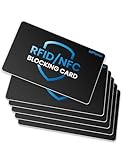
- Secure Your Information: Simply insert the RFID blocking card into your wallet to protect against digital pickpocketing. Block unauthorized scanning of your contactless cards, including credit/debit cards, passports, driver's licenses - to safeguard your identity and financial security
- Effective Protection: Our RFID blocking card utilizes advanced electromagnetic shielding technology, which features an embedded antenna mesh and chip that instantly detects and scrambles scanning attempts, providing consistent and reliable protection for the entire wallet
- Ultra Slim & Easy to Use: Credit-card-sized and just 0.03 inches (0.76 mm) thick, it slips easily into your wallet, purse or card holder adding no bulk. No charging or batteries needed. It will not demagnetize other cards, nor interfere with your phone signals
- A Thoughtful Gift: Give the practical gift of security. Effortlessly protecting your loved ones from digital theft – offering instant peace of mind, which is a truly meaningful way to show your care
- Test the Card: Test our RFID blocking card at self-checkout: Layer your contactless card with our RFID card on the reader - payment fails instantly, error message pops up
You can also report a suspected scam to the FTC. The CFPB identifies the FTC, FBI, your state attorney general, and local police as possible reporting contacts. Find their contact details through their official websites rather than links or numbers sent by the suspicious contact. The CFPB scam and fraud guidance outlines these options.
Quick Recap
Best Value

- PROTECTING YOUR INFORMATION -This RFID blocking card creates a scan-proof shield with in 1.2 inches. Simply slip it into your wallet to safeguard contactless cards (credit/debit cards, IDs, passports, driver's licenses) from wireless skimming and data theft
- ADVANCED ANTI-SCANNING TECHNOLOGY - Built-in micro-jamming technology instantly detects RFID/NFC scans and sends a blocking signal to ensure real-time protection of your financial and personal data.
- ULTRA-THIN & WALLET-FRIENDLY - Credit card-sized (0.85mm thick) to fit seamlessly in any wallet slot, card holder, Just place it near your cards for RFID protection.
- TEST IT YOURSELF - Place the RFID card above/below your wallet or contactless card and hover it near the reader. Watch for payment failures and make sure your data is safe.
- THE PERFECT GIFT FOR PEACE OF MIND - Perfect for both men and women, a practical gift for travelers, professionals or anyone who values privacy, Provide loved ones with the ultimate protection against digital pickpocketing.
Rank #4
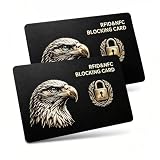
- Complete Protection: Engineered with state-of-the-art RFID blocking technology, this card protects IDs, passports, and driver's licenses from wireless scanning. Simply insert it into your wallet for instant security.
- Signal Jamming Technology: Our patented shielding blocks the 13.56MHz frequency of contactless credit cards and e-passports. Equipped with built-in signal jamming microchip generating real-time interference, its 2.4 inch protective barrier stops unauthorized scanner skimming at airports, hotels and crowded transit gates to avoid identity & financial theft.
- Sleek & Portable: With an ultra-thin 0.03-inch design (credit card-sized), it fits seamlessly into your wallet or pocket, offering effortless protection wherever you go.
- Easy to Use: No installation or batteries required. Just insert the card into your wallet and enjoy immediate protection. The card is easy to clean and maintains its performance over time.
- Tested & Verified: Place the RFID blocking card together with a contactless card on a payment reader. The reader will be unable to process payment from the contactless card, and an error message should appear.
Rank #3

- ONE CARD PROTECTS YOUR WHOLE WALLET: Drop a single KF-Premium card into your wallet, purse, or card holder and every card sitting near it is shielded from contactless RFID and NFC scans, so you do not need a separate sleeve on each card. This 2-pack covers a second wallet, a passport holder, or a family member.
- ULTRA THIN AT 0.9MM, BARELY THERE: Each blocking card is only 0.9mm thick, about as slim as one of your bank cards, so it slides into any wallet slot without the bulk of foil sleeves or switching to a new wallet. Slim enough that you forget it is working.
- STOPS FRAUD BEFORE IT STARTS: The armoured shield design sends out an interfering counter-signal that blocks unauthorized RFID and NFC readers from skimming your debit cards, credit cards, and IDs. It guards against contactless payment fraud, identity theft, and digital pickpocketing in crowds, on transit, and while you travel.
- WORKS THE MOMENT IT IS IN YOUR WALLET: No batteries, no charging, no app, and nothing to switch on. Protection is automatic and continuous for the life of the card, and the durable, high-quality build holds up to daily wear in a back pocket or bag.
- A PRACTICAL GIFT THEY WILL ACTUALLY USE: The sleek black finish gives it a premium look that suits travelers, students, parents, and anyone who carries contactless cards. Boxed as a 2-pack, it works for birthdays, holidays, or a stocking filler that quietly protects the people you care about.
Rank #2

- RFID Protection: An electromagnetically opaque layer helps block unauthorized scans, protecting credit card, debit card, and passport information from nearby readers; This RFID blocking card helps prevent digital skimming by shielding your wallet from electronic theft
- Threats Stay Outside: Digital pickpockets use hidden readers to skim contactless cards in crowds, transit and checkout lines; This credit card protector works as an RFID blocker the moment it's placed in your purse or wallet, stopping electronic theft before it occurs
- Invisible Yet Active: Ultra-thin and sized to fit any wallet slot, this rfid blocking card adds no bulk; Invisible protection helps shield your debit cards and IDs from electronic skimming without changing the way you carry your wallet
- One Card Protects All: Forget slipping every card into a separate RFID sleeve, just one RFID blocking card protects every contactless card, passport, and license all at once; Carry it in a purse, travel pouch or cardholder and stay shielded at airports, transit hubs and during daily commutes
- Drop and Defend: Keep the RFID blocking card in your wallet or travel bag, or save it as a backup; Simply insert it alongside your credit and debit cards for immediate protection against identity theft — no charging, no setup
Product prices and availability are accurate as of the date/time indicated and are subject to change. Any price and availability information displayed on Amazon at the time of purchase will apply.
Independent reader supportYour contribution helps us test, update, and keep practical guides available for everyone.
