
Free tools Windows power users keep installed
One-click scans. No signup required.
Lunar samples are collected and handled as carefully documented scientific materials, not just rocks brought home. From the choice of tools on the Moon to storage in controlled laboratory environments, each step is designed to preserve the sample, limit introduced material or chemical change, and retain the context scientists need to interpret it. Apollo established many of these practices; Artemis planning adds challenges around polar cold and volatile compounds.
How Apollo and Artemis sample handling differ
| Aspect | Apollo | Artemis planning |
|---|---|---|
| Sampling setting | Sunlit equatorial and mid-latitude regions | South-polar terrain, including permanently shadowed regions with severe cold and low-angle lighting |
| Preservation emphasis | Control terrestrial contamination, use controlled storage, and document handling; Apollo also had a separate Earth-protection quarantine framework | Continue contamination controls while planning for volatile contamination and possible sub-zero or cryogenic preservation |
| Status | Established collection and curation practices refined over the program | Detailed temperature constraints and some curation capabilities remain under development; the cited transfer route is a planning architecture |
NASA’s Technical Reports Server record for a 2009 paper reports that the six Apollo missions that landed on the Moon returned 2,196 samples totaling 382 kilograms. The paper also describes how collection strategies and tools changed over the program, so there was no single Apollo collection method applied identically on every mission.
How lunar samples are collected and prepared
Sampling plans are shaped by both the scientific questions and the requirements of later handling. NASA’s Artemis planning paper describes the curation lead as participating in sampling-plan development as well as planning for collection, handling, transport, and storage. Tools and procedures must be chosen with the materials scientists hope to measure—and the possibility of introducing contaminants—in mind.
Preparation begins before a sample is opened
A NASA core-processing report documents preparation for Apollo 17 core 73002. Staff identified, sorted, cleaned, and nitrogen-purged equipment; rehearsed the procedure; practiced with a lunar-core simulant; and scanned the real core while it was still sealed, before extrusion. The example shows why preparation and records matter: researchers seek to protect not only the material, but also the core’s structure and context before it is exposed.
#1 Best Overall
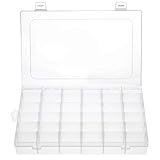
- Removable dividers: The grid inside the box can be moved, so you can adjust the dividers to create your own size compartments.
- Help to keep a number of small items apart.
- It is a portable and practical jewelry storage box.
- Size (L*W*H): about 27*17*4cm. Each grid size (L*W*H): 4.4*2.8*4cm
- 100% SATISFACTION SERVICE- We have absolute faith in our product. If for any reason you have an issue with your order, please contact us, we will give you a best solution.
How samples are transported and kept in custody
For the south-pole architecture described in NASA’s Artemis planning paper, samples would move from the lunar surface to the Human Landing System, then to Gateway and Orion, before Earth return. After recovery, the plan calls for rapid transport to NASA’s Johnson Space Center curation facility. The paper leaves the duration of Gateway storage undetermined; it describes a planned sequence, not a flight procedure demonstrated by that source.
Custody continues after arrival. NASA’s curation descriptions detail controlled work areas, restricted materials, specialized containers, and step-by-step procedures. The purpose is to keep samples identifiable and to make their handling history available to researchers as material moves through examination and allocation.
Rank #2

- 4 oz Specimen Cups For Urine & Sample Collection High-quality disposable specimen cups made from durable polypropylene plastic, suitable for collecting urine, stool, semen, and other samples in medical, clinical, and home settings.
- Leak-Resistant Screw-On Lids For Secure Transport Each specimen cup includes a tightly sealed screw-on lid to help reduce leaks and keep contents secure during handling and transport.
- Graduated Markings In oz & mL For Easy Measurement Clear graduated markings in ounces (4 oz) and milliliters (120 mL) allow for easy and accurate measurement of liquid samples.
- Non-Sterile Cups For General Sample Collection Non-sterile specimen cups suitable for general use in laboratories, clinics, and home environments for sample collection and testing purposes.
- Multipurpose Containers For Medical & Home Use These 4 oz specimen containers are designed for collecting liquid or solid samples in doctors’ offices, clinics, hospitals, and at home.
What contamination means—and how it is controlled
For sample curation, contamination means material or change introduced by people, equipment, or the surrounding environment that could alter a sample or complicate measurement results. The concern is not limited to visible dirt: trace substances, particles, and volatile compounds can matter to chemical or isotopic analyses. Artemis planning gives particular attention to possible contributions from vehicles, spacesuits, crew operations, leaks, propellants, and waste near polar volatile deposits.
Build contamination knowledge before and during a mission
NASA’s Artemis paper describes contamination knowledge as the systematic characterization of materials and environments that may contact or affect samples. Suggested approaches include witness plates or coupons, biological swabs, and analysis of flight spares, alongside characterization of tools, containers, vehicles, and suits before, during, and after flight. The paper notes that the effects of different contamination sources on chemical reactions and isotopic measurements need to be determined; no single cleaning or sampling protocol is presented as removing every possible contaminant.
Recommended Free Tools
Rank #3
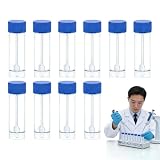
- 10-piece Collection Set: Includes 10 transparent specimen containers with blue screw caps and built-in sampling scoops, providing a convenient supply for organized specimen collection, storage, and handling
- Built-in Sampling Scoop: Each container includes an attached scoop inside the cap, allowing convenient collection and transfer of solid or semi-solid samples while reducing the need for separate sampling tools
- 25-30mL Capacity: Each specimen cup holds approximately 25-30mL and measures about 3.65 inches tall by 0.90 inch wide, offering a compact size for sample collection and organized storage
- Clear Container Design: The transparent body makes contents easy to view without opening the container, while the ribbed blue screw cap provides an easy-to-grip surface for opening and closing during routine handling
- Versatile Collection Use: Suitable for specimen collection, laboratory sampling, educational demonstrations, testing preparation, and other situations requiring small transparent containers with integrated sampling scoops
A separate historical concern: protecting Earth
Apollo’s Lunar Receiving Laboratory addressed a different planetary-protection question: whether lunar material might pose a biological risk to Earth. NASA’s historical account describes isolation of astronauts and samples, a biological barrier and vacuum system, and gloveboxes in the sample operation area. The Apollo 12 mission report groups the back-contamination plan into three phases: in-flight procedures; recovery, isolation, and transport; and quarantine with preliminary analysis. This Earth-protection framework is distinct from today’s emphasis on preventing Earth-origin material from compromising samples.
Independent reader supportYour contribution helps us test, update, and keep practical guides available for everyone.How samples are stored and documented
Controlled storage protects the material
NASA describes Apollo curation using cleanrooms, vaults, and nitrogen-filled cabinets, with restricted contact materials and procedures. In a NASA podcast transcript, lunar sample curator Andrea Mosie explains the goal this way: “We’re actually protecting the samples from us.” The transcript names Teflon, aluminum, and stainless steel among materials used in the laboratory context; this does not mean arbitrary containers made from those materials are suitable for lunar samples.
Rank #4

- Durable Material: The storage box made of durable high quality PP, light weight and long service life, easy to classify, easy to find, easy to store.
- 2 Stackable Tiers: This storage box features 2 stackable tiers of storage with 1 transparent lid, lock your supplies firmly for safe storage and transportation, and see-through latched layers allow easy access to items enclosed.Kindly Note: 2 Stackable Tiers storage box with only 1 lid.
- Approximate Total Dimensions: 35x26.5x18.9cm/13.78"x10.43"x7.44"(LxWxH), each layer container height: 9cm /3.54 inch. Large capacity and clear visible case perfect for art and craft supplies, stationery, tools, medicine, sewing kit, cosmetics or fishing supplies.
- Perfect to organize: The multi-layer separation design provide good sealing performance, dustproof, moisture-proof, diversified functions, powerful storage function, completely solve the disorder of items.
- Versatile Use: handy storage box with handle on lid for easy transporting, suitable for family, car, school, gym, workplace, travel, camping, office, health clinics, hospitals.
For Artemis, NASA says established controls will inform handling, including cleanrooms, custom nitrogen gloveboxes, specialized containers, and tools subject to strict material rules. Cold curation is also being developed for material that may include ice or other volatiles from permanently shadowed regions. Warmer temperatures could alter such material, but the cited planning sources do not set one final storage temperature for every sample. Cryogenic handling is not a universal condition for lunar samples.
Records preserve context for later science
NASA’s account of Apollo curation describes recording sample identities and container numbers, weighing and photographing material, preserving orientation, and documenting work performed by researchers who receive sample allocations. Returned material comes back with a record of its handling. These records help later researchers judge how a sample was treated and whether it remains appropriate for a particular analysis.
Do these 3 things before closing this tab:
1Scan for outdated or missing drivers - takes under a minute2Repair Windows errors before they cause bigger problems3Fix the driver behind crashes, sound loss and screen glitchesQuick Recap
Best Value

- 【Sturdy and Durable】- Made of transparent and environmentally friendly pp plastic, solid, not easily deformed. Sturdy plastic case with snap-shut lips can close tightly to protect your items from falling out.
- 【Large Capacity & Easy to Carry】- Our plastic organizer box is large enough to hold your items and portable to be stored in the luggage for travel(Outer box Size:7.9 x 6.2 x 1.2 inches, Each Grid Size:1.8 x 1.3 x 1.0 inches).
- 【Removable Dividers】- The size of the grid can be flexibly adjusted according to your needs. You can adjust the dividers to create 3 to 18 compartments for individual needs.
- 【Wide Applications】- The plastic organizer box is great for organizing and storing small items, like jewelry, earrings, necklace, rings, cosmetics, threads, beads,crafts, pills, fishing tackles, electronic components, nails, DIY crafts, etc.
- 【Satisfaction Guarantee】- 1x plastic organizer box and 15x dividers are included. We strive to provide you with best quaility product and customer experience as possible. Any questions, please contact us directly.
Product prices and availability are accurate as of the date/time indicated and are subject to change. Any price and availability information displayed on Amazon at the time of purchase will apply.

