
When a nuclear plant loses electricity from the grid, it does not automatically lose all power. Onsite emergency AC sources—commonly diesel generators—are designed to supply safety-related equipment. If those sources are also unavailable, the event is a station blackout, and operators rely on a more limited set of equipment and plant-specific procedures while working to restore power and maintain cooling.
What happens when a plant loses grid power?
Offsite power is electricity supplied from outside the plant, usually through the electrical grid. A loss of offsite power can interrupt normal electrical supplies, but it is not the same as losing every source of AC power. Onsite emergency AC sources provide a separate backup layer and can supply safety-related loads when offsite power is unavailable. The equipment and electrical arrangement vary by plant. The NRC’s discussion of station blackout describes the distinction between offsite supplies and plant electrical buses.
When does a grid outage become a station blackout?
Station blackout is a narrower, more severe condition than a community-wide blackout or a loss of grid power alone. The NRC defines it as “The complete loss of AC electrical power to the essential and nonessential switchgear buses in a nuclear power plant.” In practical terms, offsite AC power has been lost and onsite emergency AC power is unavailable to the relevant buses. A grid outage with emergency generators still available is not, by itself, a station blackout. NRC Generic Letter 81-04 addresses procedures and training for station-blackout events.
How the backup layers work
Emergency AC power
Emergency generators, commonly diesel generators, are intended to power safety-related loads when normal offsite electricity is unavailable. Their availability means the plant is in a different condition from one in which both offsite and emergency AC power are lost. Which loads are supplied, and by what equipment, depend on the facility’s design and licensing basis.
Quick wins for a faster PC:
Repair Windows errors before they cause bigger problemsFix Now →Scan for outdated or missing drivers - takes under a minuteDriver Scan →Clear out junk files and repair common Windows errorsFree Scan →#1 Best Overall

- With 13,000 watts of power, the XP13000HX Dual Fuel generator will keep your whole home running during a storm or power outage, while protecting your family from harmful fumes with CO Alert
- Enjoy the freedom and flexibility of running your generator on either gasoline or propane. Propane is cost effective, clean-burning, fuel efficient, low maintenance, has a long shelf life, and is a readily-available fuel source.
- Built using a powerful 500cc OHV DuroMax engine and features ALL COPPER WINDINGS designed to make your generator last for years.
- The XP13000HX comes with a push button start, a front facing interface that allows you to change your fuel type in seconds, and a wide variety of outlets (including a transfer switch-ready 50 amp outlet)
- The fully loaded power panel includes four 120V GFCI household outlets, one 120V 30AMP outlet, one 120/240V 30AMP twist-lock outlet, and a heavy-duty 120/240V 50AMP outlet making it transfer switch ready!
Batteries and inverters
Station batteries supply DC power to selected control and instrumentation equipment. Inverters can convert battery DC into AC for selected vital loads. This can preserve some monitoring and control capability during an AC interruption, but batteries do not supply every plant system indefinitely. Battery capacity, supported equipment and usable duration are plant-specific; there is no single runtime that applies to all nuclear plants. The NRC’s station-blackout material discusses battery-backed instrumentation and controls in plant-specific contexts.
What operators do if emergency AC power is unavailable
Operators use procedures written for the plant’s design and equipment. The objective is to maintain reactor coolant inventory and remove heat while monitoring conditions with the instrumentation and controls that remain available. They also work to restore offsite power or onsite emergency AC sources. Procedures account for supporting equipment and emergency lighting; the sequence is not identical at every facility.
Rank #2

- 9500 Running Watts and 12500 Peak Watts (Gasoline); 8500 Running Watts, 11200 Peak Watts (Propane); Remote Start with Included Key Fob, Electric and Recoil Start; Up to 12 Hours of Run Time on a 6. 6 Gallon Fuel Tank with Fuel Gauge
- Features Two GFCI 120V 5–20R 20A Standard Household Receptacle, One Transfer Switch Ready 120V L14-30R 30A, and One RV Ready 120/240V 14–50R 50A; All Outlets Have Rubber Covers for Added Safety
- Powered by a Heavy Duty 457cc Westinghouse 4-Stroke OHV Engine Featuring a Long-Lasting Cast Iron Sleeve with Automatic Low Oil Shutdown and Digital Hour Meter. VFT display gives you real time updates with the voltage output, frequency, and lifetime hours
- Plug-and-Play: Comes with a Remote Start Key Fob, 12V Battery Charger, Oil, an Oil Funnel, a Tool Kit, and a User’s Manual to Get You Started Right Out of the Box (Minimal Assembly Required)
- All Westinghouse Portable Generators are Functionally Tested in the Factory and May Contain Minimum Residual Oil and/or Fuel Odor; EPA Compliant; Backed By 3-Year Limited Service, Labor, and Parts Coverage and Nationwide Customer Service Network
Some reactor designs have steam-driven auxiliary feedwater systems, but that is not a universal description of what every plant can use or when. NRC Generic Letter 81-04 identifies procedure and training topics that include maintaining coolant inventory and heat removal with only DC power available. It does not establish one sequence or equipment list for all plants.
How long must a plant cope without power?
For U.S. NRC-regulated light-water reactors, 10 CFR 50.63 requires a plant to be able to withstand and recover from station blackout for a specified duration. That duration is not one universal number. The rule’s duration reflects factors including emergency AC-source redundancy and reliability, the expected frequency of loss of offsite power, and the probable time to restore offsite power. Each plant’s licensing documents describe the duration and systems credited for that facility. A duration stated in one plant’s licensing material should not be generalized to another.
Crashes, No Sound, or Screen Glitches?
Random freezes, missing sound and display glitches usually trace back to one bad driver. Find and replace yours safely.Free scan · under a minutePC Slower Than It Used to Be?
A free scan shows the junk files, broken settings and background clutter dragging Windows down - then fixes them in one click.Free scan · Windows 10 & 11Rank #3

- Ultra-Lightweight: At only 7.5 lbs, the Explorer 300 delivers a robust 292Wh capacity while remaining 17% lighter than the industry average. The sleek, integrated handle makes it effortless to carry on long hikes or pack with your camping gear, providing reliable off-grid power without adding bulk to your load.
- Versatile Power for 6 Devices: Equipped with 2 AC outlets, a 100W USB-C PD port, 2 USB-A ports, and a 120W car port. With a 300W rated output (600W peak surge), it easily handles laptops, drones, and cameras, while also serving as a dependable cpap battery for camping or a robust solar powered generator when paired with panels.
- Built to Last: Upgraded with premium LiFePO4 chemistry, this portable generator delivers over 4,000 charge cycles before reaching 70% capacity. This ensures more than 11 years of reliable service life, making it a sustainable and durable energy partner for a decade of exploration.
- Fast Solar Charging: Perfect for off-grid use, this solar powered generator pairs seamlessly with Jackery panels. Reach 80% capacity in approximately 2.8 hours with a 100W solar panel, or maintain your gear with a portable 40W panel (80% in 7.5 hours), making it an essential part of your hunting essentials.
- WHAT YOU GET: 1* Jackery Explorer 300 Portable Power Station, 1*AC adapter, 1* car charger cable, 1* user guide (𝐒𝐨𝐥𝐚𝐫 𝐏𝐚𝐧𝐞𝐥 𝐍𝐨𝐭 𝐈𝐧𝐜𝐥𝐮𝐝𝐞𝐝.)
What changes during an extended event?
For extended events, NRC-hosted technical work describes mitigation strategies that use portable equipment to provide power and water and help maintain or restore key safety functions. This is an additional, plant-specific layer—not a standard equipment package shared by every plant. It also does not mean that ordinary consumer generators or home batteries can run a nuclear plant. NUREG/IA-0467 discusses portable power and water equipment in the context of technical analyses of extended-blackout strategies.
Independent reader supportYour contribution helps us test, update, and keep practical guides available for everyone.What the evidence does—and does not—show
The NRC published NUREG-1776 in 2003. Its historical evaluation concluded that the station-blackout rule was effective and noted opportunities to improve the clarity of regulatory documents. That conclusion is not a current, cross-industry statistic about generator success, battery runtime, or blackout frequency. No single percentage or duration for those measures should be inferred from it.
Rank #4
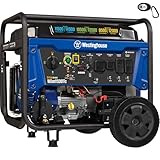
- Perfect as a backup power source for larger homes or a dependable source of portable power
- 14,500 peak watts, 11,500 running watts (gasoline); 13,500 peak watts, 10,500 running watts (propane); 12,000 peak watts, 9,500 running watts (natural gas)
- Powered by a heavy duty 550cc 4-Stroke OHV Westinghouse Engine constructed with a durable cast iron sleeve; Runs for up to 19 hours on a 9.5 gal. fuel tank with built-in fuel gauge; up to 7 hours on a 20 lb. propane tank
- Engineered with low THD, so it's safe for sensitive electronics. Power phones, computers, TVs and more. Stay connected with people, news and entertainment during power outages, or on jobsites and campsites. Durable copper windings help your generator produce cleaner power, run cooler and last longer
- All Westinghouse portable generators are gunctionally tested in the factory and may contain minimum residual oil and/or fuel odor; EPA compliant; Backed by 3-Year limited service, labor, and parts coverage and Nationwide Customer Service Network
The applicable requirements discussed here concern U.S. NRC-regulated light-water-cooled plants. Other reactor types and jurisdictions may have different requirements and equipment. For any named plant, its licensing documents are needed to establish the credited systems and coping duration.
Quick Recap
Best Value

- Perfect as a backup power source for larger homes or a dependable source of portable power
- 14,500 peak watts, 11,500 running watts (gasoline); 13,500 peak watts, 10,500 running watts (propane)
- Runs for up to 19 hours on a 9.5 gal. fuel tank with built-in fuel gauge; up to 7 hours on a 20 lb. propane tank
- Engineered with low THD, so it's safe for sensitive electronics. Power phones, computers, TVs and more. Stay connected with people, news and entertainment during power outages, or on jobsites and campsites. Durable copper windings help your generator produce cleaner power, run cooler and last longer
- Powered by a heavy duty 550cc 4-Stroke OHV Westinghouse Engine constructed with a durable cast iron sleeve
Product prices and availability are accurate as of the date/time indicated and are subject to change. Any price and availability information displayed on Amazon at the time of purchase will apply.

